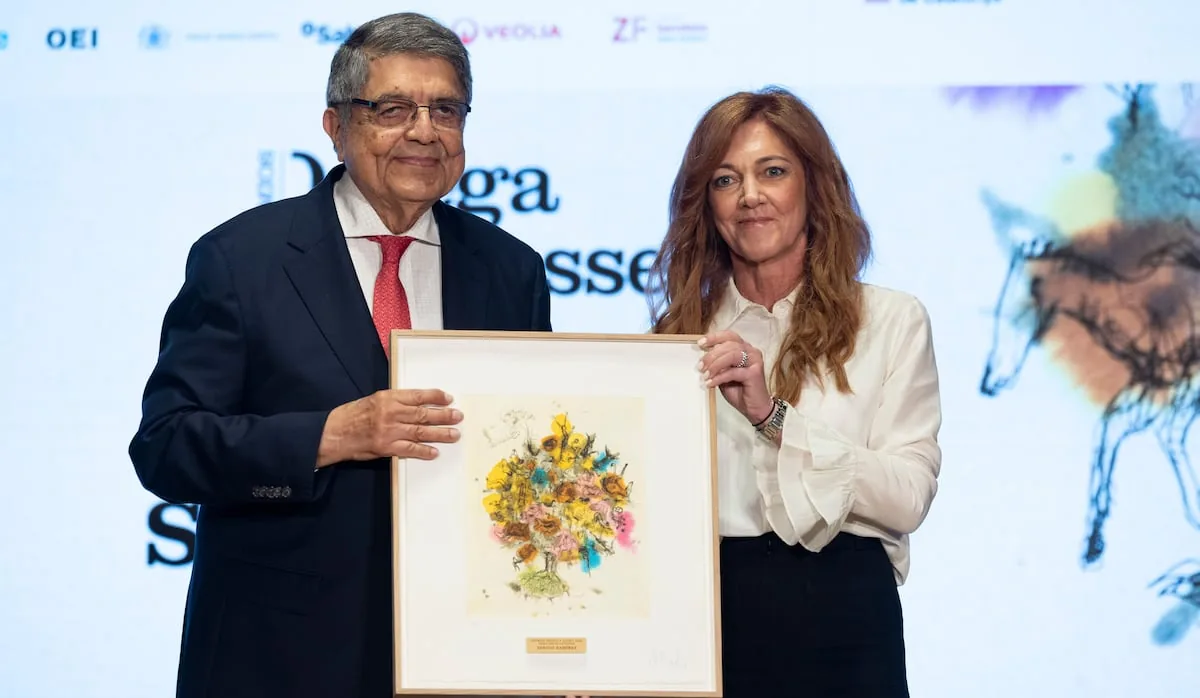









It was José Ortega y Gasset who stated that “progress is only possible when thinking big, advancement is only possible when looking far.” And the indications of the Spanish philosopher and essayist still hold value as an intellectual compass 75 years after his death. In a context of frantic informational bustle, the ambition to report exclusives here, now, and before anyone else is taken for granted, but there is no greatness without rigor, and the obligation arises to sharpen the gaze and train the nose to differentiate news from what only seems to be news. The Ortega y Gasset Journalism Awards honored this Monday the careers of Nobel Prize in Literature Svetlana Alexievich, writer Sergio Ramírez, and former The Washington Post director Martin Baron, three global references of “honesty, courage, ethics, and craft.”
Read more Night of emotions at the old royal shipyards of Barcelona for the 50th anniversary of EL PAÍS
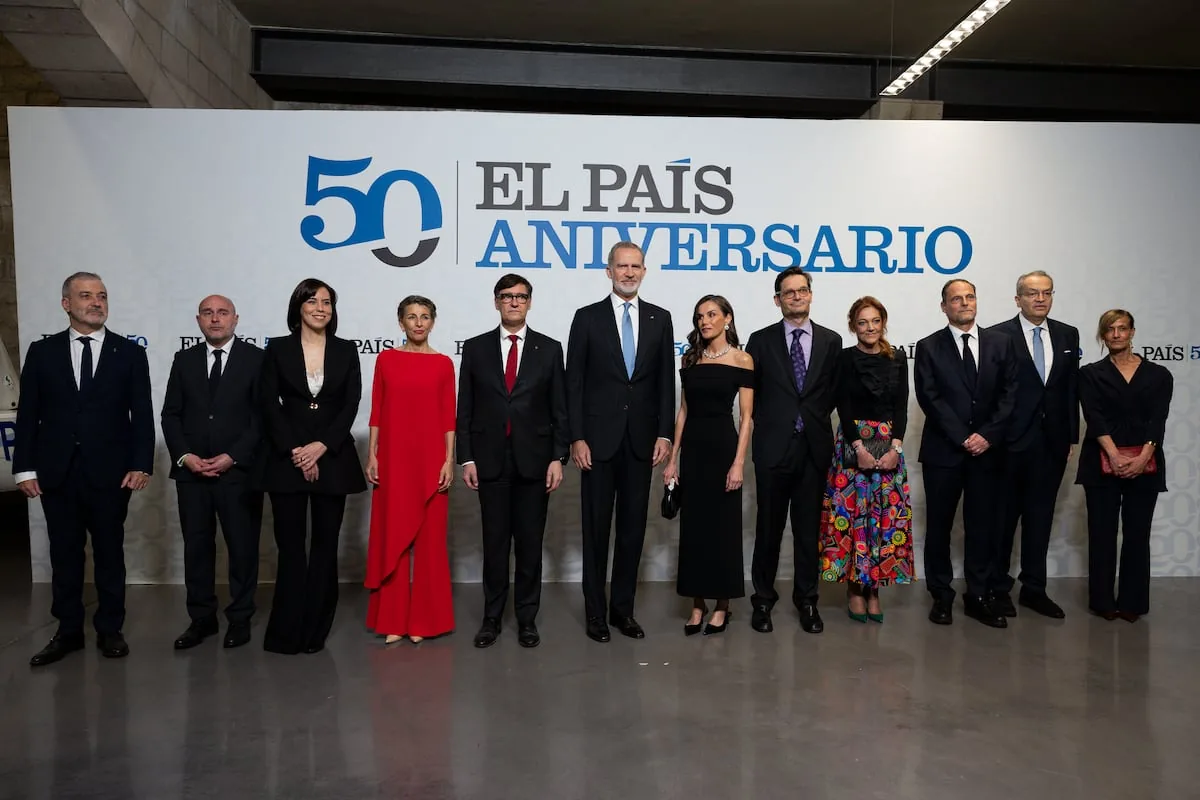
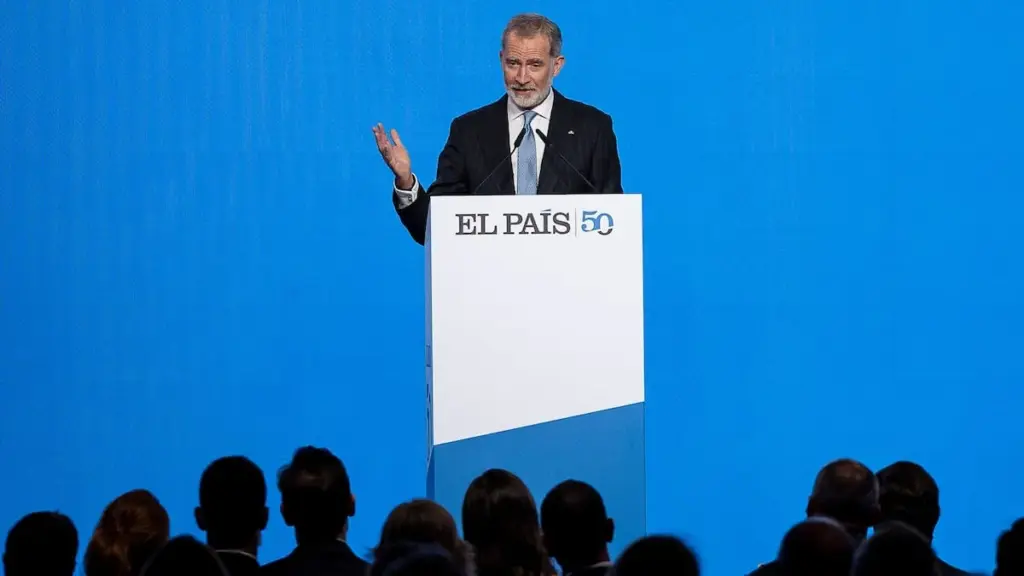
This happened during an extraordinary edition of the awards held in Barcelona, on the occasion of the first 50 years of EL PAÍS, which culminated tonight with a gala ceremony presided over by King Felipe VI and Queen Letizia during an event attended by the second vice president of the Government, Yolanda Díaz; the Minister of Science and Innovation, Diana Morant; the president of the Generalitat, Salvador Illa; and several consellers of the Catalan Government, such as Alícia Romero, Jaume Duch, and Ramon Espadaler. In his speech, the King highlighted that “journalism is crucial for freedoms and democracy.” He also praised “the role of reporters and the press” in defending institutions.
The gala of the most prestigious journalism awards in Spanish, granted annually by this newspaper since 1984, was held at the Maritime Museum, in the shadow of the Columbus monument and its finger pointing, as Ortega y Gasset suggested, far away.
On that stage, speeches were delivered by King Felipe VI; the Catalan president, Salvador Illa; the president of Grupo Prisa and EL PAÍS, Joseph Oughourlian; and the director of EL PAÍS, Jan Martínez Ahrens. The King recalled that he grew up with EL PAÍS: “If it is May 4, 1976, I am 8 years old and in 3rd grade of EGB. I heard on the news that day that there was a new newspaper; well, maybe it was the day before, maybe a few days before or after, I can’t specify. I won’t tell you I started reading it because, rightly, you wouldn’t believe me,” he admitted. “But I do tell you that at home it was a much-discussed matter — and I sensed it was something very important,” he recalled. “I am clear that from very early on and until today, until this very morning, this newspaper has accompanied me as a source to stay informed,” Felipe VI stated.
“We are here today to congratulate a vibrant newsroom that keeps the informational pulse, with great professional effort on both sides of the Atlantic,” said the monarch. “Because it is worth thinking and serious analysis of what happens is necessary,” he emphasized.
The president Salvador Illa recalled the last article published in the newspaper by Manuel Vázquez Montalbán in 2003, six days before he died. The column was titled, in Catalan, Triomf, a clear nod to the magazine Triunfo.
“As read in Catalonia as in Madrid, there was never a more fertile communication vehicle between both imaginaries’ (…) A string of centrifugal and democratic talents passed through, projecting Catalan critical consciousness through an unprecedented cultural bridge,” said that text by the writer whom the president paraphrased, using that metaphor to add: “This role of bridge and critique has been exercised by EL PAÍS. I hope it continues to do so in the coming decades, practicing good journalism.”
In his speech, Illa recalled the first front page of the newspaper, published on May 4, 1976, whose headline was that Europe already demanded the creation of political parties as a condition. “Everything was yet to be done and written, but EL PAÍS was already clear then that Europe was our collective hope. And today, 50 years later, in the European heart. And we are one of its engines,” Illa noted.
Read more A goal by Alexis takes Sevilla out of the relegation zone
The director of EL PAÍS predicted that the newspaper will continue growing, fulfilling its commitment to the reader, which he summarized as: “Inform with rigor, inform with honesty.” “In the coming years, we will do more and better in America and Europe, in the United States, Spain, and Mexico,” he assured. “We will grow by offering what we know how to do: journalism, quality information, verified, separated from opinion, prioritizing data over prejudice, telling the truth and defending, from independence, our values: democracy, tolerance, and plurality.”
In his intervention, Martínez Ahrens highlighted that journalists write both for a reader in Monterrey and one in Barcelona, Bogotá, San Diego, or Buenos Aires. “And we do it with the same identity, that of a medium that defends democracy and bets on quality journalism. Two principles that have not changed since the beginning and that have earned us the trust of readers,” he emphasized.
Joseph Oughourlian, for his part, claimed the newspaper’s “moral contract” with its readers. “It is true that EL PAÍS is not the same, but because Spain is not the same, because the world is not the same, because journalism is not the same,” he said in his speech during the night’s gala. “We have always worked thinking about the readers. About their intelligence, their right to be well informed, and their capacity to develop their own judgment,” he recalled.
“EL PAÍS is more alive and thriving than ever,” assured the president of Prisa and EL PAÍS. He also acknowledged the lights, and did not hide what he considers shadows of the newspaper’s 50 years of journey. “We have made mistakes on some occasions due to a certain arrogance, for having misread the political moment or for having underestimated the pace of technological changes,” he confessed. “Recognizing mistakes does not weaken us. On the contrary: it makes us better, more honest, and even more credible,” he added, then recalling the commitment to Latin America and the commitment to Europeanism and the defense of human rights and freedoms.
Representatives from the business, political, and cultural worlds attended the event, such as Ángel Simón, president of Indra; Carlos Torres, president of BBVA; Josep Oliu, president of Banco Sabadell; Toni Ruiz, president of Mango; Josep Sánchez Llibre, head of the employers’ association Foment; Juan José Bruguera, president of Colonial; Juan Naya, CEO of Isdin; Sergio Fuster, CEO of Codorníu; Antoni Cañete, president of Pimec; or Carlos Godó, executive president of Grupo Godó. Also attending, among others, were lawyer Cristóbal Martell, director of the Catalan police Josep Lluís Trapero, astronaut Sara García, sommelier Josep Roca, or chef Carme Ruscalleda, among others.
Before the evening gala at the museum, the awardees were honored in a solemn event held at the Saló de Cent of the Barcelona City Hall. There, Svetlana Alexievich, upon receiving the award from Martínez Ahrens, recalled an anecdote from her book about the witnesses of the Chernobyl accident: “Today journalists have to go in search of witnesses wherever they are. Maybe they, like us, do not fully understand today’s madness, but we have to put it in writing.”
Journalism from its dual aspect: source of information and tool to oversee abuses of power. During his speech in the council hall, the director of EL PAÍS claimed “the banners of quality journalism and defense of democracy” that have defined this newspaper in its half-century history. Standards, he emphasized, that the newspaper has never abandoned. Manuel Vicent, a writer whose signature has been in this newspaper since its first issues, concluded on this memorable day: “The success of a journalist is not in being read, but in being believed. Credibility is their only asset, and their prestige comes from putting themselves at the service of the citizen’s right to be well informed.”
Read more The Azteca Stadium will pay 1,000 million pesos to FIFA for the use of the boxes and stands