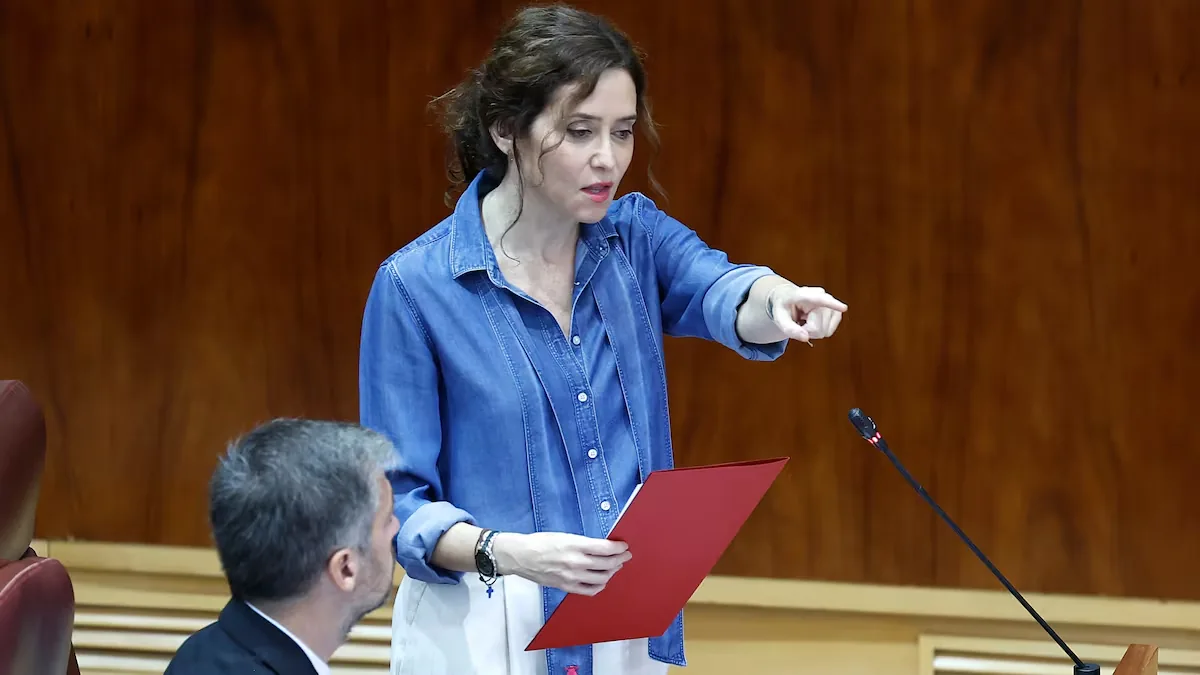
One day after the President of the Community of Madrid, Isabel Díaz Ayuso, relegated all explanations about the penthouse to the Minister of the Presidency, Miguel Ángel García Martín, he wanted to add another angle to the controversy, a reflection that, in his opinion, is being overlooked and about which he has not been asked: “What is not said is that Madrid does not have an official residence for the president, which many regional presidents do have and many ministers do have.”
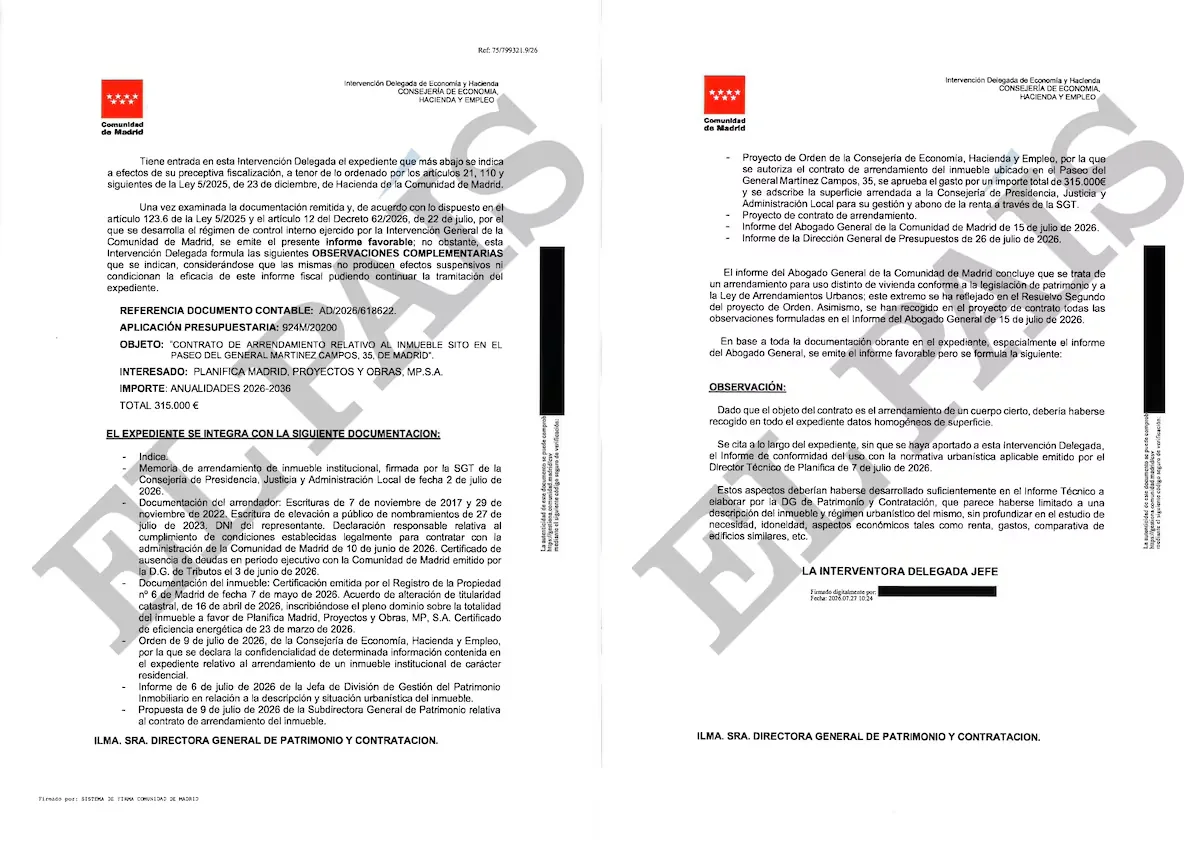
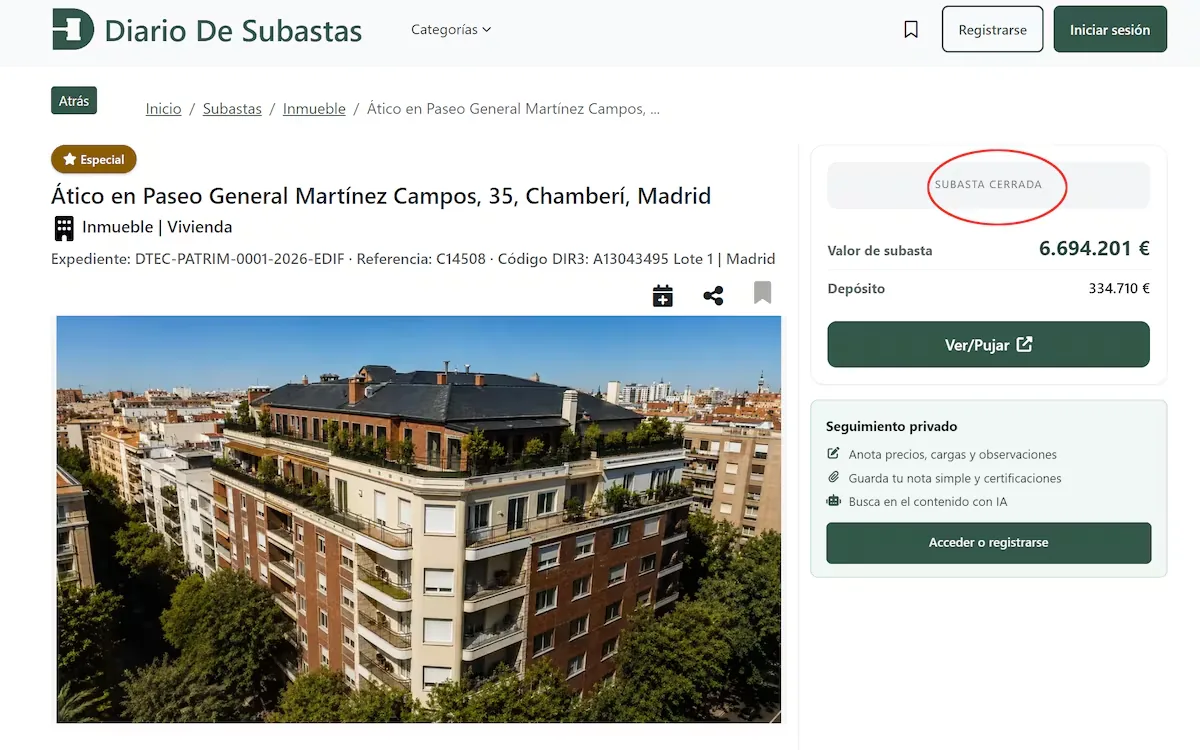
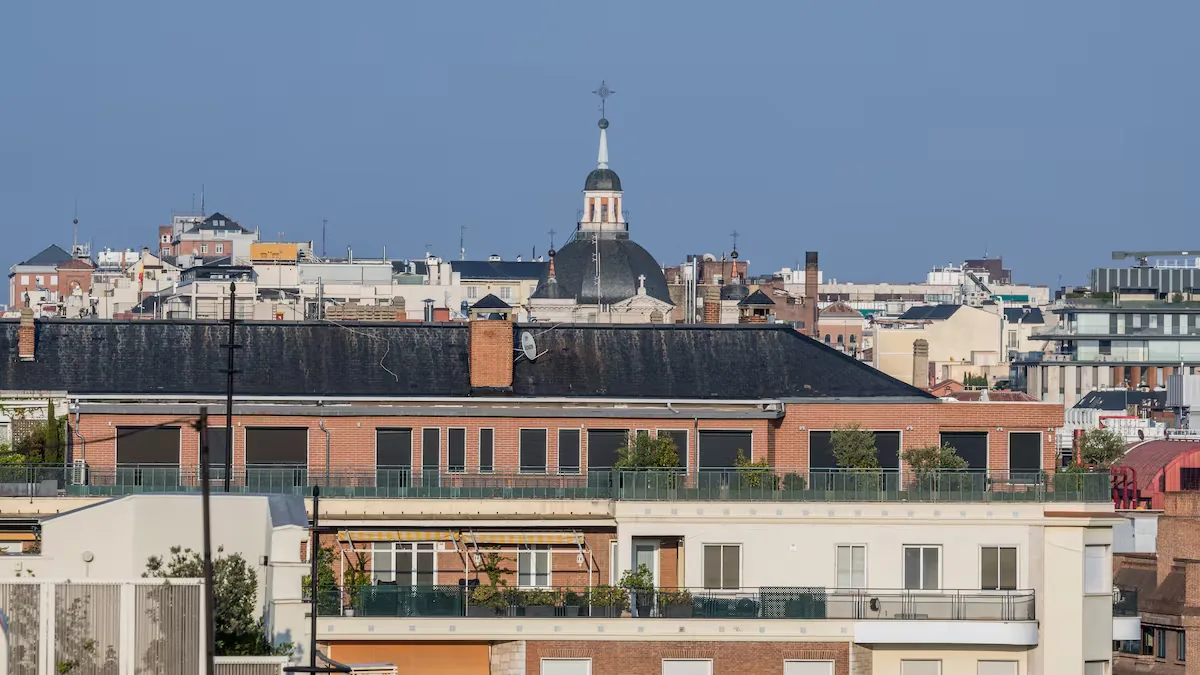
It is true, Madrid has never had an official residence for the regional leader. However, García Martín’s words contradict two facts: first, that the initial explanation from the regional government was that the 485 square meter penthouse would be a temporary office while some works were completed at the presidency headquarters, in Puerta del Sol, something that municipal regulations do not allow; the second is that the property, acquired by the public company Planifica Madrid for 6.3 million euros, could not have been an official residence either, urban planning experts warn.
“An official residence is a figure that exists. It is a service provided by the public administration to its highest representative. It would be owned by the Community of Madrid. It has its own characteristics, like everything related to security. In any case, it could be a non-official residence, a private home,” explains Antonio Giraldo, spokesperson for Urbanism, Environment and Mobility of the PSOE in the Madrid City Council, by phone.
The councilor, who already warned on his social networks that the penthouse could not be used as offices, indicates that Planifica Madrid, dedicated to land management, heritage, and urban projects, “knows how urban planning works” and that, by acquiring a penthouse, they knew that the only use it can have is ordinary housing. “It would be complicated for the City Council to change the use. The regulations of the entire building would have to be modified and all the neighbors would have to agree,” he adds.
Ayuso already spoke of a possible official residence for herself in March 2024, during a plenary session of the Assembly: “Maybe what the Community of Madrid should do is fund an official residence for its president and we would avoid you continuing to make that shameful mockery.” She then recalled that she had been renting for 20 years, five of them as president. García Martín has brought it up again, even though they are going to sell the penthouse.
This is not the first time that the explanations from the Community of Madrid have run into urban planning limitations. The regulations also do not allow offices in the penthouse, which dismantled the first explanations and for which Ayuso’s government has defended that it is selling it: if it cannot be used for offices, they get rid of it. But, under the same conditions, experts point out that the rules also do not allow what García Martín put on the table this Thursday: “An official residence of a president, a minister, or a diplomat is not a normal home. It is an official residence of a public administration to offer that service to its highest representative. And this constitutes a public administration’s institutional use, not a residential use,” Giraldo insists.
Read more Kerolin Nicoli, the most expensive signing in the history of Barcelona women’s team
For his part, Enrique Manzano, spokesperson for Renovation of the Official College of Architects of Madrid (COAM), assures that “a use of these characteristics would be comparable to the institutional use of public administration and that is only allowed up to the first floor, just like offices.” That is, an official residence is understood as an institutional dependency of the Community of Madrid. In buildings like the penthouse’s, offices are only authorized on the ground floor, the first floor, and certain lower dependencies below the ground floor, but not on a floor located on the ninth floor. The same would apply to an official residence, he comments by phone.
José Manuel Calvo, former delegate of Urbanism of the Madrid City Council, differs and does consider that an official residence could be considered as a mainly residential use with complementary activities linked to the institutional position. Because, he recalls, administrations have tools to modify urban planning or even justify certain actions for reasons of general interest. “Clinging to the rule and taking for granted that there is no possible solution seems to me a somewhat weak argument,” he maintains. In any case, he adds, if the regional government opted for any of these routes, it could be interpreted that it is a solution designed afterwards, once the controversy over the purchase of the penthouse became known.
Several autonomous communities have institutional properties for their presidents, although these are not always used as habitual residences. This is the case of the Basque Country, Catalonia, Extremadura, or the Canary Islands, where official residences are available to their leaders. Some are occupied permanently and others are reserved for institutional events or stays linked to the official agenda. Other autonomous communities, such as Murcia, Navarra, Balearic Islands, Cantabria, or La Rioja, lack this type of dependency, just like the Community of Madrid. In the Valencian Community and Andalusia, there is a different formula: aid or compensation to cover the housing of the presidents when they reside far from the regional capital.
For now, the penthouse cannot become an office or anyone’s residence ―Ayuso already said that “it was not her house” and “it was not for her”―, because the regional government is going to get rid of it and intends to allocate the money from this apartment and four other properties on Gran Vía to reconstruction after the fires that have devastated part of the Sierra Oeste of Madrid.