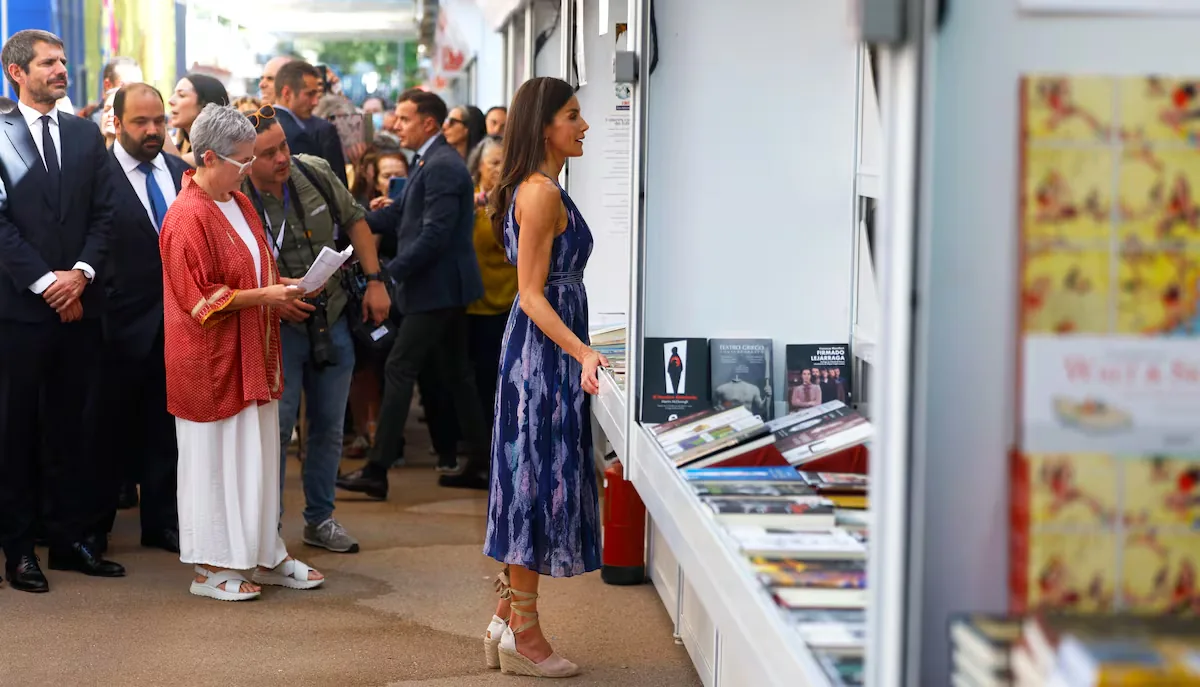








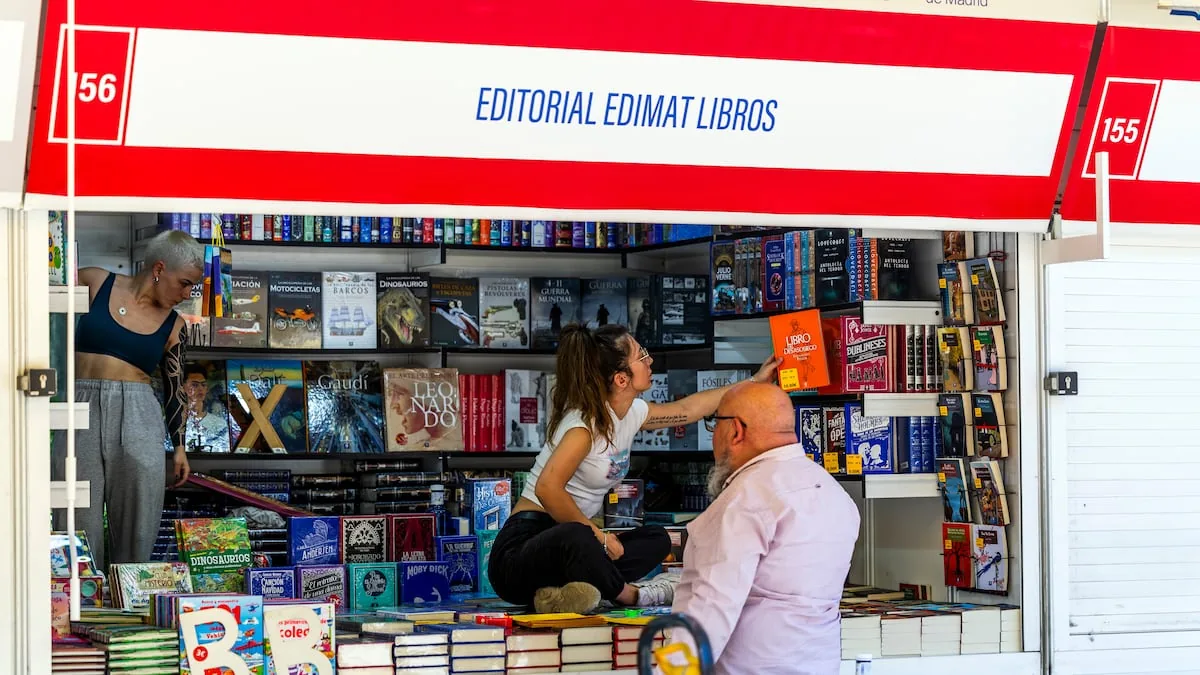
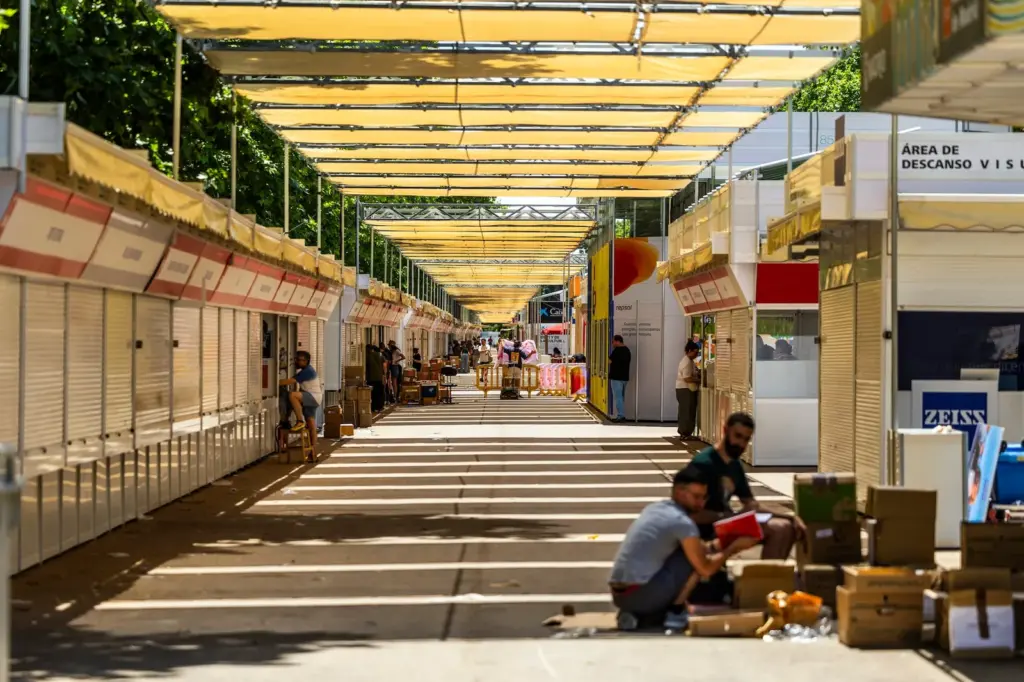
Delivery workers, booksellers, and fair staff were busy this Thursday finalizing preparations for the public opening of the 366 booths and five pavilions along the Paseo de Coches in Retiro Park in Madrid. Just 24 hours before the official inauguration, scheduled for this Friday, of the 85th edition of the Book Fair, which centers humor in literature as the theme of its programming, there was no time for jokes. Among the booths, there was a certain atmosphere of concern and unease about the impact that the visit of Pope Leo XIV will have on this major event in the book world. The 17 days the Fair remains open are an important commercial milestone in the sector, and the weekend that traditionally concentrates the highest number of visits and sales coincides with the large mass of the pontiff just meters from Retiro. All this raises the cost of accommodation and travel for participants coming to the Fair from outside Madrid.
Read more La Oreja de Van Gogh in Madrid: the triumph of Amaia Montero’s fragility
“We have been preparing the fair for two weeks without fully realizing the magnitude of what is coming. We are worried,” Luis Miguel Tigeras, president of the Madrid Booksellers Association, one of the four organizations behind the Fair along with the Madrid Publishers Association, the Federation of National Associations of Edition Distributors, and the Federation of Publishers Guilds of Spain, explained over the phone. “It is not clear how to access the booths on Sunday, June 7: neither the public nor us. Nor how the traffic cuts will affect the daily unloading of books and the number of visitors in the days before.” Siruela editor Ofelia Grande, a spokesperson for the Madrid Book Fair, predicted that the Pope’s visit “will be a monumental chaos in the city” from which booksellers, publishers, distributors, and writers will not be spared. “We are moving between ‘whatever God wills’ or ‘who knows,’” she resignedly said.
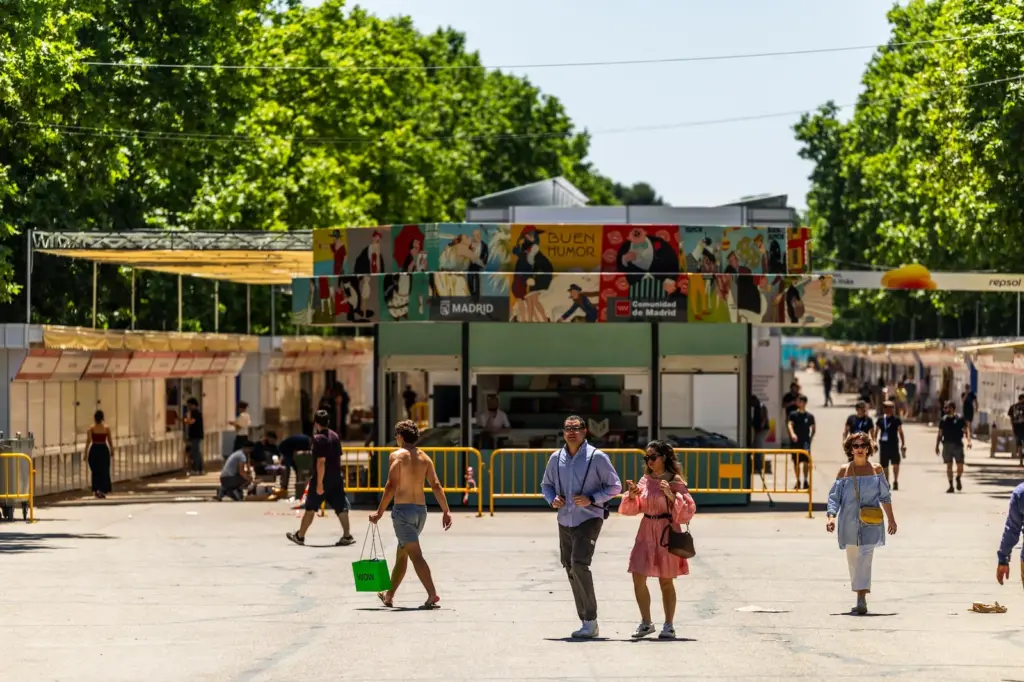
“There is a lot of uncertainty,” agreed Óscar, bookseller at Mary Read, who plans to walk to the booth from La Elipa on the morning of June 7, when the mass at Cibeles will be held, expected to be attended by nearly one and a half million faithful. The square will be blocked several days in advance and several nearby metro stations will close that day. “The support measures for the Fair from the City Council seem like a joke, with the mayor encouraging people to stay home during the week of the Pope’s visit.”
Belén from Vualá, a bookstore specializing in children’s and young adult literature, hoped that the public would arrive at Retiro either before or after, since the Fair continues after the Pope’s visit until June 14. “Traffic cuts may complicate the visit of schoolchildren during the week coming from schools outside the area. We’ll see,” she said.
A few hundred meters from Retiro, Deputy Mayor Inma Sanz said she was in contact with the Fair organizers and added: “We have to tell the truth, the entire city will be affected. We are talking about extraordinary measures, about mobility impacts that will be very significant. Indeed, we will try to minimize those effects, but the whole city will be affected.” The first closures are already underway and will intensify from June 3 and 4. “We will try to act so that it goes as smoothly as possible. We have excellent public transport in Madrid that will continue to operate during those days, except for occasional moments when some metro stations will have to be closed. The connection between Retiro and the city is excellent and it will be accessible.”
Signings
At Mary Read, they have decided not to cancel the signings scheduled for Sunday the 7th, so they will have Aida González Rossi and Alicia Valdés, author of Politics of Discomfort, among other works. The Fair director, Eva Orúe, confirms that none of the 12 events planned for that day have been canceled so far. They still do not know if there will be closed accesses to the park, and for now, they refer exhibitors to the links from the Community of Madrid and the City Council with information about transportation. “Authors are brought by their publishers, so we trust they will guide them well,” she said on the phone. “I hope we pass the test reasonably well.”
The presence of authors at Retiro is one of the big draws of the Fair, where readers have the opportunity to get their books signed. The Planeta group will have nearly 400 authors throughout the 17 days it lasts, and there are almost a thousand signings planned. Approximately 35% come from outside Madrid, even from outside Spain, such as Siri Hudsvedt or David Safier. Anagrama and La Bella Varsovia will have 30 authors at various events and signings, including the British Jonathan Coe, who has four signings and an event scheduled on the day of the mass. Who knows if his encounter with the wave of faithful will end up inspiring a story.
Read more Two injured as a Russian drone hits a residential building in Romania
Costs
The expense for exhibitors to attend the Fair is significant, but the benefits can be as well. In 2025, organizers estimated that there were more than seven and a half million euros in sales excluding the last weekend.
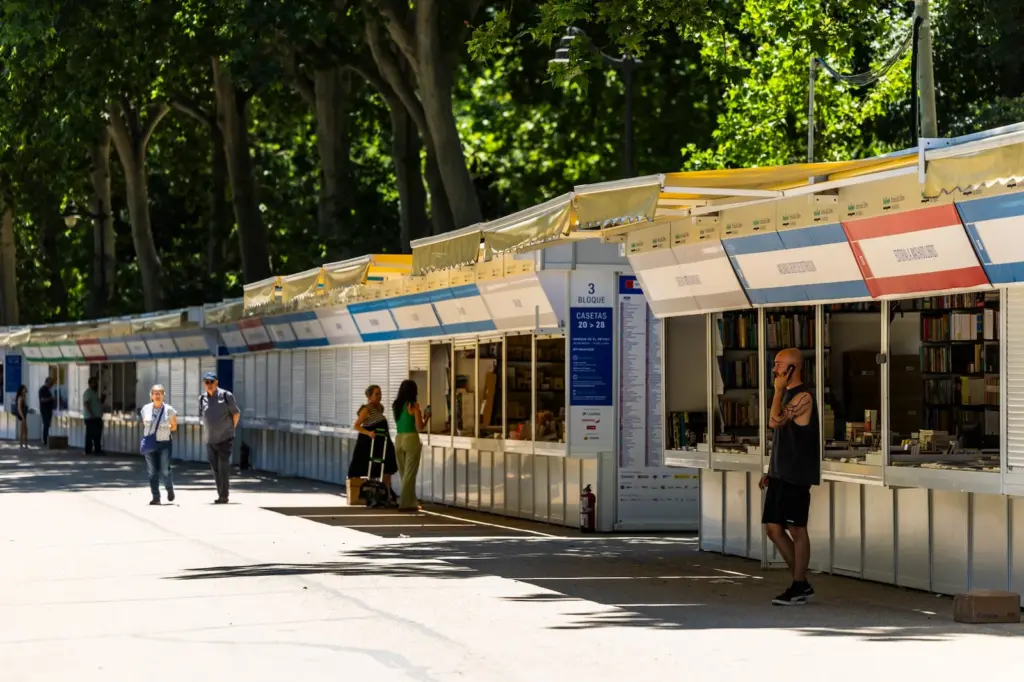
The rental price of the booths differs for booksellers, all of whom are from Madrid, and publishers. It is slightly lower for bookstores (118 booths this year) that pay distributors, while the booths of the publishing houses (220 this time) do not. Prices are also higher for booths of large groups, and even more so for official organizations. The price also varies depending on the size of the booth and whether it is located on a corner or in the central area — this is a common space for several independent publishers. A three-meter booth for a bookstore costs around 1,500 euros and a four-meter one a little more than 1,900 euros; for publishers, the small booth costs a little more than 2,200 euros and the four-meter one 3,000 euros. To this must be added personnel and transportation costs, something that represents a very significant effort for smaller players. “It is an investment in every sense of the word. You spend, but it pays off, it is very profitable,” Lucas Villavechia from the Gatopardo label in Barcelona explained over the phone, estimating it can represent around 5% of his publisher’s annual turnover.
For bookstores, the business is not as profitable because they keep no more than 25% of the billed amount, but they can access a subsidy from the Community of Madrid that helps cover expenses. “It is a very important showcase even if it is not always really profitable,” explained Verónica García from the Machado distributor.
This year, concerns derived from the papal chaos in the city are joined by those caused by the weather: alerts for thunderstorms, high temperatures that can cause tree falls, or torrential rains have forced closures on some mornings and afternoons in previous editions. The relaxation of security protocols due to weather alerts in Madrid parks, planned for this year, will not take effect until after the Fair. In 2026, attention will have to be paid to announcements made in this regard. The Fair’s organization has requested that there be no false closures as has happened on other occasions when, after a couple of hours, the park reopens, but many exhibitors do not return.
The mayor encouraged last week that worshippers attending the mass on Sunday the 7th then go to the booths at Retiro. Julia and Esther from Paulinas, the only bookstore specializing in religion with a booth at Retiro since 1997, trust in this. They believe that the dozen new titles about Leo XIV will be their best sellers.
It remains to be seen if the busy and noisy Madrid public will not be intimidated and will come to Retiro for books and signings. That is what everyone cautiously hopes. “It is a key cultural event, emblematic of Madrid. This year is a big question mark, an unknown,” reflected Raquel Garzón and Daniel Ulanovsky from Olavide Bar de Libros. We will see if “the Fair,” as Ofelia Grande said, “resists the elements and the non-elements.”
Read more Investigative journalist or paid ‘plumber’: the contradictions of Leire Díez