








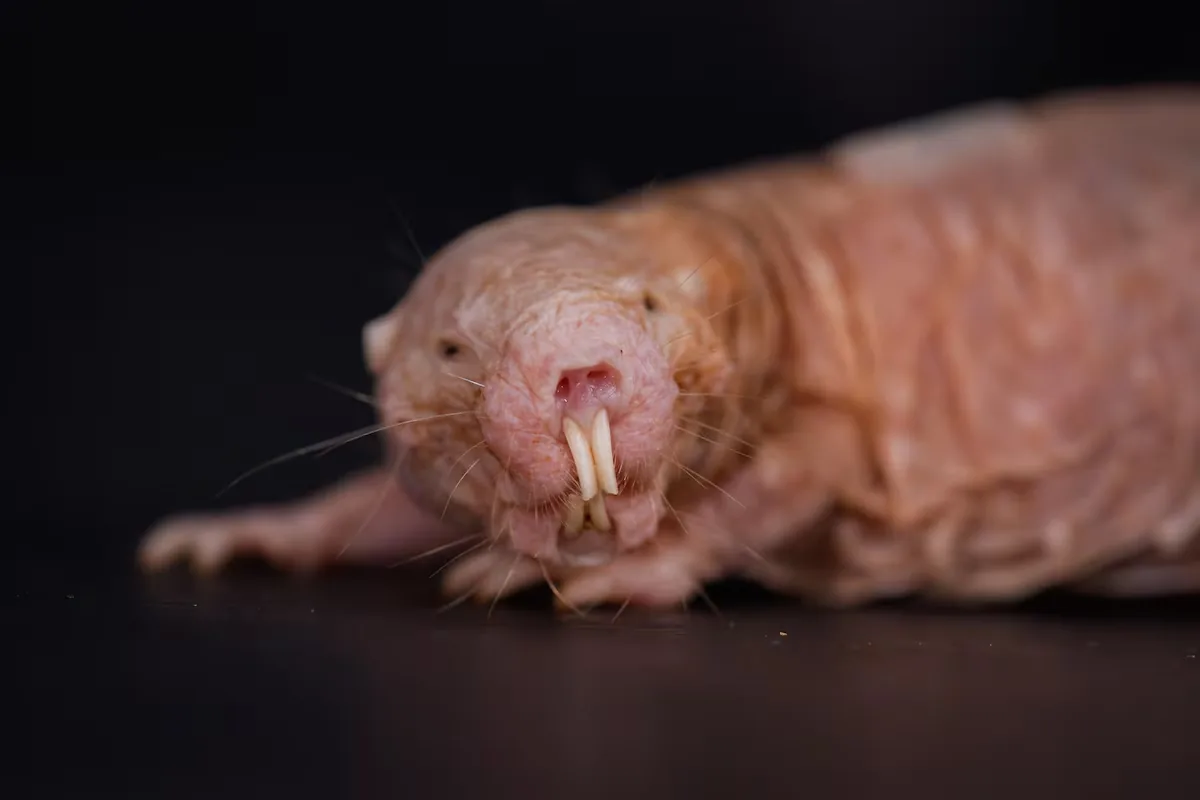
In its underground domain, the queen of the naked mole-rats smells of power. How this mammal managed to rule colonies of up to a hundred individuals with hardly any use of force was a mystery that biology experts tried to answer for years. An international study, published this Wednesday in the journal Nature, provides a solution for the first time. According to it, the secret of her authority lies in a molecule that emanates from her body and spreads throughout the colony. That chemical signal keeps the reproduction of subordinates suppressed.
Read more The EU excludes fighting-age Ukrainians from the refugee protection system
In these underground societies of East Africa, only the leader reproduces. The rest of the females remain infertile, sometimes for their entire lives. When the queen dies, the colony goes into crisis and a violent struggle breaks out to take her place.
But the mechanism that sustained that reign remained a mystery, until today. The team has identified a molecule, isopropyl myristate (IPM), that naked mole-rat queens produce in large quantities, and that is barely present in the rest of the colony members. This compound, which is widely used in cosmetics, activates olfactory circuits in the brains of the other females, raises prolactin, reduces progesterone, and blocks their reproductive capacity. When that smell disappears after the queen’s death, so does the social order. The hierarchy breaks down and the power struggle begins.
Gary Lewin, one of the study’s authors, comments that they already suspected that her dominance was not due to a physical factor like strength or size. “We knew her presence was necessary to maintain reproductive suppression, but we suspected there was more than just a dominant position,” explains the researcher from the Max Delbrück Center for Molecular Medicine of the Helmholtz Association, in Berlin, Germany.
The hunch, he points out, came from one of their characteristics. “Naked mole-rats have the largest repertoire of olfactory receptors of all rodents. They are extremely olfactory animals,” says Lewin, who along with his team has dedicated the last 15 years to unraveling the extraordinary biology of these animals.
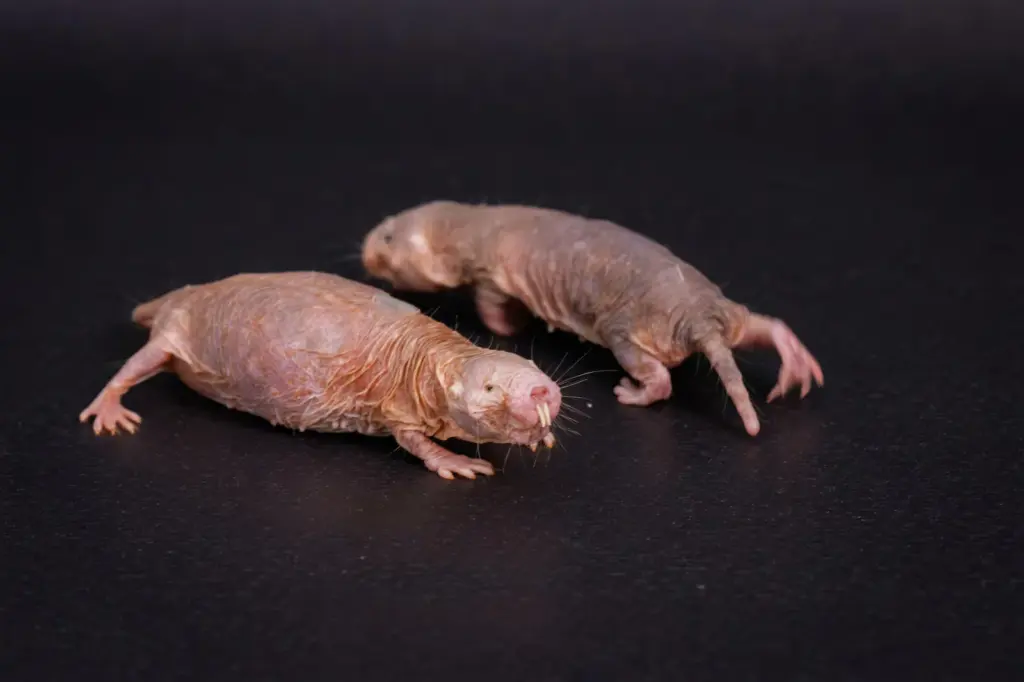
The naked mole-rat (Heterocephalus glaber) is an evolutionary anomaly. They live underground and are extraordinarily long-lived compared to other rodents. These animals can live up to 30 or even 40 years, 10 times longer than a mouse.
Behind their exceptional and peculiar appearance lies a great capacity for resistance. They barely feel pain, can survive with very little oxygen, and do not develop cancer. But, moreover, the way they relate to each other is astonishing. They organize their colonies very similarly to eusocial insects, such as ants or bees.
For Susana Pilar Gaytán, a neurobiologist who did not participate in the research, identifying the function that IPM plays in the colony is a “surprising” finding. “It is the first time we have found it in an absolutely eusocial mammal, which behaves as we had already seen occurring in ants or termites,” she says. Like these, only the queen and one or several reproductive males have offspring. The other individuals dig tunnels, search for food, care for the young, and defend the colony.
How they discovered the queen’s perfume
The researchers analyzed 771 odor samples from 351 animals belonging to different colonies. Among the more than 200 chemical compounds detected, isopropyl myristate systematically appeared in the queens but was barely detected in the rest.
The concentration of the compound reached its maximum during ovulation and decreased during gestation and lactation. “It was produced mainly around the genitals, so there was clearly a component related to reproduction,” explains physiologist Lewin.
They had to verify that this molecule was not just a chemical marker and that it had a biological function. Experiments showed that IPM activated specific olfactory regions of the brain. “We saw intense activation of the olfactory cortex,” explains the researcher. That region is connected to the hypothalamus, where reproductive hormones are regulated.
“When animals are exposed to isopropyl myristate, they show very high levels of prolactin,” says the author. This hormone increases during lactation and naturally inhibits reproduction during this period.
At the same time, progesterone levels decrease. “The animal smells the molecule and changes its hormonal state. Basically, it stops being able to reproduce,” emphasizes Lewin.
To make sure the hypothesis was correct, explains Susana Gaytán, they had to remove the source of the molecule and see what happened. “They took the ester and applied it to animals already without a queen. When the product appears, there is no aggression. They behave as if the queen were present,” points out the associate professor in the Department of Physiology at the University of Seville.
The smell over physical dominance
It was known that the queen constantly patrols the network of tunnels, which in nature can extend several kilometers. Until now, it was usually believed that these movements served to push, harass, or physically reaffirm her authority over the others. The study proposes another explanation. “We believe that she actually patrols the colony to spread her scent,” says Lewin.
The molecule is volatile enough to diffuse through the air, but it does not disappear immediately. “If you deposit it somewhere, it remains present for about 24 hours,” explains the researcher.
For Lewin, the similarity with other animals like ants is no coincidence. Naked mole-rats live underground searching for extremely scarce tubers. No individual could survive alone. “They have to cooperate to build kilometers of tunnels and share food when they find it,” he points out.
“We believe that social cohesion is regulated by the queen,” says the physiologist. An idea shared by the expert external to the study. “Animals that live underground have virtually residual visual stimulus,” explains Montero. “All the other signals they can perceive are much more important.”
IPM is not only present in naked mole-rats. The team also detected it in other social species of mole-rats where only a few females can reproduce. It even appears in mammals that are very evolutionarily distant. “It has also been found in women during lactation,” emphasizes the study’s author. However, its exact function in humans is unknown.
The experiments carried out by the team indicate that people can barely detect it by smell. “That does not necessarily mean it does not produce some subconscious effect, but for now it is only speculation,” says the study’s author.
The next step will be to find the olfactory receptor capable of recognizing this molecule. “If we identify it, we can follow the trail of the neurons involved. We would like to see how they communicate with other brain regions and check if this same mechanism exists in other species and fulfills similar functions,” points out Lewin. For now, the only certainty, the author notes, is that it is a molecule capable of “drastically modifying behavior.”
Read more Morocco releases journalist Ali Lmrabet after holding him for three days