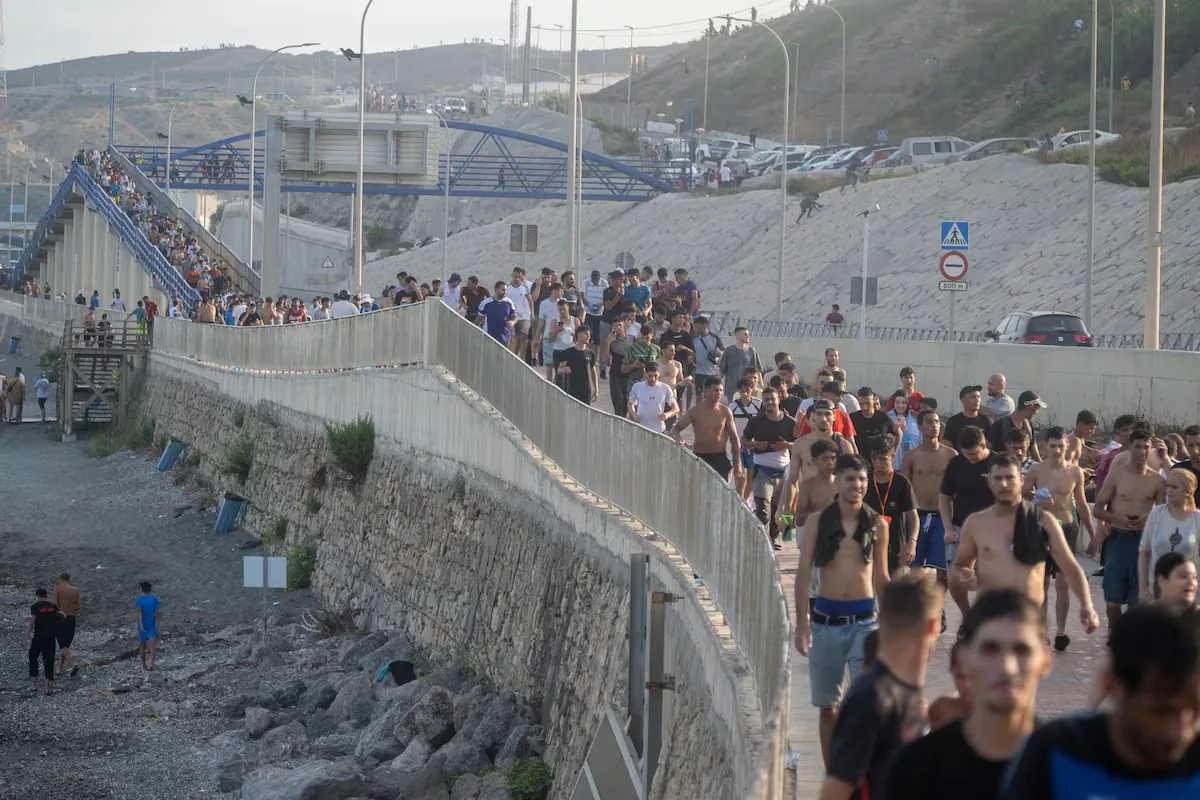
The report that the National Immigration and Borders Center (CENIF) has submitted to the National Court analyzes images and social media messages and speaks of “permissiveness” by the Moroccan security forces. In the report, accessed by EL PAÍS, the Police conclude that agents from Rabat participated in the massive entry of migrants into Ceuta on July 30 and 31 “guiding the crossing through the water.” The document includes a photographic compilation of alleged uniformed Moroccan agents and emphasizes that it was not “something accidental,” but that “compared to other previous entry processes” in 2021 and 2024, on this occasion the “migratory purpose” operated only as a “formal cover” to “direct a massive flow of people to Ceuta.”
Read more The couples of ‘La isla de las tentaciones 11’ include a Bourbon
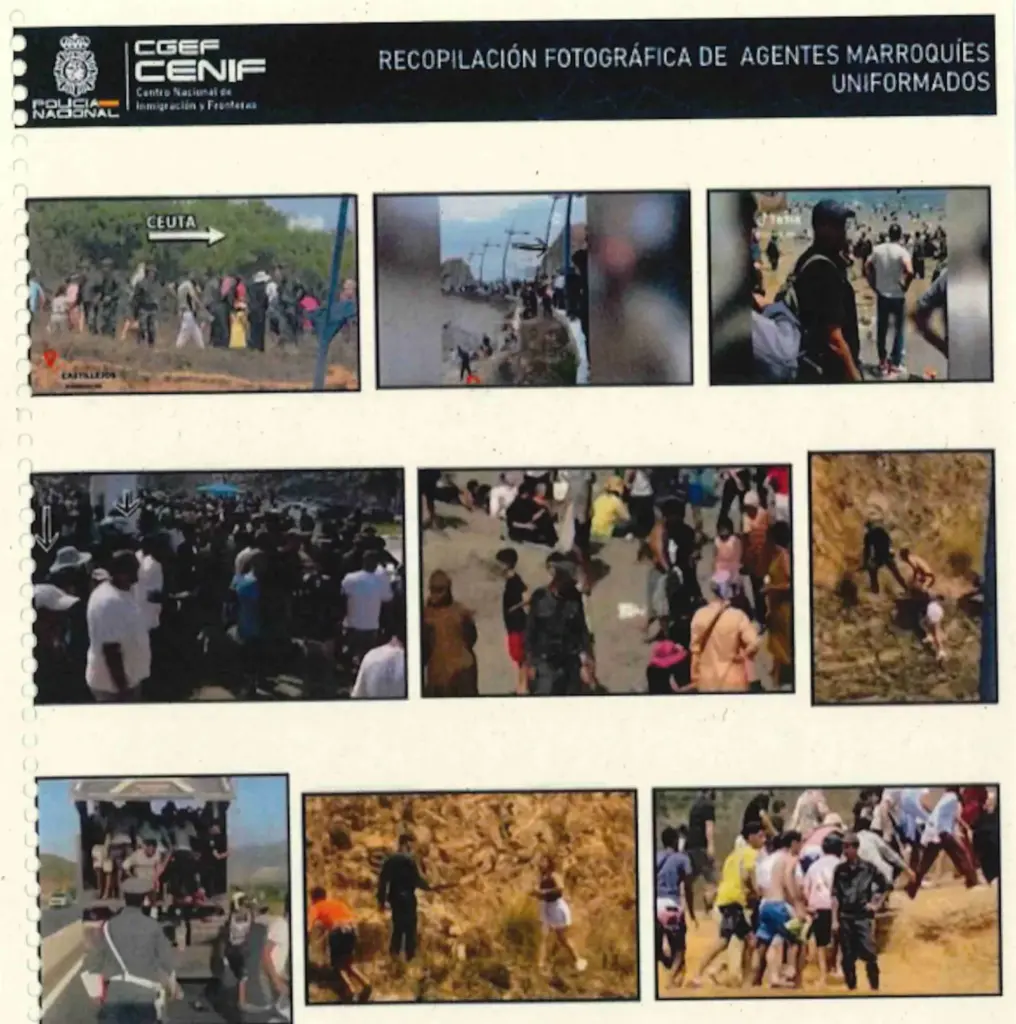
The 55-page report explains that the objective was “to eliminate the response capacity on the part of Spain.” Minister Fernando Grande-Marlaska had demanded from the Director General of the Police, Francisco Pardo Piqueras, through a letter at dawn, that he inform him if the agents were really handling that information. Pardo Piqueras replied to the Interior Minister that the report does not attribute to Morocco “the planning or execution” of that migratory crisis.
The Police do reflect in the report suspicions that there were elements on July 30 and 31 that showed an “active guiding” of the mass towards crossing points by people identified as members of the Moroccan gendarmerie, to which is added the scarce presence of the Moroccan Security Forces during those days at the border, in contrast to August 15 when “the country’s security structure” controlled the border with Ceuta for more than 48 hours and prevented another rush.
The Immigration unit details how there was a “relatively orderly and large volume exit” and subsequent effects of “destabilization in Spain’s response capacity system” that still projects. To provoke that exit, they speak of the importance of social networks and reflect messages in the days before on Facebook, Instagram, and TikTok, although without specifying authorship: “July 30,” “share this post: on July 30, 2026 we are going to launch an attack on Ceuta,” “it’s going to be the best assault,” “guys, we are grouping to leave… we want to advance in groups of 10.”
Read more Feijóo blames Morocco for the Ceuta crisis and attacks Sánchez: “He knew and covered it up”
Additionally, they add that on the very day of the massive entry, communications of the type “The door was opened this morning,” “tomorrow, God willing, there will be an assault again,” “brothers, come down, the customs has opened” “are generalized simultaneously on all applications.” According to this report, this dissemination on social networks is not done “spontaneously and unstructured, but responds to a pre-established pattern to optimize the effect of the posts.” And, for this, they explain, the content of the Supreme Court ruling of June 29 that limited hot returns in swimming entries was manipulated.
No criminal structure
The agents point out that the “undeniable fact” that the profile of the majority of migrants did not seek to remain in Spanish territory is another element to conclude that the migratory purpose was only a “cover.” “Only about 10% of the total estimated number of those who enter illegally remain,” they reflect.
The fact that so many people concentrated at the same time and in the same place is another sign for the Police that there was “a high level of specialization of tasks or functions” that are not within the reach of “any known criminal structure” in that area. They indicate that, first, they collapsed the border management system (diverting response capacities to rescue activities) and, second, eliminated the “response capacity on the part of Spain.” Something that required, they assure, “monitoring on the ground” and it is at this point that they speak of the “detection of individuals whose profile, attitudes, and actions do not correspond to those of the mass of people entering,” that is, possible Moroccan agents.