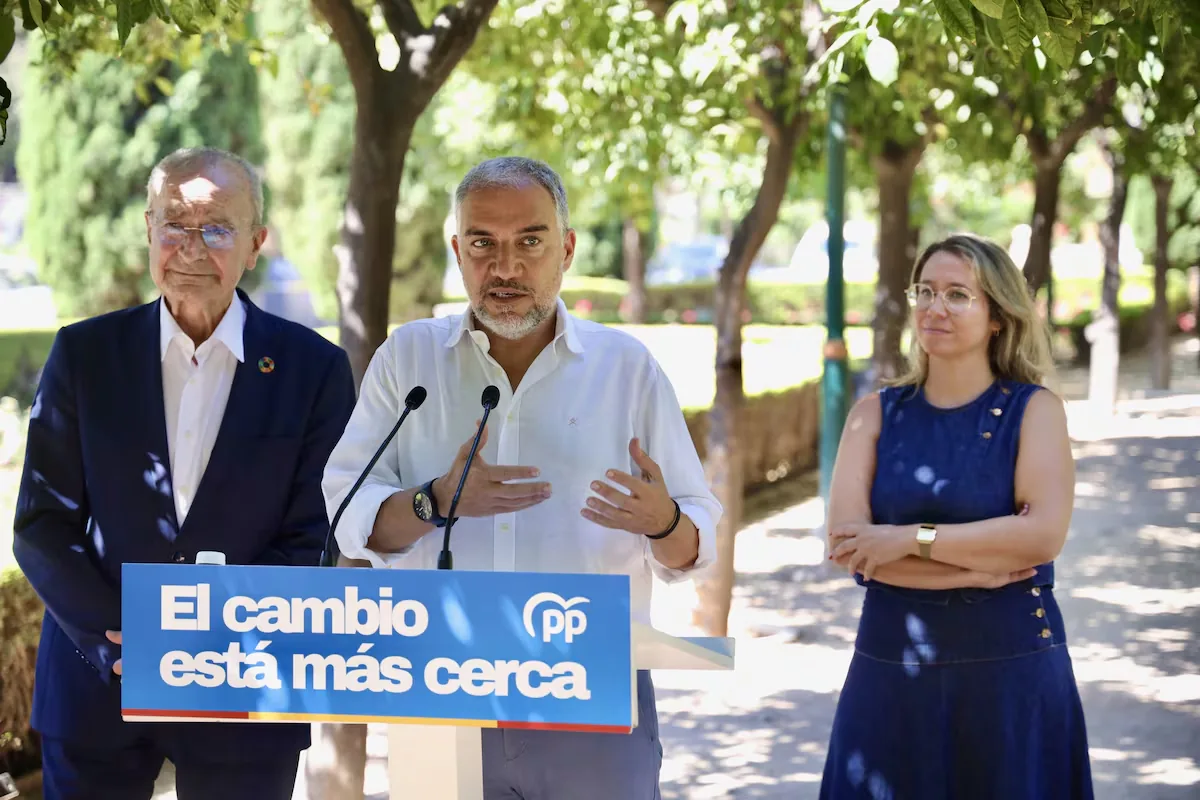
The question hangs over every press conference held by a Popular Party leader since last Thursday, when 72,000 people entered Ceuta. Will the communities, mostly governed by the PP, host the minors who arrived that day? And what about those that share the government with Vox after having signed agreements in which they precisely oppose their guardianship? At the start of the crisis, Alberto Núñez Feijóo dodged the issue when he appeared from the autonomous city. “You know our immigration plan,” the PP leader responded evasively on Saturday. Five days later, Génova acknowledges that its autonomous communities will rehouse the foreign children and minors, even though the barons protest and oppose with all kinds of obstacles, considering the mandatory distribution unfair. “The Popular Party always complies with the law; on this occasion, too. We and our governments,” said the Deputy Secretary of Autonomous and Municipal Policy, Elías Bendodo, this Thursday. The rule requires giving them shelter when another territory exceeds its capacity to care for them by three times, as is the case with Ceuta. And “complying with the law” means accepting that distribution.
Read more The impact of the drought on the Danube River from a drone’s perspective
In Extremadura, Aragón, Castilla y León, and Andalusia, the four pacts signed by PP and Vox commit the two parties not to accept more unaccompanied minors. But the Ceuta avalanche has tested these alliances in the face of an unprecedented humanitarian crisis. “The signed documents state that they will comply with the law on immigration,” Bendodo recalled. “We are going to comply with the law, but it is a problem that the Government has to fix because it has generated it directly or indirectly,” added the PP deputy secretary, who again attacked Pedro Sánchez, whom they hold responsible for the arrival of thousands of people in one day to the autonomous city. “The president is lying in the hammock and wants the Popular Party communities to solve the problem,” he asserted.
Thus, sources from the various territories governed by the PP indicate that they will oppose the immigration law — reformed last March by royal decree to incorporate mandatory distribution — with all kinds of obstacles, such as challenging it in the courts, but they will not refuse to comply with the law. In fact, since last August the numerical distribution of places by autonomous communities was established, more than 1,750 children and young people have been transferred from the Canary Islands, Ceuta, and Melilla to the Peninsula and Balearic Islands. Transfers that were taking place at least until mid-July, even after the PP and Vox pacts. On the far-right side, the secretary general of their parliamentary group has maintained that “Spain has an international obligation to return minors to their parents,” said José María Figaredo on Cuatro, where he ruled out breaking coalitions with the PP this time.
Against the resistance of his party colleagues, the president of Melilla, the Popular Juan José Imbroda, last night asked the other autonomous barons for a “gesture of solidarity” in hosting minors. “I understand my PP colleagues, but right now we have to make that gesture of solidarity and there is a royal decree to comply with, whether you like it or not. We are going to put our foot down and start fixing this from the origin. We cannot bring all the minors from Morocco,” Imbroda said this Wednesday on Cadena SER. 140 more minors entered Melilla coinciding with the massive arrival in Ceuta, but the Melilla leader emphasized that first the situation in the other autonomous city must be alleviated.
Read more Vox and Sumar agree in calling for Morocco to be excluded from organizing the 2030 World Cup
Appearances in Congress
In parallel, the Popular Party has requested this Thursday the urgent appearance of the Minister of the Interior, Fernando Grande-Marlaska; of Defense, Margarita Robles; of Foreign Affairs, José Manuel Albares; and of Justice and Relations with the Cortes, Félix Bolaños, in Congress in different committees due to the Ceuta crisis. For this, since it is an inactive period because it is August, the Popular Party asks the Board to convene the Permanent Deputation to qualify these requests. Something unlikely, considering that the PSOE and Sumar have the majority in the governing body of the lower house.
The requests for appearances add to the one already formalized last week by the Popular Party, which demands Sánchez give explanations in an extraordinary plenary session in Congress. The PSOE has also ignored this request. “It is outrageous that the president, after 72,000 people have violated our borders, is lounging on the beach,” Bendodo criticized in this regard. “If you are the president of the Government and you have an avalanche of 72,000 people, you cannot go on vacation and lie in the hammock,” he insisted. The one who will most likely be questioned in parliament is the Minister of Defense. The PP has requested Robles’ appearance in the Senate, where they have an absolute majority, to be questioned this August.