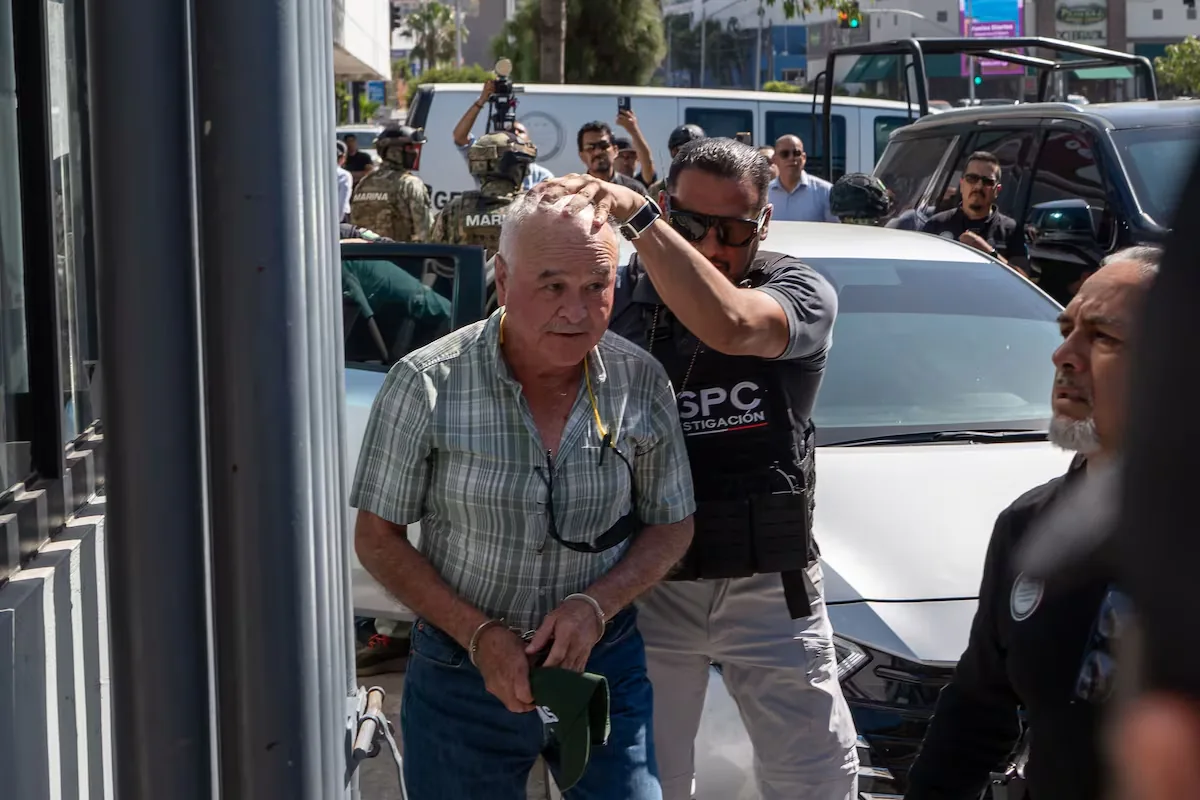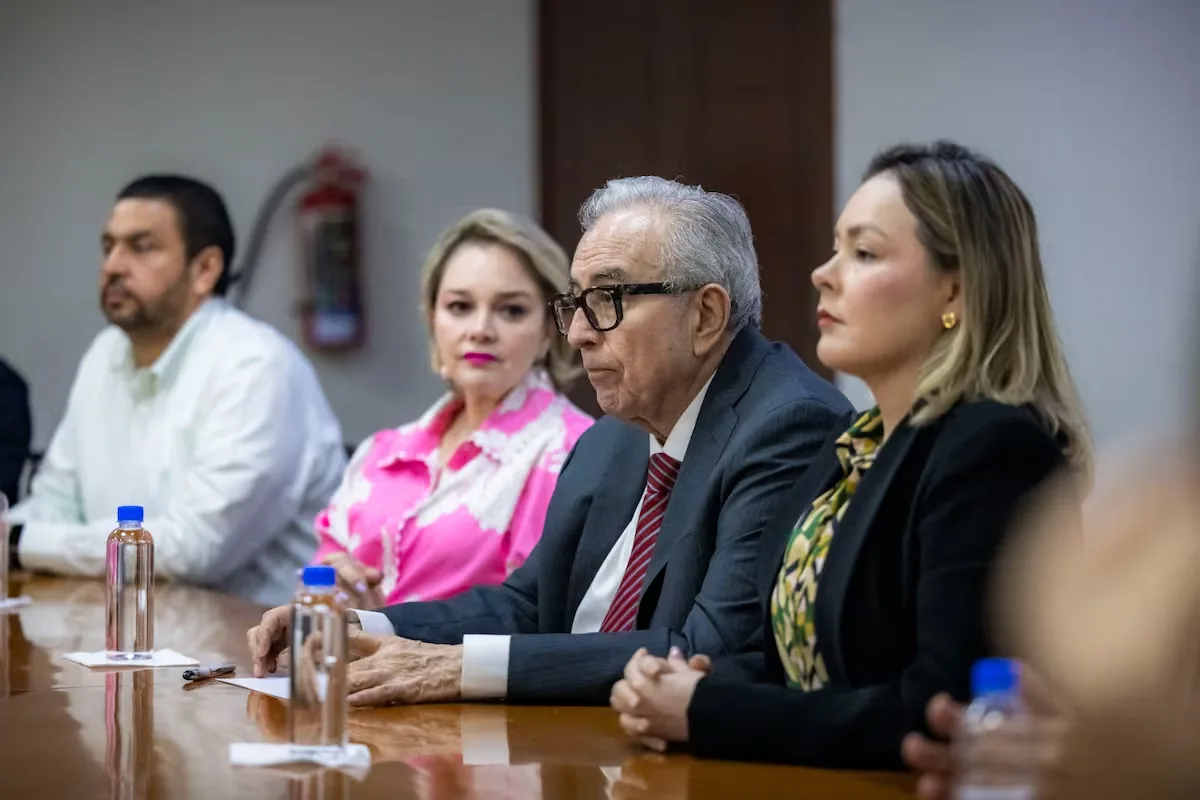
Almost a year after the biggest corruption case so far in this administration, Claudia Sheinbaum’s government had pulled several levers with the aim of scoring a point and sending a signal against impunity. With the express transfer from Argentina to Mexican soil of Rear Admiral Fernando Farías Laguna, it already had in its hands early this Friday the two alleged leaders of the mega fuel theft scheme embedded in the high ranks of the Navy. But an unexpected move crossed the path. Mid-morning, Rubén Rocha Moya announced his return as governor of Sinaloa after just three and a half months temporarily away from his post due to accusations from the U.S. Justice Department for drug trafficking. Rocha’s return, who assures in his announcement that the Prosecutor’s Office has found nothing against him during its investigation, has overshadowed the strong signal the Government intended to send with the fuel theft case, reopening a cascade of unknowns and contradictory messages.
Read more Families and rescuers question decisions of local authorities after the earthquake in Colombia
Sheinbaum’s Executive had dedicated all its efforts to the Navy and fuel theft case, aware of the explosive potential, both for touching a body considered until now untouchable and empowered during the first Morena administration, and for the shadow that the institutional corruption scheme even reaches high ranks of the ruling party. It was expected that the president would take advantage of her morning conference this Friday to capitalize on Farías Laguna’s transfer. The matter has been on the public agenda in recent days due to the tug of war over deadlines. Political pressure managed to advance his arrival, avoiding the cumbersome extradition process, a card the navy’s defense clung to, detained on Argentine soil in April.
The president had been pushing the discourse almost to the extreme these days: “Fuel theft is practically over. Thanks to the interventions we have been making at customs and the arrests that were made.” So far there have been 14 arrests, including six high-ranking navy officers, three businessmen, and five customs officials. However, faced with the capture of greater weight at the moment, the president was absent from her morning conference citing a “severe flu.”
A few hours later came Rocha’s announcement, which was in turn responded to by a statement from the Ministry of the Interior clarifying and, to some extent, contradicting the words of the governor of Sinaloa. The department assures that the return of the governor corresponds to a “personal determination.” And that, moreover, the FGR investigation against Rocha and eight other high officials is still ongoing. As the day progressed, both the party leadership, key figures, and even a joint statement from Morena governors distanced themselves from Rocha’s decision and closed ranks with the president. Amid an atmosphere of internal tension, the message directed at the Sinaloa governor is to ask for “maturity and responsibility.”
One year of the fuel theft scheme
The fuel smuggling case broke out in September last summer, due to a leak to the press, but the Government announced it had been tracking the network for at least two years, which represents a hole in public coffers of at least 150 million dollars. The blow was very hard for the Navy, to whom former president Andrés Manuel López Obrador entrusted the management of customs. The military body, the best valued both outside and inside the country, had until now an aura of incorruptibility. Sheinbaum’s Government response was a swift move seeking to take the initiative amid the scandal. Besides announcing it had been tracking the trail for some time, it stated that the first warning to pull the thread came precisely from the then still Secretary of the Navy, Rafael Ojeda Durán.
The highest-ranking official of the Mexican Navy during the previous administration is in any case in a delicate position. Not only because those he accused before the prosecutor’s office, according to the official version, were two of his relatives. The Farías Laguna brothers are political nephews of Ojeda. Both held high positions in the military body after a meteoric rise during the years their uncle was head of the secretariat. The shadow over Ojeda has been widening as the investigation progressed. Less than a month ago, the Attorney General’s Office (FGR) summoned seven navy officers to testify before its specialized organized crime division in relation to the fuel theft case. One of those summoned, according to EL PAÍS sources close to the investigation, is the same witness who declared in February this year that one of its leaders asked the then Secretary of the Navy for help to authorize a ship with smuggled fuel.
Read more The broken world of a three-year-old child after the immigration detention of his dad
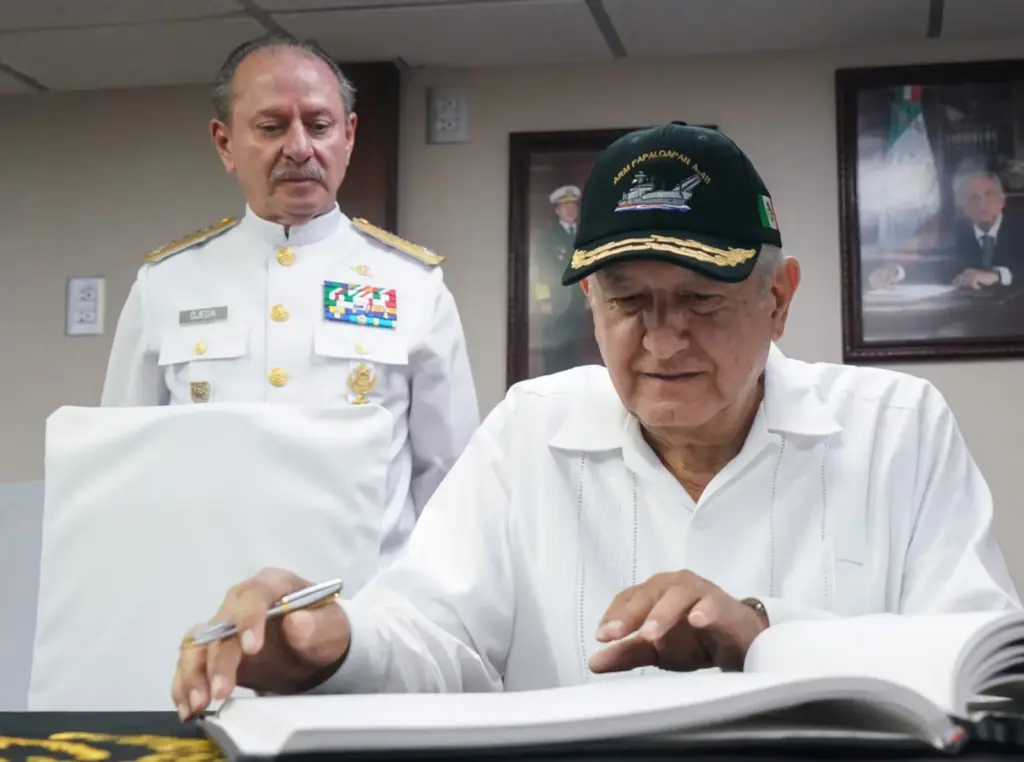
Weeks earlier, another testimony had also cited Ojeda as a facilitator of operations for the entry of a smuggling ship. The name of the former secretary is not the only one appearing in the testimonies accessed by this newspaper. At the beginning of 2025, coinciding with the seizure of another ship in Tampico, Tamaulipas, another witness also places Andrés Manuel López Beltrán on the scene. López Obrador’s son has recently been in the spotlight after announcing the cancellation of his U.S. visa himself. The ruling party’s response to defend its former Organization Secretary has been to use the accusation of interference campaign as a shield, a strategy open for months in the face of the U.S. political and judicial offensive against narco-politics.
López Beltrán’s controversy has fueled the opposition. Both PAN and PRI demanded that the FGR start an investigation. The noise was such that the prosecutor’s office came out to deny that there was any open file against López. The prosecutor’s statement denied having “protected witnesses who have made allegations to carry out an investigation against the son of a former president,” explicitly citing “hydrocarbon-related crimes.”
The fuel theft scandals, a monster with a thousand arms and several years of life, are one of the cards the opposition is exploiting most to wear down the Government. Its epicenter is the border state of Tamaulipas, historically governed by the PRI and PAN, which turned Morena in 2021. The shadow of corruption crosses several governors and also crosses the border, adding another ingredient to the explosive cocktail. In its border cities with Texas is where the Financial Crimes Control Network has detected most of the hundreds of suspicious activities worth 7 billion dollars during the last year, involving businessmen, institutions, and organized crime.
There is a major case with a foot on each side of the border. It is the trial against the Jensen family in the United States, which has shed light on the criminal scheme that allowed smuggling thousands of shipments of crude stolen from Pemex to their country, with the collaboration of U.S. security agencies. The same ones that have also appeared in the Farías Laguna case. According to his lawyer, “members of the FBI and the U.S. government requested a meeting with my client.” The defender added he did not know “what he might have talked about with the federal agents,” shortly before his transfer to Mexican territory.
Read more The ranch in California of the new CJNG boss, which the Trump Government seeks to seize