









Eva Olsson barely drags her shopping cart up a steep street in the Swedish city of Eskilstuna. At 84 years old, life weighs heavily on her. “I have no one left. I feel like a stranger in the place I arrived at when I was young,” she laments. “I went to the supermarket and only ran into black people. I have nothing against immigrants, but I do have a problem with them concentrating in certain areas and showing no interest in integrating. They have stolen our neighborhood,” she insists. For almost six decades, she always voted for the Social Democratic Party, but she and her husband — who passed away a few months ago — chose the far-right Sweden Democrats in 2022, and she is clear that she will vote for them again next Sunday. “They are the only ones capable of solving this,” she concludes.
Read more Inside the White House on 9/11: oral history of the «darkest day» in recent United States history
Olsson lives in Fröslunda, a suburb of low-rise residential blocks built in the 1950s. She moved there with her husband when he started working at a steel plant. “All the friends I had here left years ago. If I weren’t half dead, I would pack my bags too,” the elderly woman says. Of the barely 4,000 inhabitants of Fröslunda, almost three-quarters are of foreign origin, mostly Somalis and Eritreans.
Fröslunda is one of Sweden’s 65 vulnerable areas, an official category used by the police to identify neighborhoods marked by socioeconomic precariousness and the influence of criminal networks. The unemployment rate exceeds 25%, and more than half of its inhabitants live at risk of poverty. The population has fallen by 12% in the last five years. Additionally, several shootings have worsened the feeling of insecurity and abandonment.
The deterioration of Fröslunda is the sharpest expression of the decline of Eskilstuna (106,000 inhabitants), a former steel powerhouse that reached its peak in the late sixties when thousands of Finns arrived to work in its factories. The industrial crisis of the mid-seventies caused closures and layoffs, leaving a wound the city has never fully healed. Today there are semi-deserted streets, shops closed for years, and an industrial fabric unable to generate the jobs of the past.
Eskilstuna is the only Swedish municipality with more than 100,000 inhabitants that is losing population, as well as the second city with the highest unemployment rate, only surpassed by Malmö. The industrial decline has also weakened its historic Social Democratic hegemony: in the 1968 parliamentary elections, the party nearly reached 60% of the votes in the locality. Although it remains the leading force, in the 2022 elections the Sweden Democrats obtained 24.2%, their best result among the country’s main cities.
From the Social Democrats’ polling station in the city center, former national MP Lars Linder admits that his party has not been able to offer solutions to workers who have been unemployed for years. While handing out program leaflets — printed in Swedish, Finnish, Arabic, and Somali — he points out that the Sweden Democrats sell them a magic formula: “You are unemployed because an immigrant took your job, and we are going to fix that.”
This vote transfer extends across much of the Nordic country’s working class. A survey published in May by the national statistics institute shows that 36% of members of Sweden’s main trade union confederation sympathize with the Social Democrats, compared to 30% who lean toward the Sweden Democrats. “The working class has been underrepresented by all political forces,” explains Olle Folke, professor of Political Science at Uppsala University. “The Social Democratic Party has the most representatives of working-class origin in absolute terms, but the result is equally poor when compared to the real weight of the working class in its electorate. The Sweden Democrats, on the other hand, have the highest proportion of workers among their officials,” he adds.
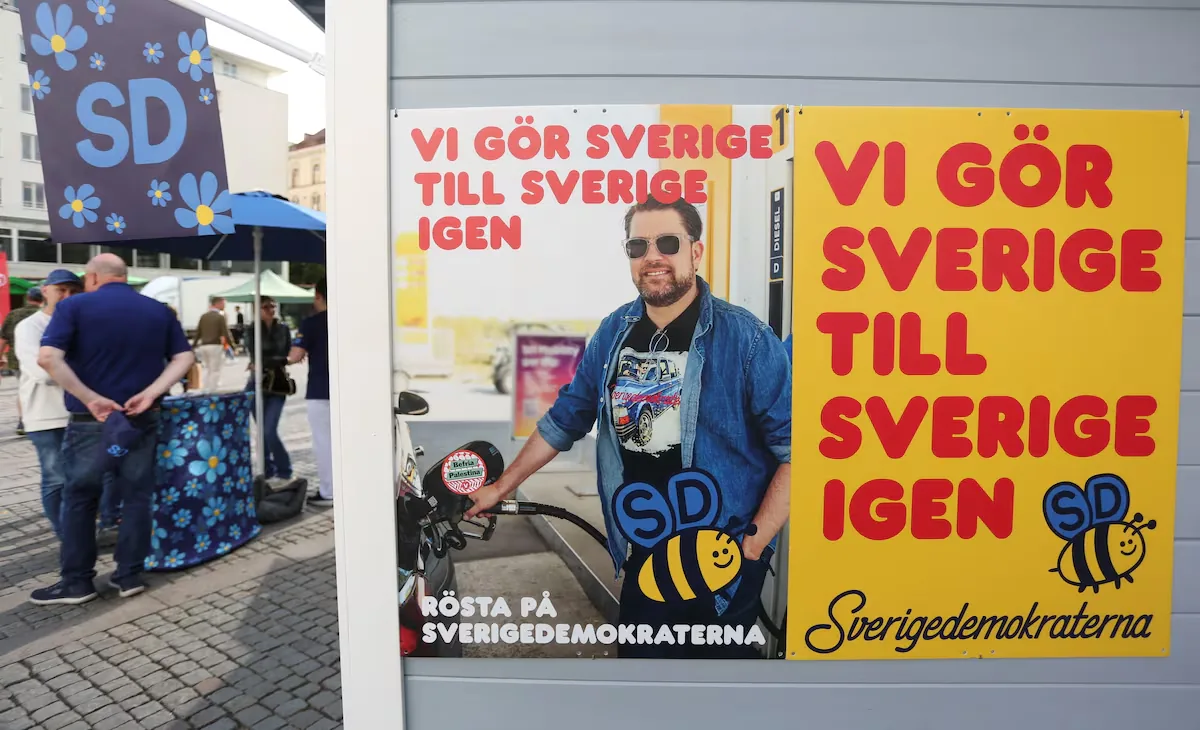
The far right has condensed its electoral message into a slogan clearly inspired by Trump: “Make Sweden Sweden Again.” Its leader, Jimmie Akesson, walked escorted through the center of Eskilstuna a few weeks ago, attending the media and taking photos with supporters. “My intention is to spend exactly zero crowns on integration,” he declared. “Those who do not learn the language and adapt must return to their country.”
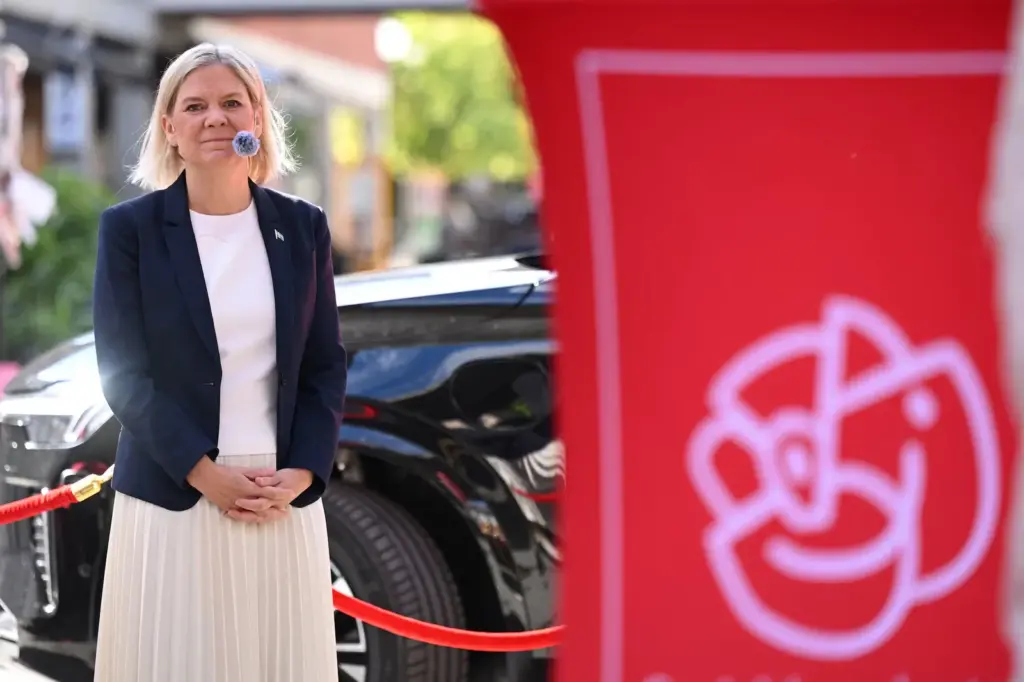
The Social Democrats have tried to contain the far right by hardening their own discourse on immigration. During a visit to Fröslunda in early August, their leader, former Prime Minister Magdalena Andersson, insisted on the need to end the concentration of foreign population in the suburbs. In the 2022 campaign, she declared that there should be no “Chinatowns” or “Somalitowns” in Sweden, words for which she later apologized. She is now trying to win back voters like Olsson without losing those of migrant origin.
The Social Democrats’ shift on migration is not recent. In 2015, the Scandinavian country received 163,000 asylum applications, an unprecedented figure that overwhelmed its reception capacity. The government of Social Democrat Stefan Löfven then reached a broad agreement with the opposition to tighten asylum and family reunification requirements. What began as an exceptional response ended up marking a turning point in one of the European countries traditionally most open to immigration. The right-wing coalition government that emerged after the 2022 elections — which does not include the Sweden Democrats, although it absolutely depends on their support in Parliament — has further tightened migration policy.
The Social Democrats have supported, explicitly or tacitly, much of the reforms in recent years and assure they will not backtrack if they return to power. Early in the summer, polls clearly indicated they would regain government after this Sunday’s elections, but although they remain favorites, the margin has narrowed significantly. The far right emphasizes that Andersson will not be able to govern under any circumstances without the support of the Left Party and the Greens, who favor a much less restrictive migration policy.
Alar Kuutmann, a Left Party member for nearly half a century, demands that the campaign focus on inequality. According to Oxfam, the 46 richest citizens of the Scandinavian country own more wealth than almost eight million inhabitants combined (75% of the population). “Many people who are struggling cling to the empty promises of the far right,” says Kuutmann, who accuses the Sweden Democrats of stigmatizing immigrants.
At 74 years old, he says he has never perceived so much interest in the Left Party in Eskilstuna’s suburbs, traditionally Social Democratic strongholds. In his view, the attempt to compete with the Sweden Democrats has left the party’s more progressive sector bewildered. “They want to move closer to the far right’s positions on immigration and security so they can’t be accused of being soft. But you can’t be in two places at once,” he concludes.