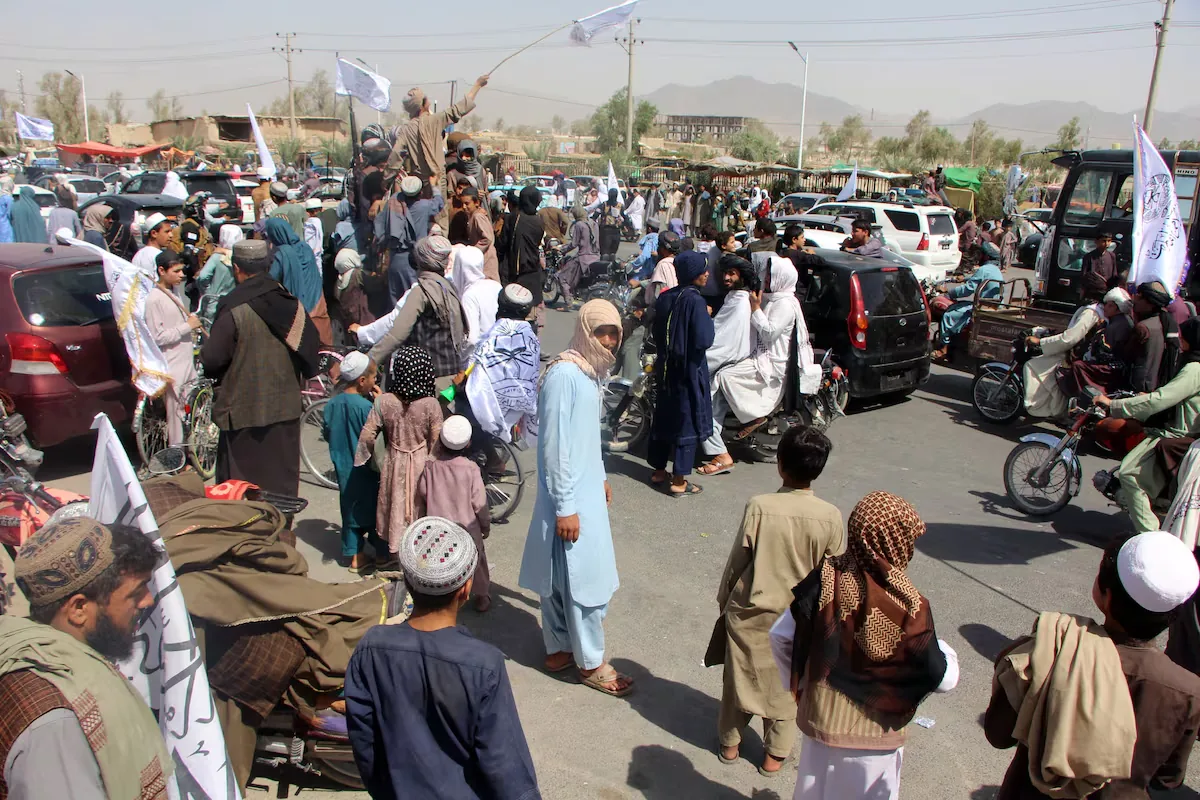
The Taliban celebrated this Saturday their five years of return to power, trying to present their Government as a firm authority, despite humanitarian and human rights organizations denouncing repression, especially of women, and warning of the severe crisis Afghanistan is going through.
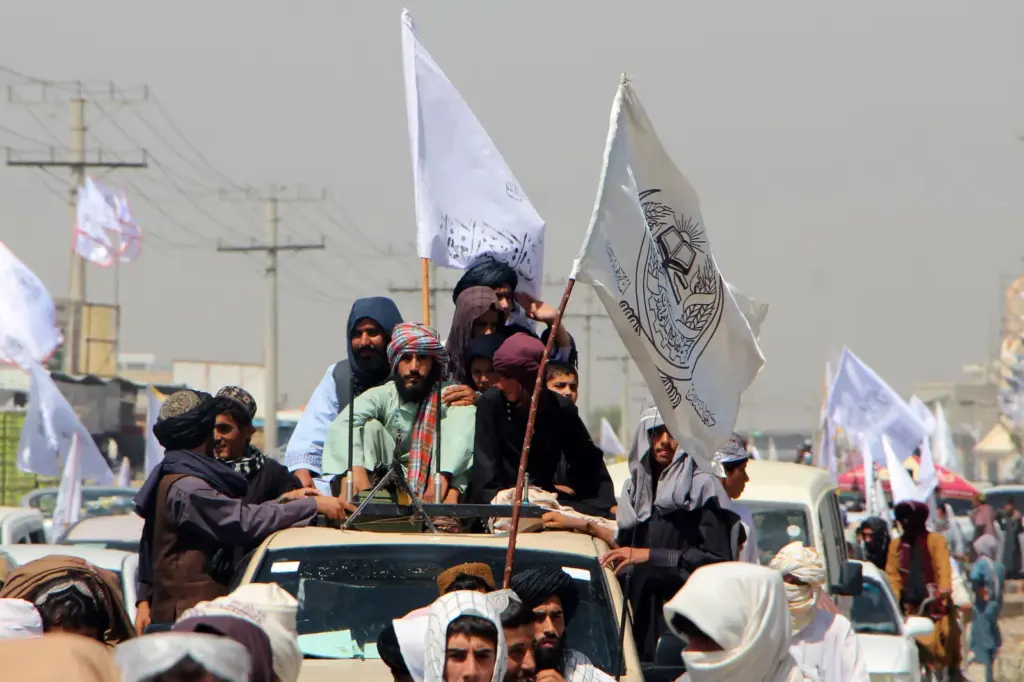
In front of the former United States Embassy in Kabul, Taliban armored vehicles participated in a parade, in which they displayed flags and banners and celebrated what the Government described as the “day of victory” against Western domination. Sirajuddin Haqqani, Interior Minister, stated in a video-recorded speech that their return to power was the result of “morale, courage” and “divine help.”
“Afghanistan wishes to live in an atmosphere of peace and tranquility with all countries of the world, will not allow anyone to use Afghan soil against any other country, and asks other countries not to engage in any conspiracy against Afghanistan and to respect our territory, airspace, and interests,” the self-proclaimed Islamic Emirate of Afghanistan said in another statement. Their reaffirmation of not using their soil against third parties comes after Pakistan’s accusations that Kabul shelters groups that attack its territory.
The celebratory message also claimed the country’s takeover on August 15, 2021, as a “great victory and liberation from foreign yoke.” The day of this fifth anniversary will be marked in Kabul by a strong security deployment, military parades of the Taliban army, and various sporting events in the capital, where high-ranking officials of the de facto regime are expected to formally address the nation throughout the day.
Although the day is marked by celebration, in his message, the Interior Minister also made an unusual acknowledgment of “issues and problems that may still exist.” International organizations and the UN highlight that the Taliban have struggled to address the natural and humanitarian crises Afghanistan has faced in the last five years, partly due to the severe restrictions imposed on Afghan women.
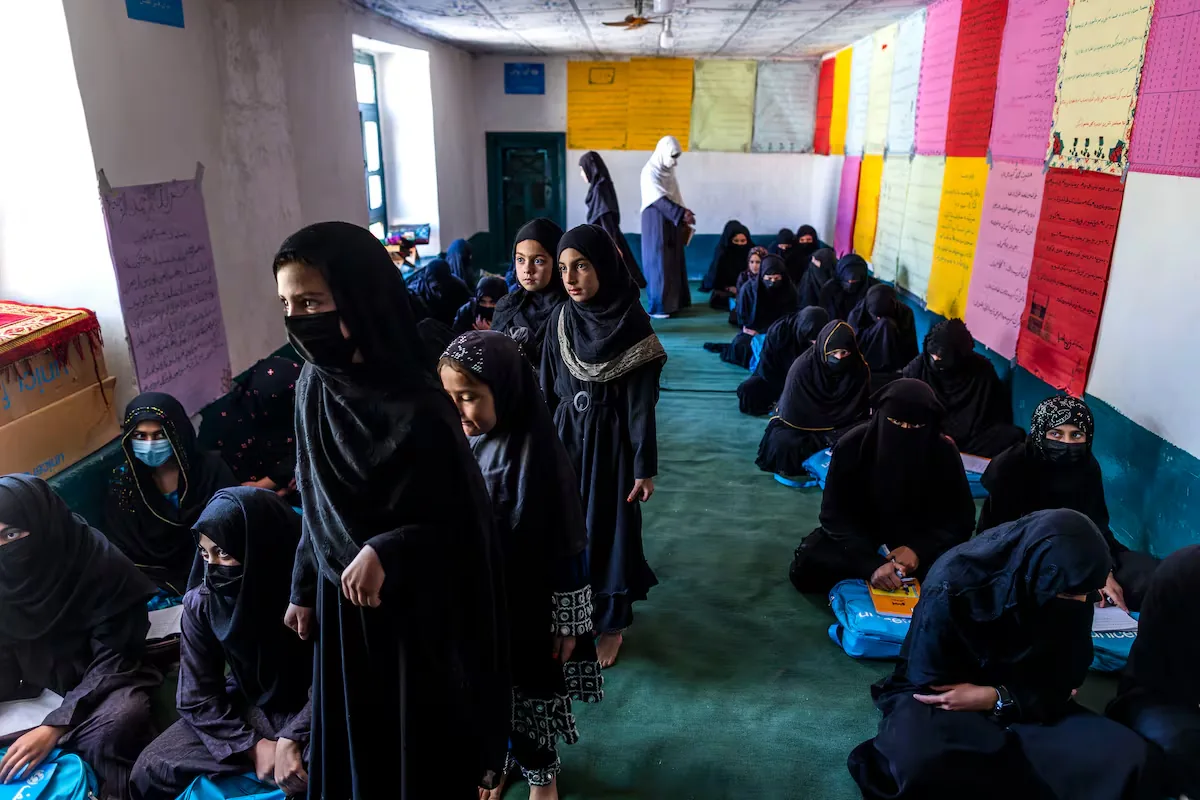
When the Taliban returned to power in August 2021, amid the withdrawal of the US and its allies, they promised to govern more liberally than they had in the late 1990s and early 2000s — a period marked by public executions and sheltering Osama bin Laden after 9/11. But those guarantees quickly faded. The Taliban have imposed widespread restrictions on women and girls since 2021, preventing 2.5 million from accessing secondary and university education, according to UNESCO, and limiting their freedom of movement. Half of Afghan women only leave home once or twice a month, according to data published Wednesday by UN Women. The Taliban claim they act with women in accordance with Islamic sharia.
Five years later, except for Russia, their Government remains unrecognized internationally. Relations between the Taliban and Pakistan — initially their most important partner — are tense, as Islamabad accuses Kabul of supporting Pakistani insurgents. Many of Kabul’s former embassies remain empty since the Taliban’s return to power, including the US embassy, which served as the backdrop for the Taliban celebrations this Saturday. However, the Taliban have made discreet diplomatic advances, as some countries weigh the limits of their influence in Afghanistan and the need to establish relations with the Government.
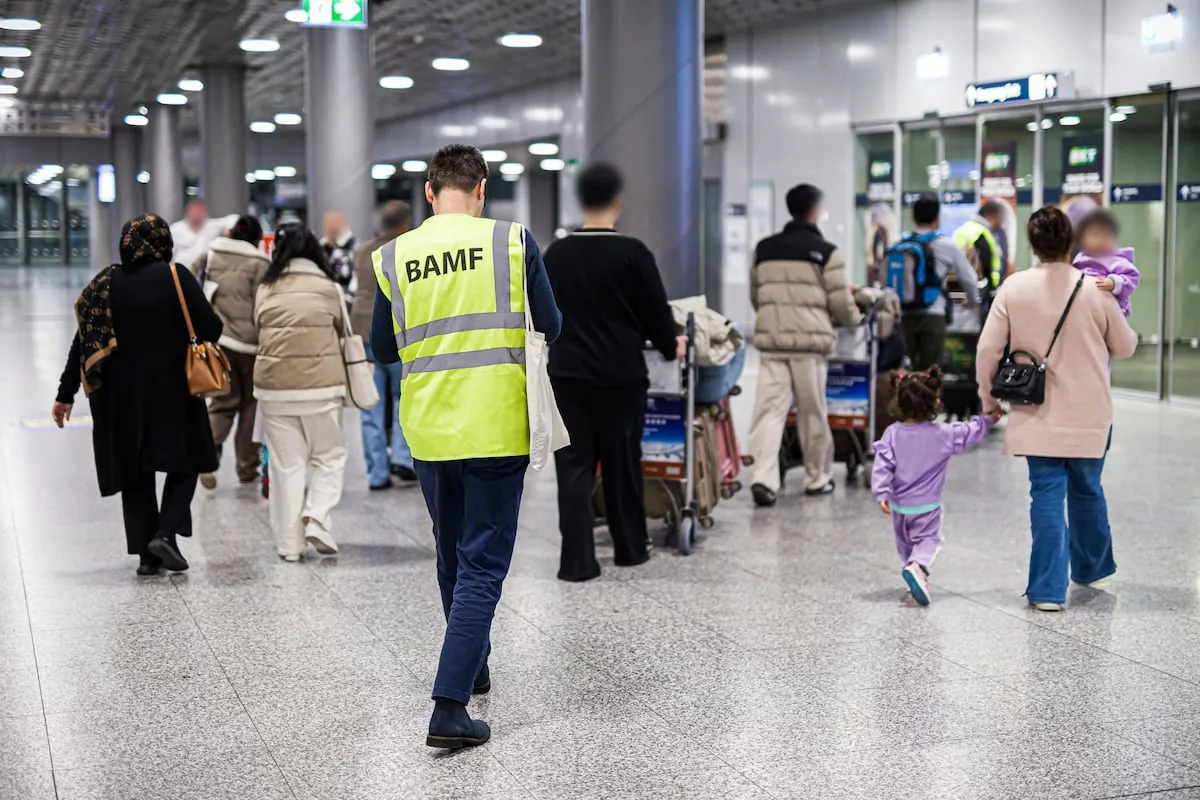
The Taliban are increasingly pushing to reach agreements with European countries that have been seeking ways to deport more Afghans. The Kabul Government is also leveraging its geographic location, at the crossroads of South Asia, Central Asia, and the Middle East, to close economic deals.
Zia Ahmad Takal, deputy spokesperson for the Taliban Ministry of Foreign Affairs, stated that commemorative ceremonies for the Government’s fifth anniversary were expected to be held in the capitals of Pakistan, China, Uzbekistan, Iran, Turkey, and Malaysia.
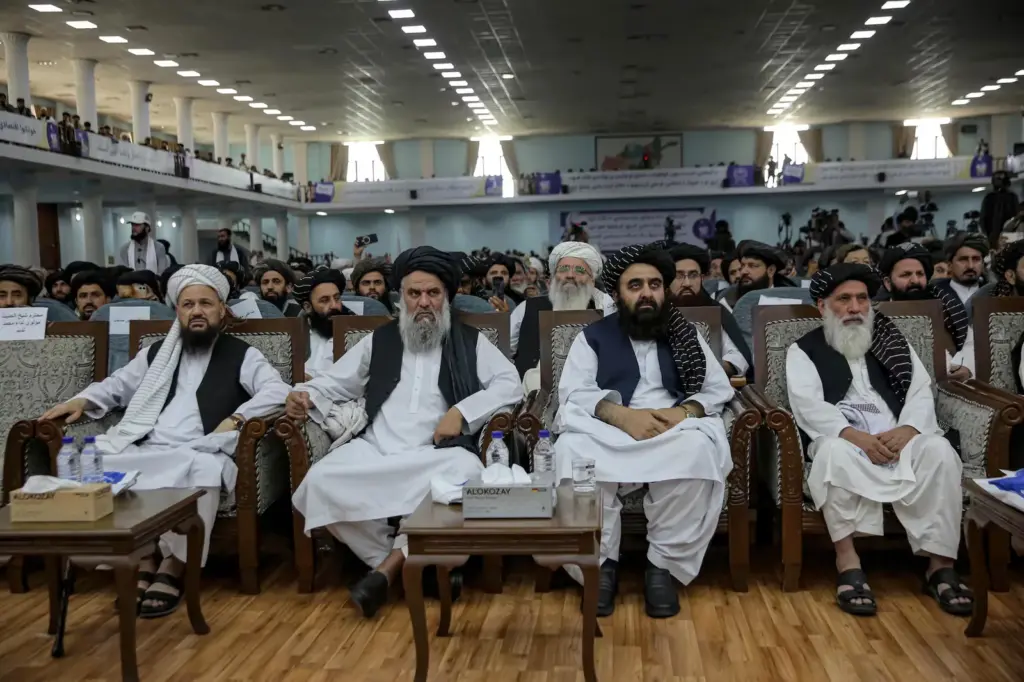
“My hope for Afghanistan’s future is that we move towards development, God willing,” said Najibullah Ghorzang, a 28-year-old trader who attended the ceremonies in Kabul. “We defeated a great empire and we will defeat them again,” he said referring to the US and its allies.
The NGO International Rescue Committee (IRC) warned Friday that Afghanistan’s humanitarian needs have reached a record level, due to droughts, the consequences of deadly earthquakes, and the deportation of Afghans from neighboring countries Iran and Pakistan. It noted that while foreign aid budgets have been reduced, the number of Afghans needing humanitarian assistance has increased by 3.5 million people since 2021.
“Sustainable peace and prosperity require more than the mere absence of conflict,” said Georgette Gagnon, the UN’s senior representative for Afghanistan, in a statement. “Afghanistan’s future depends on building a society where the rights and opportunities of all Afghans are respected.”
Fatima, 28, has struggled to survive alongside her son. After the Taliban’s return to power, she fled to Iran, where she was able to continue working as a makeup artist, despite the Taliban banning women from practicing that profession in Afghanistan. Last year she was expelled from Iran and deported to Afghanistan. “Every morning I wake up wondering how I will cover my basic expenses, and every night I close my eyes worried about my son’s future,” she says.