









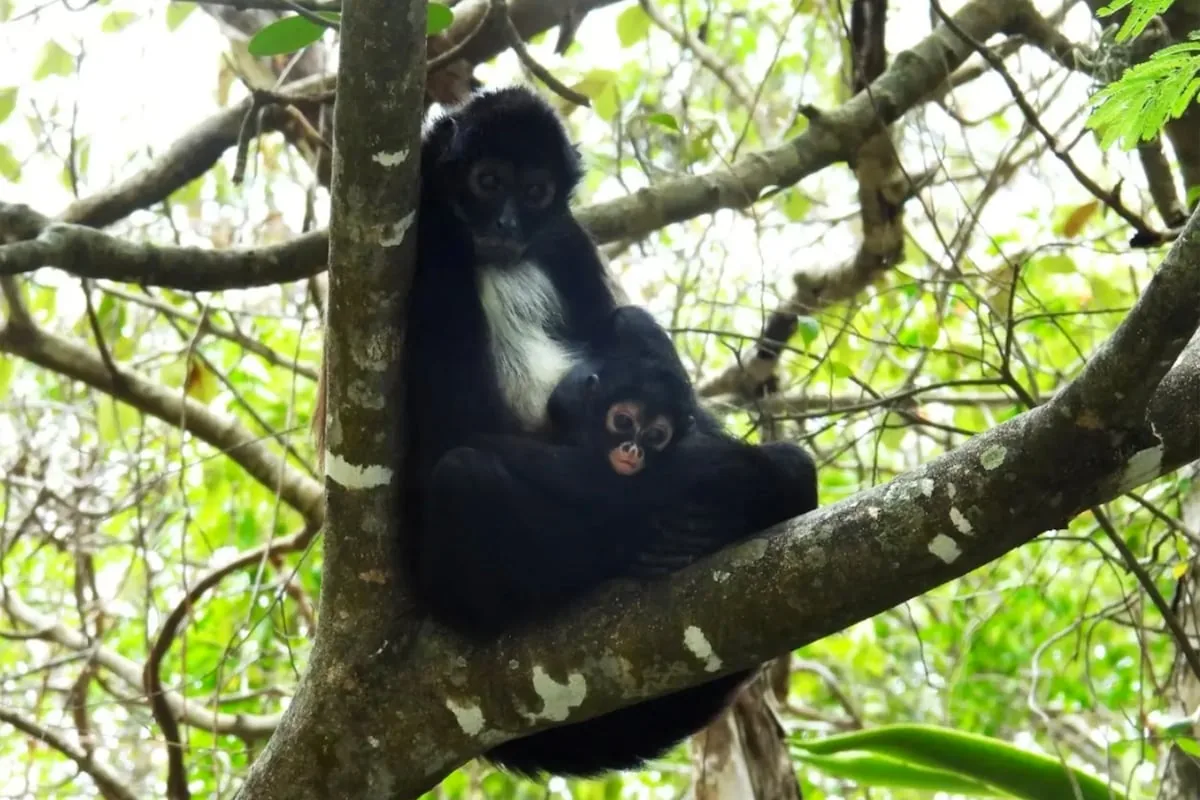
The National Commission of Natural Protected Areas (Conanp) has confirmed the birth of a new spider monkey (Ateles geoffroyi vellerosus) offspring in the Cañón del Sumidero National Park, in Chiapas. This is the third individual born in the ecosystem since the species was reintroduced in 2016, after more than three decades of recorded absence in the western area of the park.
Read more Tesla shares rise on Wall Street after revenue and profit increase
The spider monkey offspring is a descendant of a pair that was part of the group of 12 individuals reintroduced on November 28, 10 years ago. Since then, the alpha male and the dominant female have managed to establish themselves on the western wall of the canyon, and today they form a family of five healthy specimens: the founding pair, a juvenile female —the first offspring—, a juvenile male —the second offspring— and the newborn.
The spider monkey is distinguished by its prehensile tail with tactile function, the absence of thumbs to facilitate brachiation (moving from one branch to another), and a frugivorous diet of native species, such as sapodilla and fig. Due to the characteristics of their diet, they are important seed dispersers, being key species for ecosystem regeneration.
View this post on Instagram
The social structure of spider monkeys and their slow reproductive rate, with gestation and rearing periods of up to four years, mean that each birth represents an achievement for the conservation of the species. Furthermore, the breeding and birth season largely depends on food availability. In Mexico, this inhabitant of the tropical rainforests of the country’s southeast is listed as endangered according to NOM-059-SEMARNAT-201.
Some of the threats to this species include habitat loss due to land-use changes from increased agricultural activities, deforestation, hunting, and the trafficking of young individuals for sale as pets.
Read more Pere Romeu, after winning the league: “Whoever plays, Barcelona maintains its identity”
Given the presence of the new offspring, environmental authorities have issued specific recommendations for nautical service providers and visitors to the Cañón del Sumidero. Authorities request maintaining a minimum distance of 20 meters from the riverbank upon any sighting, avoiding excessive noise, and refraining from actions that could stress the animals. They also warn that the alpha male actively protects its offspring and could react aggressively to stimuli perceived as a threat.
According to the Conanp statement, the achievement is the result of collaborative work with the Miguel Álvarez del Toro Regional Zoo (Zoomat) and the civil association Conservation of Usumacinta Biodiversity (Cobius). “Protecting wildlife in the Cañón del Sumidero National Park is a shared responsibility. This birth enriches the biocultural heritage of Chiapas and confirms that the State’s natural heart continues to be,” the document states.
Subscribe to the EL PAÍS México newsletter and the WhatsApp channel and receive all the key news from this country.
Read more King Felipe recalls the importance of memory at the Cervantes Prize lunch