The two young people arrested for the homicide of a man in Manresa (Barcelona) last Tuesday in a fight were under supervised release. At 15 and 16 years old, Pere O. and Otman A. had four and three arrests respectively by the Mossos d’Esquadra related to violent robberies, injuries, and even attempted homicide. The Generalitat recalls that supervised release, when it comes to minors, is based on therapeutic, monitoring measures that are tailored to the profile of those affected to achieve reintegration.
Read more The hour of the Glory facade of the Sagrada Familia: this is how Gaudí imagined it
The Prosecutor’s Office has confirmed to this newspaper that the two minors were “under monitoring with a supervised release measure” for a prior crime that “has nothing to do with the homicide arrest,” detailed the public ministry. In the case of Pere O., he was admitted to a juvenile center from early May until the end of July, accused of a violent robbery and attempted homicide. The judge later decreed his supervised release. Since Thursday, the two have been admitted to a closed center accused of the homicide of Carles Vilajosana, 45 years old, in a fight in Manresa. For one of the two, the judge has also decreed therapeutic measures.
Police sources specialized in the juvenile criminal field explain that the supervised release measure does not imply police surveillance over those individuals. Among other things because, due to lack of resources, it would be impossible. Supervised release authorizes police officers to contact minors and even show up at their homes to inquire about their situation. But in minors, where the emphasis on rehabilitation is even greater than in adults, supervised release primarily has a therapeutic approach: sometimes it consists of attending some kind of social work or a visit with a professional, such as a social educator or a psychologist.
Despite their youth, the two young people arrested are well known to the Mossos d’Esquadra. Otman A., alleged perpetrator of the stabbing that killed Vilajosana, has been arrested three times, for motorcycle theft and for a violent robbery of a mobile phone. Son of Moroccan parents, after Vilajosana’s homicide, the Mossos arrested him in the occupied house in the municipality where he spends much of his time with other young people. “He lacks a solid family environment,” police sources explain, about the young man’s profile.
Read more Photographer Roger Farrington publishes unpublished images of John Lennon’s return to music in 1980
Pere A. was arrested in the same occupied place, where he also lives. Born in 2010, but still 15 years old, he already has four arrests behind him, for vehicle theft and driving without a license, injuries, and attempted homicide. One of the victims was a waiter at a city bar, who told this newspaper how he attacked him with a screwdriver in the shoulder when he reproached them for their uncivil behavior. The case is pending trial.
On August 28, only four days before Vilajosana’s homicide, the Mossos arrested Pere O. again. He was accused of injuring a man with a screwdriver in an attempted robbery, police sources explain. But the victim did not identify him before the judge, and he was released again, according to those same sources. Both he and Otman A. also have administrative sanctions for drug possession.
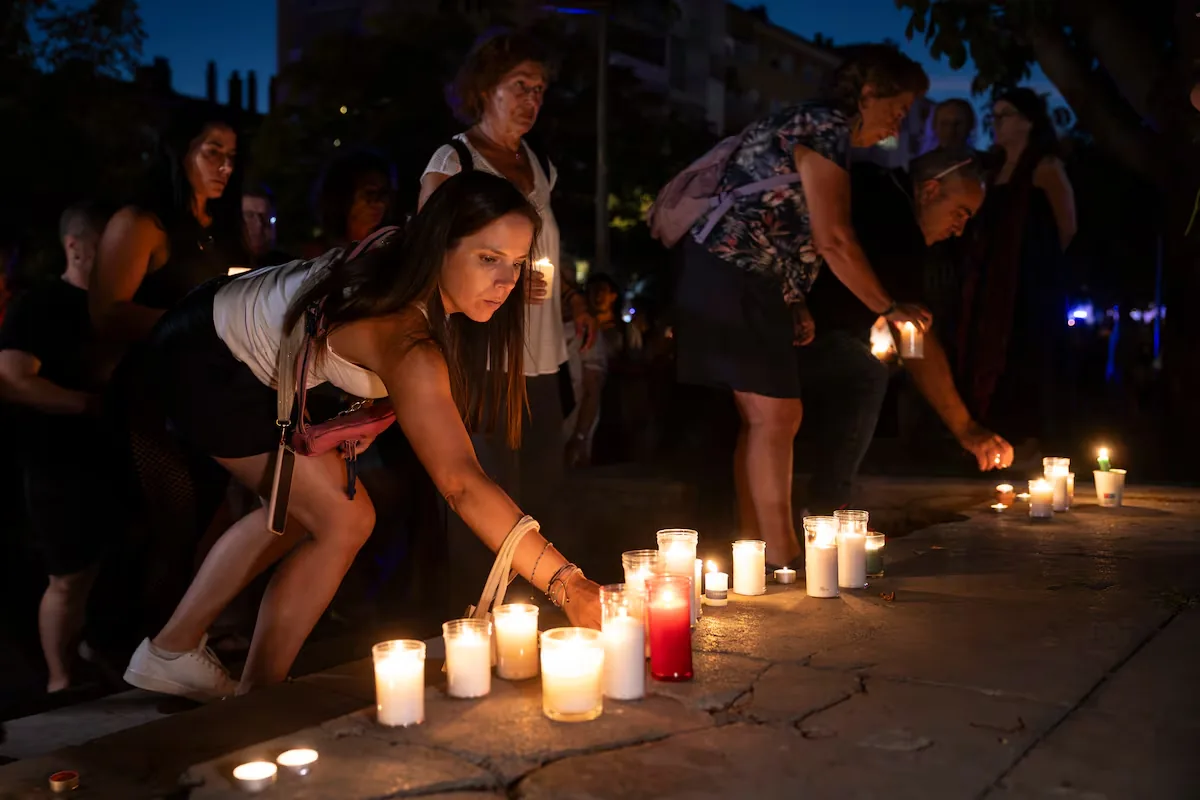
This Friday, Carles Vilajosana’s funeral was held. The man, 45 years old, was a well-known and much-loved person in the Bages area. A gardener by profession, he had two minor twin children. The event gathered hundreds of people. Vilajosana’s death has been exploited by the far right to try to stir up coexistence in Manresa with the false idea that the two detainees are unaccompanied foreign minors, when the reality is that both are Spanish nationals. The incident has shocked this inland Catalonia town of 80,000 inhabitants. The neighbors have expressed, in various gatherings and demonstrations these days, their solidarity with the victim’s family, their rejection of violence, and their concern about a growing feeling of insecurity that they attribute to groups of uprooted young people.