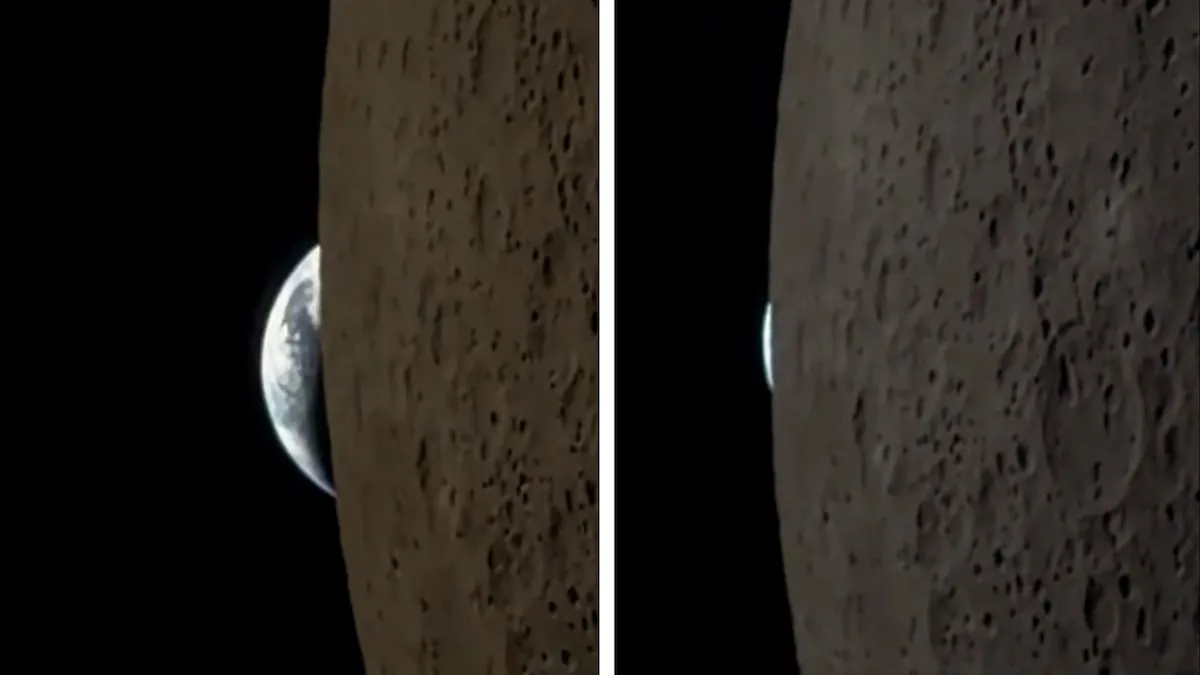









During the 41 minutes that the Artemis 2 crew hid behind the Moon, the whole world held its breath. After the launch, it was the next most delicate moment of the entire mission. On the far side of the satellite, exposed to the vacuum and solar radiation, cut off and without any possibility of help, the lives of the four people who have been farthest from Earth depended on the surgical precision of calculations that could no longer be corrected. During those minutes they were alone in the universe. It is difficult to imagine the dramatic burden, the emotion, and even the vertigo that the NASA team felt upon hearing Christina Koch’s voice on their radio receivers: “It’s wonderful to hear Earth again.” They were witnessing humanity’s most recent feat.
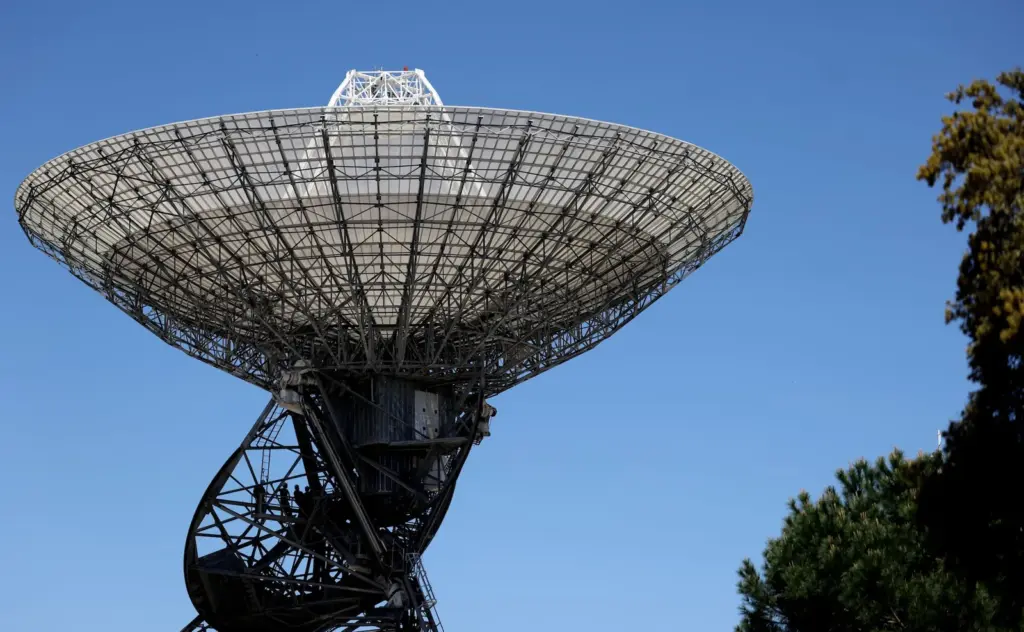
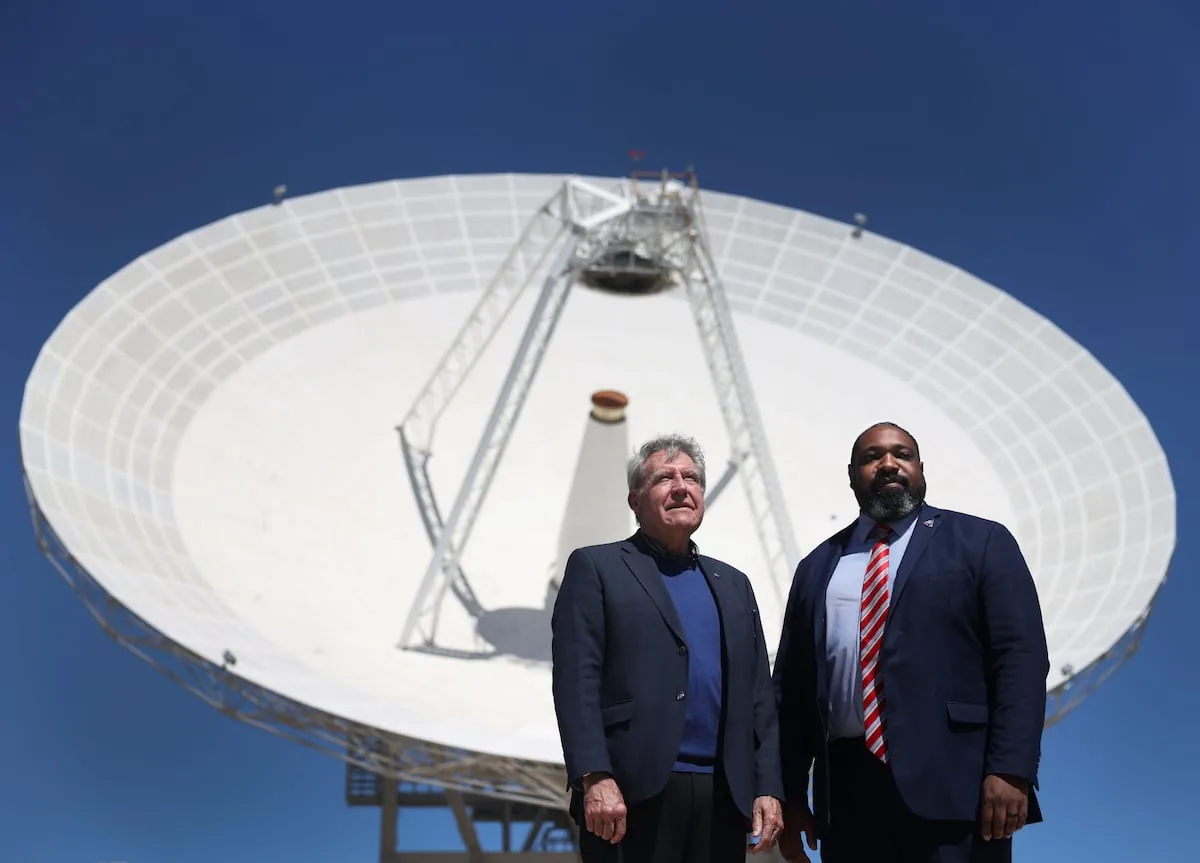
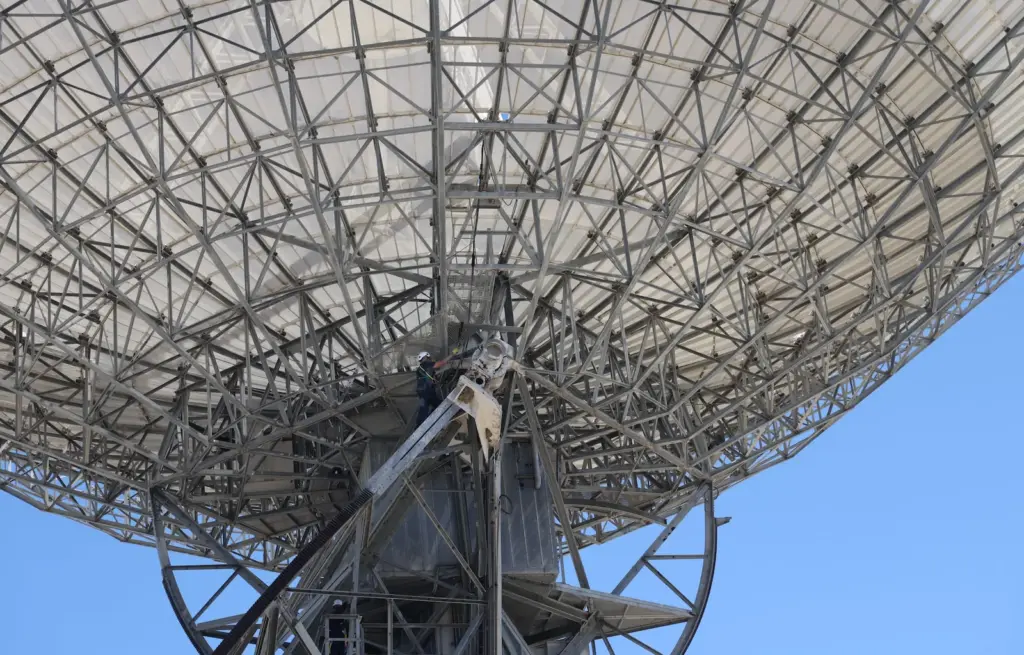
The voice of the first woman to go to the Moon took 1.28 seconds to travel from the spacecraft to Earth, but the message that made Houston erupt in cheers and applause was heard a fraction of a second earlier in Madrid. The electromagnetic waves carrying it found their first receiver near the municipality of Robledo de Chavela (Madrid, 4,874 inhabitants), where they struck two colossal white antennas pointing at the spacecraft. The director of that complex, Moisés Manuel Fernández, says this mission has been “the greatest milestone” in his career. It has also been so for Philip Baldwin, NASA’s communications manager, who experienced the entire process from that alien-looking base hidden among the holm oaks of a Madrid valley.
“The first to know that everything was going well were our operators,” Fernández explains. All that information they received via waves traveled very quickly through a fiber optic cable connected to another similar station in Goldstone (California, USA) and from there to the Houston base (Texas, USA), where the mission was controlled. “All this in almost real time,” he adds.
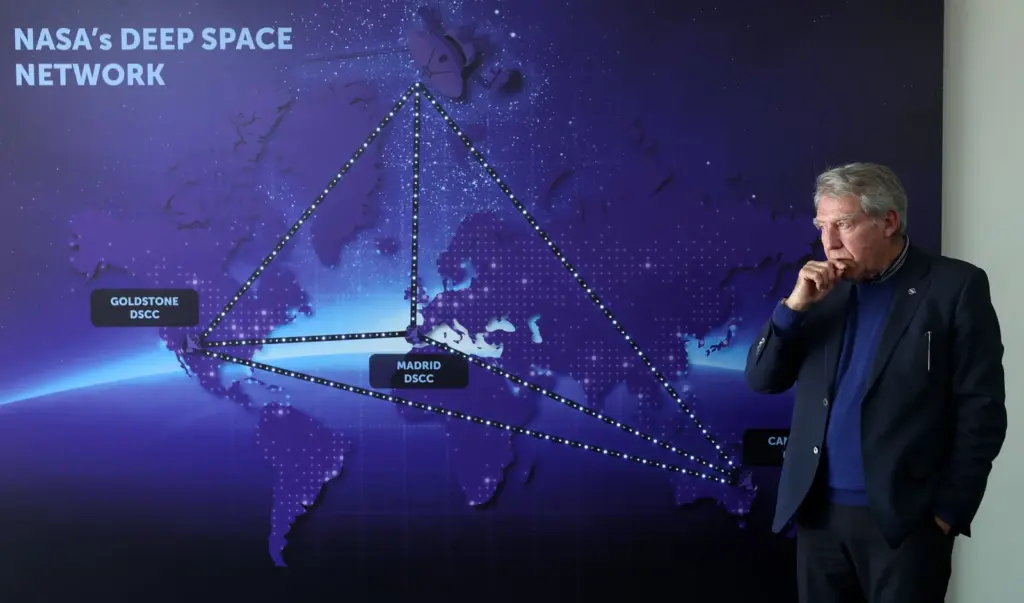
The Robledo de Chavela base is the largest of the three that make up NASA’s Deep Space Network (DSN). Another is Goldstone and the third is in Canberra, Australia. They are positioned around the globe so that any point in space is connected by an imaginary straight line to at least one of these antennas. The Earth’s rotation means these devices have to disconnect and transfer the signal to those that have the spacecraft they want to communicate with in their field of view. Therefore, whether a message is received in Australia, the USA, or Spain largely depends on luck.
It is not the first time that the Spanish base has had the stars align and won the space lottery. In 1969, when humans first set foot on the Moon, the so-called Antenna 66 was the one that captured Neil Armstrong’s famous phrase: “That’s one small step for man, one giant leap for mankind.” This device, weighing around 500 tons, has become a monument due to the significance of that moment. An emblematic point of the base that reminds of what the 90 people who work there are capable of.
Read more Birdwatchers who count birds: “Some choose a dog or a cat, we choose goldfinches”
Currently, the complex has six antennas coordinated with the four in the USA and the four in Australia. It is impressive how fast these objects move, how they rotate on their axis and raise their enormous dish toward the sky. Not all operate constantly, but on this website it is possible to see in real time which space mission each is connected to. When a single wave is seen over the antenna, it means it is receiving information from space. When there are two waves, it means it is sending it.
The most interesting example due to its complexity is the Voyager 1 mission, the human-made object that has traveled the farthest, almost 24 light hours from Earth. On August 25, 2013, the spacecraft’s solar radiation receivers experienced a drastic drop in their metrics: the spacecraft had officially left the solar system. The signals sent to that spacecraft from Robledo de Chavela travel at the speed of light, nearly 300,000 kilometers per second, and yet take almost a day to travel from one point to the other. That is, to see a photo taken by the spacecraft today, the command to trigger the camera would have had to be sent yesterday and it would still take another day to receive it.
But that is the least of the complications for the people working at the complex. The most important thing is to ensure the signal reaches its destination and is not lost in the void. To do this requires performing a ridiculously complex operation: pointing all six antennas simultaneously exactly at that spacecraft, whose size is similar to a three-door car. This is not done daily because it disconnects the rest of the space missions from the network. The next time this will be done is June 28 of this year, to perform a massive data download.
But the moment that will really make the team at that base nervous again will come in 2030. That year, humanity is expected to return to the Moon, this time to create a permanent base that will serve as a springboard to Mars. “When in 2019 they told us we had to catch the Moon by 2025, I was shocked because I didn’t understand how we were going to achieve something like that in such a short time,” explains Baldwin, who is confident they will meet their goal this time. “It will be an important moment, not only for the United States but for all humanity.”
Read more Teenagers enjoy the movies I schedule for them