









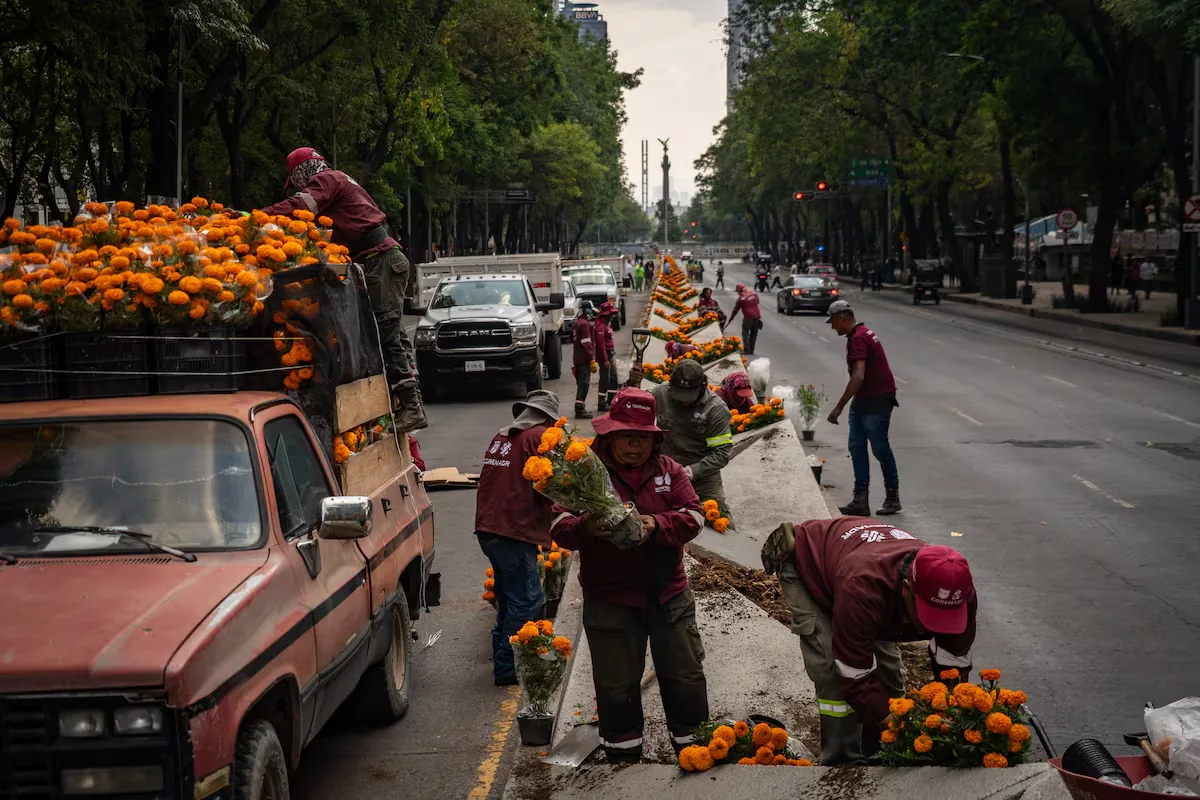
The marigold season has come early in Mexico City. The flower that every year decorates the offerings, streets, and markets during the Day of the Dead celebrations has appeared in the capital this June, five months earlier than usual. This is the first time that producers in Xochimilco have modified the planting times, as part of a government initiative to welcome visitors arriving in the city for the 2026 FIFA World Cup.
Read more An armed group kidnaps journalist Roxana Berenice Guzmán in Veracruz
In a video shared on the social media of the Mexico City Secretariat of the Environment (Sedema), it was explained that to harvest on time, seeds were planted between February and March in the town of San Luis Tlaxialtemalco, in Xochimilco. “It was a challenge because marigolds had never been planted at this time before,” said Julia Álvarez Icaza Ramírez, head of Sedema. Since this week, workers have begun placing the flowers on the medians around the Angel of Independence, on Paseo de la Reforma avenue.
Attention marigold lovers!
— Secretaría del Medio Ambiente (@SEDEMA_CDMX) June 2, 2026
For the first time in history, together with the producers of Xochimilco, we have advanced the harvest of this flower to share the beauty of our traditions on the eve of the 2026 World Cup.
From San Luis Tlaxialtemalco to the world! pic.twitter.com/dCaqyv4SRn
In addition to marigolds, the decoration of public spaces with other species such as geraniums, lavender, rosemary, miguelito, mallow, and guinea belen is planned. In March, Clara Brugada’s administration announced the purchase of one million plants from producers in conservation soil as part of the preparations for the World Cup. Authorities have estimated that up to 300,000 specimens will be planted weekly in the city. “We want this city to be transformed with plants, with images of flowers that help us remember Mexico City with many flowers. So the work of the producers is also part of the image we will present,” said the head of government.
The marigold flower is one of the most significant elements of the Day of the Dead, so its harvest and commercialization are usually reserved for the months of October and November. Its use in ceremonies, rituals, and medicinal practices has been documented since pre-Hispanic times. It was also common in burials and offerings, as it was believed that its petals preserved the light and warmth of the sun, guiding souls in their return to the world of the living. Therefore, the flower became a symbol associated with the bond between the living and their ancestors, a union that remains today.
Read more CNTE protesters intensify pressure on the Government with blockades in the city center
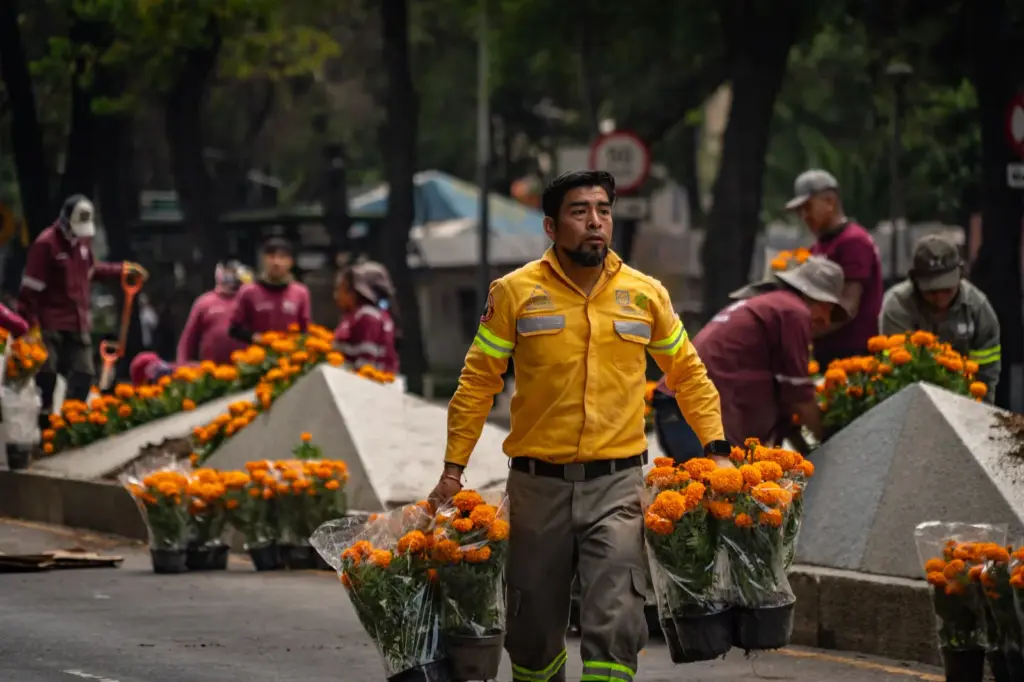
The increased demand has transformed how the marigold flower is cultivated. Currently, a significant proportion of the seeds used come from the United States and China, while native Mexican varieties represent a smaller fraction of the market. Some national producers have even resorted to imported marigold seeds, a more showy variety ideal for sale in pots.
However, experts consider that the commercial boom of the flower does not represent, at least for now, a threat to the conservation of native species.
Subscribe to EL PAÍS México’s newsletter and to the WhatsApp channel and receive all the key news about the current affairs of this country.
Read more Madrid, one step away from elimination in the ‘playoffs’