









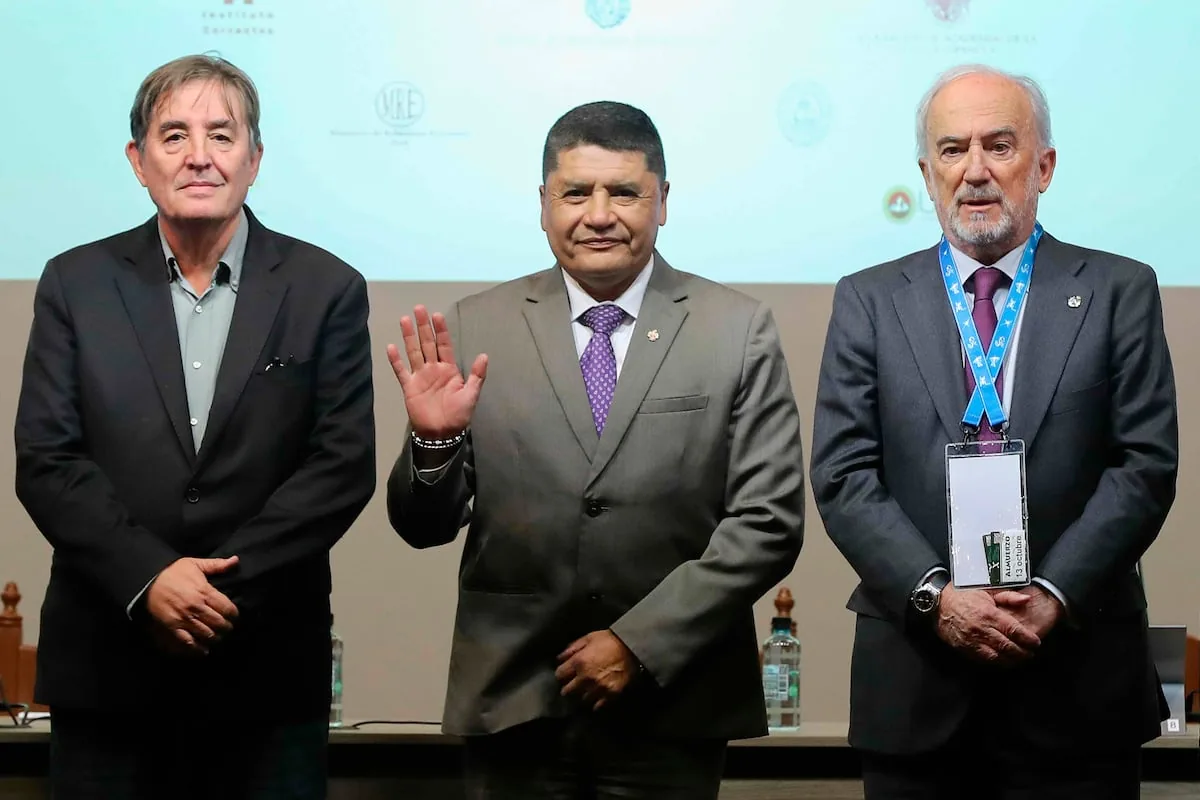
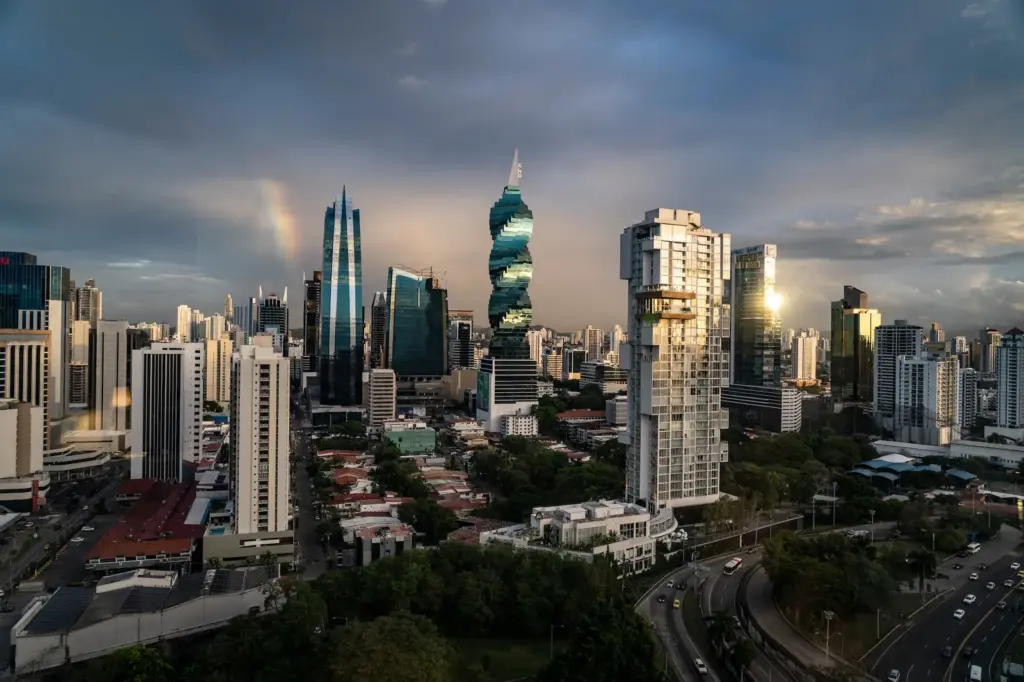
“See you at the next language congress in…”. This phrase could not be uttered when the last International Congress of the Spanish Language (CILE) ended in Arequipa (Peru) on October 17. Contrary to what had happened on some previous occasions, the closing ceremony did not officially announce which city would host the next CILE. The reason was a congress marked by strong disagreements between the heads of the two main organizing institutions, the Instituto Cervantes, represented by the writer Luis García Montero, and the Royal Spanish Academy (RAE), represented by the Administrative Law professor Santiago Muñoz Machado, who also did not agree on this point. However, Panama City, through the Panamanian Academy of the Language, had put itself forward to host the eleventh CILE — expected for late 2028 — with the approval of the heads of the 23 Spanish language academies. Nevertheless, six months later it has still not been officially announced, although sources consulted are confident that this matter will soon be resolved.
Read more V&A East, a museum to listen to
The disagreement over Panama began, according to RAE sources, when, after the formal meeting of the directors of the language academies, “some informed García Montero that Panama had been chosen, and he reacted with irritation and uttered insults against some of them.” Panama had already hosted a CILE in 2013. “But there was only one candidacy, which had the backing of its country’s government, and this was known even before the CILE by the Spanish State through the Panamanian.” This source shows a copy of the diplomatic cable sent by the Spanish ambassador in Panama to Cervantes and the Ministry of Foreign Affairs a few days before the start of the Arequipa CILE, with the subject: “Panamanian candidacy International Congress of the Language 2028.”
This source adds that “if Panama’s hosting was not made official in Arequipa, it was to avoid adding fuel to the fire.” Shortly after the congress, they say, the RAE spoke with the Foreign Minister, José Manuel Albares, to regret “the diplomatic incident created by García Montero.” However, they clarify, today “the situation has improved and the announcement is close.”
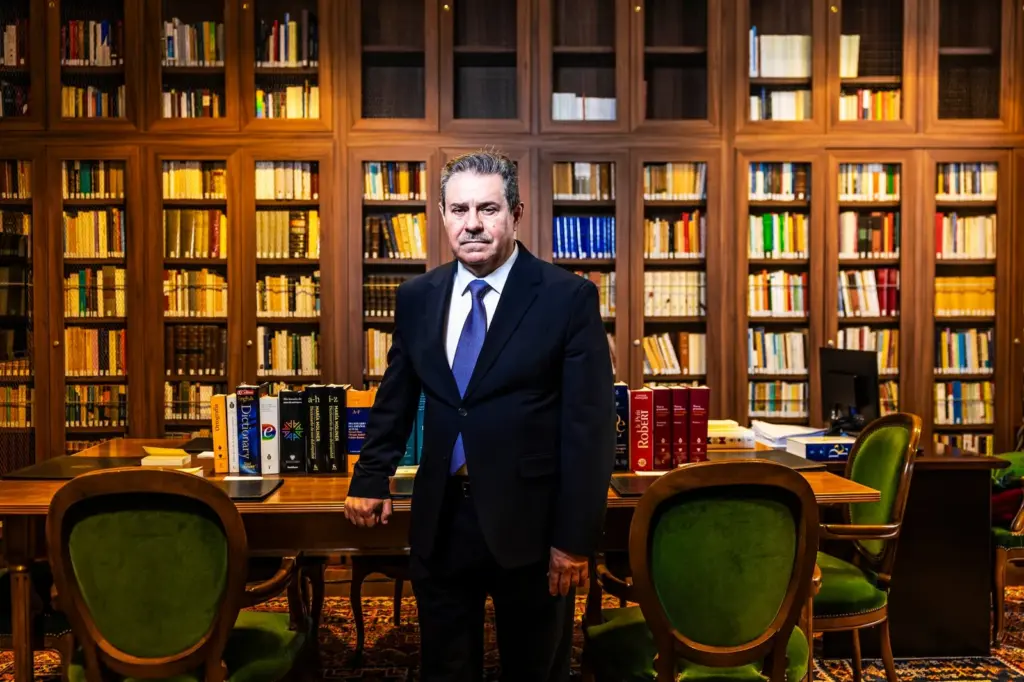
The director of the Panamanian Academy of the Language, Jorge Eduardo Ritter, in a telephone conversation, states that even a year before the CILE, at an Asale meeting in 2024 in Quito, the candidacy was presented. “In Arequipa I reiterated that offer and presented letters from the authorities of my country, which had also been sent to Cervantes. For this reason, the 23 directors unanimously accepted it.” Ritter acknowledges that such an agreement must then “be formalized with the approval of Cervantes,” as emphasized in an agreement from 2000, extended and later modified, signed by Cervantes and the RAE. Ritter wants to make clear that “what happened between the two directors must be kept separate from Panama’s proposal” and adds that he has not yet received any notification of when the necessary agreement will be signed: “We cannot start preparations until that happens.”
It should be noted that in Arequipa there was an intention for another candidacy, that of La Plata (Argentina), but, as explained by the president of the Argentine Academy of Letters, Rafael Oteriño, over the phone, “it was put forward by a commission of professional forces from the city,” but it did not include the support of the municipal or national Argentine government, so it was not considered.
The CILE began in 1997 in Zacatecas (Mexico) and are held every three years. The venue is decided by joint agreement between Cervantes, on one hand, and the RAE and the Association of Spanish Language Academies (Asale), on the other. The host country welcomes several hundred writers, academics, linguists, and journalists for a week and assumes almost all the expenses, which in Arequipa were more than four million euros, for example. Cervantes covers the administrative costs of the Spanish side and organizes cultural activities, while Asale and the RAE handle the detailed academic program, in coordination with Cervantes, with dozens of round tables and conferences.

Cervantes insists that the designation of venues “is agreed upon” and for this “proposals must be submitted to both institutions and the Government of Spain,” a circumstance that, they say, did not happen this time. There was a “unilateral choice of Panama without prior knowledge of Cervantes,” according to a December statement. In that note, Cervantes regretted that the RAE, “taking advantage of its ex officio presidency of Asale, uses the Latin American academies causing damage to institutional and cultural relations with Panama.” An argument emphasized by García Montero, a columnist for EL PAÍS, in an interview with El Confidencial this week, in which he labeled Muñoz Machado as “imperialist” for supposedly imposing Panama City.
In response, the Secretary General of Asale (whose office is at the RAE, which financially supports it), the Venezuelan Francisco Javier Pérez, expresses being “surprised” by the controversy because the decision was “unanimous among the academies,” although he admits nothing was agreed with Cervantes. “It was our proposal that García Montero has interpreted as an imposition. Thus, a new disagreement has arisen, compounded by his statements, which hinder the process.” How have the other academies taken this disagreement? “With astonishment and rejection. It is an uncomfortable situation,” he adds.
Read more The most enjoyable Griezmann Cup final
In fact, Pérez sent a letter to García Montero a few days ago, published this week by El Confidencial, in which he denied that the RAE director had imposed anything: “Your insistence on presenting reality differently is not only offensive to Muñoz Machado but also to all the academies, whose declaration of will you do not give the slightest importance.”
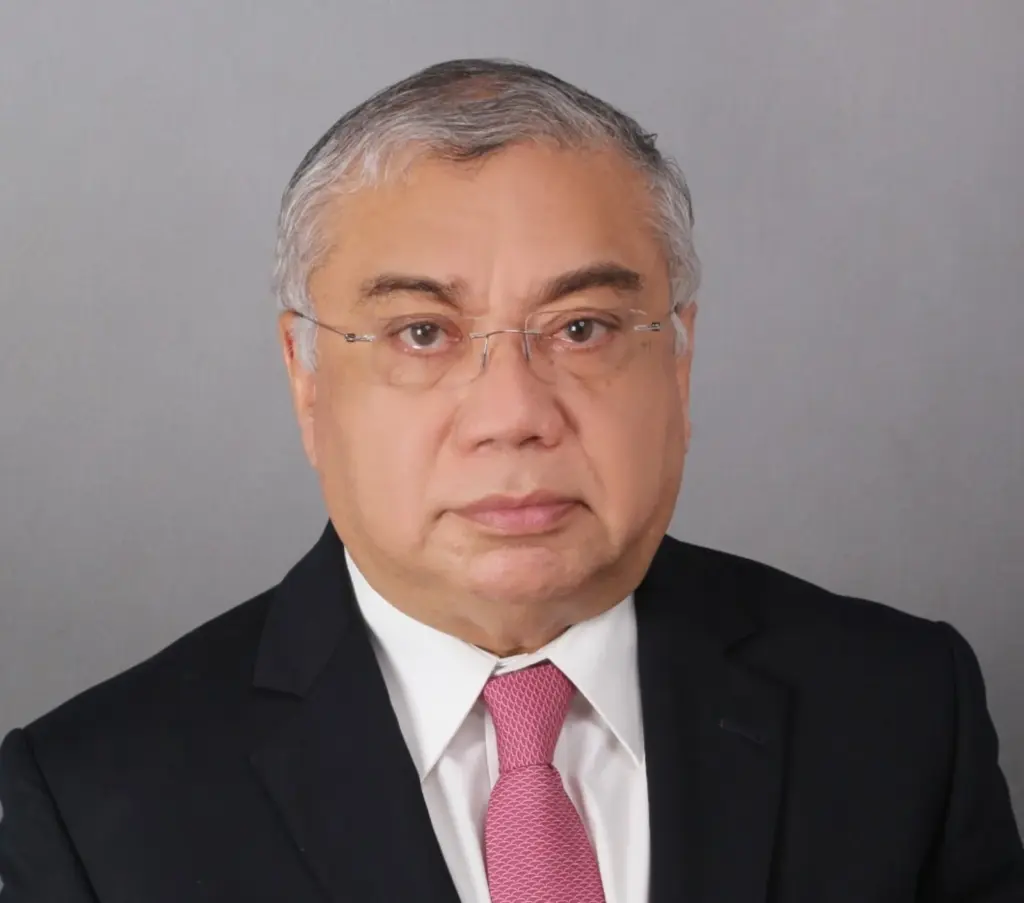
With that letter, of which Pérez confirms he has not yet received a reply, he says he seeks “an agreement among the three institutions to finally make a joint declaration stating that the congress will be in Panama.” “García Montero thinks it was a matter of verticality, when Asale is an association that agrees on everything by consensus.” However, he trusts that the announcement can be made “soon.”
An academic consulted confirms this point: “Everything will proceed as usual. With the signing of an agreement between the state hosting the congress, Panama, and Spain, through Cervantes, whose director has the rank of Secretary of State” (Cervantes is an entity attached to Foreign Affairs). This academic is convinced that “soon” José Manuel Albares will inform his Panamanian counterpart “of the start of drafting the agreement to prepare the CILE.”
The same academic laments, however, that “a problem has been created over something absurd because there was no other candidacy.” Regarding García Montero’s statements, he points out that “a person-to-person conflict cannot become a confrontation between two institutions that are complementary.” “These congresses are very important for the projection of Spanish, and what happened in Arequipa undoubtedly weakens us.”
Another academic humorously compares this confrontation to the “Iberian bullring” Valle-Inclán spoke of, and points to García Montero for having opened Pandora’s box: “It is regrettable because he has not respected his own institution,” and criticizes “the spectacle given to the outside world.” “It has already taken many years to achieve brotherhood among the language academies for this to happen now.”
For now, it is the latest upheaval in the history of something as seemingly calm as the Spanish language congresses. However, as one academic wryly recalls, “in thirty years of CILE there have been earthquakes, self-coups, president removals, and states of emergency.”