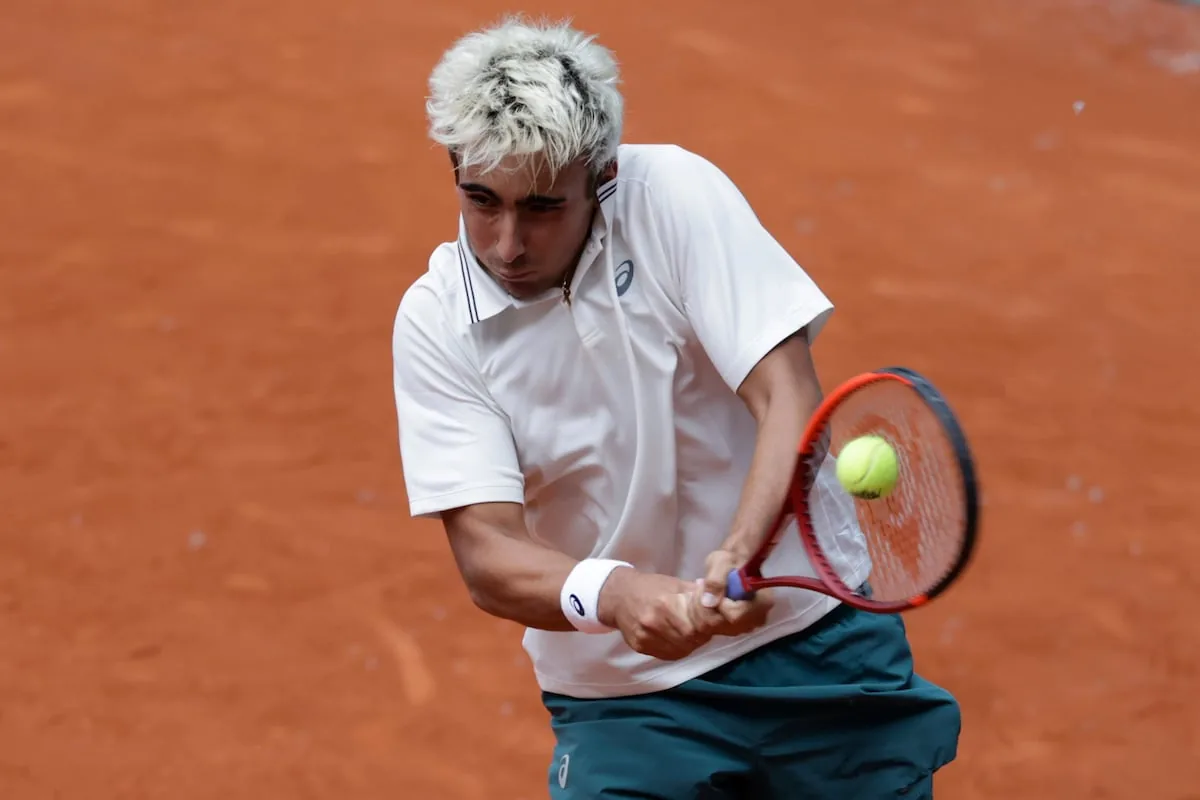
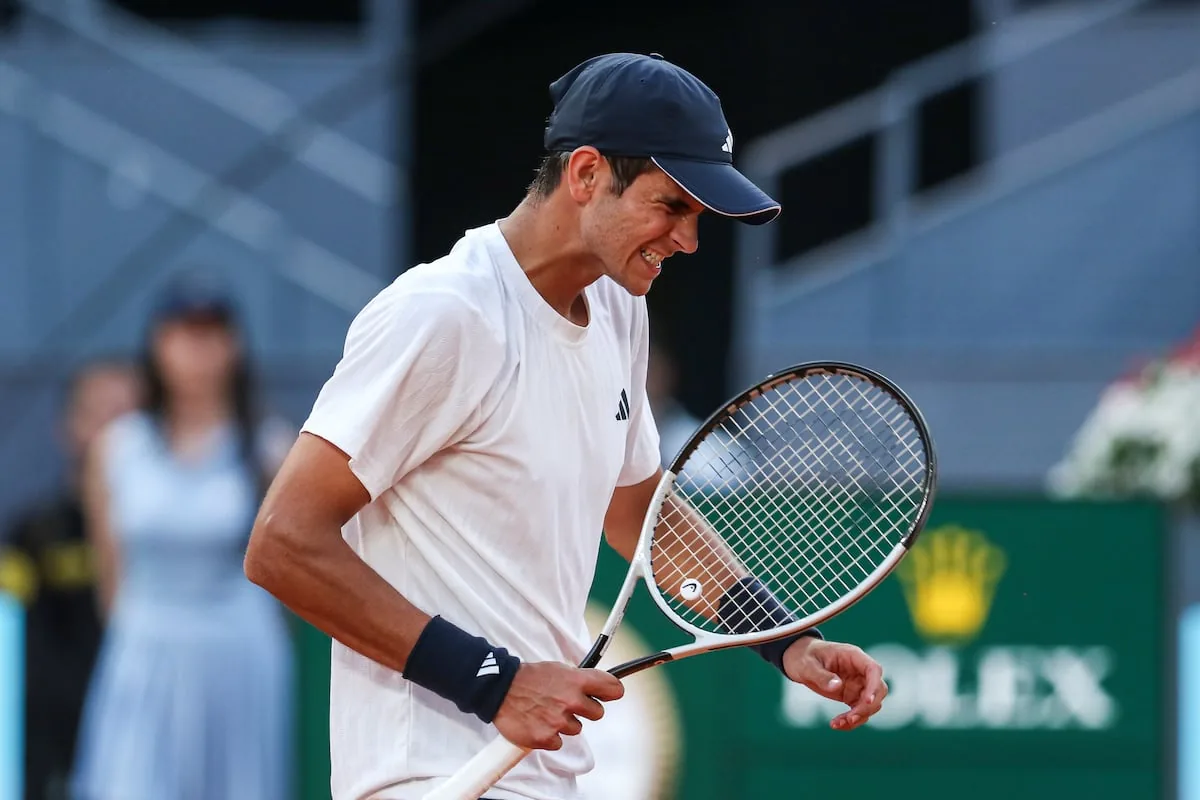
The young Rafael Jódar, 19 years old, suffers greatly and calls for the physio to massage his calves in the final stretch of the match against the Dutchman Jesper de Jong. He has already played 35 matches on those legs this year, his first among the elite, and that still youthful body must get used to the continuous grind. The Spaniard starts badly, another breath of fresh air, but reacts and the crowd (a third of the capacity) remembers it: there’s a good tennis player down there. He already has 27 victories this season of discoveries, the first in the San Fermín neighborhood, and the boy celebrates: “Hey, Jude! Let’s go!”. Madridista Bellingham applauds and he is already looking to Friday: the 2-6, 7-5 and 6-6 (in 2h 31m) guides him towards the clash with the world number eight, Alex de Miñaur.
From one stage to another, from Barcelona to Madrid, two radically different realities; two very distinct scenarios, two atmospheres that have little in common and two Jódars. From the free one who enjoyed himself on the sand of Godó just a few days ago, to this other one who today suffers in the depths of the Caja Mágica, a setting always complex and even more so for Spaniards, for the young and even more so for debutants. It was never easy to adapt or get a feel for a tournament that, for example, choked the now director Garbiñe Muguruza; also another Madrilenian, Martín Landaluce, who three years ago —when he was 17— succumbed to Richard Gasquet and everything that a debut implies.
Playing at home, a double-edged sword for anyone. Jódar, the same player who recently triumphed in Marrakech and amazed at Godó, with a series of eight consecutive victories, now experiences the jitters. From the beginning, it’s an uphill battle. Far from the good sensations of last week in Pedralbes, many difficulties with his serve —only 44% of first serves in the first set— and disorder in the rally; trailing an incisive De Jong who senses those nerves and fiercely attacks the Spaniard’s second serves. “Breathe!”, a fan tries to encourage him after four breaks. But, uncomfortable the whole time, he can’t quite find his rhythm.
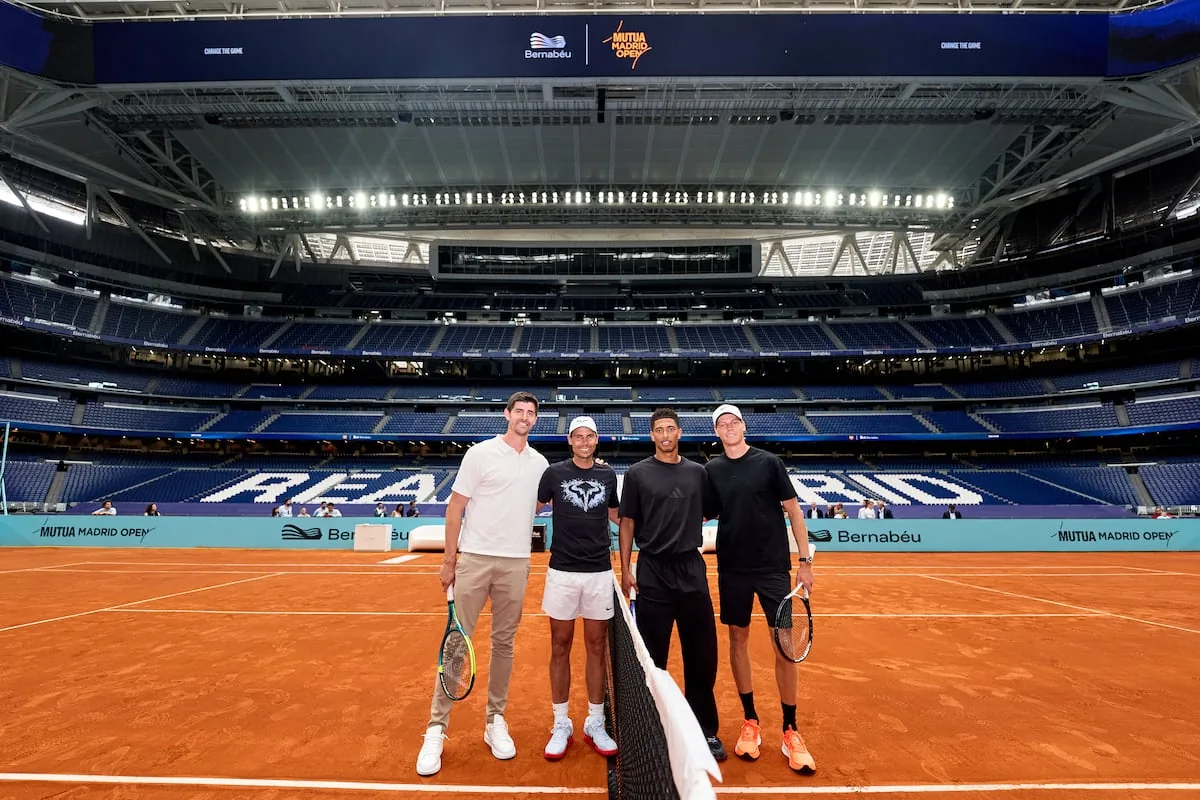
The photo is striking. To one side, in the box, his father tries to suggest tips, surrounded by empty seats and metal plates, with his usual discretion. In contrast to other players, Jódar relies exclusively on the guidance of his father, who also doesn’t like what he sees. That forehand and backhand, so clean just a moment ago, frequently crashes into the net (12 unforced errors) and the deep shot flies excessively long. Madrid, something different. More difficult than usual to control the ball. An extra newton means a fault. Someone named Jannik Sinner, who apparently knows a thing or two, recalled it the day before: “This tournament is one of the most demanding.”
The world number one’s impression coincides with that of the entire circuit, everyone aware of the complexity and trickiness of the altitude and the setting. The rookie Jódar also knows it, and besides tennis, he has guts. Given what has been seen, he’s not bad at comebacks either. The Madrilenian recalibrates again and little by little, in fits and starts and without De Jong allowing him to enjoy it, he corrects himself and gains ground. On the fifth attempt, he closes the second set and evens the match, and despite the setback in the decider —from a favorable 3-1 to 3-3—, he prevails again. He grits his teeth, a trademark, and salutes the crowd that now enjoys another refreshing talent. Madrid embraces its Jódar.
Read more Manchester City takes the lead in the Premier League after seven months of Arsenal’s leadership