



No one disputes that Brunete is a town. We are in the west of the Madrid region, 30 kilometers from Puerta del Sol, where that word, town, bothers in other larger neighboring municipalities, but the people of Brunete use it, some with pride and others with resignation. Here live 11,287 people. There is no shopping center, no cinemas, no nightclubs, and Mercadona closed five years ago to relocate to the neighboring municipality of Villanueva de la Cañada, more populated and richer. It was a blow for the people of Brunete. The mayor tried by all means to stop that exodus and even requested a meeting in Valencia with Juan Roig, the president of those supermarkets, but it was in vain.
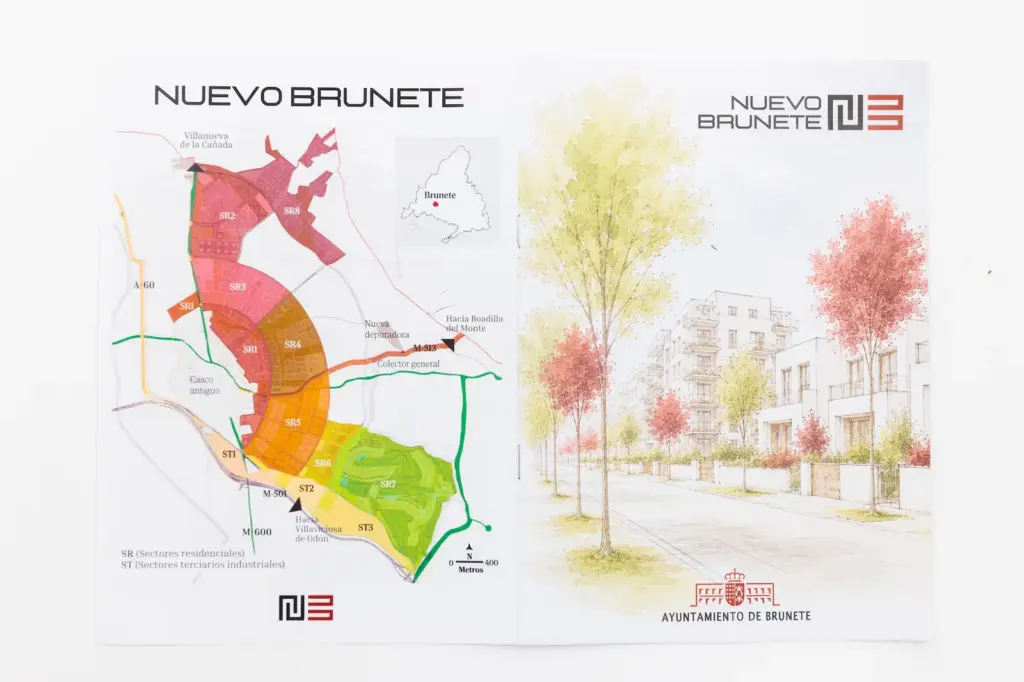
However, that quiet life —or boring, depending on whom you ask— could be numbered. The City Council, governed by the Popular Mar Nicolás, has an urban plan designed in the era of the real estate boom that contemplates the construction of 17,572 homes. Taking an average of three people per household as a reference, the project would allow the arrival of 52,000 new neighbors.
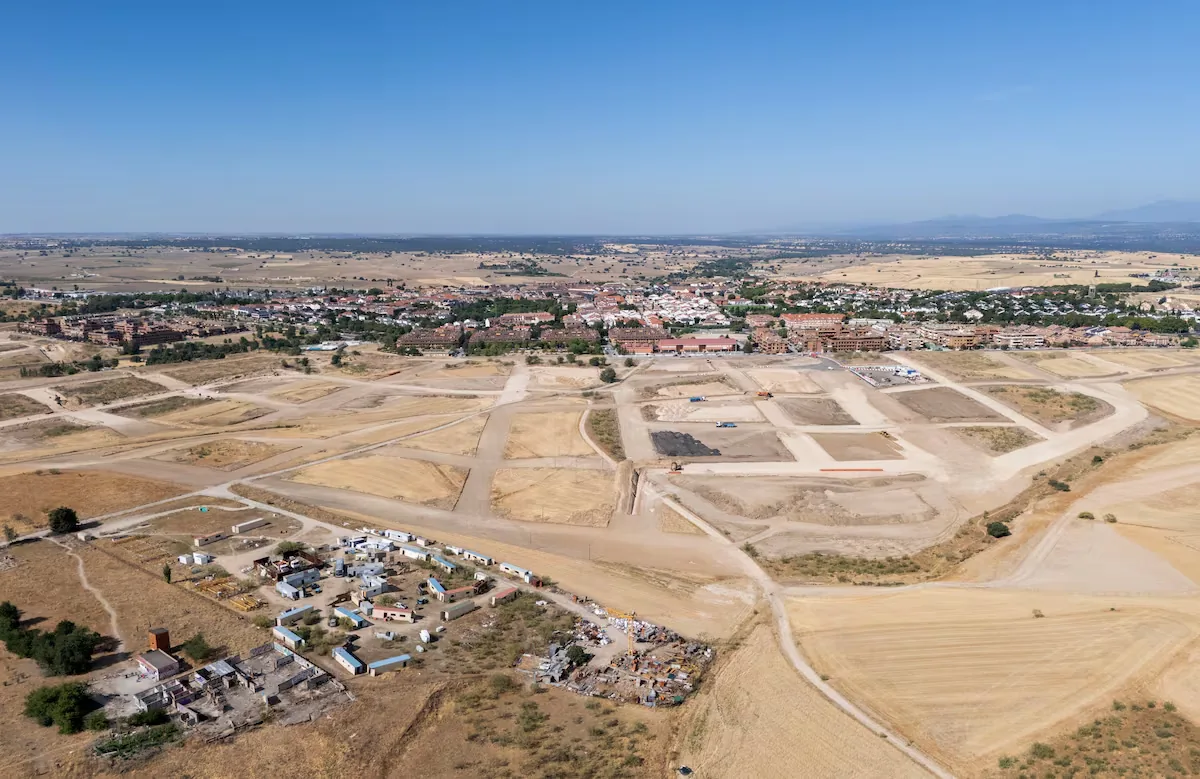
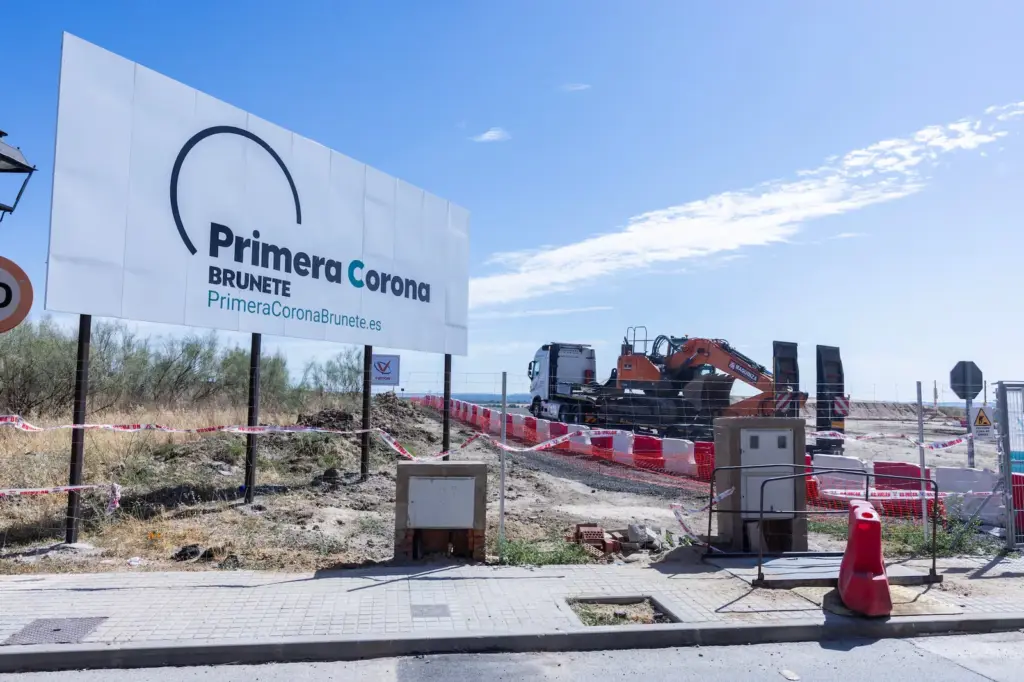
The mayor laid the first stone of Nuevo Brunete in April last year, that is the name of the project. Since then, work has progressed with the initial phase of earthmoving, the first step to radically transform this locality.
What happens here is not an isolated case. In different parts of the region, small and medium-sized Madrid municipalities are preparing plans to multiply their size and absorb part of the residential demand that Madrid city cannot satisfy due to price. El Molar, with nearly 10,000 inhabitants, projects more than 5,300 homes; Paracuellos de Jarama has approved 7,233 homes; and in Tres Cantos the opposition fears that the developments under study will end up doubling the population in a disorderly way. Metropolitan expansion is gaining speed again.
The push responds to a real need: the shortage of affordable housing. But it also awakens uncomfortable memories. Some of these projects were born during the previous real estate bubble, were frozen after the crisis, and now return in a context of strong demographic pressure and a political discourse that imagines an increasingly large and competitive Madrid on the global stage. Environmentalists fear that the Madrid law deregulating land, planned for the end of the year, will mean the loss of natural land, and urban planners warn of the creation of new commuter towns dependent on cars.
“The mayors have opened the floodgates because they have believed the official discourse of Madrid DF that will compete with Miami, New York, or London,” criticizes Adolfo Rodríguez, activist of Ecologists in Action, citing the concept popularized two years ago by essayist Fernando Caballero, who argues that all of Spain would benefit if the capital becomes a megalopolis of 10 million inhabitants to compete with other large global cities.
For now, life in Brunete has changed little. The construction sites border the urban area to the west. It is the part of the municipality closest to Madrid city. From dawn, trucks enter and leave the area where the homes will be built. Several real estate agencies have opened in the surrounding streets in the last year.
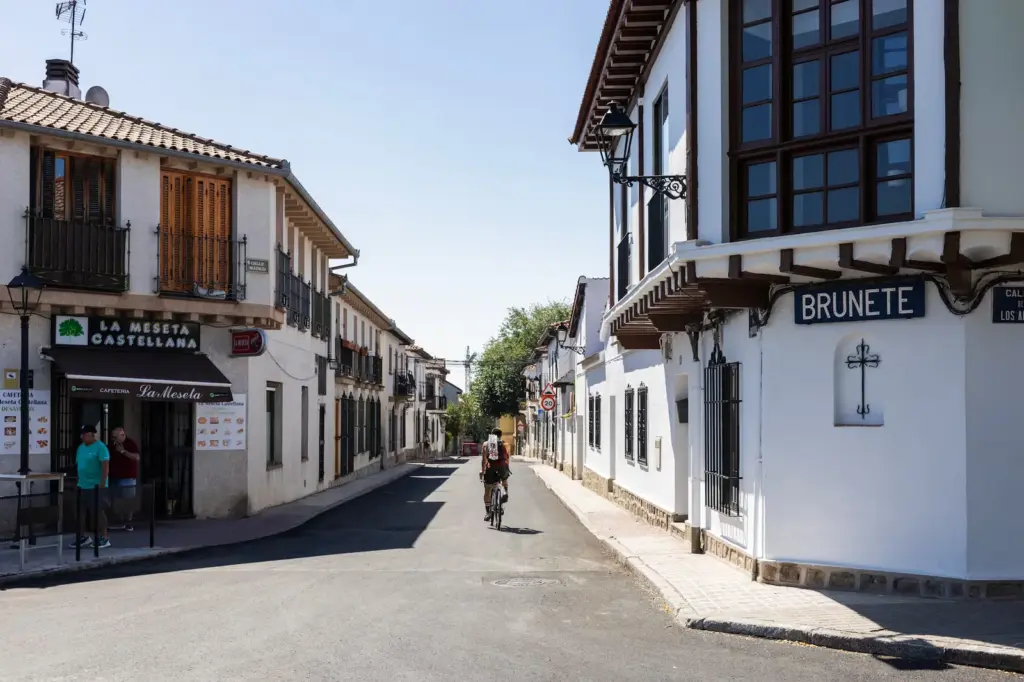
The center of white houses in Brunete could be mistaken for that of any Manchego town. Everything revolves around the Plaza Mayor, the place of popular festivals and the giant screen to watch Spain in the World Cup. After lunch on a summer day, it is completely deserted and only the birds and the bells break the silence. The storks have nested in a church tower.
A few meters away, in Luis Martín Granizo park, there is not much movement either. Four friends spend the afternoon in the shade. Questions about the Nuevo Brunete megaproject encourage them. “This is a boring town,” says Sara Fernández, 49 years old. “It needs a push.” Sara ran a bar with her uncle but ended up closing it a decade ago because “the kids head to Madrid.”
“Look, I want Brunete to change, but not wildly. To preserve its green surroundings,” intervenes Nacho Piera, 33 years old, sporting a blonde mohawk and two earrings per ear. One of his hobbies until not long ago was going out with friends to the fields to pick mushrooms and wild asparagus. Walking or doing sports in nature is the leisure of Brunete’s residents. On the paths, they cross toads, rabbits, foxes, and wild boars.
Álvaro José Fernández, 34 years old, prefers everything to stay the same. He believes Brunete risks becoming a new Boadilla del Monte, where he lives. Today it is the second richest municipality in Spain, but development has made everything more expensive. “People with money will come to live and they will ruin everything,” he says, sprawled in a folding chair, and continues with the bad omens: “Everything will become overcrowded. We will go down the road seeing house after house.”
Read more This is how they have started to deceive justice with AI: «It is an invisible fraud»
When Nuevo Brunete was launched, the mayor celebrated that they were “building a future of opportunities for families, for our youth, for entrepreneurs, and for all those who believe in the potential of our locality.” The plan includes 42.4% protected housing.
The developers argue that such a large increase in supply will help moderate prices. Álvaro and other neighbors believe the opposite. “The price will go up,” he predicts. His argument is simple: when the town becomes a city, with more services and leisure options, it will attract more people and everything will become more expensive: “The cheapest thing is to go to a village.”
For now, living in Brunete is much more affordable than in Boadilla or Villanueva, the wealthiest municipalities nearby. Second-hand apartments with pool and garage range between 200,000 and 400,000 euros and chalets between 500,000 and 700,000 euros.
The big question is how long it will take Nuevo Brunete to become a reality. Skepticism is widespread. Neighbors have been hearing about expansion plans for decades that ended up derailing due to various irregularities and later due to the bursting of the real estate bubble.
The mayor, who has not responded to EL PAÍS despite repeated attempts, told a local media outlet that construction “will be spaced over a period of 15 or 20 years.”
The left-wing opposition shares the need to grow but fears the municipality is not prepared to do so sustainably. “These developments are very necessary but we don’t want what happened in Boadilla where there are huge traffic jams,” says José Manuel Hoyo, mayor for the PSOE between 2019 and 2023, and now an independent councilor.
People without cars have a hard time. Brunete does not have Cercanías and on weekends there is not even a bus to take them to the hospital they depend on, Puerta de Hierro, in Majadahonda. Many neighbors also consider that some public services have become too small, from the health center to the library.
“Here the problem is that growth is sudden and wild,” warns David Izquierdo, spokesperson for Ganemos Brunete (the Podemos and United Left platform). Izquierdo recalls the pharaonic projects that were left half-finished after the 2008 crisis: “We don’t know if a bubble will come and everything will be left halfway.”
Izquierdo is also worried about losing the village atmosphere. “Here you greet everyone on the street, they are faces you see daily and that can be lost. It would be a shame,” he says echoing what attracted so many neighbors from the capital, himself among them. They left Madrid in search of a quieter life. Now they fear Madrid will catch up with them again.
Do you have something to tell? Write to the author at fpeinado@elpais.es