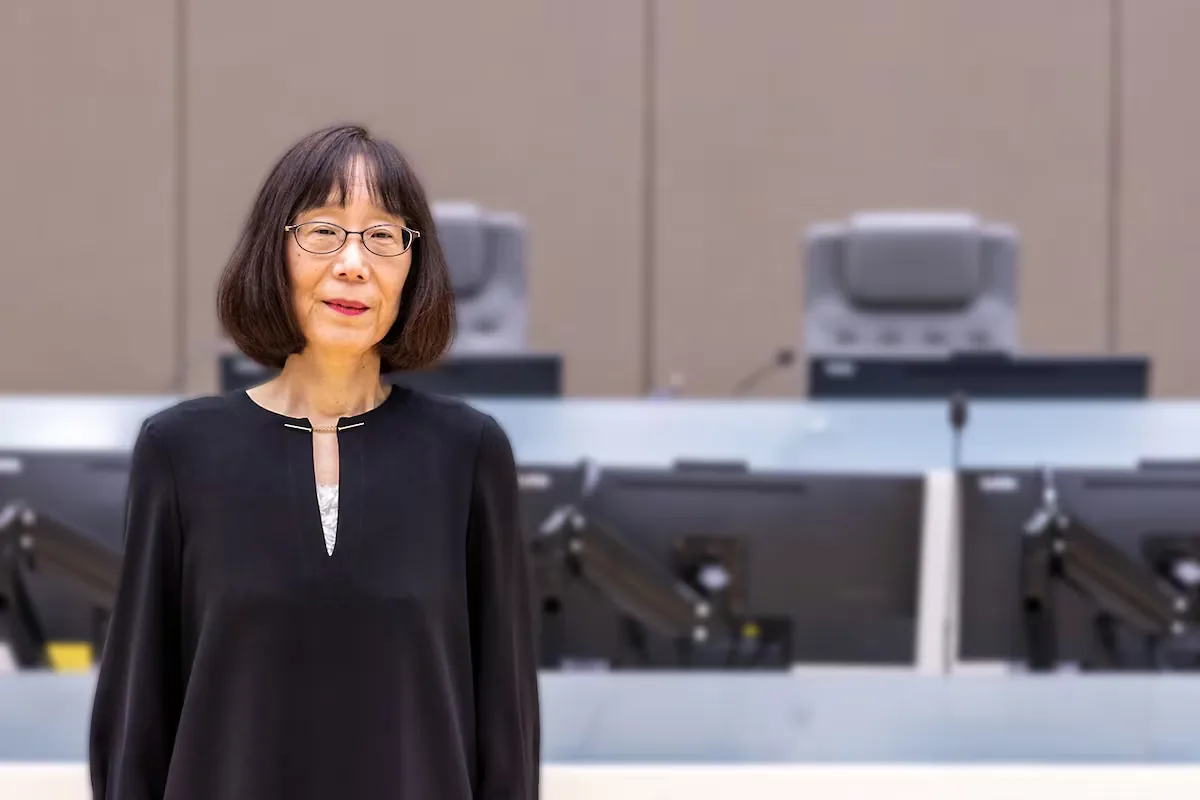
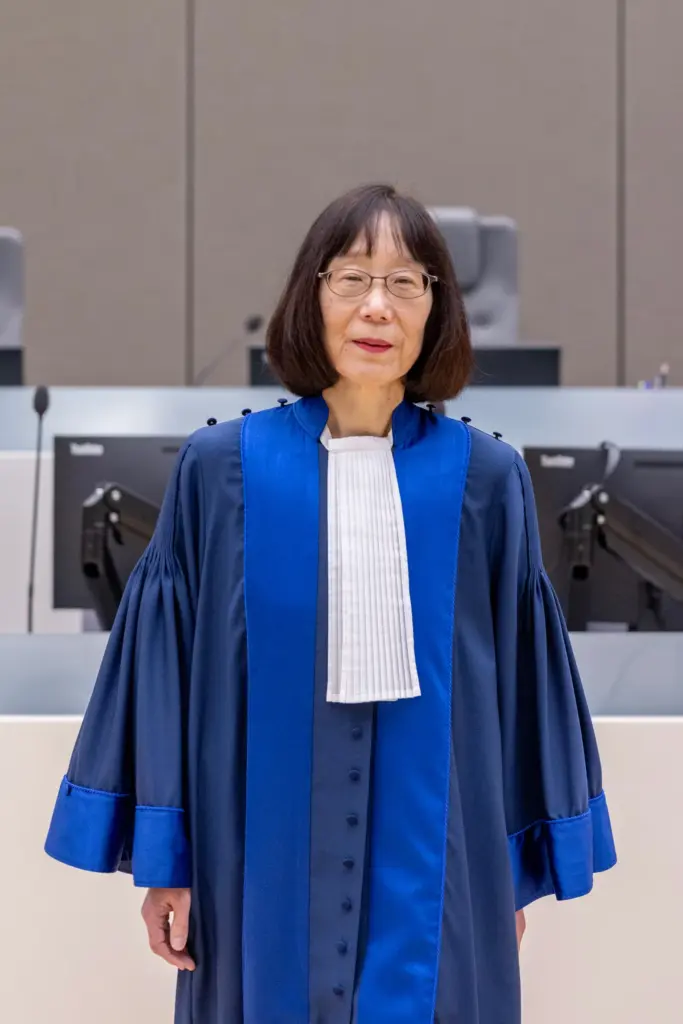
Tomoko Akane (Nagoya, Japan, 1956) was elected in 2024 by her peers as president of the International Criminal Court (ICC). Her term ends in 2027, coinciding with the expiration of the nine-year statutory period as a judge in the only permanent institution that tries the highest responsible for genocide, war crimes, and crimes against humanity. In August, the United States sanctioned her along with Senegalese prosecutor Abdoulaye Seye. At this moment, for example, this magistrate cannot enter U.S. territory and her credit card has been canceled. There are already 13 judges, prosecutors, and one staff member punished in this way by the government of President Donald Trump, who considers the ICC a “corrupt and politicized body” that threatens its sovereignty and attacks its main ally, Israel.
Read more Morocco, emboldened: Mohammed VI grows stronger thanks to the support of Trump (and Israel)
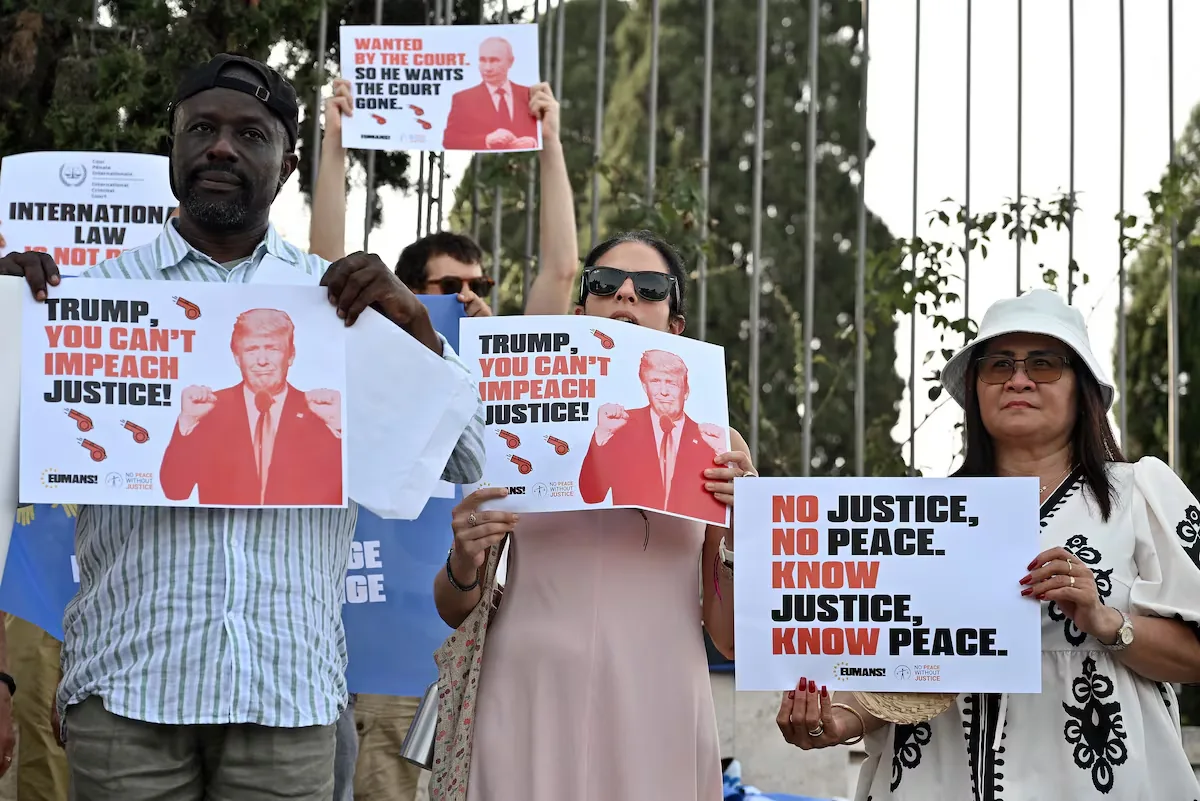
The U.S. is not one of its 125 member states and Washington believes that no world court can prevail over its own and its Constitution. Marco Rubio, Secretary of State, has gone further declaring that he intends to “dismantle it,” and also pressures countries with which it maintains alliances to abandon it.
Moreover, Akane joined in 2023 the Pre-Trial Chamber that issued the arrest warrant against Russian President Vladimir Putin and was also convicted in absentia by Moscow courts. Her situation is unprecedented. The ICC president has responded to a questionnaire sent by EL PAÍS, in her first interview with a Western media outlet since the announcement of the sanctions.
Question. How do you face the punishment imposed on you by the United States?
Answer. It is always shocking to see your name on the same list as traffickers and terrorists when you are a judge committed to defending the rule of law. Many of its effects have not yet materialized, but it is reasonable to expect that they will affect some aspects of my personal life. My credit card was suspended almost immediately. Other judges have suffered practical disruptions in their daily lives as a result of companies ceasing to provide services to sanctioned individuals.
Since my high school years, I have been driven by a commitment to justice. At this critical moment, as its president, I feel the personal responsibility to help protect the Court. Its independence and ability to deliver justice to victims. I will continue to perform my duties and fulfill my mandate. I took an oath to do so and remain firm in that commitment.
Q. Is the ICC facing its greatest challenge since it was created in 2002?
A. Nine of the 18 judges, the two deputy prosecutors, the former prosecutor, and one staff member have been sanctioned by the United States. Additionally, nine current and former judges, including the entire ICC presidency, have been convicted in absentia by Russia, [after issuing an arrest warrant against Russian President Vladimir Putin, for his alleged responsibility in the forced deportation of Ukrainian minors], which has obvious implications for their personal security. In total, two-thirds of the Court’s judges are subject to coercive measures by some of the world’s most powerful states. This is an unprecedented situation in the history of the ICC. These attacks attest to the importance of the impartiality of this Court’s work. Efforts to investigate and prosecute the most serious crimes under international law provoke resistance from those who prefer impunity over accountability.
Q. Are we witnessing the beginning of the end of the international rule of law?
A. These are deeply worrying times for international justice and for the international order based on rules. At the same time, it is encouraging to see how states, civil society organizations, and citizens raise their voices in defense of International Law. These displays of solidarity are more important than ever.
The Court was not created by chance nor established overnight. Rome was not built in a day, nor was the Rome Statute [the text that underpins the ICC’s work]. The Court arose from the lessons of war, persecution, and mass atrocities, and from the conviction of states that law and justice must prevail over force. Those values are as important as ever. It remains a young institution compared to legal systems built over centuries. But it rests on an idea whose time has come: no one is above the law.
Q. The crimes tried by the ICC may seem distant but could happen anywhere. Can it still be the cornerstone of the global fight against impunity?
A. A permanent court is operational before crimes are committed. Its jurisdiction is known in advance and applies the same law to all those under its reach. This permanence is what allows a court to deter and not just react, and what makes the promise credible to people who would have no reason to expect a court to ever be created for them.
Once I was in the courtroom when a victim of sexual violence was asked why she had decided to testify. She answered: “I know no one else can defend me, only justice, the judges (…) because what happened to me, I wouldn’t want it to happen to anyone else.” Those victims remind us why this work is important and why it must continue. To make the promise of “never again” a reality. Sooner or later, History will hold us all accountable. “Where were you?” they will ask us. I call on states to defend and promote these fundamental principles of International Law, which are moral imperatives, and to promote the pursuit of justice.
Read more Tamales and tomatoes
Q. What kind of external collective action does the ICC need to face Washington’s penalties?
A. We have received strong support from states and will continue in close contact with them to face the challenges of these measures, including political, legal, financial, and operational issues. There is another form of collective action: cooperation. ICC decisions can only be enforced when states give effect to them, especially through the execution of arrest warrants. The pursuit of justice is a shared responsibility.
Q. How do the sanctions affect the victims?
A. I can assure you that they remain central in our proceedings. They participate in trials through their legal representatives, ensuring that their views and concerns are heard throughout the process. After a conviction, they may be entitled to receive compensation.
The trial against the former head of state of the Philippines [Rodrigo Duterte] is scheduled to begin in November, and another case related to serious crimes allegedly committed in a detention center in Libya [against former militia commander Khaled Mohamed Ali El Hisri] is expected to open next year. To date, the Court has opened 18 investigations and contributed to accountability for serious crimes such as the recruitment and use of child soldiers, destruction of cultural heritage, sexual violence, or attacks against civilians.
Q. The United States claims that the Court is politicized and has Israel in its sights. Does the ICC violate the national sovereignty of its 125 States Parties?
A. The mandate is to investigate and prosecute when states are unwilling or unable to do so. The Court complements national systems rather than replacing them. That does not constitute a violation of sovereignty. It is the exercise of sovereignty. The very creation of the ICC results from the exercise of sovereignty by states in a multilateral treaty. It is based on the shared conviction that the rule of law is the greatest protection against abuse of power, and that accountability is essential. Judges do not choose the situations presented to them nor the accused. We simply apply the law to the evidence of the cases we receive. That is what impartiality requires.
Q. During its early years, the ICC was criticized for focusing on Africa. Now there are arrest warrants against Russian President Putin and Israeli Prime Minister Benjamin Netanyahu for the war in Gaza. What has happened?
A. At the beginning, several investigations arose from referrals on the initiative of African states or by the United Nations Security Council relating to conflicts in Africa. Over time, the work has expanded to cover all regions of the world. But our responsibility is not to respond to political debates, but to apply the law regardless of geography, nationality, or political considerations.
Q. The Court lacks its own police and depends on international cooperation to execute its arrest warrants. Does this not undermine accountability?
A. None of the current proceedings would have been possible without the cooperation of states to arrest and surrender the suspects in question. Cooperation with the Court is a challenge and a legal obligation, and a means for states to reinforce their commitment to international justice. Arrest warrants do not expire and the most serious crimes do not prescribe. History has shown time and again that justice can take time, but accountability remains possible.