Morocco has taken giant diplomatic strides on the international stage, far exceeding its stature as an emerging regional power in North Africa, with the blessing of three permanent members of the UN Security Council —the United States, France, and the United Kingdom— and the abstention of the remaining two —Russia and China—. In the last five years, this country of just over 38 million inhabitants and a gross domestic product 10 times smaller than Spain’s has also become the largest arms importer on the continent.
Read more Tamales and tomatoes
Donald Trump’s recognition of Moroccan sovereignty over Western Sahara at the end of 2020 marked a turning point in the country’s foreign policy, highlights Bernabé López García, an Arabist and veteran expert on Morocco: “For the first time, a great power like the US confirmed Rabat’s thesis, bypassing the UN with impunity. It was in the extra time of the president’s stay in the White House, which gave an air of improvisation to the decision, as if done through the back door,” recalls the honorary professor of the Autonomous University of Madrid, who explains that, “in exchange for establishing relations with Israel, Trump emboldened Morocco, which has since hardened its foreign policy, pressuring left and right, before Security Council Resolution 2797, the work of the new Trump Administration in its second term, was approved last October.” Rabat gained the backing to place its autonomy plan for the Sahara at the center of the UN debate. “It was of great help, once many more supports were obtained, including those from key countries such as France, the United Kingdom, Germany, and Spain, the former colonial power.”
Little time remains until the next vote on the Sahara in the Security Council, at the end of October. Until then, observers have wondered, notes Bernabé López, if what is currently happening in Ceuta could be a gesture from the harder Moroccan sector of power to “do a favor for the American friend who puts Pedro Sánchez in a tight spot (as an enemy of the Republican), and incidentally support the irredentists (supporters of Greater Morocco beyond its recognized borders),” with a view to the electoral campaign for the legislative elections on September 23. The elections were languishing, oblivious to citizen interest, before the Ceuta migration crisis acted as a catalyst for mobilization to the polls.
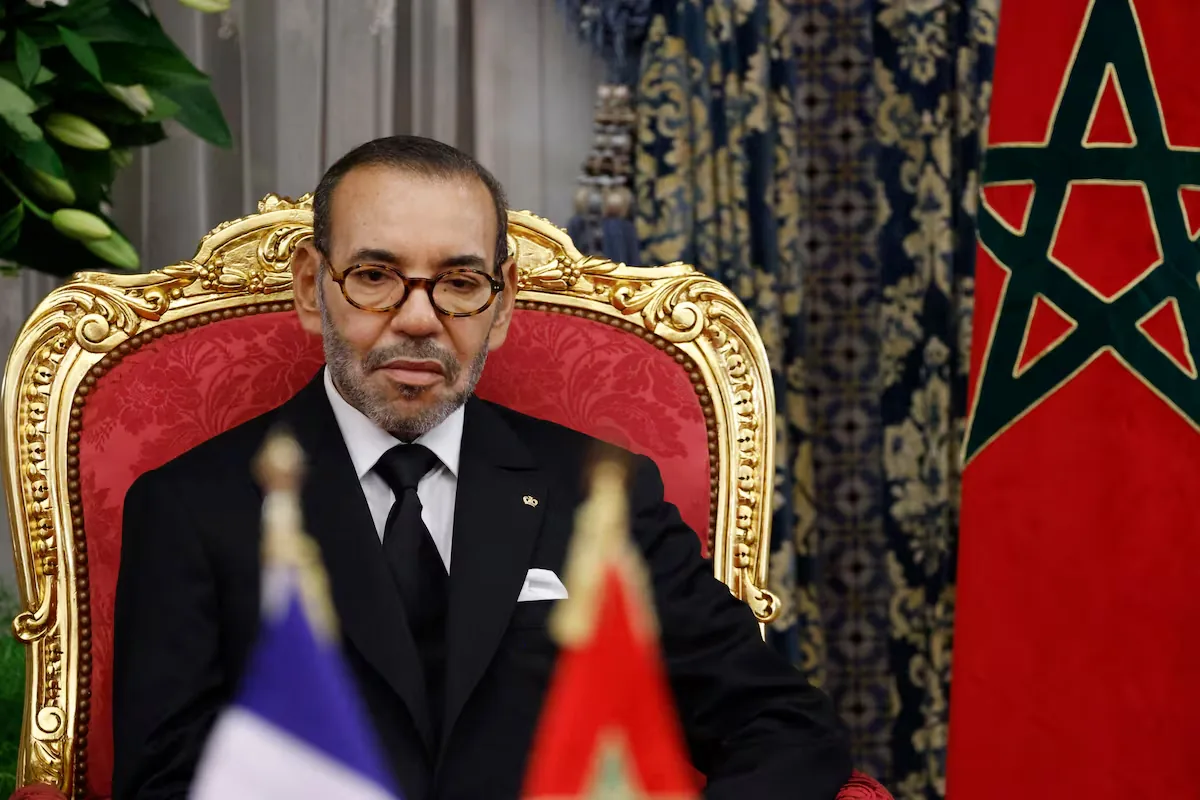
The Maghreb country appears more solid today in its foreign relations than during the crisis of the Spanish islet Perejil (Laila, for Moroccans) which marked the early years of Mohamed VI’s reign in 2002 and brought Morocco and Spain to the brink of armed conflict. Moroccan security forces occupied an uninhabited rock, located near the coast, until they were dislodged by the Spanish Army. It even shows more assertiveness than in the Ceuta border crisis in 2021, when nearly 10,000 Moroccans stormed the Spanish autonomous city due to the laxity of Rabat’s security forces. And, in the midst of a migration crisis since last July, it has also reactivated the question of sovereignty over Ceuta and Melilla —through several ministers, one of them in the presence of King Mohamed VI himself— after having advanced several squares in its diplomatic position in the Sahara.
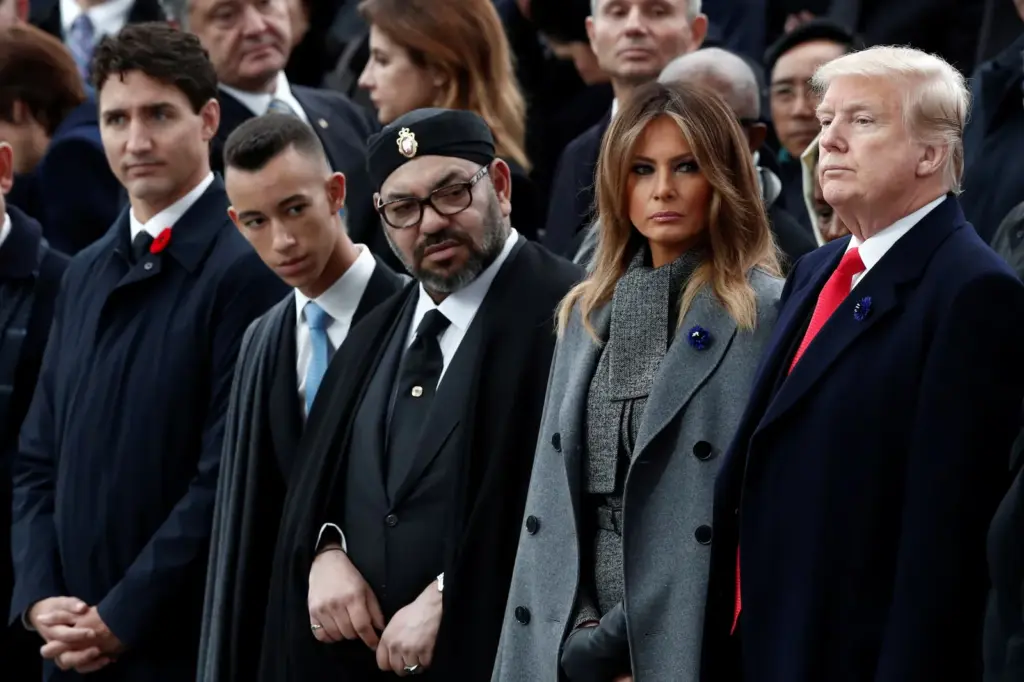
Entrenched in the autonomy thesis after the shift in its favor by the United States, it now seems to play with an advantage. The President of the Government, Pedro Sánchez, recognized in 2022 before Mohamed VI in the Moroccan capital that he considered the self-government proposal under Rabat’s sovereignty as the “most serious, realistic, and credible” solution for the entrenched Sahara conflict, which turned 50 in 2025. In return, Madrid and Rabat sealed a “mutual commitment to avoid the use of unilateral sovereignty claims and actions that could offend the other party.”
Given the current upheaval in Ceuta, Bernabé López warns that Morocco should not be in a position to address a claim over the autonomous cities without first fully resolving the Sahara issue. But that would be “strictly speaking with the international law of before in hand, since now everything is upside down.” Ceuta and Melilla are not territories to be decolonized, according to the UN, and Morocco has never managed to change that situation, although “in these times, that may matter little.”
With Washington’s help, the North African country has rearmed to surpass Algeria’s military purchases, its biggest regional rival, according to the latest report from the Stockholm International Peace Research Institute (Sipri). The United States supplies 60% of arms acquisitions, compared to 10% from France, which has been displaced from second place after the re-establishment of relations with Israel six years ago.
Washington’s recognition of Moroccan authority over the Sahara led to the normalization of already existing under-the-radar relations with Israel. They advanced vigorously in security and defense matters, in the diplomatic ripple effect of the so-called Abraham Accords. As Lahcen Haddad, a Moroccan academic expert in international affairs, explains, “the step taken by the US represented a significant milestone. It was part of a diplomatic process initiated years earlier by Rabat to reach a solution through the Moroccan autonomy initiative.” In his opinion, the importance of this decision lay in the hegemonic role of the United States in international relations and the coherence of its stance. “It contributed to reorienting the debate towards a pragmatic and negotiated solution that takes into account the reality on the ground,” specifies the former minister and current parliamentarian.
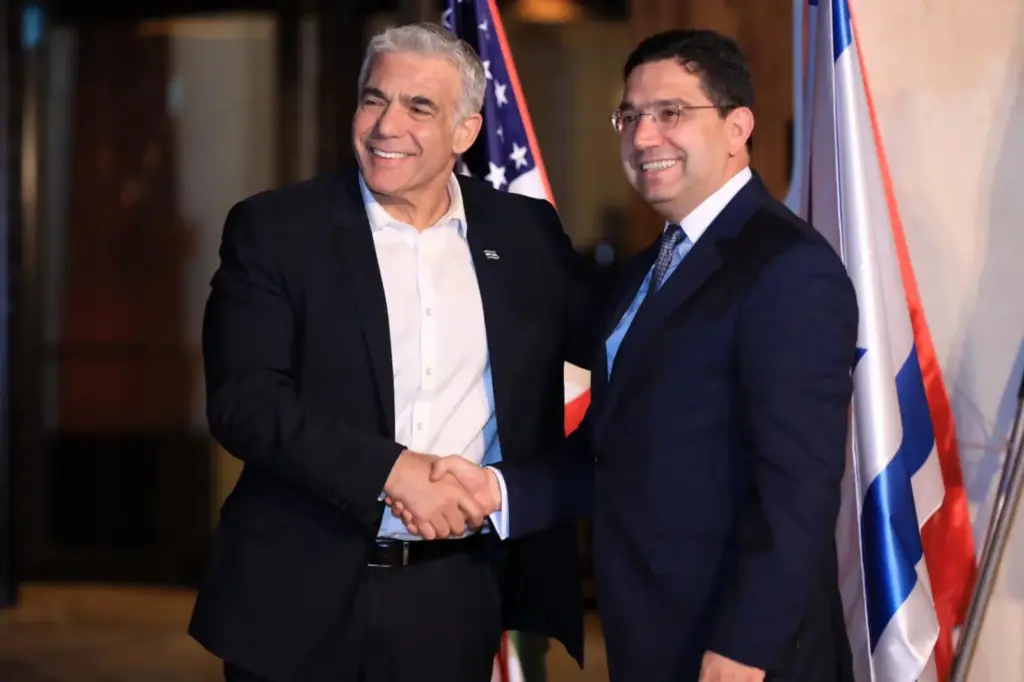
Regarding the resumption of relations with Israel, he considers that they were framed within the same diplomatic context, and in the “historical ties that unite Morocco with its Jewish community and the diaspora in Israel [nearly one million inhabitants of Moroccan origin].” In addition to security and defense agreements, Haddad highlights the expansion of cooperation in areas such as technology and cybersecurity.
Morocco has acquired the Barak MX anti-aircraft and anti-missile system, manufactured in Israel, deployed as a desert iron dome in the Sahara, at a cost of 430 million euros. At the same time, the Israeli and Moroccan armies have this year for the first time signed a military action plan that consolidates the defense cooperation agreement signed by both governments in 2021. This includes joint maneuvers, such as those of the African Lion exercises organized by the US in southern Morocco and in which Israeli troops participate, or the construction of two Ofek 13 spy satellites designed by Israel Aerospace Industries for 925 million euros for the Rabat Armed Forces.
Agreements with Russia, China, and Latin America
The Sahara underpins Rabat’s foreign strategy, and Haddad admits that Security Council Resolution 2797 represented “a significant diplomatic advance given the growing attention paid to the Moroccan autonomy initiative, although without prejudging the final outcome of the negotiations.” He believes that the abstentions of Russia and China can be interpreted as an expression of their reservations and traditional approaches to the Sahara issue, but he emphasizes that no permanent member exercised its veto, “which confirms the existence of a diplomatic space to continue talks,” based on the autonomy plan.
Rabat signed a fishing agreement with Russia in 2020, renewed in 2025, while the European fishing fleet ceased operating in waters under Moroccan control in 2023. China has also taken the first steps to cast its nets in those same fishing grounds, although Beijing has focused its economic interest on the installation of gigafactories for manufacturing electric batteries and other automotive components.
Read more Unity in Morena: Mission Impossible for Sheinbaum
The question of Western Sahara is “the prism through which Morocco views its international environment,” according to the doctrine formalized in a speech by King Mohamed VI in 2022. The outstretched hand is only extended to those who share Rabat’s criteria for the autonomy of the territory under its exclusive authority. The current monarch has undertaken a strategy of rapprochement with sub-Saharan states during his reign with the aim of reintegrating his country into the African Union in 2016. His father, Hassan II, left it abruptly in 1984 after the admission of the Sahrawi Arab Democratic Republic (SADR), proclaimed by the Polisario Front.
The opening of three dozen consulates in El Aaiún or Dakhla (formerly Villa Cisneros), the main cities of the Sahara, and the evolution of the positions of several African states demonstrate, according to Haddad, a member of the conservative and nationalist Istiqlal Party, the growing strengthening of Moroccan relations in Africa. Morocco has made that continent one of the central focuses of its diplomatic interests. For decades, it has been weaving an economic, diplomatic, and religious network in Africa, and exerts influence over numerous sub-Saharan countries through investments in the banking, insurance, and telecommunications sectors. The African destinations of the flag carrier Royal Air Maroc have tripled in recent years, turning Casablanca’s Mohamed V airport into a connection hub between Africa and Europe.
In Latin America, Morocco has also undertaken efforts to diversify and consolidate its alliances. Some states have re-evaluated their position regarding the SADR. The latest has been Colombia, which on August 8 recognized Morocco’s sovereignty over Western Sahara and froze its relations with the Sahrawi Arab Democratic Republic, following in the footsteps of other conservative Latin American governments that have displaced those of progressive leaders.
Like most Moroccans, Haddad reaffirms his country’s historical position on Ceuta and Melilla —as “occupied cities” that must be reintegrated into national sovereignty—, although he recognizes the need to address this issue with caution and in a spirit of dialogue in the midst of an election campaign. “Morocco can continue to express its [sovereignist] position, while at the same time prioritizing cooperation and stability in its relations with Spain.”
Morocco’s international strategy on the Sahara has been strengthened by its alliance with the US under Trump’s presidency and with Israel under Prime Minister Benjamin Netanyahu. This advantageous position can contribute to reinforcing its overall diplomatic influence, but, as Haddad adds in a conciliatory message, “it does not prejudge the specific treatment of the issue of Ceuta and Melilla.” He believes it could be addressed “gradually, when political and diplomatic conditions are propitious, respecting the interests of the affected populations and the stability of the Western Mediterranean (…) through an approach based on consultation, trust, and the search for peaceful solutions.”
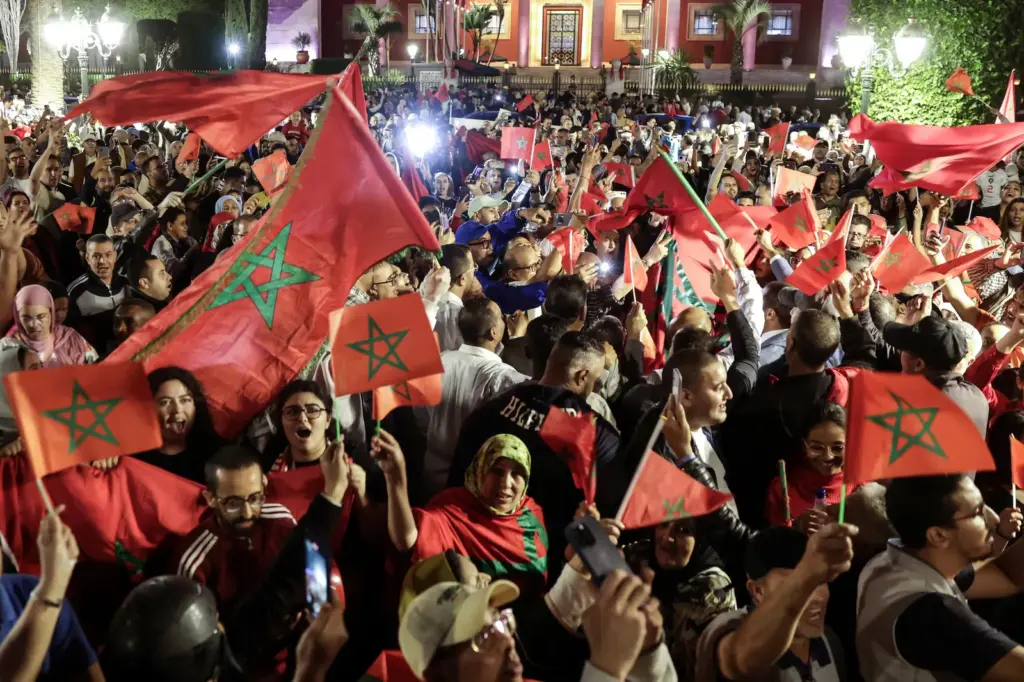
Trump’s 2020 decision on the Sahara marked a turning point for Morocco, although there were precedents for its diplomatic shift, as highlighted by International Relations professor Irene Fernández Molina. The invalidation by the European Union between 2015 and 2016 of its agreements with Rabat affecting Western Sahara (fishing, trade, agriculture…) already caused a turnaround in Rabat’s policy, which began to prioritize “territorial integrity.” Morocco then adopted a more aggressive stance, to the point of triggering a crisis with the EU, without high-level political dialogue until 2019.
The opening of consulates of African countries in Western Sahara later broke the international consensus on the former Spanish colony, explains the same expert in Moroccan foreign policy. “Trump’s declaration of sovereignty was the icing on the cake and provided Rabat with an unimaginable diplomatic victory until then.” She adds: “Trump strengthened Morocco’s position, but everything remained a coitus interruptus, as the administration of Democrat Joe Biden opted to suspend the recognition of sovereignty over the Sahara shortly after, without applying it with concrete measures.”
The university analyst maintains that Security Council Resolution 2797 of October 2025 did not represent such a radical change: “The United Nations Mission for the Referendum in Western Sahara (MINURSO) has not disappeared, as Rabat intended, and the consultation [on self-determination] formally remains in its name.” Amidst the “unprecedented centrality” achieved by the Moroccan autonomy plan after the UN vote, the ambiguity of previous resolutions fundamentally persists. “A new negotiation process was driven by the US earlier this year, but it has lost momentum and diluted, without generating news again since the start of the Iran war.” She cites the meetings convened by Washington between Morocco and the Polisario Front, in the presence of Algeria and Mauritania, which officially began in February in Madrid. “Rabat awaited Trump’s return to the White House to take giant steps [on the international stage] with the aim of obtaining international legalization of its de facto control over the territory of Western Sahara.”
Analysts now wonder if Rabat is in a position to address the issue of Ceuta and Melilla. “There is a hierarchy of priorities,” this expert points out, “and Morocco is still far from achieving full international recognition of the annexation of the Sahara. It is an issue that has not yet been closed according to its interests. Meanwhile, the question of Ceuta and Melilla occupies a subsidiary place.”
Although different voices are now heard in Morocco bringing up the claim over both autonomous cities, the political and media uproar is explained more by the legislative elections on September 23, adds Professor Fernández Molina, than by a real change in the strategic orientation at the heart of the Moroccan regime.
Read more The ethical quality of good living