







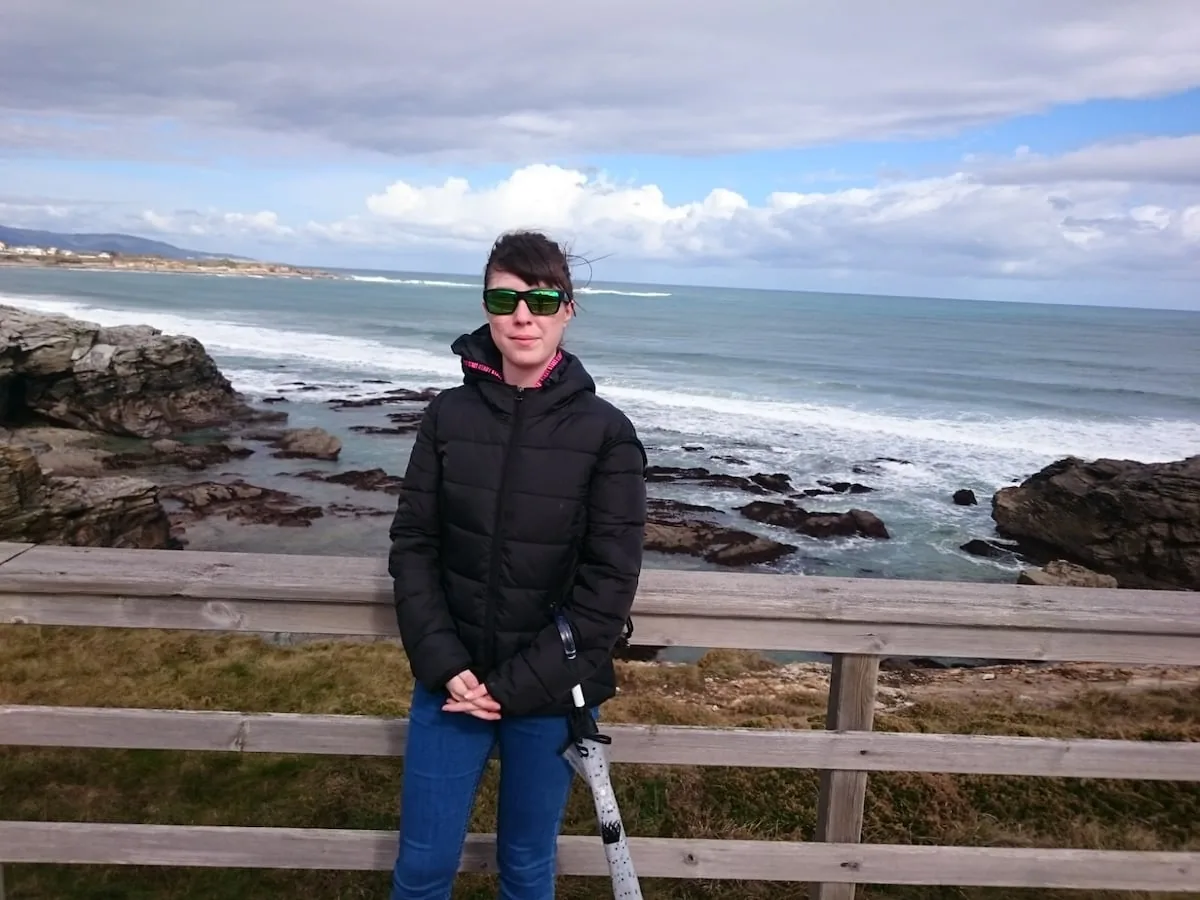
Irene died during Holy Week in 2018 at just 24 years old while visiting the caves of As Catedrais beach, in Ribadeo (Lugo). A stone from this natural monument, which had become a tourist attraction, fell on the young woman from Valladolid. That March 31, she had ventured with her boyfriend into the cavities open to visitors, surrounded by a crowd of curious onlookers and surveillance personnel, and after two other landslides had occurred that same morning and were ignored. None of this facilitated the clearing of responsibilities after the tragedy. The criminal investigation was shelved, and her family had to face a judicial battle through civil channels that lasted eight difficult years. The Audiencia Nacional has just ruled in their favor.
“What happened was not an inevitable accident,” emphasize Irene Baladrón Zorita’s parents. The central government, the Xunta, and the Ribadeo City Council have been passing the buck for years, washing their hands and blaming the victim because she “was informed of the danger.” The sentence issued in February, which can still be appealed in cassation before the Supreme Court, jointly distributes responsibility among these three administrations and establishes compensation of 73,000 euros for the family. It concludes that all of them had competencies related to safety on this beach on the Lugo coast, a geological marvel visited by 250,000 tourists each year and which has a limited visit system organized by the Xunta.
The family denounced that the signage of the danger of landslides was “insufficient” and that the three administrations “allowed the influx of numerous visitors to the place, despite the fact that a storm had passed in previous days and the rains increased the risk of landslides.” The City Council and the Xunta argued that Irene’s death occurred in a maritime-terrestrial zone, owned by the State. The central government defended itself by alleging that the powers of surveillance and accident prevention in these areas belong to the local administration and that the controls of entry to the natural monument were the responsibility of the regional executive.
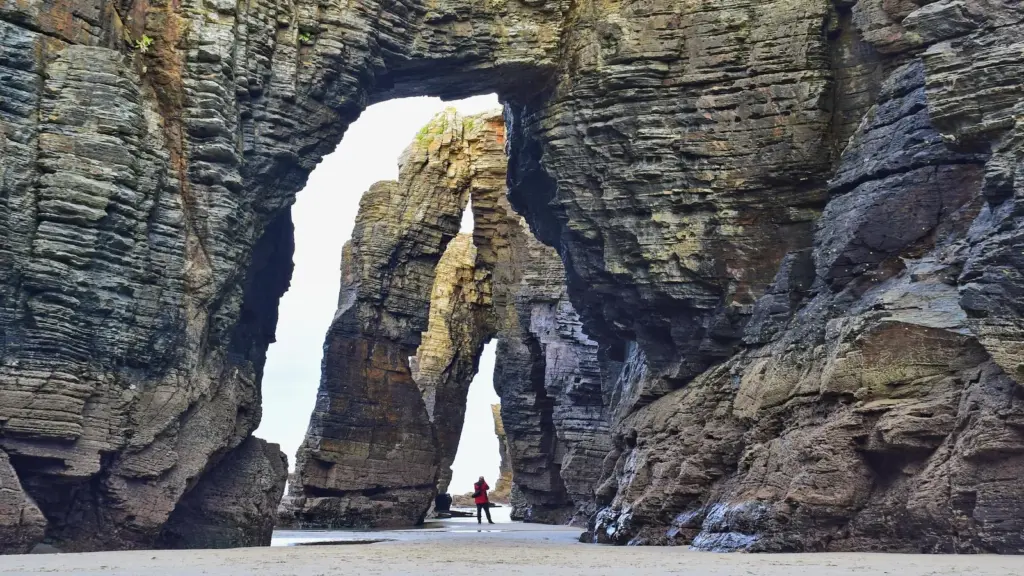
The parents insist that these administrations “were not unaware of the risk.” For example, as stated in the sentence, the central government carried out works on the cliff in 2006 and 2010 without adopting the prevention measures recommended in a report from the University of Santiago that “expressly warned of the existing dangers.” It was a “controlled access enclave, with an entrance, with a capacity of up to 5,000 people daily, paid staff, and actively promoted by the same institutions that for years claimed to have no responsibility whatsoever,” the family continues. The defendant administrations had “technical reports documenting the danger” and “workers were expressly prohibited from entering the caves due to occupational hazards.” As if that weren’t enough, they add, the storm of the previous days “had extraordinarily increased the risk, something visitors could not know.” The sentence itself emphasizes that “there was no action plan agreed upon by the public administrations” to protect people when the weather softens these delicate stony formations carved by wind and tides over thousands of years.
Nature also issued warnings that day that went unheeded. Before Irene entered the beach, two landslides occurred in the caves that did not hit any tourist and also did not prevent visits from continuing normally. “They should have closed the beach or implemented safety preservation measures for tourists, such as closing caves or setting up safe routes,” explains Santiago Díez, the victim’s family lawyer, who explains that security at this natural monument was reinforced after the young woman’s death, a girl born in León but living in Laguna de Duero, Valladolid, who was about to graduate in Law. “The day after Irene’s death, the beach was immediately closed. That decision, which came too late for her and for us, shows that it was always possible to make it,” her parents point out. Since then, “the same beach closes, normally, when conditions require it.”
Read more Mariana Mazzucato: “The years of US hegemony are over, we are seeing the end of the Roman Empire”
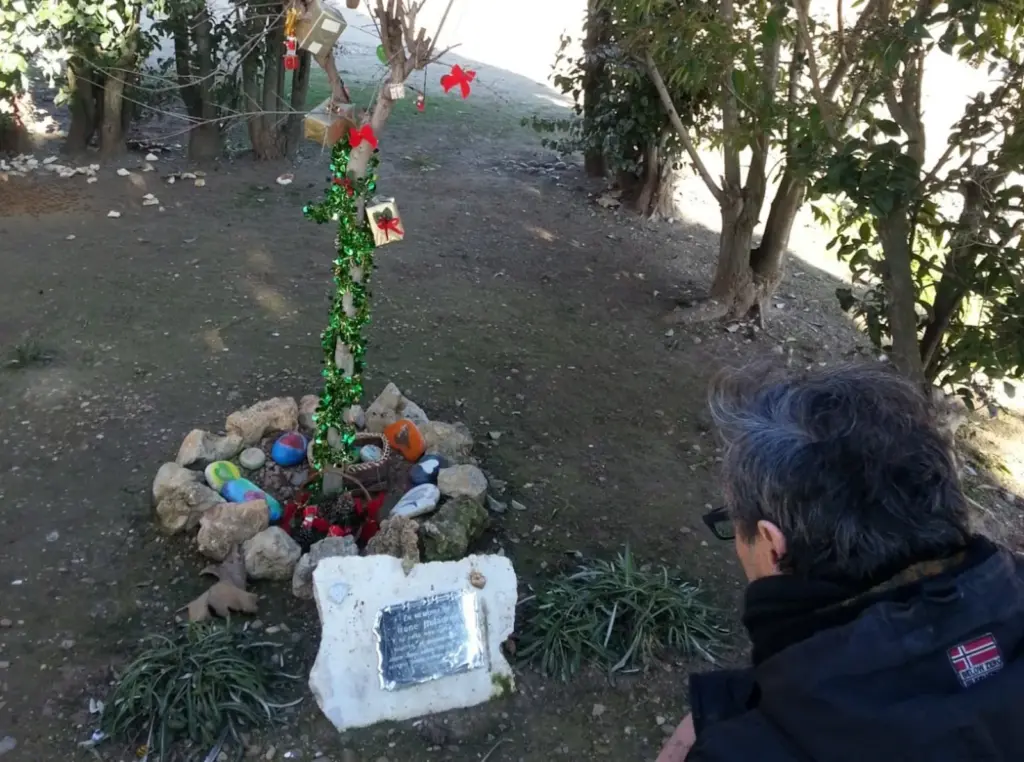
The path Irene’s parents have had to walk to repair their daughter’s memory has been long and difficult. After the tragedy, which the Xunta insisted on defining as an “inevitable” fatality, a criminal case was opened which, despite the family’s appeals, ended up being closed due to the blurred responsibilities regarding safety on the beach. They filed administrative claims, but they were rejected. Then they filed a lawsuit before the Audiencia Nacional, and the lawyers of the three administrations, along with those of their insurers, deployed a common strategy of pointing fingers at each other. “It has caused tremendous emotional stress for the parents,” laments Díez.
The lawyer believes that the As Catedrais case is related to the collapse of the El Bocal beach walkway in Cantabria, which killed six young people. In that case, the criminal case is currently progressing, with the indictment of three officials from the State Coastal Demarcation, a 112 operator, and a police officer. “It is a very similar case and, if the criminal route is closed, it could end up in the Audiencia Nacional with a similar lawsuit,” says Díez.
There is an allusion in the judicial ruling that has “disappointed” the young woman’s family. “It is profoundly unfair” that the judges insinuate that the tourist who lost her life “should have known that it was not a totally safe place” because at the entrances “there was a specific warning of the risk,” criticizes the lawyer. “What fault can a person have who enters an open place with controlled access?” asks Díez. However, Irene’s parents have decided not to appeal that part to the Supreme Court. They feel “exhausted” and “without strength” for another years-long fight.
Read more Trump and his allies use attack at correspondents’ dinner to push for construction of his ballroom