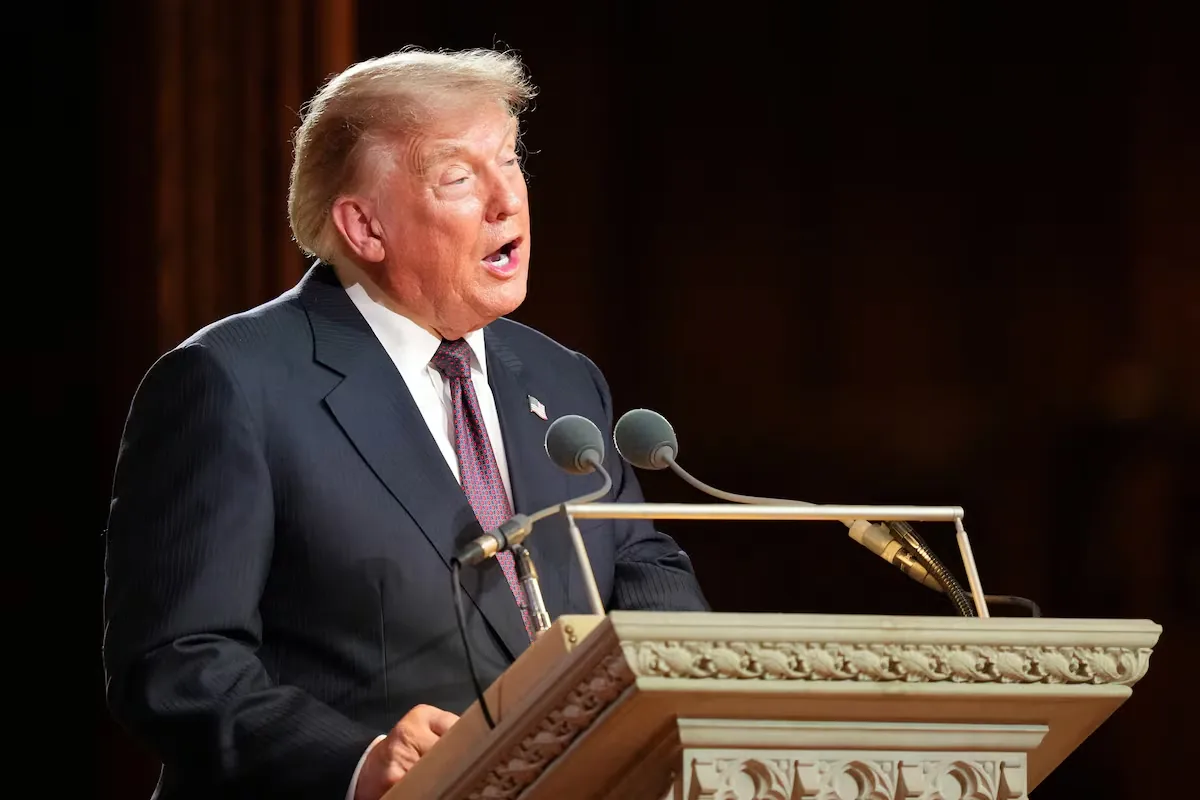









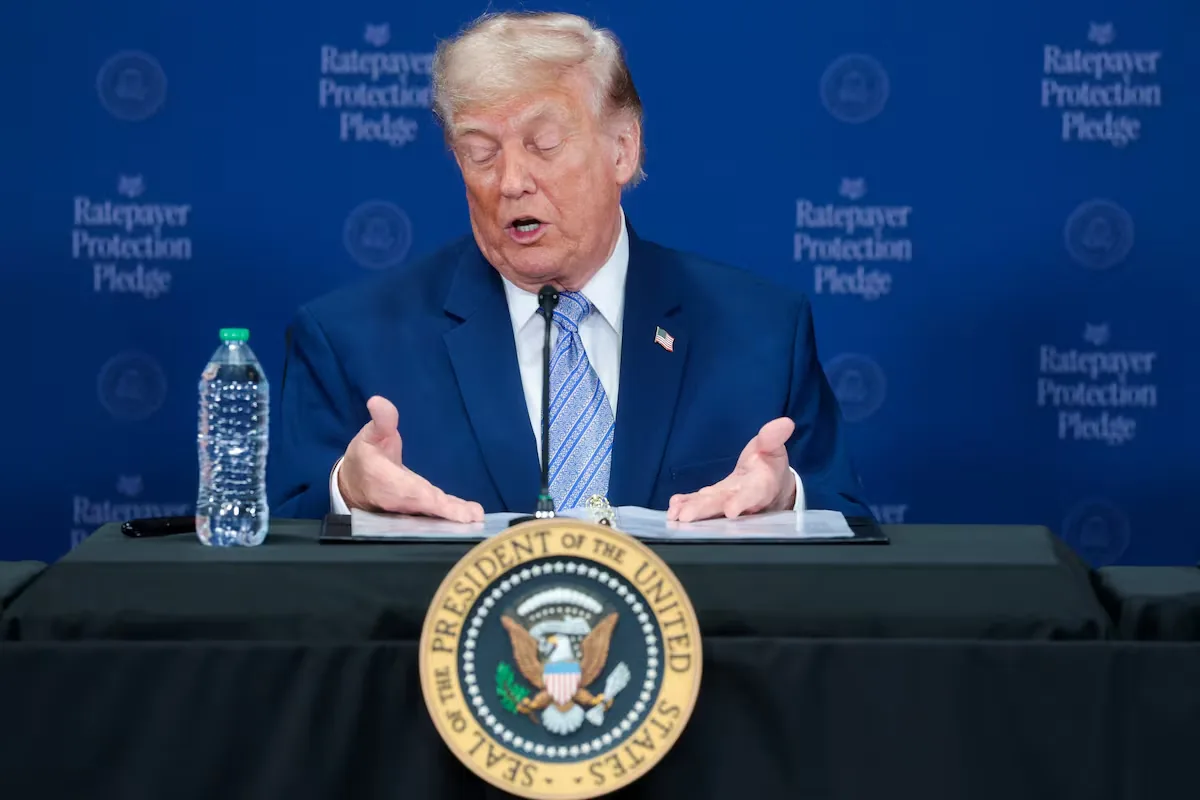
US President Donald Trump on Thursday approved an executive order to impose tariffs of between 10% and 12.5% on more than 60 countries, including Spain and the rest of the European Union members, the United Kingdom, China, India, Japan, South Korea, and Mexico, for not having taken sufficient measures to control imports of goods produced through forced labor. The new tariff blow is expected to come into effect this midnight before the universal 10% tariff approved last January by the US leader expires, to avoid a legal vacuum after the Supreme Court’s setback to the main measure on which his trade policy pivoted.
Read more Latest news on wildfires, live | Wind complicates extinguishing fires in the Community of Madrid
“This is the most momentous international action on labor rights that the United States has ever undertaken, or that any country has ever undertaken,” a senior Trump administration official declared in a call to a group of journalists. That is, he considers, for example, that the EU does not effectively prevent the purchase of products from economies where basic labor standards are not respected.
The White House estimates that the new trade retaliation will affect 99% of US trade. Trump approves this new round of import duties to maintain the tariff wall. It is based on Section 301 of the Trade Act of 1974, which allows him to establish compensatory measures against countries that engage in unjustifiable or discriminatory trade practices. With this decision, he also revives the trade war at one of the most complex moments of his second term, when the Iran war seems to have reached a dead end and polls reveal growing American discontent with his policies.
Trade Crusade
Despite everything, Trump persists in his trade crusade. It was one of the main arguments of the election campaign that propelled him back to the White House. And it was one of the most controversial measures at the start of the legislature. On April 2, 2025, a day he dubbed Liberation Day, he punched the global geopolitical chessboard and threw years of globalization, diplomacy, and trade relations to the ground. He opened a new era in world trade with indiscriminate tariffs on the entire planet. Global markets panicked and, although the fear that the resulting volatility would lead to a crisis forced them to quarantine and renegotiate with their trading partners, the rules of world trade had already changed.
The US Supreme Court wrote another chapter in this trade war. Last January, it declared reciprocal tariffs unconstitutional because they were approved by circumventing congressional oversight and without an appropriate legal framework. The Court concluded that Trump had overstepped by relying on the International Emergency Economic Powers Act (IEEPA), a 1977 law approved for other purposes.
To avoid humiliation and prevent the tariff wall he had built from collapsing, Trump announced a new round of tariffs a few days later. He invoked Chapter 122 of the Trade Act of 1974 to establish a universal 10% tariff. But this trade measure was only valid for 150 days, unless it was endorsed by Congress, something that has not happened in a divided country and four months before midterm elections, decisive for defining the president’s legacy and the limits of his power.
Negotiating Weapon
The real estate developer who became famous on television shows has wielded tariffs as a diplomatic negotiating weapon. He has threatened multiple countries with them under the most outlandish pretexts. From a group of countries that aligned with Denmark to avoid Trump’s expansionist desires in Greenland, to Canada over the smoke from wildfires reaching US skies.
Trump also threatened Spain with tariffs for not increasing defense spending, but Washington cannot set individual rates for European Union countries without first negotiating them with the European executive. He also warned that he would impose a 100% tariff on those European countries that approved the tax on certain digital services, known as the Google tax, which harms large US tech companies. That won’t be easy either. He will have to find another alternative route to the one chosen for this latest round of tariffs.
Chapter 301
The White House was aware that it would not get Congress’s approval to extend the universal 10% tariff, so it sought another legal loophole to maintain the trade wall. It resorted to Section 301 of the Trade Act of 1970, which allows tariffs to be imposed on countries that engage in “unfair, unjustifiable, or discriminatory” practices.
This rule requires prior investigations to justify trade retaliation, so US Commerce Secretary Jamieson Greer opened two files. One on 60 partners who allegedly failed to take sufficient measures to control imports produced through forced labor; and another on 16 countries accused of overproduction, a practice that drives down prices and harms domestic producers. The US Administration is using the first file based on Chapter 301 to now establish duties of between 10% and 12.5% on 60 countries.
Analysts and experts already expected the new trade offensive because the expiration date of the universal tariff was approaching. In fact, in the last two weeks, Trump had already imposed a 50% tariff on a wide range of products imported from Canada, such as automotive materials, alcoholic beverages, dairy products, furniture, and textiles, among others. In addition, he established a 25% tax on Brazil and accused President Lula da Silva of approaching trade negotiations with “bad faith.”
The new batch of tariffs reflects Trump’s effort to change the rules of world trade. They are a symbol of his protectionist policy and although the president claims they are intended to correct trade imbalances, in reality they are a source of revenue for a country that accumulates constant public deficits and runaway public debt.
They also occur in the midst of negotiations for the United States-Mexico-Canada Agreement (USMCA), signed in 2020 and whose review began a few weeks ago. Washington wants to remodel the trade pact to gain more advantages over its neighbors and threatens with tariffs in the negotiation. However, the new wave of taxes is expected to include exemptions for goods traded under the USMCA, which would be a relief for two of the United States’ largest trading partners.
The Republican leader persists in his bet on tariffs despite the fact that the courts are overturning almost all his proposals. Last January, the Supreme Court declared reciprocal tariffs illegal. Two months later, the US Court of International Trade did the same with the universal 10% tax, although another appeals court kept them in force while appeals were resolved. Dozens of companies are also expected to appeal this new trade offensive despite the Trump Administration’s efforts to dress them in impeccable legality.
Read more Powerlessness against the fire in Hell’s Valley: “El Bierzo again”