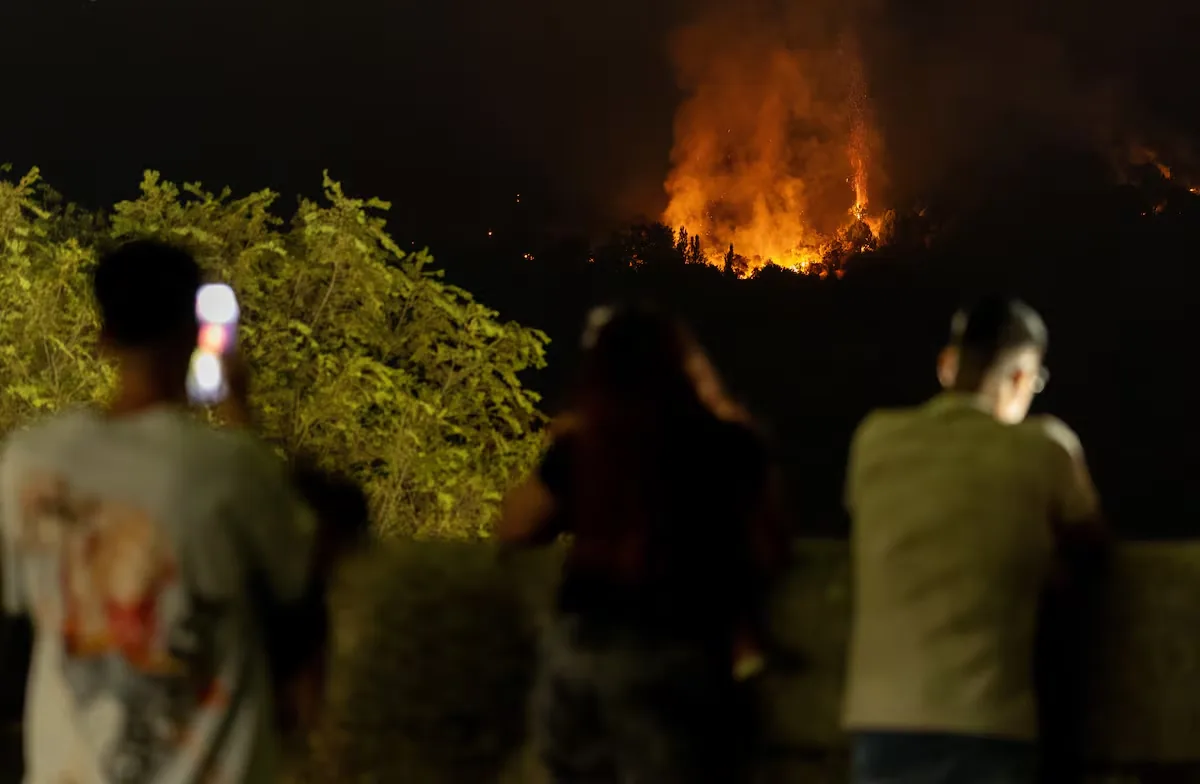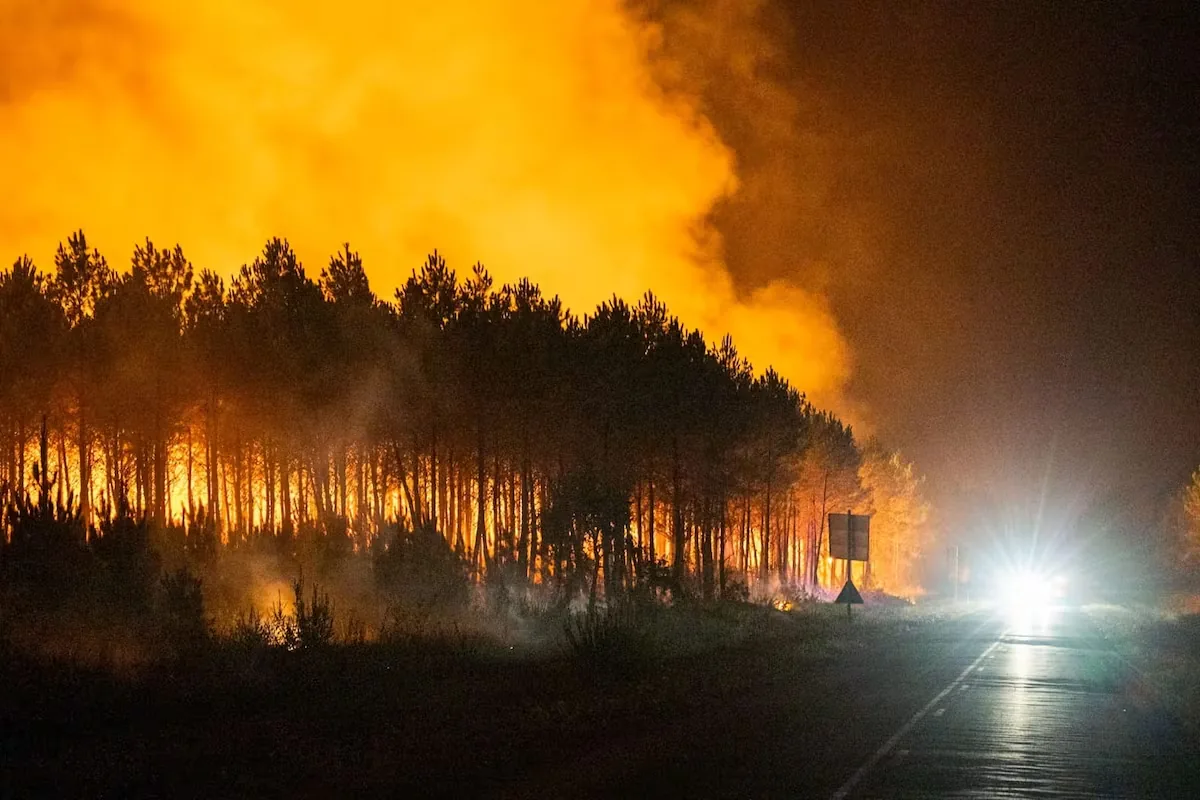






It smells and sounds like 2025. Smoke again and the crackle of fire again. El Bierzo is burning again. The Leonese region that suffered so much from last summer’s fires is once again suffering from the flames that are scorching the immense forest mass that grew in winter, without the residents seeing more prevention or control. The flanks are multiplying and what on Wednesday afternoon seemed like a small fire in Castropodame (León) has become a new burning tongue through the mountainous areas of San Pedro Castañero (León). The SUV of some locals rattles through there, frustrated because new fires are growing without aerial means appearing. The fire has burned the Hell Valley, an abrupt gorge among dry pine forests. The men ask for resources and resign themselves: “El Bierzo again.”
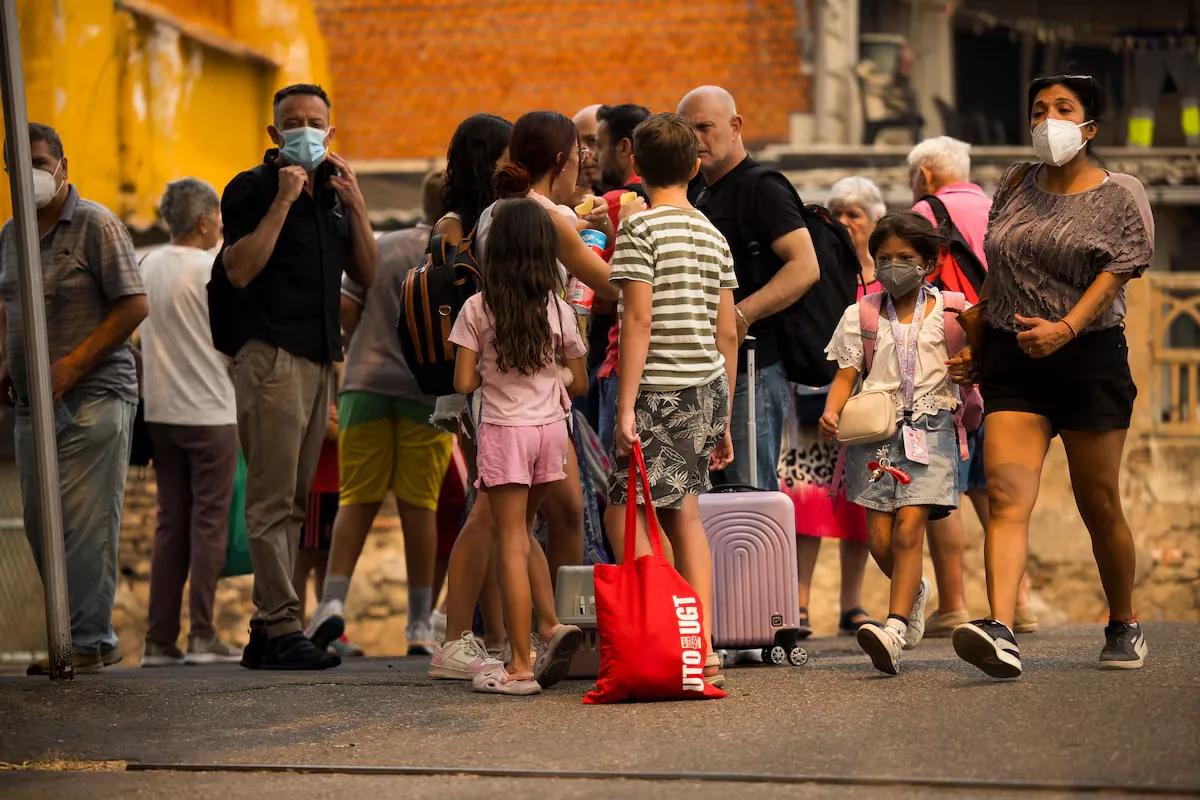
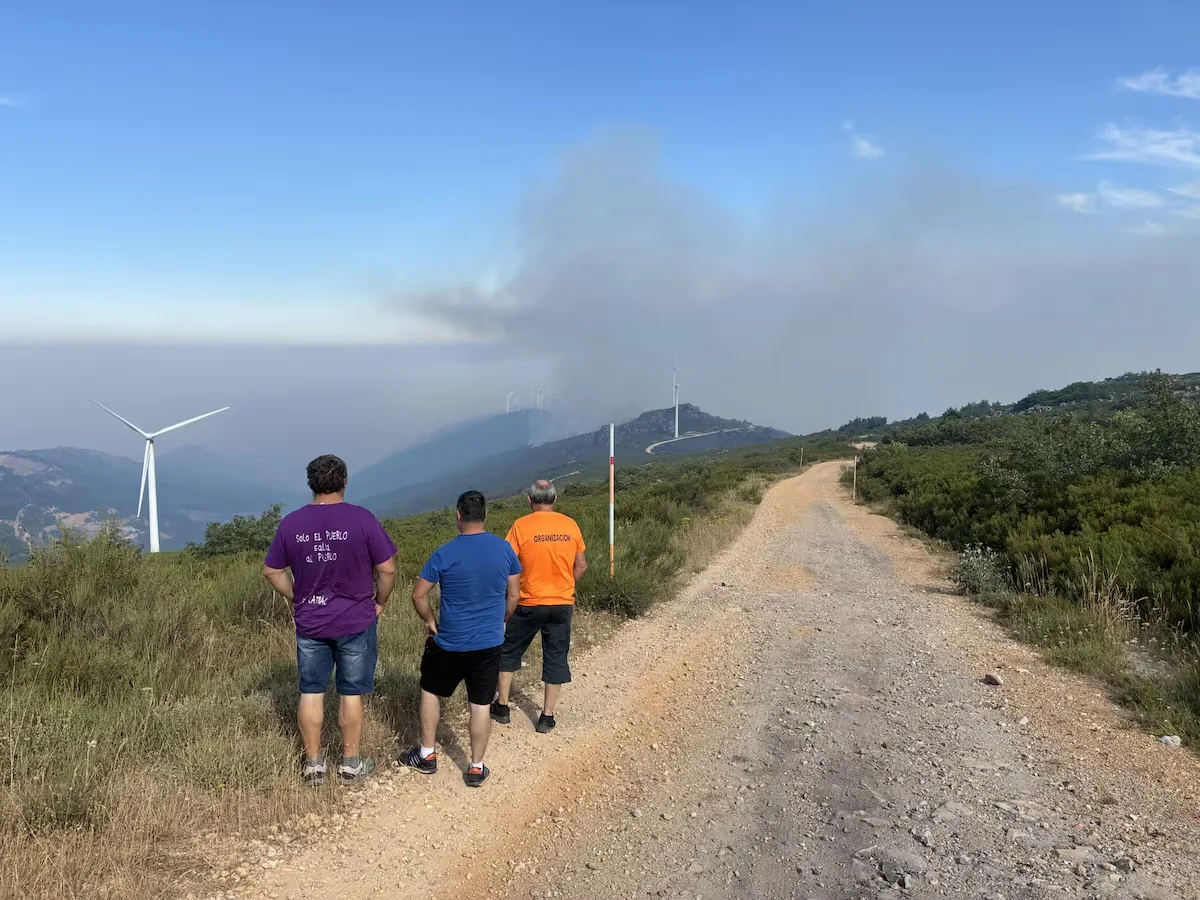
Hoses are spread across San Pedro Castañero (100 inhabitants). There are bicycles at the doors of the houses, but no children: they were evacuated the previous night along with the elderly. The rest stayed just in case and, after first observing the mountains with their arms akimbo, they start the four-by-four towards the top of the peaks, wind turbine territory, to assess the damage and estimate where the fire is advancing at 1,300 meters of altitude. The mayor, Román Díaz (PSOE), rides as co-pilot in Carlos Rodríguez’s car, 50, and behind him is Felipe Conçençao, 47. “Back to the same old thing,” he mutters, faced with “total and absolute neglect” and the feeling that “it’s absurd, it seems they don’t care if it burns.”
That “they” refers to the Junta de Castilla y León (PP-Vox), responsible for forest management. The group demands more winter resources, mountain clearing, management and creation of firebreaks, and more local involvement. Nuria Ramos, from the León command post, reported that the night was favorable due to the lack of wind and that this town, along with Turienzo Castañero, remains evacuated pending daytime operations. The crew watches as the flames intensify and engulf the vegetation with an increasing crackle as they devour the scrub and jump to taller trees. The mayor calls the command post and begs for helicopters like those supplied from a pond further down: “Send an aerial resource, with two passes it will be extinguished and won’t jump to the large pine forest!” For now, nothing, although as the hours pass, more blades will be heard flying over the area. Rodríguez, wearing a t-shirt with the slogan “Only the people save the people,” grumbles: “Damn it, again!” The men point to some well-maintained pine forests, without the undergrowth where the fire flies and allows it to climb to the treetops and spread: “This is because we clean them ourselves!
A local resident reported the start of the flames around six o’clock on Wednesday afternoon. That initial fire turned into a powerful blaze, with many brigades assigned to Guadalajara or Segovia, also seriously affected these days. The Junta referred to the origin of this fire as “accidental,” but sources close to the case explain that they found “a 16-liter jerrycan of gasoline and seven liters of oil on a track; we handed it over to the Civil Guard, a sign that the fire was presumably caused by an accident with a chainsaw cutting pines for the works on the power lines of the wind farm.” The Junta prohibits barbecues, pyrotechnics, or risky work during hot periods like this, but exempts “emergency actions and general interest” if communicated to the territorial services. The firefighter summarizes it this way: “It’s perfectly legal, not negligence, but it’s a risk that the Junta allows: if you have crews in Guadalajara, that area is left without surveillance. Don’t authorize it!” A pessimistic firefighter believes that with the afternoon heat, things could get out of control again.
Read more Calls to 016 grew by 120.8% in the hours after Spain won the World Cup
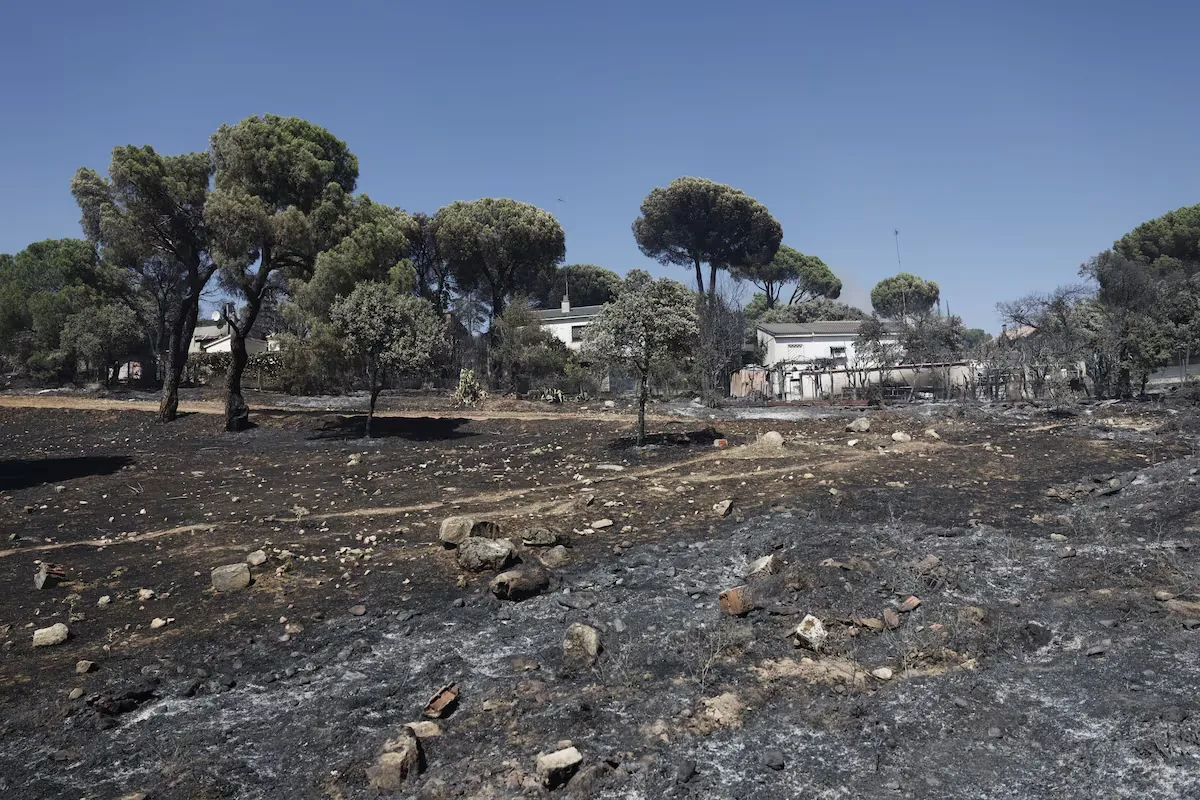
The expedition ascends and sees burned traffic signs, boundaries that contained the fire, and small fires that awaken with the incipient heat and burn fiercely again. The ground, once green, crowded with scrub, brush, and heather, is now black. Only the paths have prevented its advance, although everything will depend on whether the wind and temperatures rise. “It burned to the limit!” exclaims the mayor, who gets out because other residents who have gone up to the area have had a problem with a wheel and need support. Along the way, they cross paths with trucks from the Military Emergency Unit.
The trio returns to the village, where some of the inhabitants are packing their last bags. Adolfo Marón, 69, fills the trunk. Slim, active, he does so in front of an empty house, with a slate roof like so many in El Bierzo. The man slept in a family house in another municipality, just in case, and returned first thing in the morning, still amazed, but with some excitement at the volume of the night fire: “You couldn’t see anything because of the smoke, the spectacle was impressive, with 15-meter flames… I don’t know if I’m half a pyromaniac.”
The team says goodbye, expectant. After a first onslaught in June resulting from dry storms, the flames have returned to the region when many weeks of summer and possible heat waves still remain.
Read more Earthquakes in Venezuela caused damage valued at 19.6 billion dollars, according to the World Bank