









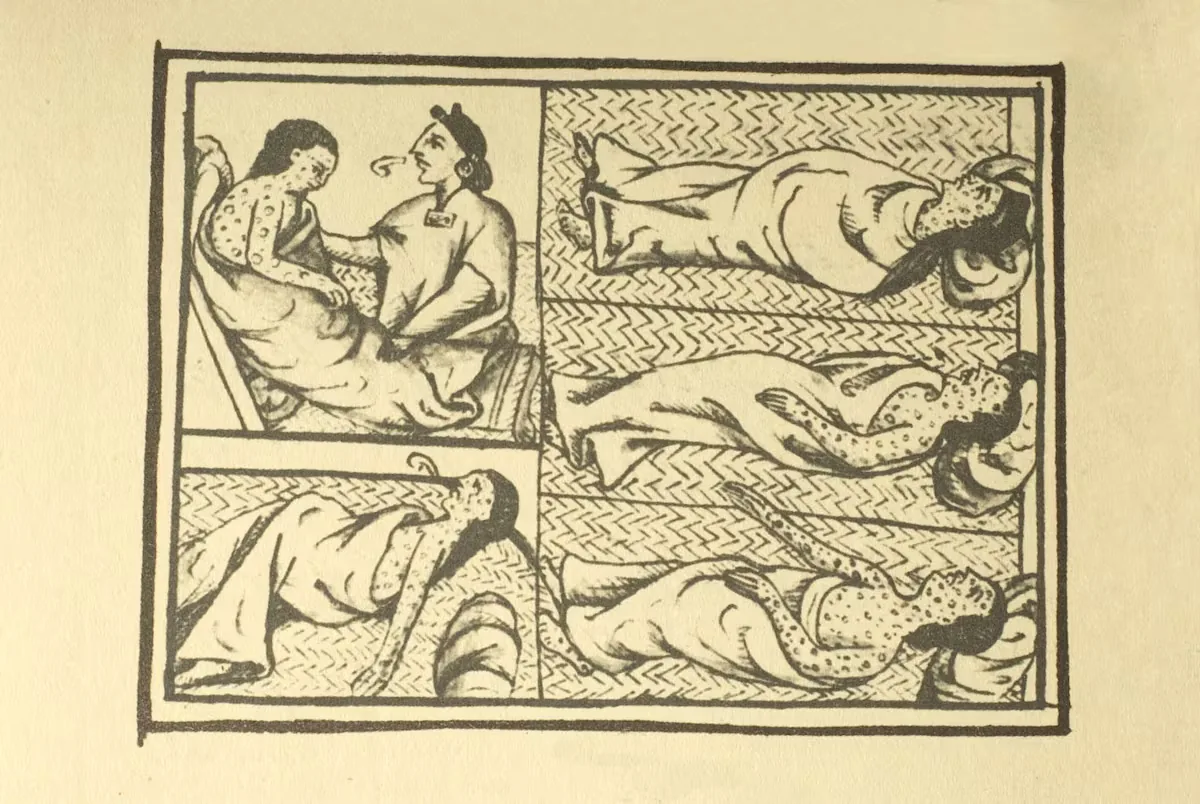
A woman in her thirties and a young man barely 20 years old died of smallpox in the first decades of Spanish colonization of America. Unearthed decades ago from an Inca culture site in northern Chile, they have now been found to carry DNA of Variola virus. These are the oldest proofs of the virus’s presence on American soil. The authors of the discovery, whose details are published in the journal Science, also show that this lineage had already stopped losing genes. In other words, being of animal origin (zoonotic), it found in humans its perfect host. The immune system of the indigenous people, unable to face the new disease, may have helped in this maturation process. The analysis rules out the existence of the virus in America before colonization.
Although there is no agreement among historians about the American population before the arrival of Christopher Columbus (about 13 million for the most cautious, about 90 million for the most generous), they do agree that diseases were what caused, by the end of the 16th century, only 10% of those numbers to remain, more than warfare with Europeans or slavery. They also agree that among the various ailments, such as the mysterious cocoliztli, smallpox was the disease that killed the most. The first documented outbreak took place in the Caribbean, in Hispaniola (present-day Santo Domingo) in 1518. Two years later it had already jumped to the continent, decimating the Aztecs, reaching as far as the mouth of the Camarones inlet, facing the Pacific, in present-day Chile.
“Camarones 9 is an archaeological site that is indeed in the Camarones ravine, reaching the coast,” says researcher from the University of Chile and co-author of the study, Constanza de la Fuente. “It was excavated between the 1960s and 1980s [of the last century], and many individuals were recovered who were wrapped, in fetal position and wrapped in various textiles,” she details. They were moved and some exhibited at the San Miguel de Azapa Archaeological Museum. Since then, the arrival of ancient DNA technologies allowed the study of samples from 13 of them.

“Initially we were interested in finding bacteria, for example tuberculosis, of which it is known there are ancient DNA samples in America,” says researcher from Trinity College Dublin (Ireland) and co-author of the study, Bruno Romero. “We found none of that, but seeing the results, suddenly, we found Variola. So we started working analyzing the virus itself,” he adds. “These smallpox samples are the oldest found on the American continent,” highlights his colleague de la Fuente. Combining carbon-14 dating and the virus’s own molecular clock, the authors place the two samples in a time range from 1492 to 1631.
A detail that influenced the finding is that both the woman and the young man from Camarones 9 were mummified. “The dry environment, lack of rain, and high salinity of the Atacama Desert create a favorable environment for the preservation of bioanthropological and archaeological remains, both organic and inorganic,” recalls archaeologist from the Institute of Advanced Research of the University of Tarapacá (Chile) and co-author of the work, Bernardo Arriaza.
The researchers gathered information on previous smallpox samples, from the European Middle Ages, such as the so-called Viking strains, and later ones from the 17th to 19th centuries and up to the arrival of vaccines. This allowed them to create a phylogenetic tree placing each sample, each strain, and each lineage on the leaves, branches, and trunk of the virus. This rules out the existence of smallpox in America before the arrival of Europeans. “If the virus had been native to America, it would have separated from Eurasian samples a very long time ago,” Romero recalls. The reality is quite different: “The phylogenetic tree shows you that this Variola strain is in an intermediate position between the Viking strains and the 17th-century strains in Lithuania, suggesting it comes from the Old World,” concludes the Trinity College researcher.
For José Vicente Tuells, professor at CEU Cardenal Herrera University and expert in history of medicine, the work is highly relevant because “it transforms a widely accepted historical hypothesis into direct genetic proof.” It is the first time that science, in this case genetics and ancient DNA, provides evidence that “smallpox was a disease introduced from the Old World and circulated among indigenous American populations during the early stage of colonization,” he adds. However, he also points out that, being a small sample, it does not resolve “the debate about the role of smallpox in the indigenous demographic collapse,” he concludes.
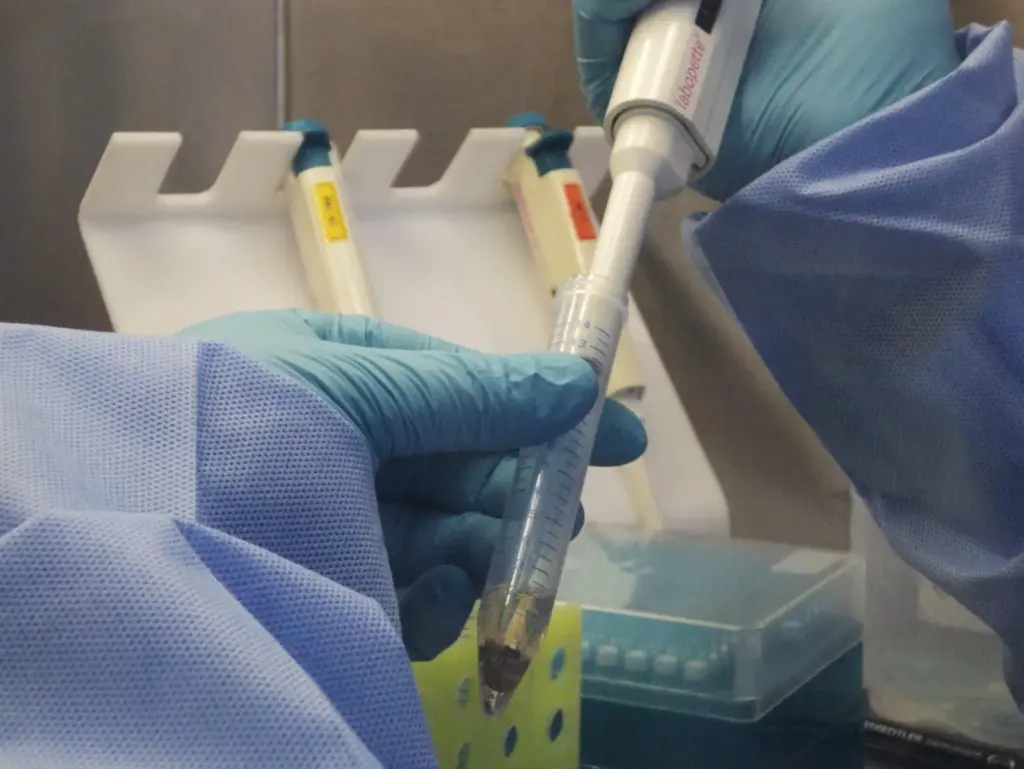
The two smallpox samples were also special. When analyzing the virus’s genetic machinery and its evolution, they observed that several dozen genes had mutated; specifically, they were inactivated, as they did not express proteins that performed any function.
“We discovered that the virus underwent a long period of genetic changes until the 16th century, but its evolution slowed down significantly during the peak of colonial expansion and the great smallpox epidemics of the 17th and 18th centuries,” says Dr. Lara Cassidy, from the School of Genetics and Microbiology at Trinity College Dublin and also co-author of the study. “This suggests that the virus may have reached an evolutionary optimum, which allowed it to spread successfully with little additional adaptation, possibly favored by the lack of immunity in newly exposed populations,” she adds.
Antonio Alcamí is a virologist at the Severo Ochoa Molecular Biology Center/CSIC and an expert in poxviruses, the family to which human smallpox belongs. He recalls that “by specializing in a host, viruses tend to lose genes.” Thus, the Viking strains, from around the year 1000, “were intermediate strains that had already lost some of them,” he adds. Modern smallpox, from the 20th century before its definitive eradication, “had lost 49 genes,” Alcamí sums up. It is the same number that had been inactivated in the strain found in Camarones.
Although that loss or inactivity is related to specialization in a host, “there is a question to answer,” says the Spanish researcher: “How is gene loss related to an increase in virulence?” In fact, Viking smallpox was caused by an attenuated virus, without high mortality. The one that killed the woman and the young man from Camarones also ended millions of American lives.