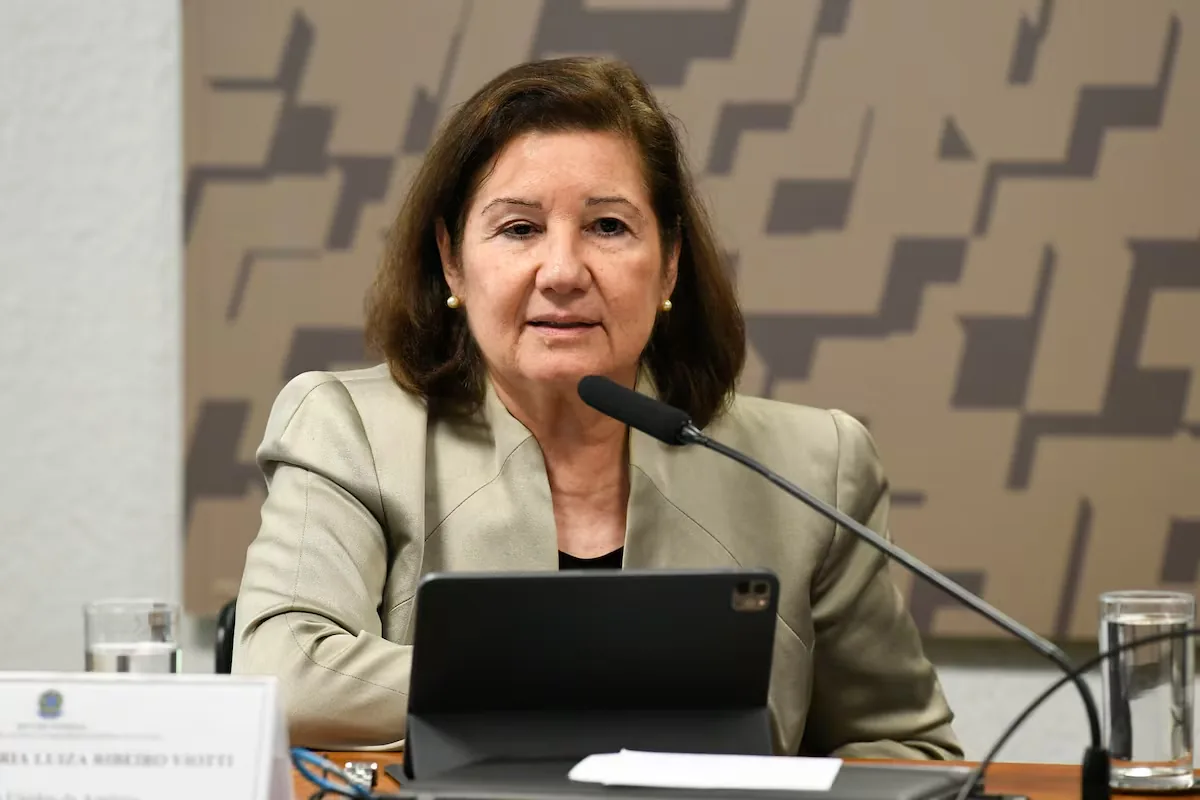
The decision by the United States Government to cancel the visa of Brazil’s ambassador in Washington, Maria Luiza Viotti, adds fuel to the fire in the tense relationship between the two countries, and it comes just weeks before the Brazilian elections. The Trump Administration argues that the measure is retaliation for the Brazilian Government’s delay in granting agrément to the U.S. ambassador appointed for Brasilia.
Read more The cordless drill under 40 euros that is surprising users: includes 25 accessories and LED light
The Government of Luiz Inácio Lula da Silva counters that thesis by saying that the United States is lying and seeks to interfere in the electoral process, as emphasized in a very harsh and unusual tone by the Ministry of Foreign Affairs: “Today’s decision is not an isolated event, it is part of a deliberate escalation of hostile measures towards Brazil, motivated by ideological reasons incompatible with a bilateral alliance that has always been based on mutual respect. The misplaced interest in interfering in the upcoming presidential elections is also obvious,” says a fragment of the statement.
Brazilians will go to the polls on October 4 to choose between Lula, who at 80 years old seeks to make history and secure a fourth term, and Flávio Bolsonaro, the eldest son of former president Jair Bolsonaro, who seeks to revive the legacy of the great leader of the Brazilian far-right, who is serving a 27-year prison sentence for an attempted coup. Although polls give Lula a slight advantage, the confrontation is expected to be fierce.
In the corridors of Brasilia, what worries most is the interference of the Trump Administration to benefit the ultra candidate, both through traditional political channels and through the predictable mass disinformation campaigns that will flood Brazilian cell phone screens in a few weeks.
The cancellation of the visa of Brazil’s ambassador in Washington comes just days after Brazilian authorities denied visas to two U.S. State Department officials who intended to visit Brazil supposedly to discuss freedom of expression in the electoral context. For the Brazilian Government, “they planned to visit the country to sow doubts about the integrity of the electoral system.” According to a report by The Washington Post, Riley M. Barne and Samuel D. Samson were Marco Rubio’s envoys to poison the elections.
The climate particularly soured in Brazil because just at those days, Flávio Bolsonaro made statements spreading falsehoods and casting doubt on the reliability of the electronic voting machines used in Brazil, just as his father did in the 2022 elections, in his strategy to deny Lula’s victory and prepare the coup attempt.
Sources from the Brazilian Government explained to EL PAÍS that the State Department’s intention to interfere is clear because they have a favorite candidate, who is Flávio Bolsonaro. Lula, however, will not give an inch and will take advantage of the fact that Brazil, due to its economic and demographic weight and its position on the map, at a prudent distance from the most powerful country on the continent, has some room to maneuver to remain firm.
The bad phase in the relationship between Washington and Brasilia is not new. Proof of this is the situation of the United States embassy in the Brazilian capital, where there has been no ambassador since Trump took office. Brazil argues that the United States violated international protocols by announcing its ambassador candidate, Danny Pérez, before the regulatory request, which was seen as an imposition.
So far, the peak of maximum tension between the two countries occurred exactly one year ago, when Trump imposed 50% tariffs on Brazil as retaliation for the trial of former president Bolsonaro. The Republican even said that Brazil was conducting a “witch hunt” against his friend and his supporters. He also applied sanctions and an almost total economic blockade in the United States against the judge who led the judicial process, Alexandre de Moraes, and other authorities.
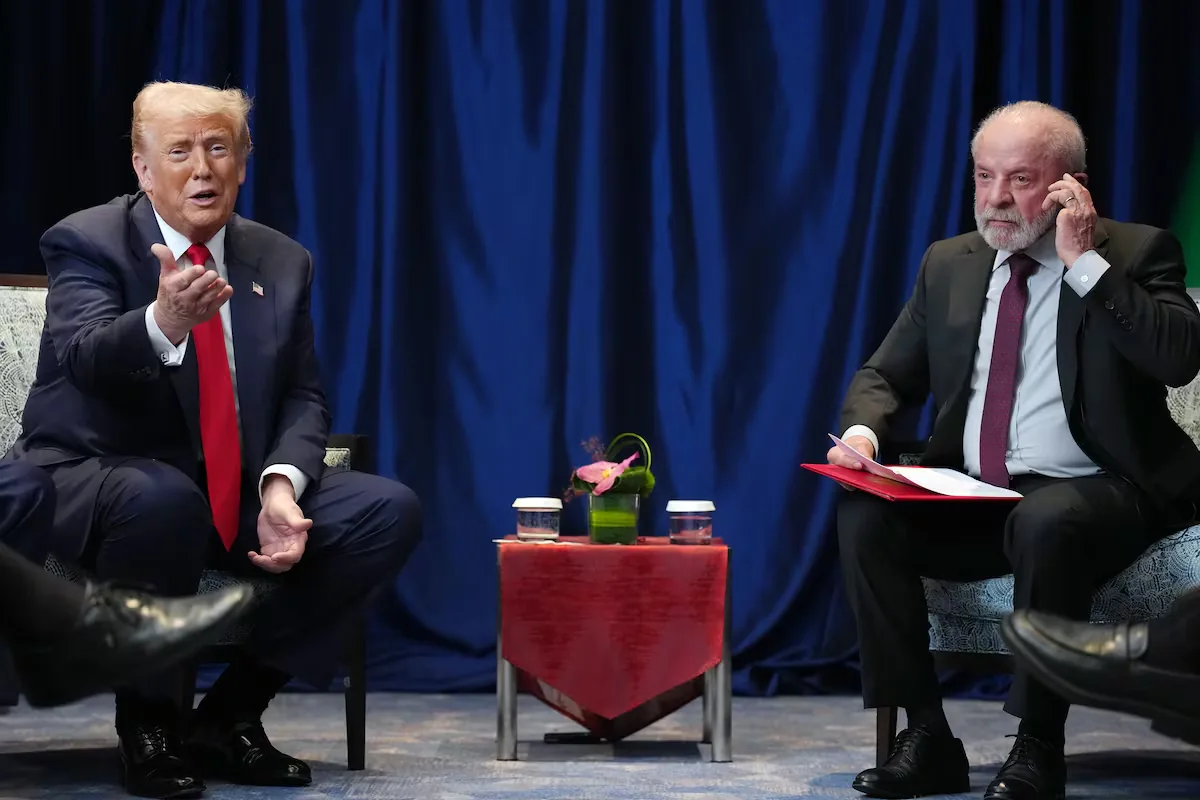
Brazil did not yield to the pressures, the trial was held, and Bolsonaro was sentenced to 27 years in prison. Over time, things seemed to return to normal: Lula and Trump met personally, staged some personal chemistry, and reopened dialogue channels. In May of this year, Lula visited him at the White House, and the Brazilian Government sold that meeting as an absolute success, although there was more facade than substance. Technical-level negotiations to avoid a new tariff hike did not advance, and a few weeks ago what Brazil already took for granted was confirmed: first, tariffs of 25% as punishment for alleged unfair competition, to which later another 12.5% were added for forced labor, which in this case also affected other countries.
The Brazilian Government threatened to apply the Reciprocity Law, which would allow applying the same tariffs to U.S. products, but opted for caution and did not worsen the situation. Lula also avoided directly attacking Trump, but will likely raise the tone as the campaign heats up.
For Leonardo Paz Neves, researcher at the International Intelligence Center of the Getúlio Vargas Foundation in Rio de Janeiro, this new chapter in the crisis between the United States and Brazil confirms that the Bolsonaro family still has some degree of influence in the U.S. Government. Another of the former president’s sons, Eduardo Bolsonaro, has lived in the United States for more than a year and is the main architect of Trump’s pressure strategy against Brazil.
“The bridges between the two countries are being damaged in some aspects, and it does not seem likely to me to return to some degree of normality in the short term, at least until the elections,” says the specialist, who nevertheless does not rule out that if Lula wins, Trump will quickly ignore the loser and start giving him more space. The other option, not recognizing a possible victory and resorting to the argument of electoral fraud, he also does not dare to discard. “It is all very unpredictable. I think it will depend on the degree of disinformation there is, on the material the opposition manages to create to build its argument,” he says.
The most extreme hypothesis, the possibility that U.S. interference dangerously escalates and materializes into something worse, is not, for now, on the table, but it does not sound like science fiction either. A few days ago, Lula said he wanted the Armed Forces well prepared “so that no one sticks their nose in.” At the event that confirmed him as a presidential candidate, he insisted again on that idea, recalling that Brazil has 16,800 kilometers of land border, another 8,000 of maritime border, and natural resources of incalculable value. “The left has to stop with that nonsense that there is no need to worry about defense,” he said.
Just this Tuesday, the Minister of Defense, José Múcio, half seriously, half jokingly, admitted that Brazil would not have much to do in the face of a hypothetical U.S. invasion: “I keep seeing journalists (asking): ‘If the United States wanted to invade Brazil, what would you do as Minister of Defense? I open the door, because we don’t have equipment to face them, nor money to fix the door,” he summarized.
Read more Laptops, foldable and cheap: these are the ideal mini washing machines for camping