






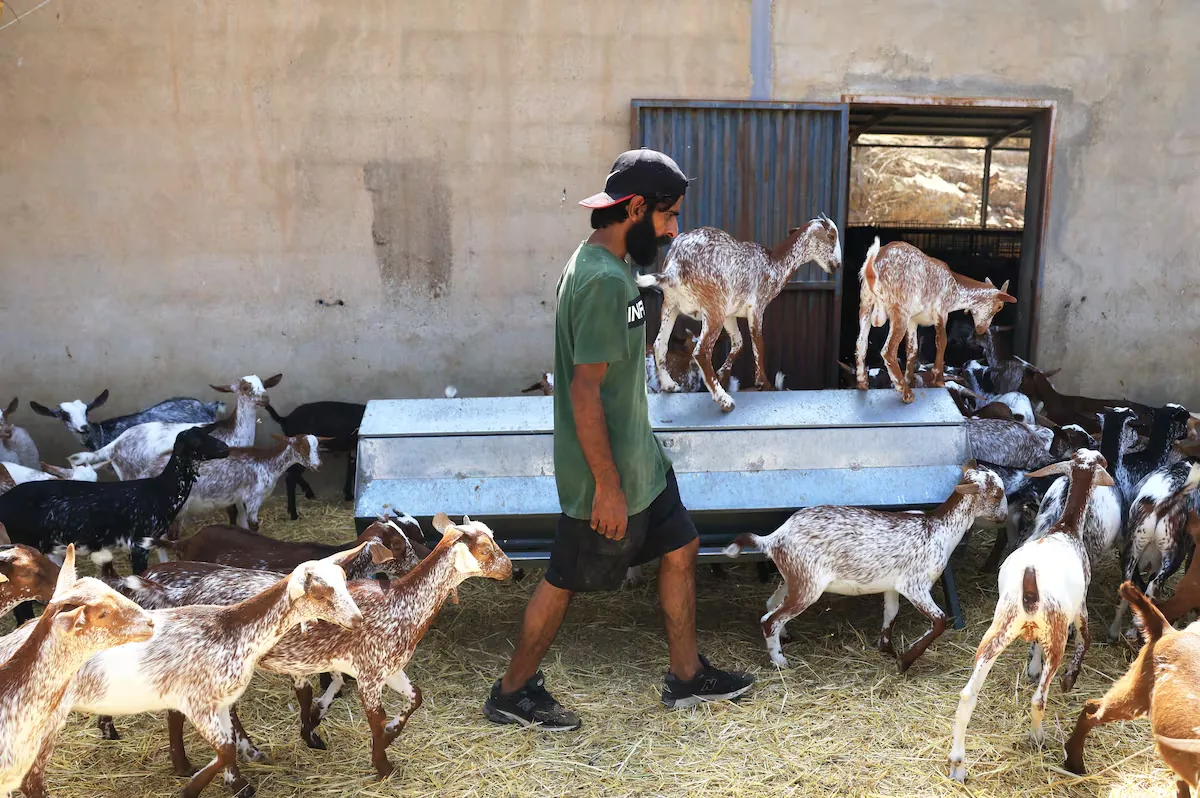
He did not give it importance. When his brother told him there was a fire in Los Gallardos, Waheed Mumtaz (Gujrat, Pakistan, 35 years old) had just arrived at the barn where he keeps his flock of 720 goats to milk them. The news did not make him change his plan. His land is on the road that leads to Bédar, the village that ended up bearing the worst part of the fire, but at that moment he was more than seven kilometers away from the flames. What Mumtaz did not suspect then was that just a few hours later he would be alongside his brother fighting hand to hand against tongues of fire, using as their only defense a hose without pressure and a bucket of water.
When he first smelled the smoke it was just after half past seven in the evening. “That’s when I started to worry.” The smell was getting stronger by the moment. He went out every few minutes, looked at the horizon to see how the situation was evolving, and went back inside. Minutes passed and he not only smelled it, but saw it. It was thicker and gray and it did not let him breathe or see if behind the opaque curtain there was a tongue of fire approaching. “Smoke scares me more than fire,” he admits. At that moment he, along with his brother Khaward and the worker who works there, Karan, fled by car to Bédar. “The first thing is to save lives and people come before animals.”
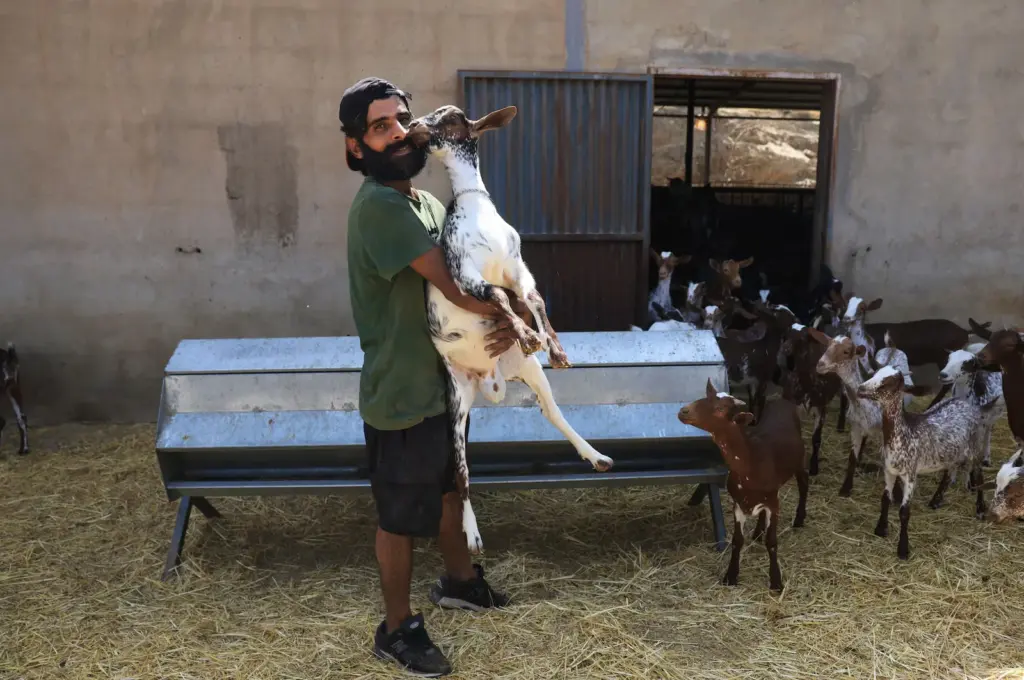
There are no more like him left there. The last shepherd of Bédar arrived in Spain 21 years ago and has worked in a food store in Barcelona, in a pastry shop, and has been a taxi driver. “There are many animals in my country. It’s in my genes,” he says to explain his decision to go to the countryside.
But what Waheed left behind was not just a memory of his country. The farm was a bet since he arrived there last year in search of a quieter life. He has no insurance, so he would have lost everything. The goats are the source of income for a family of five. From the milk he milks, the man’s wife, his son, his father, and an older brother “who is sick and cannot work” live. That was what he constantly thought when, from a viewpoint in the village, he saw how the fire advanced towards his land. “There I decided what to do: stay up there or risk my life for my animals.” He chose the latter.
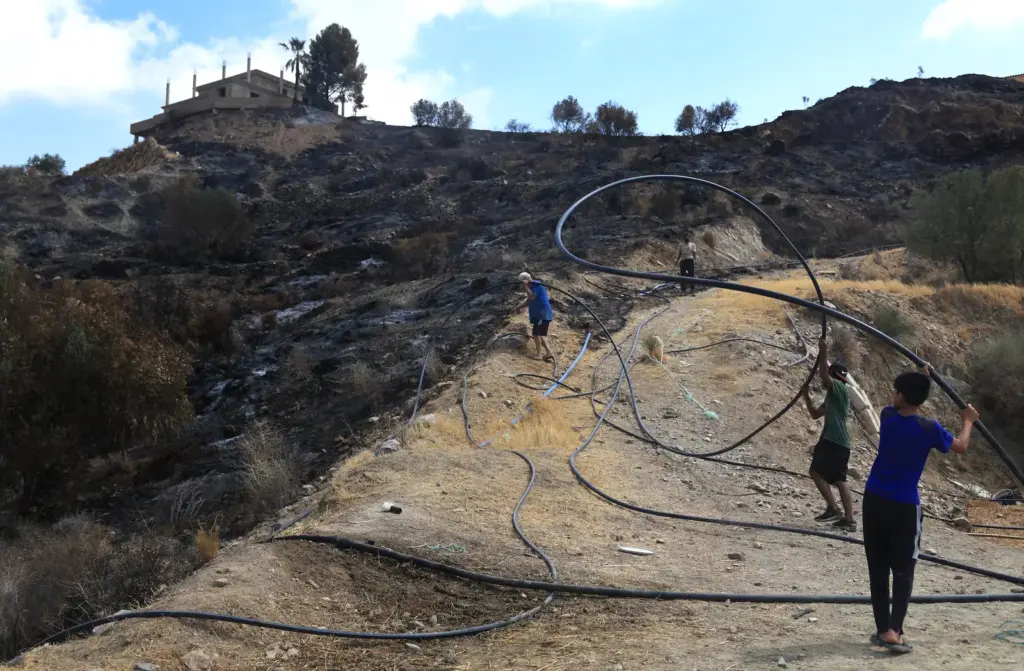
He and his brother took the curves of the mountainous road that goes down from Bédar to his farm at high speed, while watching the fire from the window and trying to spot the barn through the smoke coming from the valley. When they arrived, the flames were very close. First, they watered the door with the hose. Then, the ravine behind it. “It’s full of firewood, cane, dry straw.” The result, he says, could have been disastrous. Then the fire started to puncture the hose and make it lose pressure. In the end, they only had the bucket left.
Read more Polish fighters intercept a Russian reconnaissance plane 30 kilometers off their coast
“When I was there, I only thought about my family,” he says. “I risked my life for my animals because my life depends on them,” he explains. He did not leave the place until the Civil Guard kicked him out at ten at night, the same time the first of the 12 incinerated bodies found around the village was discovered. One more woman died from burns days later, on Sunday, at the Virgen del Rocío hospital in Seville. Waheed went back up at five in the morning on Friday, when the fire was still out of control, and no one moved him from there.
In the end, he managed to save almost all the goats. All except one. It was the one he loved the most, his favorite, his companion, like one would say about a dog that is one more member of the family. The goat followed him everywhere: “I didn’t even have to call her.” She was the only one he let out of the farm “because she always came back.” This time she did not return. After everything he had lived through, Mumtaz breaks down remembering her.
The rest of the goats are fine, although they have suffered a lot. “If they are not milked for several days, they can develop mastitis. That is what hurts me the most. It is animal abuse,” the shepherd assures. He tries to feed them little so they do not produce milk, because his automatic milker has broken down and it is impossible to extract milk from so many goats by hand.
He estimates that during this time he has lost between 1,500 and 2,000 liters of milk and that the goats, after so long without being milked, will produce less than before. Mumtaz takes stock of what he has, what he has lost, and what could have disappeared forever. “You have to thank God,” he says, despite everything.