









Metal detector
Metal detector
Metal detector
Metal detector
Best metal detector
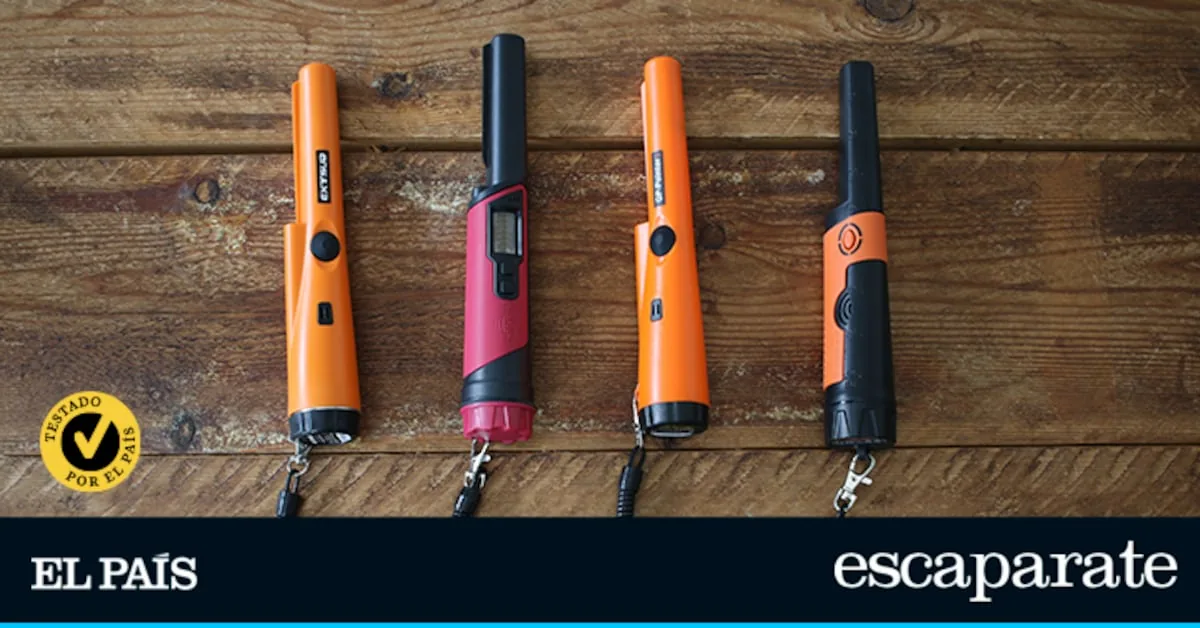
Finding hidden metal objects — whether in beach sand, in the field, or even in more everyday tasks — can become a frustrating task if you don’t have the right tool. We are talking about metal detectors, devices that work through electromagnetic fields and allow locating buried or hidden metals, making them useful both for those looking for coins or jewelry and for more practical applications. That is why, at EL PAÍS Escaparate, we have tested four models with different features to see which one is really worth it.
Read more The truce that confirms Iran’s advantage
Which metal detectors have we chosen and how have we tested them?
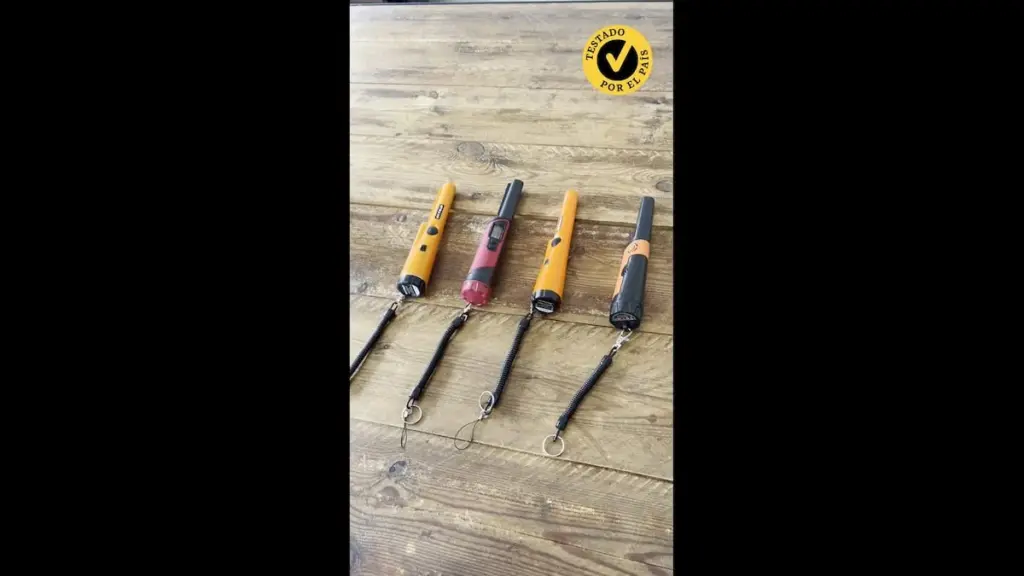
For this comparison, we have selected models with different detection range levels and different approaches, including some options with screens and others more basic, aiming to see how much these differences influence the real experience. Based on these considerations, the four chosen metal detectors are: DR.Ötek, Sunpow, Flintronic, and Extsud.
During the tests, we used the detectors with different types of metals to evaluate their sensitivity and accuracy, as well as to check the battery life in continuous use. We also tested them on different surfaces — such as beach, mountain, and everyday environments — and in various weather conditions, with a group of seven people. Finally, we considered aspects such as ease of use, safety, durability, and overall performance in real situations.
Why can you trust me?
I am a journalist specialized in product analysis and, in recent years, I have tested and compared dozens of devices and accessories for media like El País. My way of evaluating starts from something very specific: understanding what a product really offers in relation to its cost. Not only in specific tests but also in everyday use, because that is where the details that make a difference are perceived. Beyond the specifications, I am interested in how it performs in practice, how consistent it is over time, and what limitations appear when you integrate it into your routine. Because, in the end, a good product is not the flashiest, but the one that best justifies its price day by day. That is the criterion with which I build each recommendation.
Which metal detector was the winner?
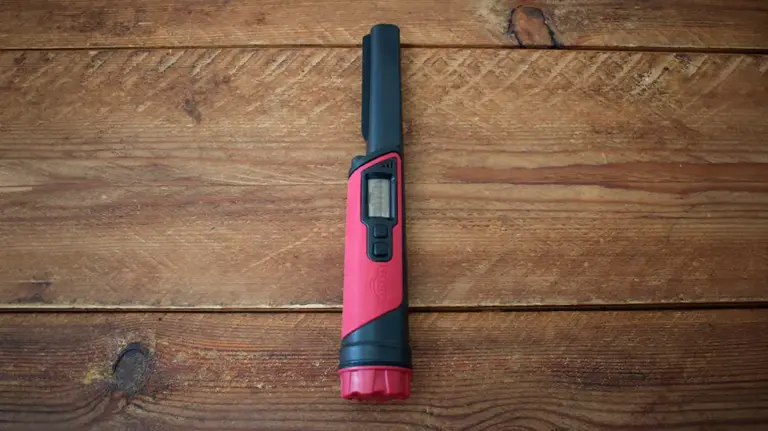
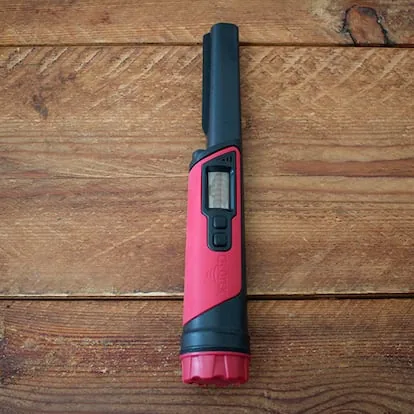
The DR.Ötek metal detector stands out for its accuracy, LCD screen, and water resistance. During the tests, it was the most reliable at avoiding false detections and the most comfortable for locating objects precisely, although its price is higher and it requires a bit more care in handling.
How does it work?
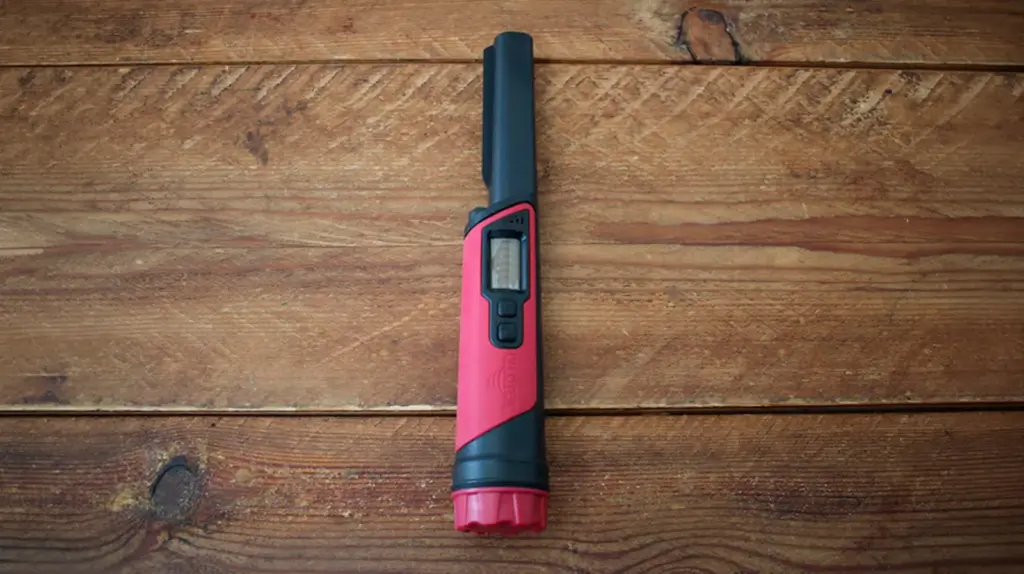
My favorite aspect of the DR.Ötek metal detector has been the accuracy with which it allows locating objects, especially thanks to its LCD screen. In practice, being able to see the signal intensity makes it much easier to know exactly where to dig, which greatly reduces time lost in unnecessary searches.
Technically, it incorporates a 360-degree omnidirectional probe with a detection distance of up to 8 cm, as well as a specific button to cancel interference. This function, which eliminates random beeps, makes a clear difference compared to other models, as it avoids false alarms and makes the experience much more reliable. Therefore, in real situations — such as in sand or loose soil — it translates into more efficient use.
Another aspect I found especially useful is its IP68 water resistance certification, which allows using it even underwater without worries. Additionally, it offers three alert modes (vibration, sound, or both), allowing adaptation according to the environment. Still, not everything is perfect: it does not distinguish between types of metals and its price is higher. Also, it requires somewhat more careful handling than simpler models.
Why do we recommend it?
The best:
- Detects all types of metals.
- Detection distance of 8 cm.
- LCD screen to identify detections.
- IP68 certified, water and dust resistant.
- Includes case and strap for carrying.
- Works with an included 9V battery.
- Made of plastic.
To improve:
- High price.
- Does not distinguish between different types of metals.
- Needs more careful handling than other models.
Other alternatives to the best metal detector
Sunpow metal detector
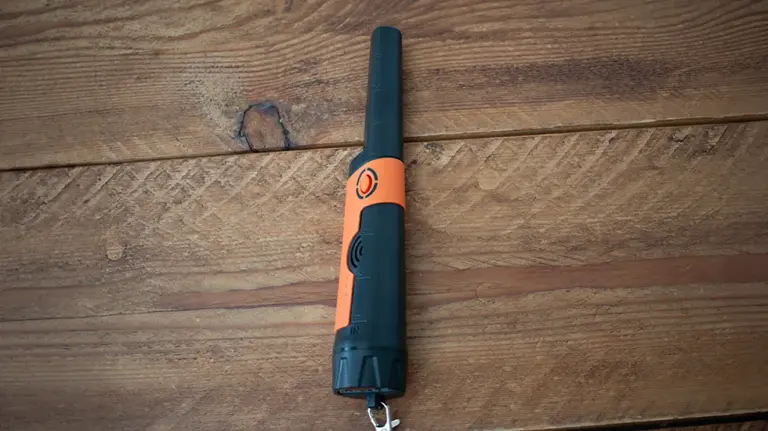
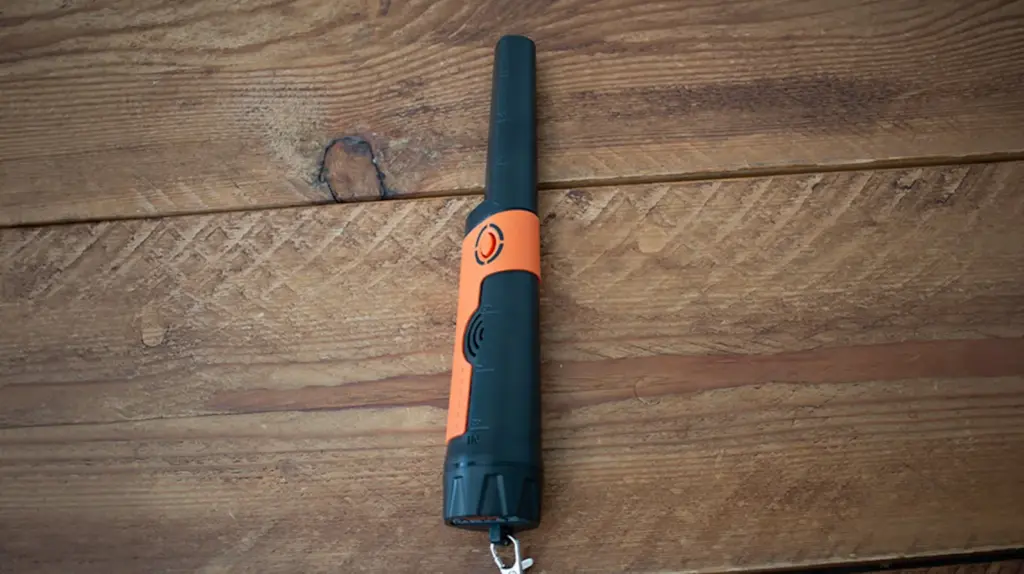
Thanks to its detection range and ease of use, the Sunpow metal detector seemed to me the best alternative to the winning model. It is a very balanced option for those looking for a functional product, although the lack of a screen and more moderate resistance place it slightly behind.
How does it work?
In practice, the Sunpow metal detector has proven to be a very reliable model in essentials. Its detection capability of up to 9 cm, along with 360-degree scanning, allows locating objects quickly, which is especially noticeable when used on large surfaces like beaches or fields.
One of its strengths is simplicity: it works with a single button and combines sound and vibration alerts, making it very easy to use even without prior experience. Additionally, its lightweight design and included accessories — such as the belt clip — make transport during long sessions much easier.
However, compared to the previous model, it falls a step behind. It does not include a screen, which forces interpreting detection only by acoustic or vibratory signals. Also, although it has IP68 waterproof certification, its resistance to intensive use is more moderate. Still, it performs very well as a practical and balanced option.
Why do we recommend it?
The best:
- Detects all types of metals.
- Detection distance of 9 cm.
- IP68 certified, water and dust resistant.
- Includes spring clip and belt loop for carrying.
- Works with an included 9V battery.
- Made of plastic.
To improve:
- Does not distinguish between different types of metals.
- Has no screen.
- Moderate resistance to frequent use.
Flintronic portable metal detector
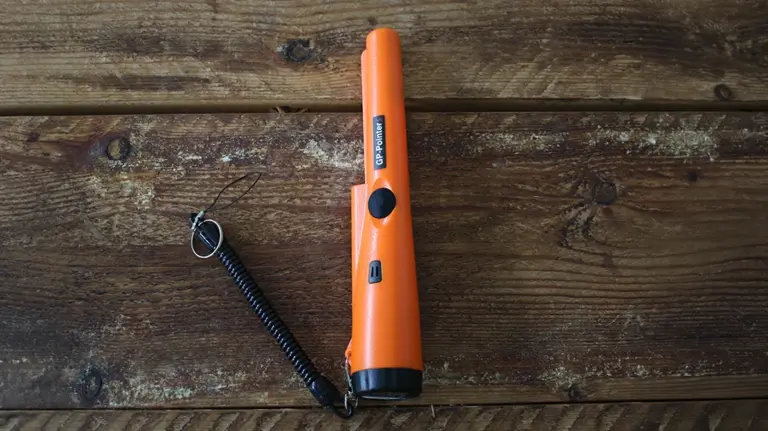
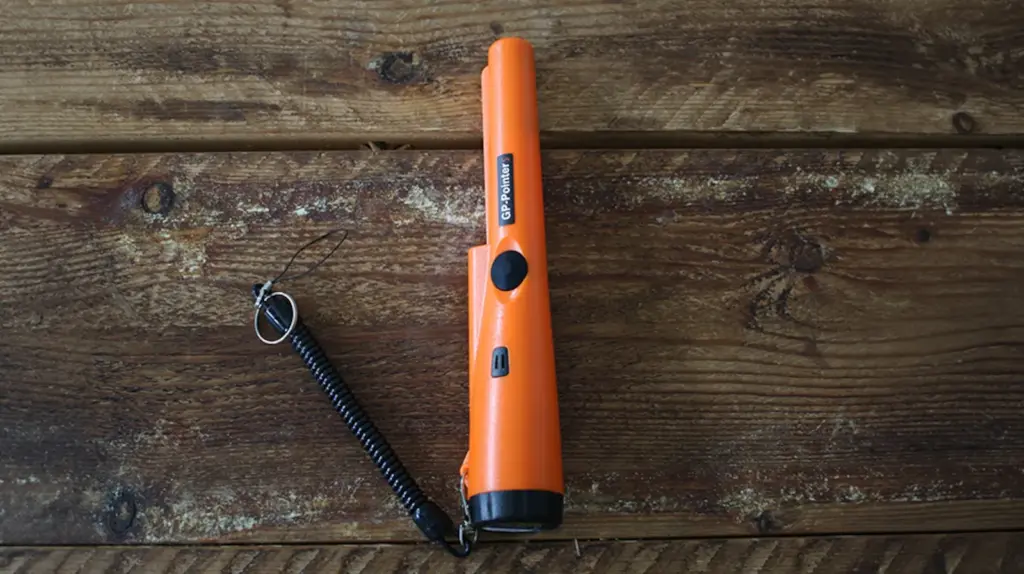
The correct performance of the Flintronic metal detector is its great appeal, as it offers good accuracy and a compact design. It is easy to use and functional in different environments, although its water resistance is more limited and it lacks a screen.
How does it work?
During the tests, the Flintronic metal detector showed quite balanced behavior. Its detection range between 3.5 and 8 cm is enough to locate small objects like coins or jewelry, and its progressive alert system — with sound and vibration — helps to fine-tune the target location.
Read more I try the best boxing machines and tell you which one is up to the mark
Also, I found interesting the inclusion of an LED light, which is useful in low visibility conditions, as well as its low battery indicator. In terms of use, it is an agile device, with simple one-button operation, which facilitates handling in any situation.
The problem is that it has some limitations compared to higher models. It has no screen, which reduces precision when interpreting the signal, and its IP66 certification means it can only be partially used in water. This, in practice, limits its versatility in more demanding environments.
Why do we recommend it?
The best:
- Detects all types of metals.
- Detection distance of up to 8 cm.
- IP66 certified, water and dust resistant.
- Works with an included 9V battery.
- Made of plastic.
To improve:
- Does not distinguish between different types of metals.
- Has no screen.
- Less water resistance than other models.
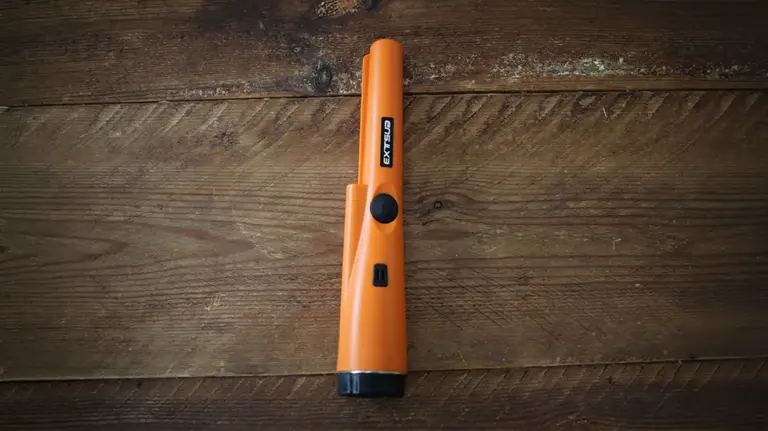
Extsud waterproof metal detector
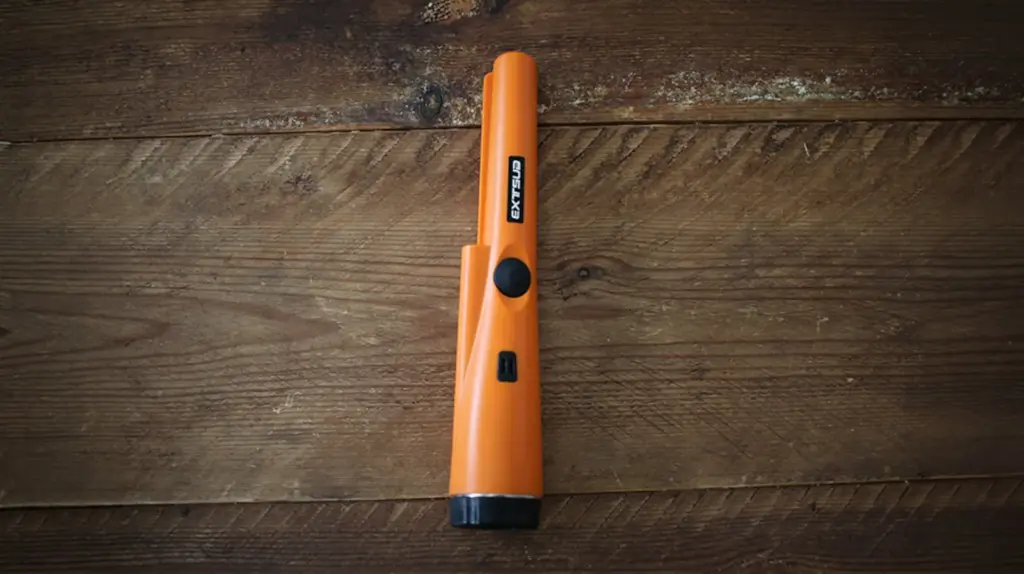
The main limitation of the Extsud metal detector is the shorter detection distance it offers, which requires getting closer to the object. Still, it is a functional and easy-to-use model, suitable for basic use, although clearly less competitive.
How does it work?
In real use, the Extsud metal detector meets the essentials, but it is quickly noticeable that its maximum range of about 5 cm is lower than the rest. This means you have to work closer to the ground or object, making the search less efficient, especially in large areas.
On the other hand, it offers simple operation with sound and vibration alerts, as well as a lightweight and easy-to-carry design, with included case. It also has IP66 certification, allowing use in moderately wet conditions.
However, beyond these basic features, its limitations weigh heavily: it does not include a screen, does not come with the battery needed to operate, and its water resistance is more limited. Therefore, although it can serve for beginners, it clearly falls behind more complete options.
Why do we recommend it?
The best:
- Detects all types of metals.
- Detection distance of up to 5 cm.
- IP66 certified, water and dust resistant.
- Made of plastic.
- With carrying case.
To improve:
- Does not distinguish between different types of metals.
- Has no screen.
- Less water resistance than other models.
- Shorter detection distance.
- Does not include the 9V battery to operate.
Frequently asked questions about metal detectors
Why are metal detectors prohibited?
The use of these devices is not generically prohibited, but their use is heavily restricted to protect historical and archaeological heritage. Spanish authorities seek to prevent the looting of sites and the alteration of stratigraphic contexts that have incalculable scientific value. A chance find extracted without professional methodology means the definitive loss of information about our history. For this reason, the Historical Heritage Law imposes severe sanctions on those who conduct prospecting without the corresponding administrative authorization. The regulation tries to balance recreational leisure with the safeguarding of cultural assets that belong to all society.
Where is it legal to use a metal detector?
The legality of this practice varies significantly between different Autonomous Communities, so it is vital to consult the specific regulation of each region. Generally, beaches represent the most accessible spaces for this activity, always outside archaeological protection zones or protected natural areas. On private land, the hobbyist needs explicit permission from the owner and must ensure the place lacks historical cataloging. Some provinces require a detectorist card or a temporary license for conducting searches. It is always advisable to avoid proximity to monuments, castles, or areas marked in the cultural heritage inventory to avoid serious legal problems.
What depth does a metal detector detect?
The prospecting range depends directly on the size of the object, soil mineralization, and the sensor technology itself. A mid-range device usually locates coins or rings at a distance between 20 and 35 centimeters below the surface. If the target has larger dimensions, such as a metal box or a large tool, the device can register the signal up to one meter deep. Units with Pulse Induction technology offer superior performance in difficult terrains, although they lose precision in material discrimination. Conversely, very low frequency (VLF) models are more accurate for small pieces but suffer more interference from soil moisture.
[Remember that if you are an Amazon Prime user, all purchases have free shipping. Amazon offers a free and no-obligation trial period for 30 days.]
*All purchase prices included in this article are updated to May 27, 2026.
You can follow EL PAÍS ESCAPARATE on Instagram, or subscribe here to our Newsletter.