







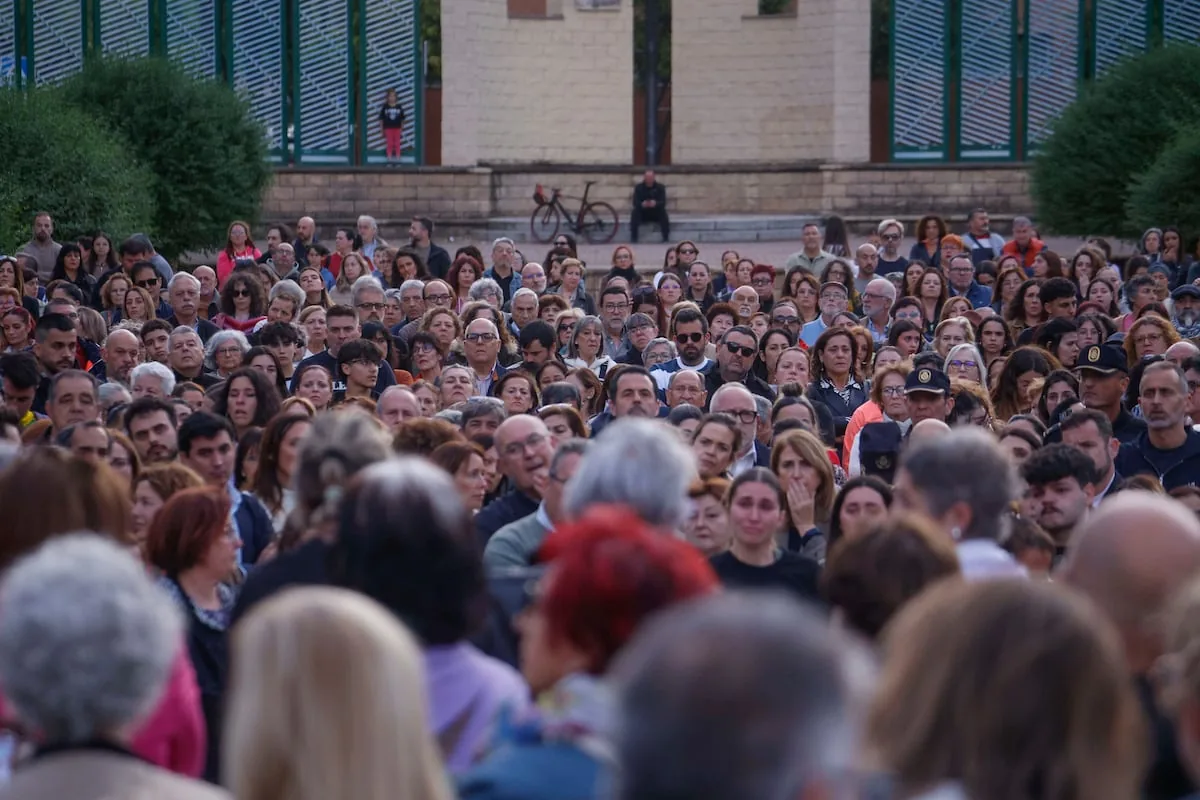
Tulia Ester reported her ex-husband for violence last weekend. On Monday, she was stabbed in the landing of her house as she was leaving to attend the fast-track trial that was to be held that same morning at the Violence Court of Córdoba. Including her, there have now been 1,359 women killed by their partners or ex-partners since these cases began to be recorded in Spain in 2003. So far this year, there have been 16 fatal victims: double the number recorded by this time in 2025. But there is another fact that worsens this brutal escalation of deaths: half of them, like Ester, had reported their aggressor.
Read more The relationship between doctor and patient also matters for prescribing medications
The victim, a 64-year-old Colombian woman who had lived in Spain for 30 years, had been separated for 20 years from her alleged killer, a 65-year-old Spaniard. He entered her house on Friday with a hammer, smashed the music system, grabbed her by the chest, and threatened to destroy the rest. On Saturday, he was arrested following the woman’s complaint and released provisionally with a restraining order. No one requested his imprisonment; not even the Prosecutor’s Office. Both were included with a “medium risk” rating in the VioGén system, which grants police protection for her. Tulia Ester refused the offer of an officer accompanying her to the trial. Her ex-husband violated the restraining order. Experts know well that most victims are unable to see the mortal danger they face. But it is regrettable that the underestimation of the risk comes from the authorities. In light of the outcome, neither was the risk of the situation medium nor could the restraining order be left in the hands of the aggressor.
It is distressing that with each new crime, the previous year is glanced at sideways, expecting that another half a hundred women could be murdered in 2026 – in 2025 there were 46 and this year, the trend is increasing. But what is unacceptable is to confirm, once again, that the authorities have a serious problem with protecting victims who report. The Ministry of the Interior recalled after Tulia’s murder that zero risk does not exist. It is not the most appropriate phrase from those who have to guarantee security, when 16 murders have just been added in a little over a quarter. Governments, judges, and security forces are responsible for preventing these deaths. And the data reveal that there is much room for improvement. As an example, of 102,112 active cases in the VioGén system, barely 4,500 have electronic bracelets. No woman protected by this system has been murdered.
Protection is costly. It requires money, resources, and extensive training of the authorities. But also decisively assuming responsibility, acting with all means and urgency, with the same courage as the victims when they report.
Read more Feijóo will campaign in Andalusia with his own agenda parallel to that of Juan Manuel Moreno