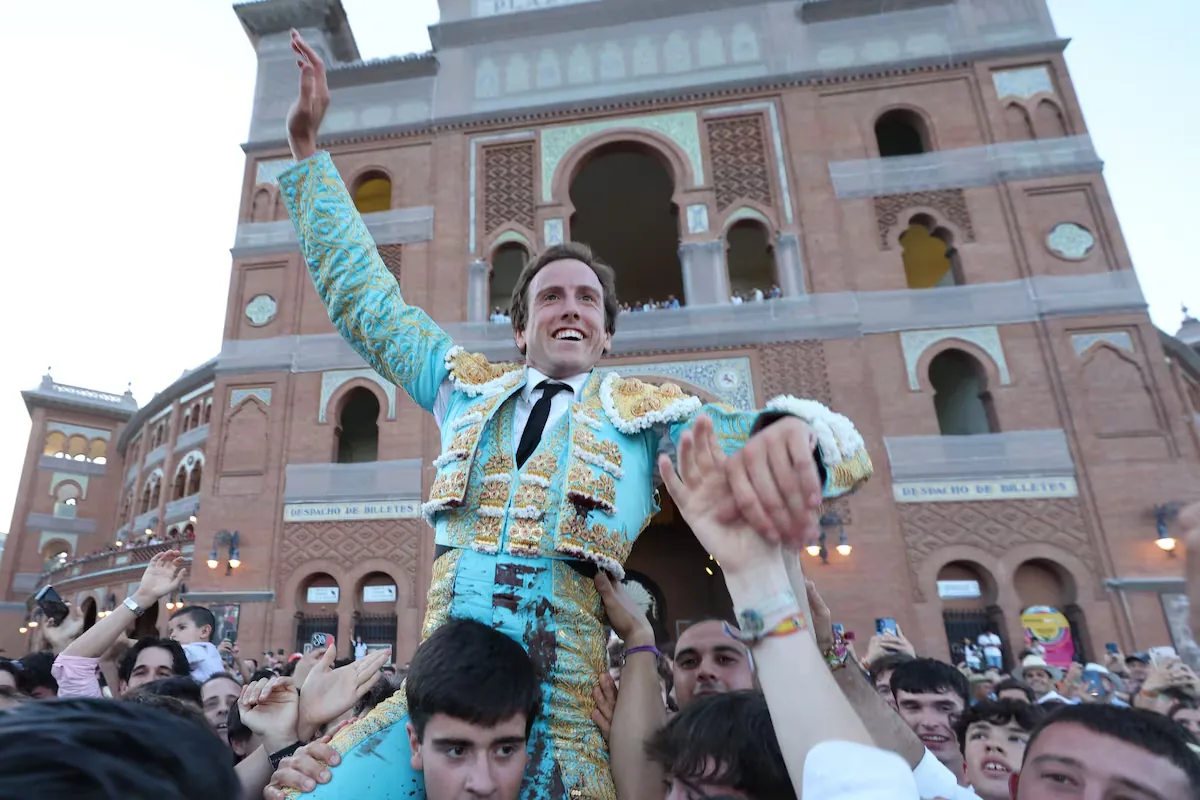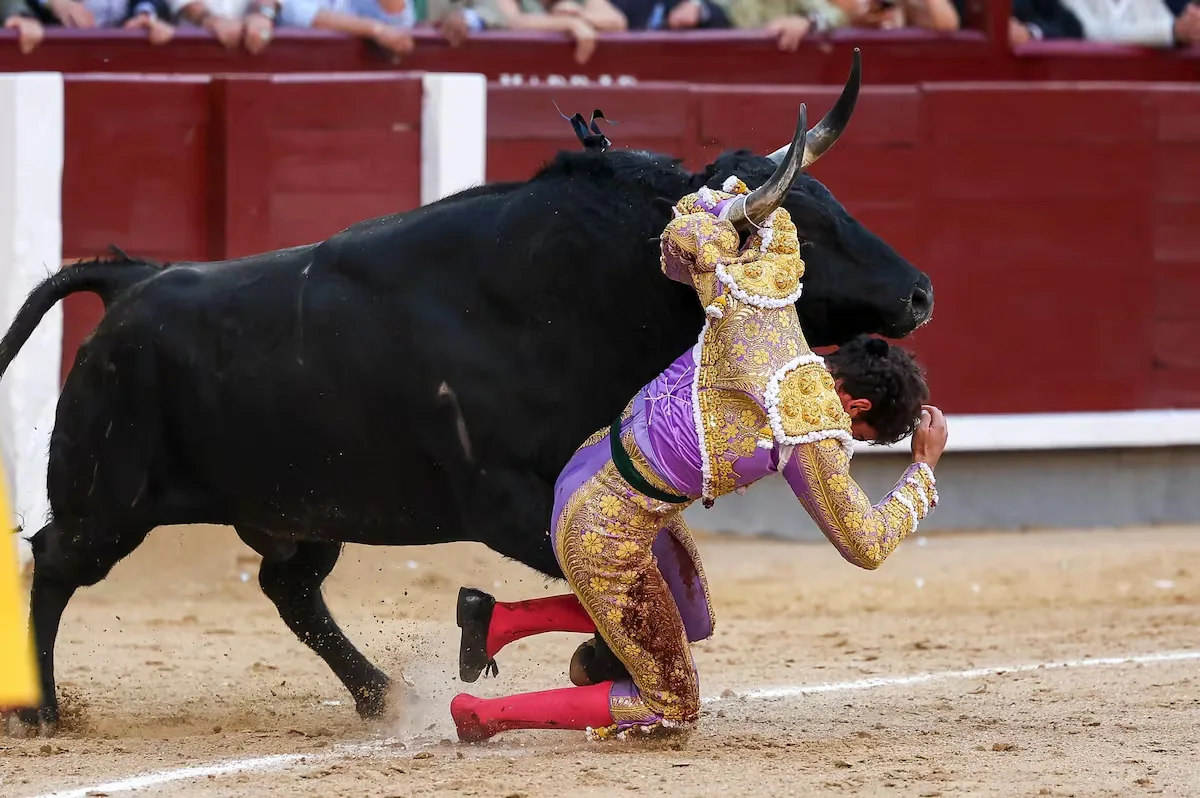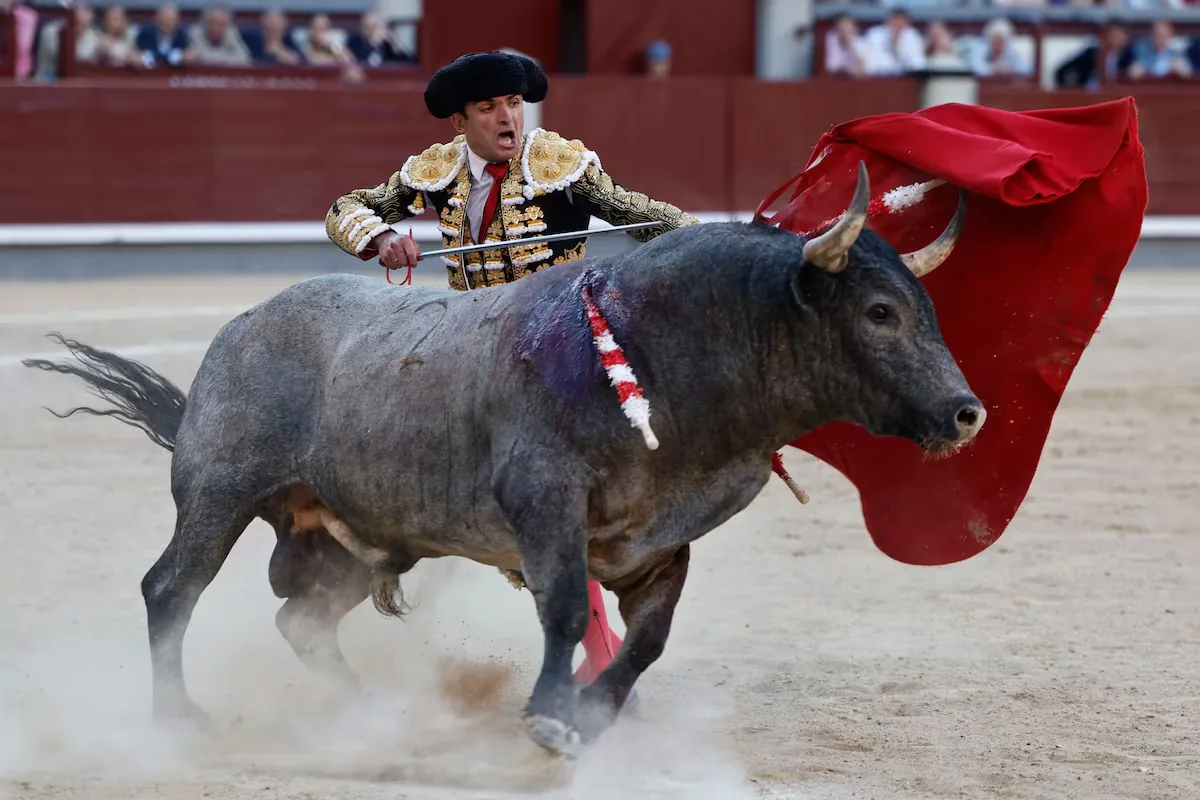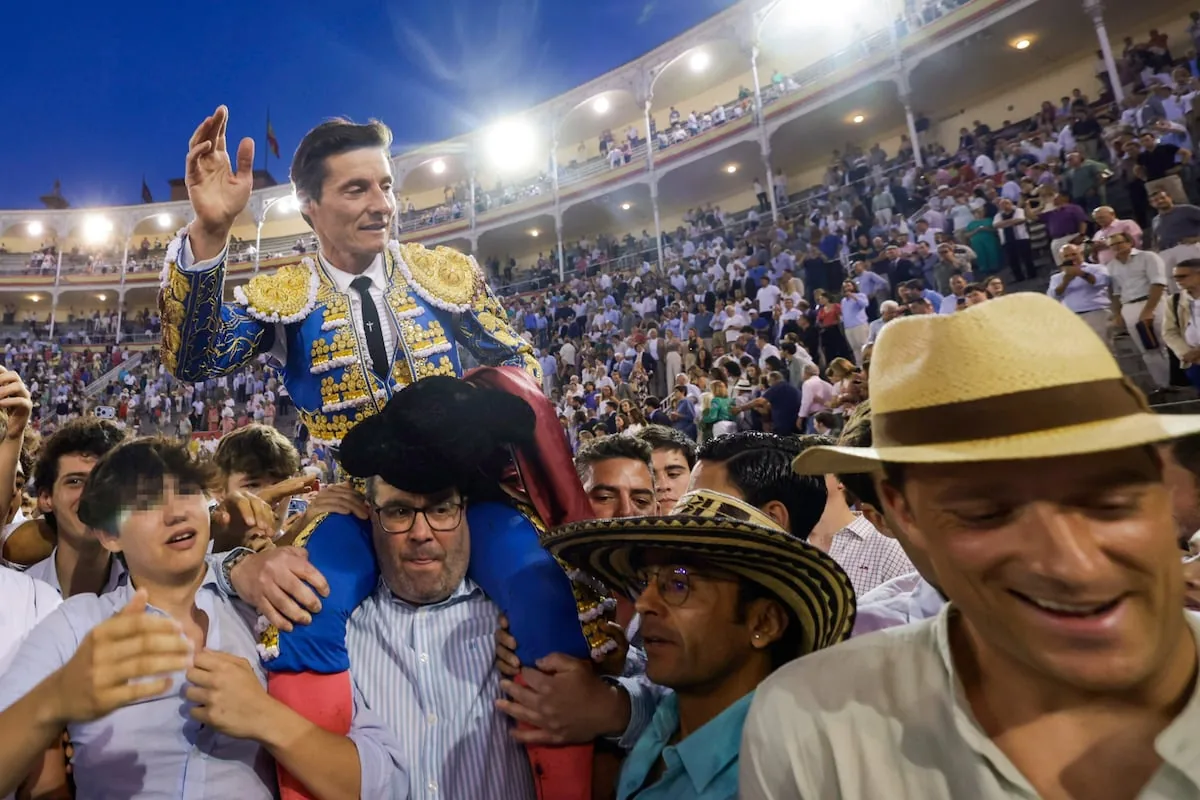






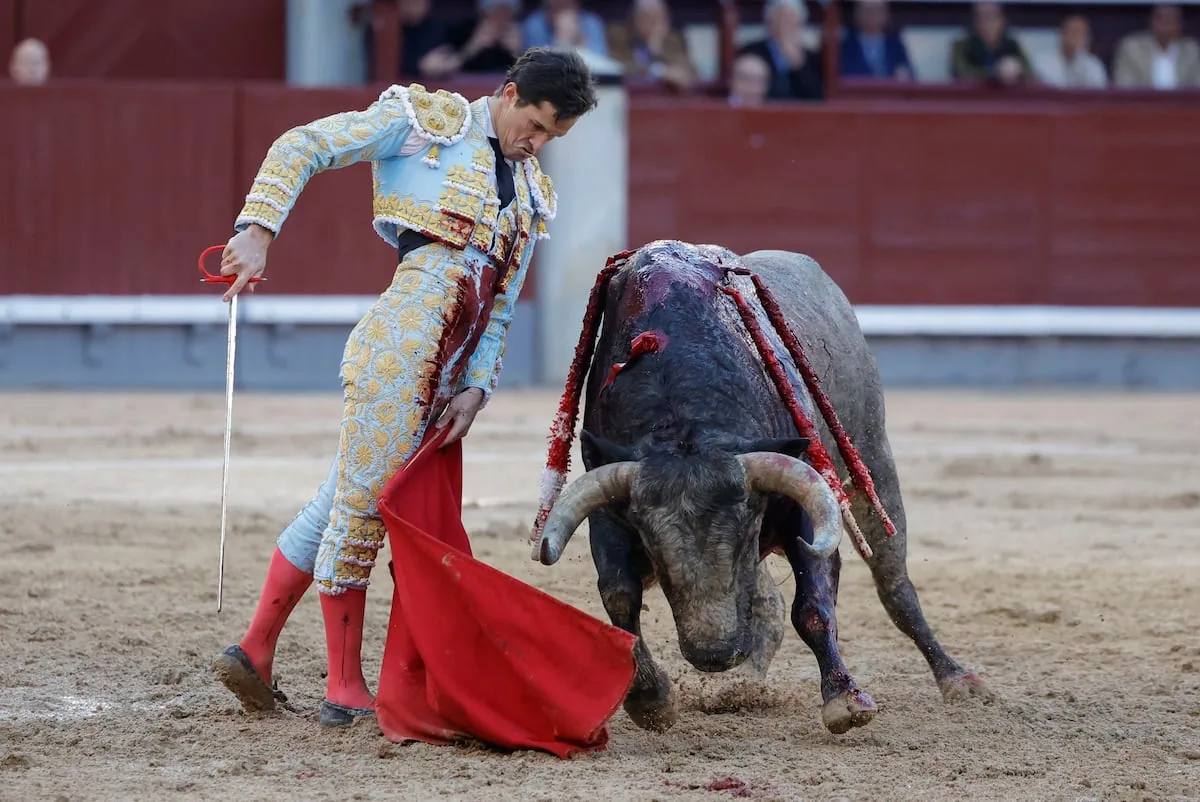
Well presented and sharp-horned – the fourth, beautiful, with a sheeted coat – the bulls from La Quinta, but solemnly tame, lacking breed, uncertain, bland… Children of different fathers and mothers, all six had gone to the same school and only the sixth finished the studies with a barely passing grade. The others failed, with very low marks, so the bullfight slid down a cliff of growing disappointment from the start. The last one, as tame as the others at the horse, charged fiercely at Tomás Rufo’s muleta, but also did not save the honor of his house. The remaining five fled from the horses or came with constant head shaking on the chest protector, and rather than charging, they bumped the passes with their faces in the air, without distance, steadiness, or submission.
Without the bull in the ring, nothing matters; and the bulls from La Quinta were not in the arena; that is, they were not where they were supposed to be, their bodies were in Madrid, but their tame souls were screaming for a slaughterhouse.
The consolation is that this happens in the best families, but, coincidentally, it happened at the San Isidro Fair, on a full house afternoon of ‘sold out’, and that is a real annoyance for those who, defying bad weather, come to have fun.
No, there was no fun, and only a few drops of excitement in the third of banderillas of the sixth, with good pairs from Sergio Blasco and Fernando Sánchez, who were forced to salute, and in the overflowing delivery of rage from Tomás Rufo, with a courageous muleta performance before a fierce bull to which he did not lose face, he achieved moments of true interest and killed poorly.
Everything else is already forgotten because memory rejects what does not satisfy, but it would not be fair to disregard the professionalism of the performing trio, the saliva swallowed by the bullfighters before certainly complicated opponents, and their determined spirit to draw water from a dry well.
The curious thing is that they were not always understood by all the audience. This new public is accused of ignorance when they ask for trophies without justified cause or get carried away by noisy triumphalism; likewise, those who set themselves up as defenders of extreme demands and ridicule themselves with untimely and clearly unfair protests should also be criticized.
There was Daniel Luque before the fifth bull, truly complicated, looking for solutions in a dazzling technical display, and a sector of the arena opted for protests, unable to see the merit of the bullfighter under such adverse circumstances. There was no artistic flourish, because it was impossible, but there was a lesson in bullfighting, although some insisted on tarnishing the very serious commitment of the Sevillian bullfighter. Luque also could not triumph with the dull and brusque second, before which he again showed himself settled and dominant.
Miguel Ángel Perera also had no options before two opponents as lacking breed as impossible for modern bullfighting; not even the handsome fourth allowed a detail of bravery or good condition. And Rufo stoically endured the poor condition of his first, guided from the first muletazo; fortunately, he did not find the bullfighter’s body, although he was eager.
La Quinta/ Perera, Luque, Rufo
Bulls from La Quinta, well presented and sharp-horned, very tame, lacking breed and dull. Only the sixth, tame, fierce and brave, performed at the muleta.
Miguel Ángel Perera: crossed and low sword thrust and seven descabellos (silence); two pinches and dropped sword thrust (silence).
Daniel Luque: pinch, sword thrust and one descabello (silence); half sword thrust _warning_ and one descabello (silence).
Tomás Rufo: pinch _warning_ two pinches, perpendicular and detached sword thrust and two descabellos (silence); low sword thrust, two descabellos _warning_ one descabello and the bull lies down (silence).
Las Ventas bullring. May 9. Second event of the San Isidro Fair. Sold out (22,964 spectators, according to the company).