



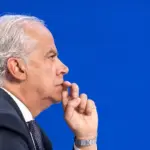




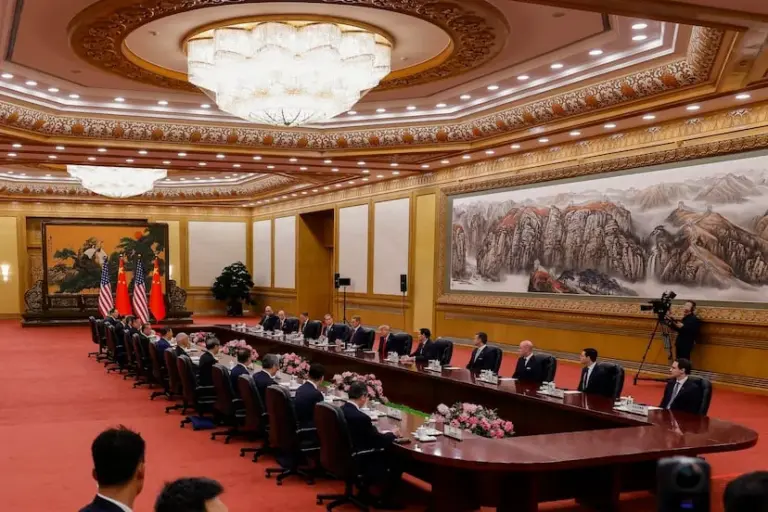
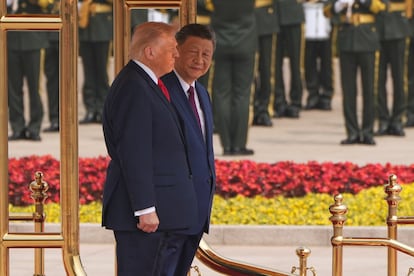
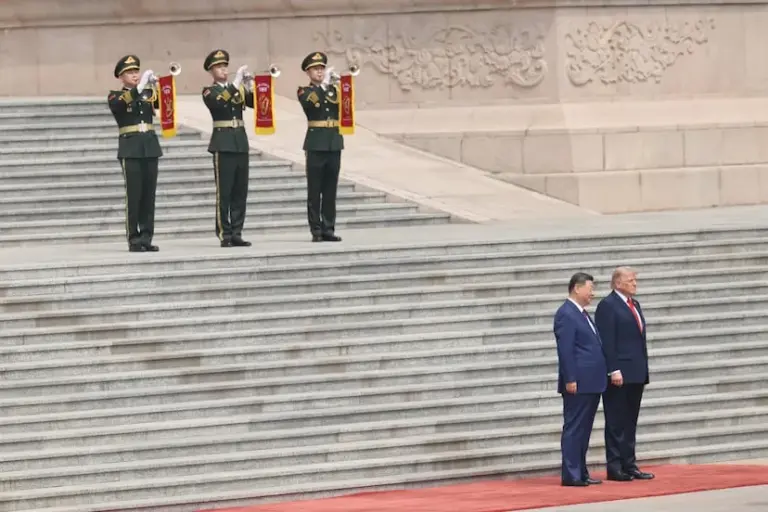
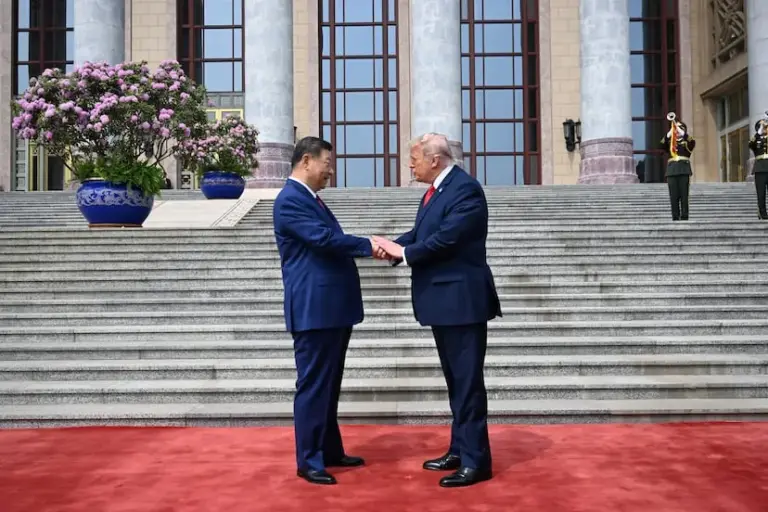
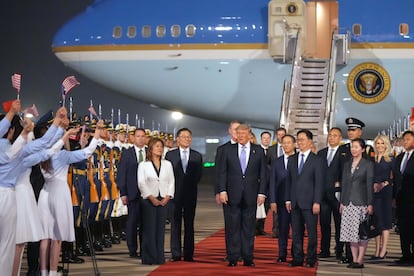
The leaders of the two superpowers have finally met face to face in Beijing to resolve a good handful of trade, technological, and geopolitical disputes accumulated on the table in recent years. After landing Wednesday night in the capital of the Asian giant, the U.S. president, Donald Trump, was received early Thursday by his Chinese counterpart, Xi Jinping, in the Great Hall of the People, the building reserved for major political occasions.
Read more The South Carolina Supreme Court orders a retrial for the Murdaugh murders
In the first negotiation session between the leaders, Xi warned Trump about Taiwan: “It is the most important issue in China-U.S. relations,” said the Asian leader. Mishandled, he warned, it could even lead them to “conflict.”
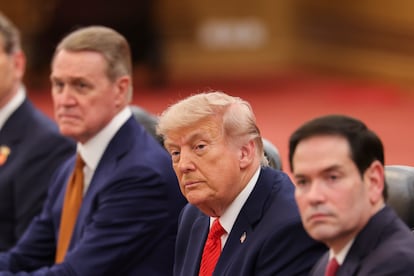
“The relationship between China and the United States is going to be better than ever before,” the Republican magnate assured in the initial exchange of statements, open to the press. He repeated several times the “honor” it was for him to visit and to be his “friend.” “We have had a fantastic relationship, we have gotten along well, and when there have been difficulties, we have solved them,” he expressed. “I called you and you called me,” he continued, in pure Trump style. “People don’t know that when we had a problem, we solved it very quickly and we are going to have a fantastic future together.”
The day concluded with a banquet filled with well-intentioned words, where Trump extended an invitation to Xi and his wife to the White House on September 24.
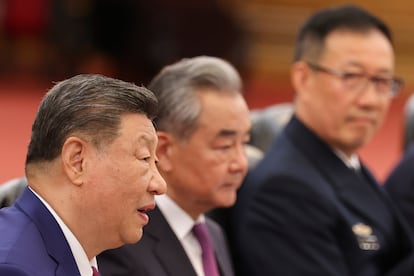
Xi, as usual, began the morning meeting talking about a world in the process of mutation with a phrase he has turned into a mantra. “Unprecedented changes in a century are accelerating,” he said. “The international situation is going through a period marked by intertwined turbulences and transformations. The world finds itself again at a new historical crossroads.”
Sitting on the left flank of the room, surrounded by his trusted team, Xi launched a battery of questions across the room, where Trump and his delegation sat: “Can China and the United States overcome the so-called ‘Thucydides Trap’ and open a new paradigm of relations between great powers? Can they join efforts to face global challenges and inject more stability into the world? Can they, keeping in mind the welfare of the peoples of both countries and the future and destiny of humanity, jointly build a better future for bilateral relations?”
These are, he said, questions of history, the world, and the peoples, whose answer “the leaders of the great powers must write together.”
During the talks, they addressed the U.S. war in Iran, against which China has raised its voice on numerous occasions. It was expected that Washington would ask Beijing to use its influence over Tehran to steer peace negotiations.
Although the official reading of the meeting provided by the Chinese government does not explicitly mention Iran, the White House statement does: “Both parties agreed that the Strait of Hormuz must remain open to ensure the free flow of energy,” it states. “President Xi also made clear China’s opposition to the militarization of the strait and any attempt to charge tolls for its use, and expressed interest in buying more U.S. oil to reduce China’s dependence on the strait in the future,” it adds. “Both countries agreed that Iran can never have a nuclear weapon.”
The Chinese version does not mention crude purchases and only refers to an exchange of “views” on “the situation in the Middle East, the Ukraine crisis, and the Korean Peninsula.”
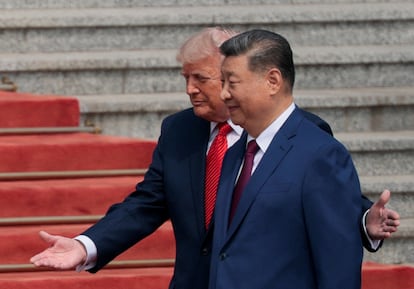
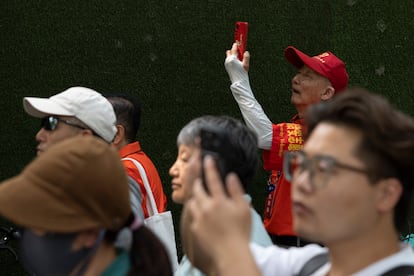
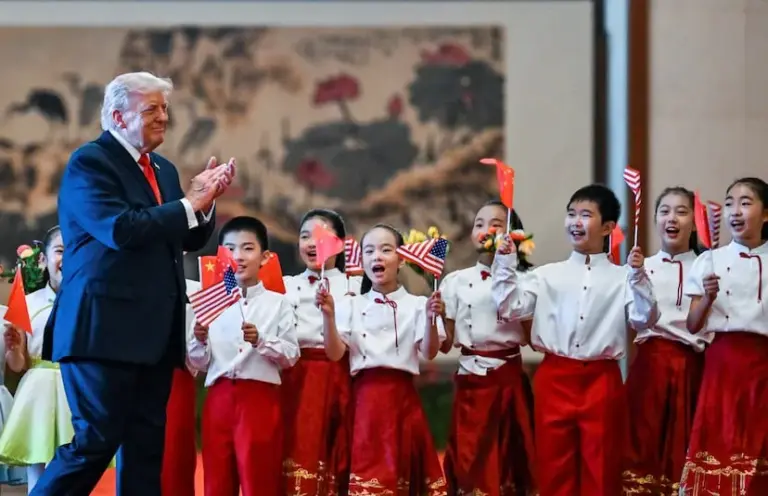
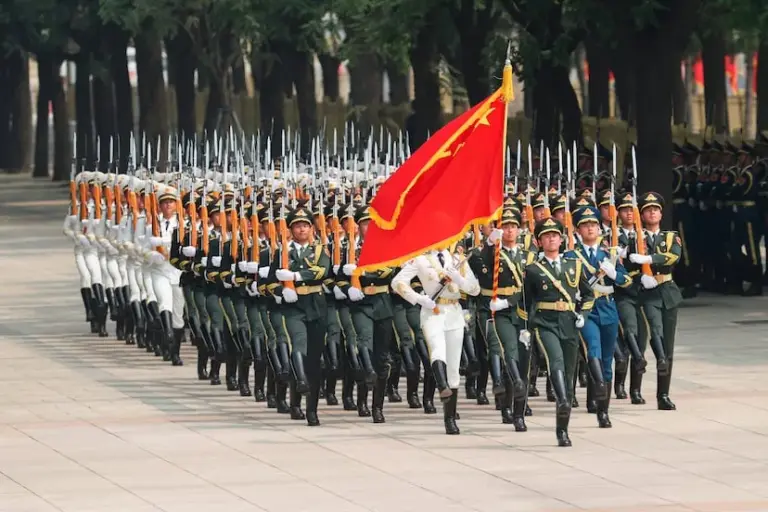
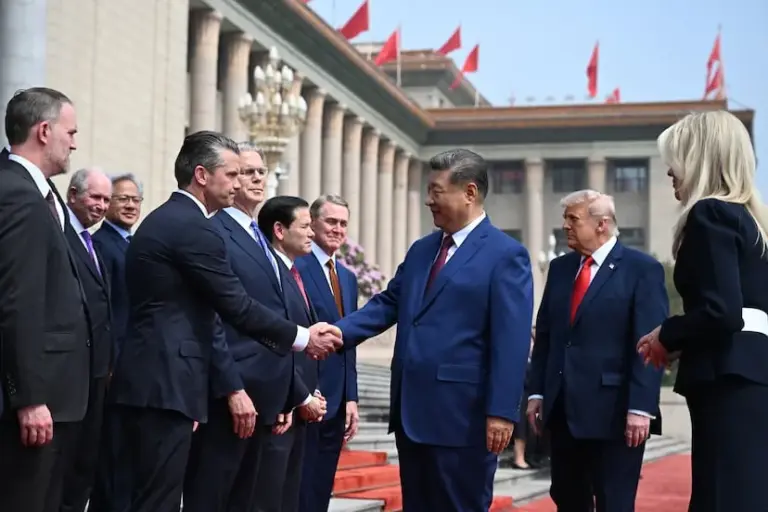
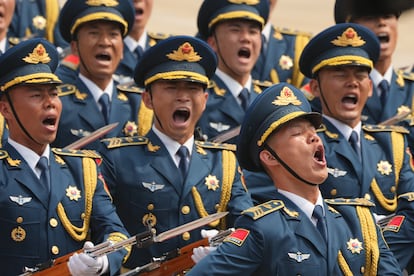
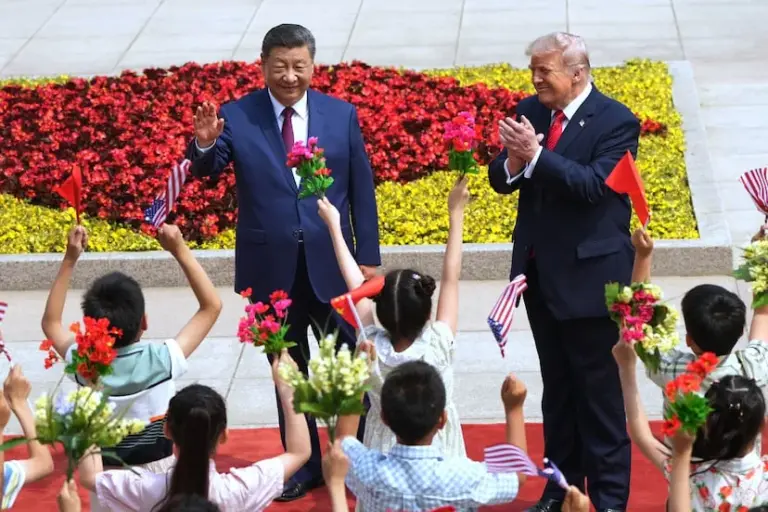
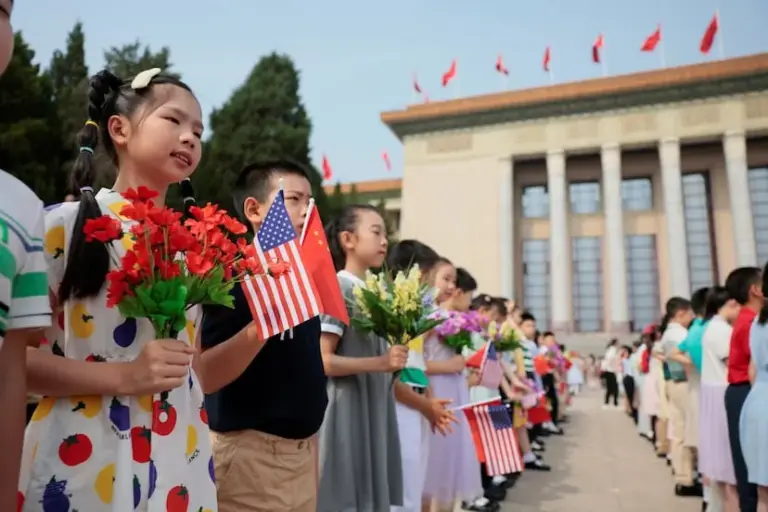
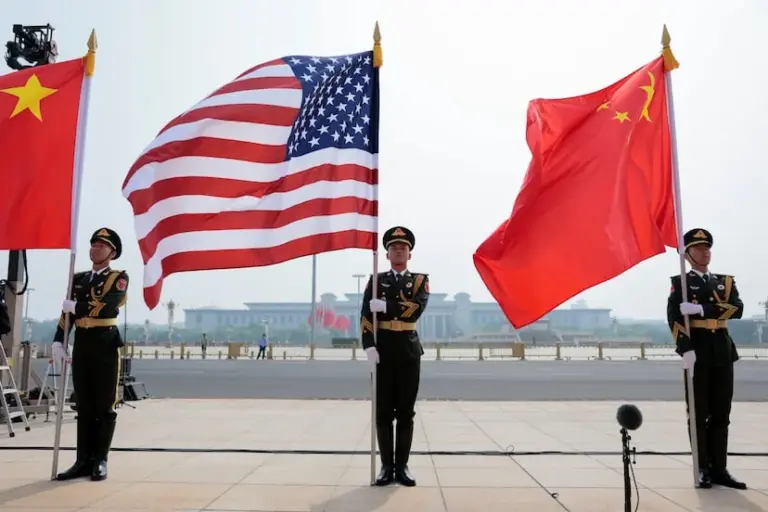
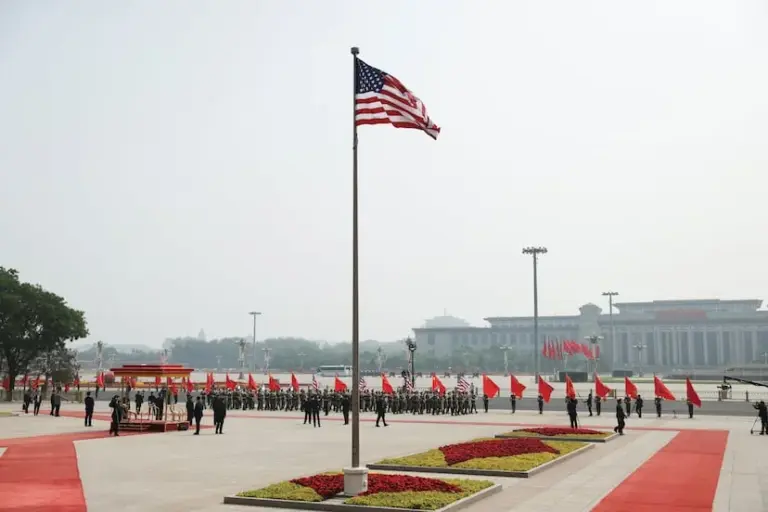
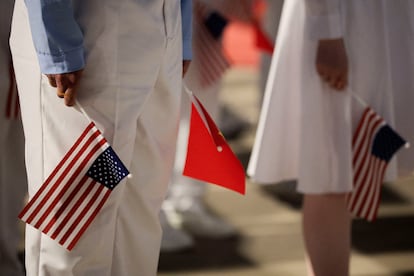
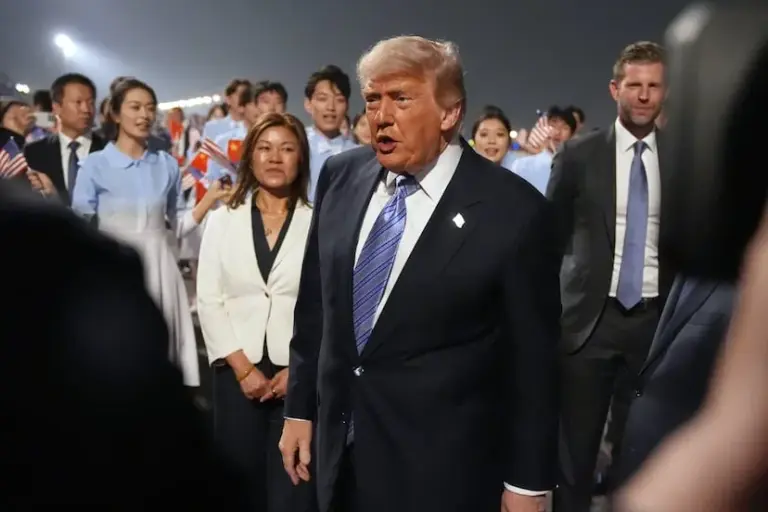
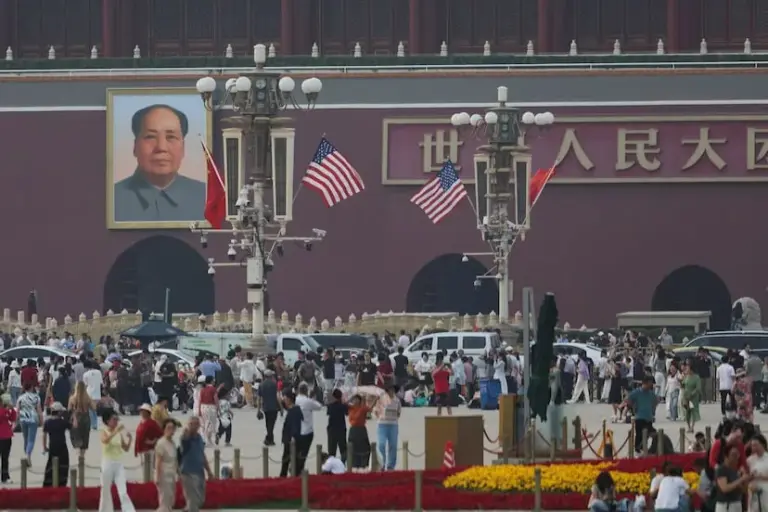
Minutes before sitting down to negotiate, during the official reception at the foot of the access staircase of the Great Hall of the People, on the side of the historic Tiananmen Square, the Chinese government deployed the usual pomp with which they receive heads of state: children waving flags of both countries while shouting in chorus “Welcome!”, cannon salutes, troop reviews, respective anthems played by the military band.
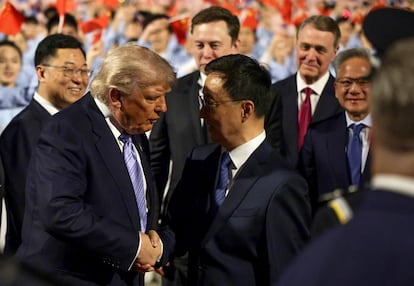
It is impressive to see both, Xi and Trump, with their long list of differences, walking together through the same place where, when appropriate, delegates of the Chinese Communist Party congress tread. Xi seemed especially smiling as they shook hands.
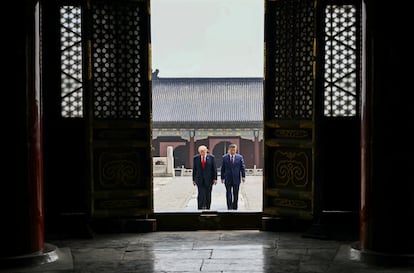
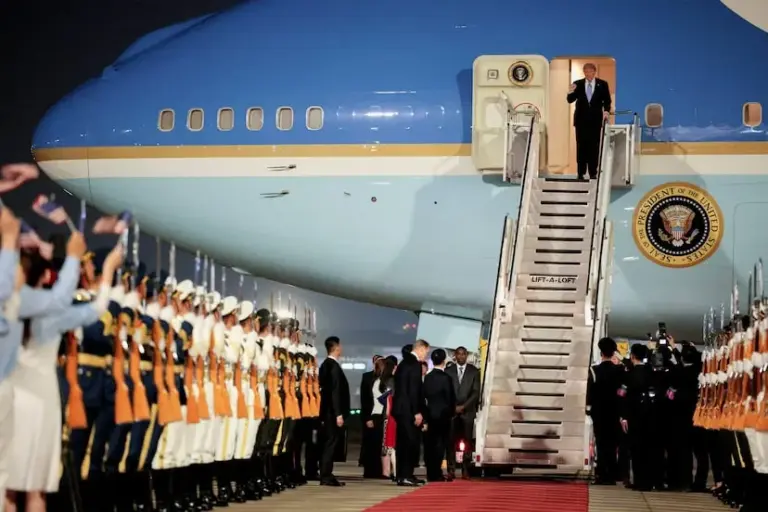
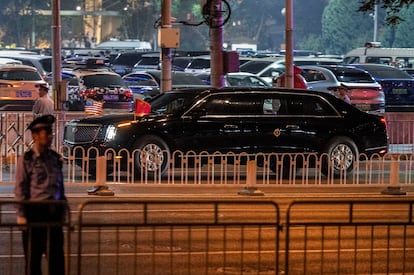
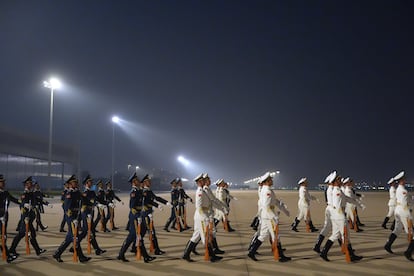
The summit, which will last until Friday, comes after the world’s first and second economies were embroiled in an intense trade and tariff dispute in 2025, paused for a year at their last meeting in October in Busan (South Korea). The tone from Beijing and Washington ahead of the summit is positive, showing signs that both countries seek to stabilize their relations and extend the understanding. Xi and Trump have agreed on “a new vision” that favors a relationship of “constructive strategic stability” for the next three years, according to the official Chinese statement.
But beneath the friendly wrapping, tensions, grievances, and suspicions accumulated in recent times also pulse at the meeting: from U.S. technological restrictions — which China sees as an attempt to curb its development — to Beijing’s ability to exert pressure by limiting exports of rare earths and other minerals critical to the U.S. industry.
Trump had also announced he intended to talk about Taiwan, an issue on which Xi has made China’s red lines clear: “If handled properly, bilateral relations can maintain overall stability,” he said, according to the official Xinhua agency. “If handled poorly, both countries could enter into friction and even conflict, leading the whole China-U.S. relationship to an extremely dangerous situation.” Maintaining “peace and stability” in the strait “constitutes the greatest common denominator between China and the United States,” he added.
The Trump administration has emphasized the commercial and economic profile of the trip, and its intention to advance agreements for China to commit to buying more products from the North American country, specifically the so-called three Bs: soybeans (beans in English), beef (beef), and Boeing airplanes.
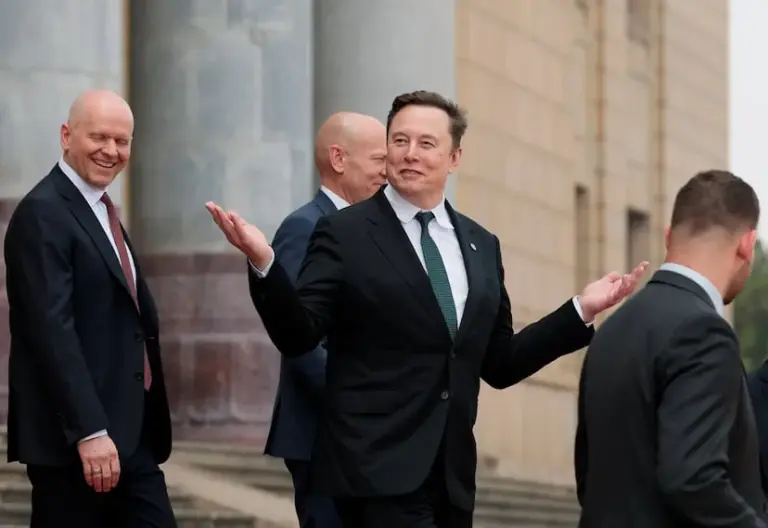
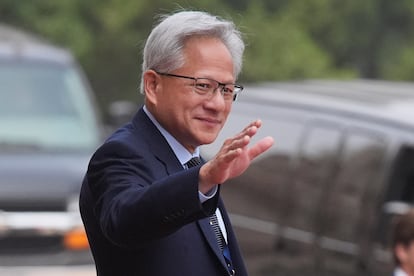
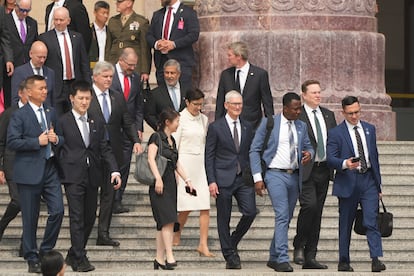
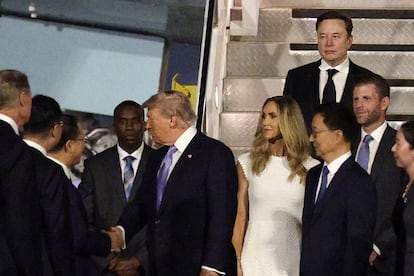
In his introductory remarks, Trump referred to the powerful entourage of businessmen accompanying him on this trip, top executives of U.S. multinationals, including Elon Musk (Tesla, SpaceX), Tim Cook (Apple), Larry Fink (BlackRock, the world’s largest investment fund), and Jensen Huang (Nvidia, chip designer, the most valuable company on the planet by market capitalization, and a critical player in the technological rivalry in this AI era).
They are “the best businessmen, the greatest, I guess the best in the world,” Trump described them. “They are here today to pay their respects to you and to China, and they look forward to trading and doing business, and it will be totally reciprocal on our part.”
His speech was full of laudatory words: “I have great respect for China, for the work it has done, you are a great leader, I tell everyone,” he said. “Sometimes people don’t like me saying it, but I say it anyway because it’s true.”
Xi also showed his willingness to understand: “When both parties cooperate, both benefit; when they confront, both are harmed,” he said. “China and the United States must be partners and not adversaries, promote mutual achievement and shared prosperity, and open a correct path of coexistence between great powers in the new era.”
He gave signals about that openness Trump demands: “China will open its doors even more.” And he recalled that U.S. businesses are deeply linked to the period of opening and reform that has transformed the People’s Republic. “China welcomes more mutually beneficial cooperation from the United States.” His intention, he concluded, is to make 2026 “a historic and emblematic year that marks the continuity and opening of a new stage” between the two countries.
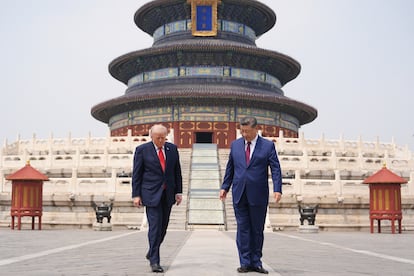
At noon, the leaders moved to the Temple of Heaven, a 15th-century imperial complex, to unwind the summit. The site, now a World Heritage site, was used during the Ming and Qing days as a sacred sanctuary to make offerings in exchange for good harvests. It is one of the most visited places in Beijing. “Great place. Incredible. China is beautiful,” said Trump, who was accompanied by his son Eric and daughter-in-law Lara.
Later, during the banquet, both leaders gave speeches before proposing a toast. Trump summarized: “It has been a fantastic day”; “we have had an extremely positive conversation and meetings.” Xi proposed reconciling the slogans of both countries: “Achieving the great rejuvenation of the Chinese nation and making America great again can go hand in hand.” Finally, he raised his glass and asked, as is customary in any toast in China, to empty the glass: “Ganbei!”