








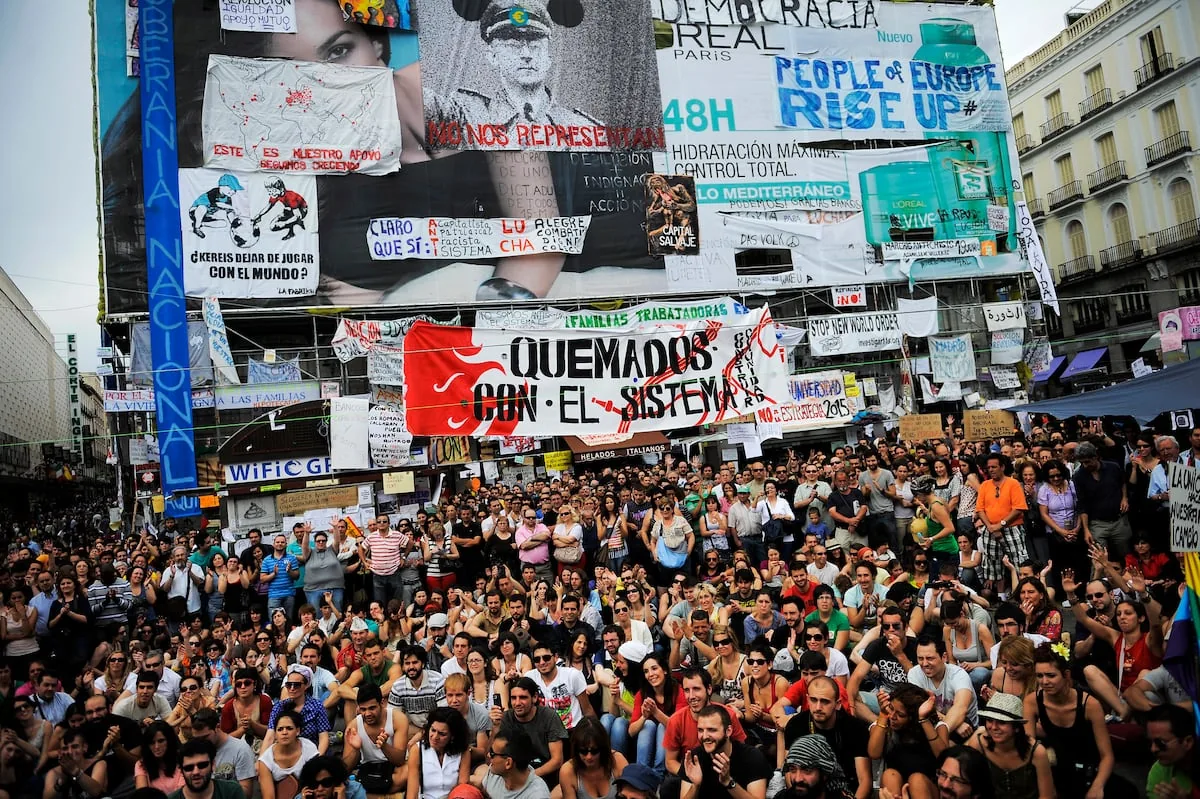
15 years after 15-M, both those of us who were part of it and its detractors have to acknowledge two things: that nothing changed, but that afterwards nothing was the same. It turned out that under the cobblestones of Puerta del Sol there was no beach sand either, but there did seem to be some well-calibrated compass: the indignados predicted with sometimes astonishing accuracy what the problems and debates of the coming decades would be.
Read more The encrypted ‘chats’ of the drug traffickers in the port of Valencia: “We control all police units”
“No home, no job, no pension,” said the slogan of Youth Without a Future, the organization that called the demonstration that led to the camp in Madrid. It concentrated the major concerns of those of us who were 20 then and are now 30, which remain the same even though we now have some gray hair. They are also three of the major discussions of the present: housing, job insecurity, and the sustainability of the pension system.
Fresh out of university, which was sold to us for decades as the stamp on the passport that would allow us to board the social elevator, we began to sense that the progress in which our parents had blind faith—or maybe not so blind, because they had seen it materialize before their eyes and thought it would continue before ours—was fading. That is why another major debate that 15-M put on the table is whether those born in the eighties and nineties are the first generation to live worse than their parents. Back then it seemed clear: mileurista had gone from insult to compliment and the plumbers or stock clerks who worked their backs off so their children could do a master’s in English realized that this would not guarantee them a place in the labor market. And that, in cases where it did, that job would not guarantee being able to pay for a house—neither rented nor much less owned—a car and, if they wished, a child’s diapers.
Today this debate has become polarized and somewhat dishonest; on one hand, there are those who want to talk about a generational gap but not social class, and on the other, those who want to exclude the generational variable and deny objective parameters such as the loss of purchasing power of young people or that their saving capacity is less than that of previous generations. But in 2011, with this slogan as one of its main banners, 15-M had the support of up to 80% of Spaniards.
Read more What do the polls say in Andalusia? The setback of the PP and other possible surprises
The indignados also had the support of 80% of young Spaniards saying “PSOE, PP, it’s all the same shit,” denouncing interested polarization and turnismo, demanding a new board where there was no talk of right or left but of the bottom against the top. A discourse that today would embarrass some of those who claimed to be its heirs, who came to dynamite the two-party system but ended up not only reinforcing it but refounding it with an even more belligerent dialectic: that of the antifascist alert.
There are surely also alleged heirs of 15-M who are uncomfortable remembering that all this happened with Zapatero in power, because there was a time—not very long ago—when you could criticize the PSOE without being called a fascist or question the European Union without being accused of being a Le Pen supporter. There was a time when we were fair and radical, when we dared to point at the moon and not the finger. To say that we are not merchandise in the hands of politicians and bankers. And that it is not a crisis—financial yesterday, housing today—it is a scam.