




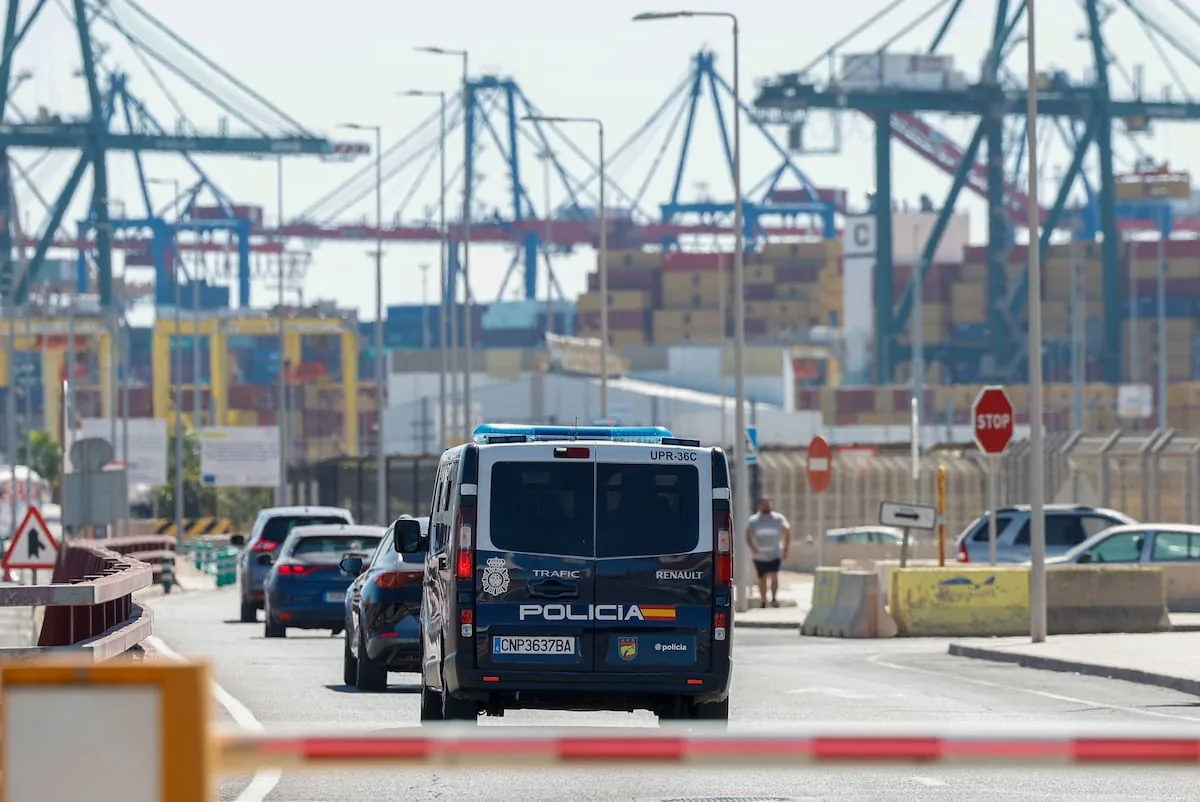
When the drug trafficker Esteban B. sent a message through the encrypted app Zangi in April last year, he didn’t know he would soon eat his words. “Here we have a system that controls all the police control units,” boasted the trafficker to Josafat M., Kamal, alleged leader of the network. Five months after this display of arrogance, the National Police dismantled a plot that stored 4.5 tons of cocaine. And with it, the unspeakable secrets of an organization that, from the labyrinthine mini-city of the port of Valencia, extended its tentacles to Colombia and the Balkans amid the metallic noise of containers and cranes. The police operation, named Operation Spider, resulted in more than 80 arrests. Among them, 17 dockworkers and a civil guard.
Read more What do the polls say in Andalusia? The setback of the PP and other possible surprises
Esteban B.’s message, considered the leader of the logistics apparatus, aimed to instill confidence. The drug trafficker tries to convince his interlocutor that moving a cargo ship with cocaine from Ibiza to the Peninsula is a brilliant idea. And, for that reason, they should pay him well. “It could be done very well. And now, since it’s tourist season, it helps,” suggests Esteban, according to the wiretaps and messages accessed by EL PAÍS. These communications are part of the case file of this major investigation that the Valencia Court of Instruction number 15 has been probing for two years.
Investigators are convinced that the group knew the date of their arrest. In one of their secret conversations, Kamal talks with a trafficker masked under the alias Conan about the possibility of being arrested on September 22, 2025, when the arrest was executed along with 60 other people. The leader’s interlocutor says he is calm because he left his house “clean” (without incriminating evidence). “At most, photos and little else,” he states. “I’ll get five months in pretrial detention if they don’t catch me with anything,” estimates Kamal’s accomplice, a businessman who combines cocaine trafficking with construction and renovations.
In another encrypted chat, the traffickers discuss the fees they pay their collaborators. The network paid between 100,000 and 120,000 euros to their “camis,” the truck drivers who transported the unloaded merchandise. And 50,000 to the “breaker,” the person in charge of removing the seals from the containers to extract the drug. Kamal (Josafat M.), considered an intermediary with a leadership position, explains these figures and when it’s worth paying out to another member of the organization. “If you pay too much, they get rich and stop working,” he warns. “200 (200,000 euros) and if some cami other than the kid from yesterday comes in, they pay separately and that’s it,” replies María (code name), referring to the occasional hiring of external drivers. “Even if it’s 300 k (300,000 euros) in expenses, it’s a gift,” she adds, focused on the return on investment. “Always giving away money,” complains Kamal, who — according to investigators — was in charge of managing the containers and their subsequent distribution by road.
The leader’s arrogance
The alleged leader knew how to shed his arrogance. And if the business was worth it, he resorted to the treatment of “boss” to please his interlocutor. In August 2025, he used this formula to chat with “Levinskey,” a trafficker with interests in the Ecuadorian cocaine business who was considering introducing a shipment of 480 kilos. “Help me get out. They have me roasted. The 480 are mine, well, yours,” Levinskey requests. “Don’t worry, boss. Next week, we’ll talk,” he replies with a smiling face icon. “And you’re going to fight for the prices.” “Whatever is in my hands,” answers the South American trafficker, who addresses the Spaniard affectionately as “brother” and considers him “one of ours.”
Another episode reveals the fear Kamal instills in his collaborators. In May 2025, a member of his network warns him how he terrified another trafficker after a meeting. “I don’t know if you noticed, but you spoke very close to his face. He shit himself jjjj.” “I didn’t do anything to make him scared. I was very diplomatic,” says Kamal, who concludes that the scared trafficker “is dumb.”
The analysis of Zangi conversations, a system of Armenian origin that encrypts with military-grade encryption through ten digits, reveals that the network based in the port of Valencia considered an in extremis business shortly before their arrest: sending 50 kilos of coke to a trafficker “from the North.” The merchandise had to be “of good quality.” They would earn between 13,500 and 13,900 euros per kilo. And the operation would yield 700,000 euros. “It has to be good and in normal format,” emphasized an interlocutor of Kamal registered on his phone under the alias “Friend.” The traffickers also complain about the price drop. They miss the days when a kilo of coke nearly reached 40,000 euros. “If this doesn’t improve, I’ll have to change professions,” laments Kamal.
After a meeting in Marbella, the organization’s leaders consider a business to move “six devices” — six kilos of cocaine — with drones. They estimate it takes 10 minutes to pick up the merchandise and transport it to the destination. And they are concerned about the machines’ autonomy. The operation was never carried out. The traffickers suspect the police know their plans and intend to arrest them.
Nine truck drivers were arrested in September 2025 for belonging to this plot that used the blind hook trick: placing backpacks with cocaine in a container of legal merchandise without the importer and exporter knowing. The drivers themselves slept in the container to prepare the drug and get it out as soon as possible without raising suspicion, according to the geolocation beacons installed by investigators.
Alongside international trafficking, the plot also speculated. They bought coke when prices dropped or an opportunity arose. And, after storing it, sold the merchandise at a higher price. Kamal recommended a collaborator buy the drug from a seller in Alicante who offered the kilo at 13,500 euros. “It’s a good price. Buy it and keep it […] You have better prices than I do,” admitted the alleged leader in May 2025.
Alongside the masterminds, the network also included three stevedores, considered “the key.” Or, in other words, the pass to smuggle coke into Europe through Valencia. The organization also included transport businessmen, unionists, and a doctor from the Port Employment Center. Through their infiltration in this body, the traffickers incorporated new members into the port stevedoring by rigging exams. And thus, they could control their shifts and container movements.
The messages from the group dismantled in Operation Spider — named so because they used “spider men” who climbed containers to extract the substance — were recovered by investigators with a forensic system. The network deleted their communications almost daily, following Kamal’s instructions. They feared surprise visits from Security Forces and Corps officials. “Delete everything, in case they come at night,” insisted the leader.
Read more A Cuba on the brink of collapse faces the vertigo of change imposed by the United States