









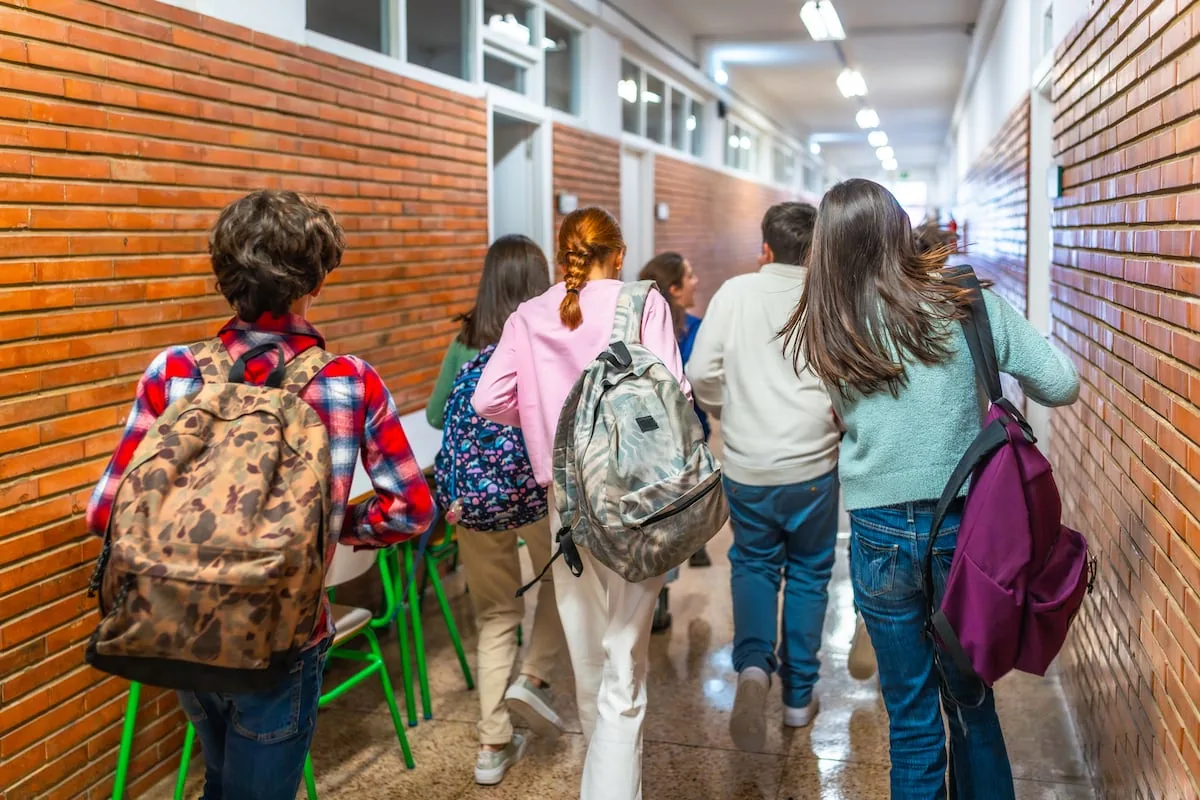
Although the brutal crime of the inspector in Calama no longer makes daily headlines, its echo persists in a series of news that confront us with a disturbing reality: students carrying weapons, threats that are beginning to become normalized, and educational communities stretched to the limit. As if, suddenly, everyone saw what had been happening for some time. That event opened, albeit belatedly, a conversation that those of us working in education have been sustaining for years. School violence has ceased to be an isolated phenomenon and has become a complex expression of deeper social tensions.
Read more Juan Abarca Cidón, new president of the newspaper ‘Redacción Médica’
Reducing this phenomenon to isolated incidents or individual failures would be a mistake. What we are seeing in schools is, in many cases, a reflection of a fragmented society, where bonds weaken, distrust sets in, and coexistence becomes more fragile. Schools are not bubbles. They receive, process, and often amplify what happens outside them. Therefore, any response that aims to be effective must go beyond the immediate and address the causes underlying this crisis.
There are no simple solutions, and it would be naive to suggest otherwise. But it is urgent to affirm that there are paths that target the root of the problem: strengthening the bond, meaning, and belonging within educational communities. These three elements, often sidelined in the face of pressure for academic results or control measures, are, however, fundamental to building safe and meaningful environments.
One of the keys lies in how we understand learning. For a long time, the school system has favored a logic centered on the transmission of content, often disconnected from the students’ life experience. Instead, when the educational process manages to connect with the environment, with the real questions of the students, and with the possibility of influencing their context, something different happens. Learning becomes a meaningful experience.
From this perspective, methodologies like service learning, which integrate academic training with social commitment, offer a relevant opportunity. It is not just about ‘learning by doing,’ but doing so with a clear and shared purpose. When students identify problems in their environment, design solutions, implement them, and reflect on the process, learning becomes situated, concrete, and deeply meaningful. Knowledge ceases to be abstract and becomes a tool for action.
But the impact is not limited to the cognitive realm. This type of experience contributes to the development of skills that are essential today: teamwork, empathy, critical thinking, effective communication, and peaceful conflict resolution. In contexts where violence appears as an available form of relationship, creating spaces where other ways of living together are practiced is not accessory but essential.
Read more Sheinbaum seeks an agreement with tomato producers to curb inflation
What emerges in these processes is something that often goes unnoticed in public debate. Young people are not disconnected or uninterested. From our experience in Technical Professional Education institutions, through the initiative ‘Protagonists of Change,’ what we see is that when they find real opportunities for participation, they respond with creativity, commitment, and leadership. Even in complex contexts marked by violence or exclusion, it is possible to observe how other forms of relationships, based on collaboration and respect, make their way.
Security is necessary, without a doubt. But it is not enough. A gate can detect an object, but it cannot rebuild trust, generate a sense of belonging, or offer a life project. Nor can it replace the role of a community that welcomes, listens, and establishes meaningful bonds among its members.
One of the greatest challenges schools face today is precisely that: rebuilding the meaning of the educational experience in a context where many of its promises have lost strength. Education no longer appears as a clear path for mobility nor as a space to project the future. It is there that frustration, disconnection, and, in some cases, violence find fertile ground.
The fundamental question is not only how we prevent violence from entering the school, but how we build schools where violence ceases to make sense. This implies rethinking not only coexistence strategies but also the very purpose of education. It means asking ourselves what kind of experiences we are offering, what place we give to student participation, and how we connect learning with life.
On that path, the challenge is great, but so is the opportunity. Because in every space where a student finds meaning, where they feel part of it, and where they can contribute, a concrete possibility opens to counteract the logic of violence. And that is, probably, one of the most urgent tasks of our time.