









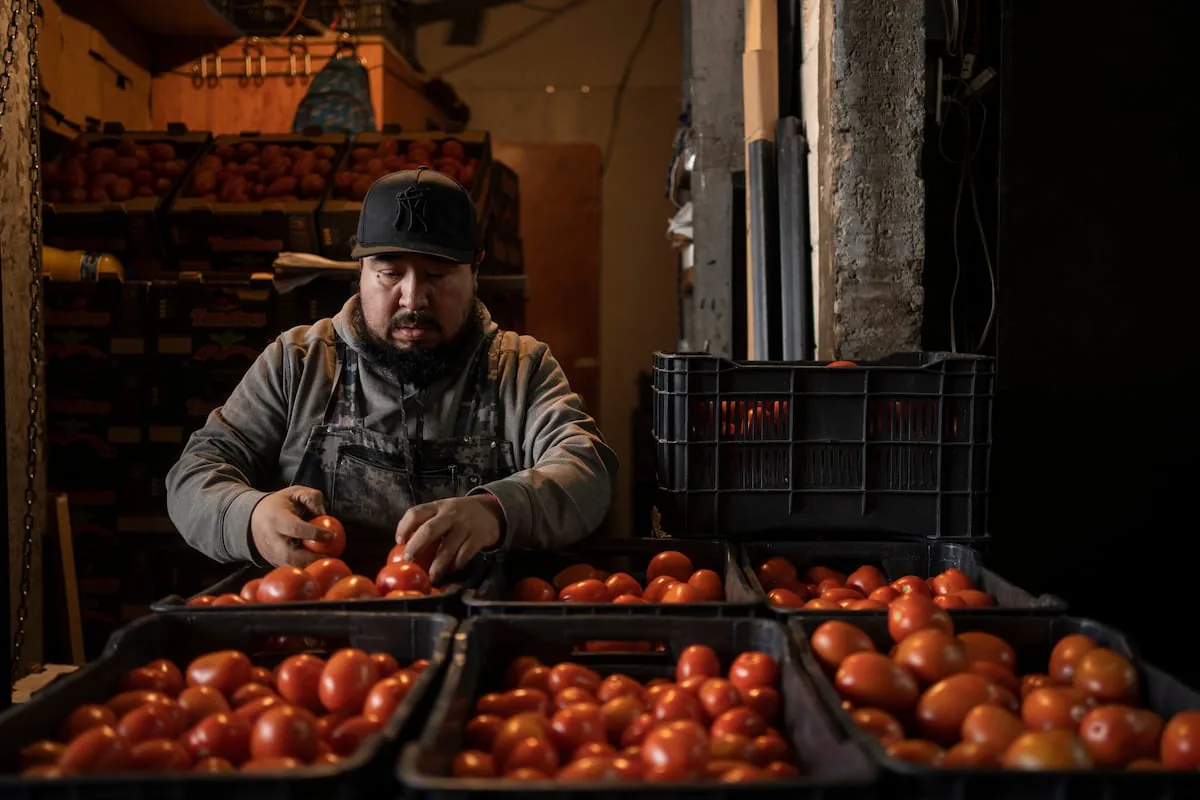
With subsidies, improvements in logistics chains, and agreements with agricultural producers and gas station owners, Claudia Sheinbaum’s government seeks to contain inflation. The price hike in Mexico went from 3.7% last December to 4.6% at the end of March. The increase in the indicator is mainly attributed to the rise in agricultural products such as tomato, potato, onion, or green tomato. The governor has indicated in her morning conference that this afternoon she will meet with tomato producers to negotiate a base price for this fruit, which has a great impact on the indicator due to its presence on Mexican tables. “If the price of tomato increases, prices in restaurants increase, we do not want prices to rise and in the case of tortillas there has been a slight increase, but we are also meeting with them because the price of corn has dropped, so there would be no reason for a price increase,” she commented.

Sheinbaum pointed out that, although inflation rose in March, it is not above the price hikes of other times such as during the war in Ukraine in 2022, when the indicator reached 7.8%. “Inflation is not above other years. Even with the excessive increase in fuel prices due to the situation in the Middle East, inflation is still contained,” she declared this Thursday at the National Palace. The governor has insisted that there are no economic reasons to justify increases in the price of tortillas, energy, and the basic basket, which is below one thousand pesos.
In response to the price hike, Sheinbaum’s government has activated a series of measures ranging from price agreements with gas station owners to waiving part of the taxes on fuels. With these agreements, the price of diesel was set at 28 pesos per liter, while regular gasoline should not exceed 24 pesos per liter. The sector is receiving tax support through the discount of the Special Tax on Production and Services (Ieps), equivalent to 5 billion pesos that the federal government will not collect this week. Along the same lines, César Escalante, head of the Federal Consumer Protection Agency (Profeco), reported that inspections and the placement of banners will continue at gas stations that offer liters above the prices agreed with the government. He detailed that this week about thirty gas stations have been visited and banners indicating price excesses have been placed at 13 of them.
Due to the war in Iran, the Treasury reactivated subsidies on gasoline and diesel with the aim of softening the impact of international energy volatility on fuel prices. The conflict in the Middle East will also affect international prices of energy, fertilizers, and metals, so agricultural prices to producers will tend to increase, impacting final consumer prices.
The head of the USTR will visit Mexico ahead of the USMCA review
Economy Secretary Marcelo Ebrard explained that as part of the upcoming USMCA review in July, the head of the US Trade Representative, Jamieson Greer, will visit Mexico next Monday. “The first round of talks aimed at the treaty review took place in Washington in March, now it is time for this round of talks, which would be the second, to be held in Mexico. There will be sessions to review sector by sector, in steel and aluminum, automotive industry, the entire agricultural sector, the concerns we have and the proposals we have, topics such as rules of origin and coordination of trade policies between countries,” the official detailed.
In Thursday’s conference, an investment of 1 billion dollars by the company Flex for the next three years was also announced. The company’s Director of Business Development and Government Relations, Guillermo Del Río, explained that this disbursement will also involve hiring 5,000 people in Mexico. The electronics company that equips data centers has eight plants in the center and north of the country.