





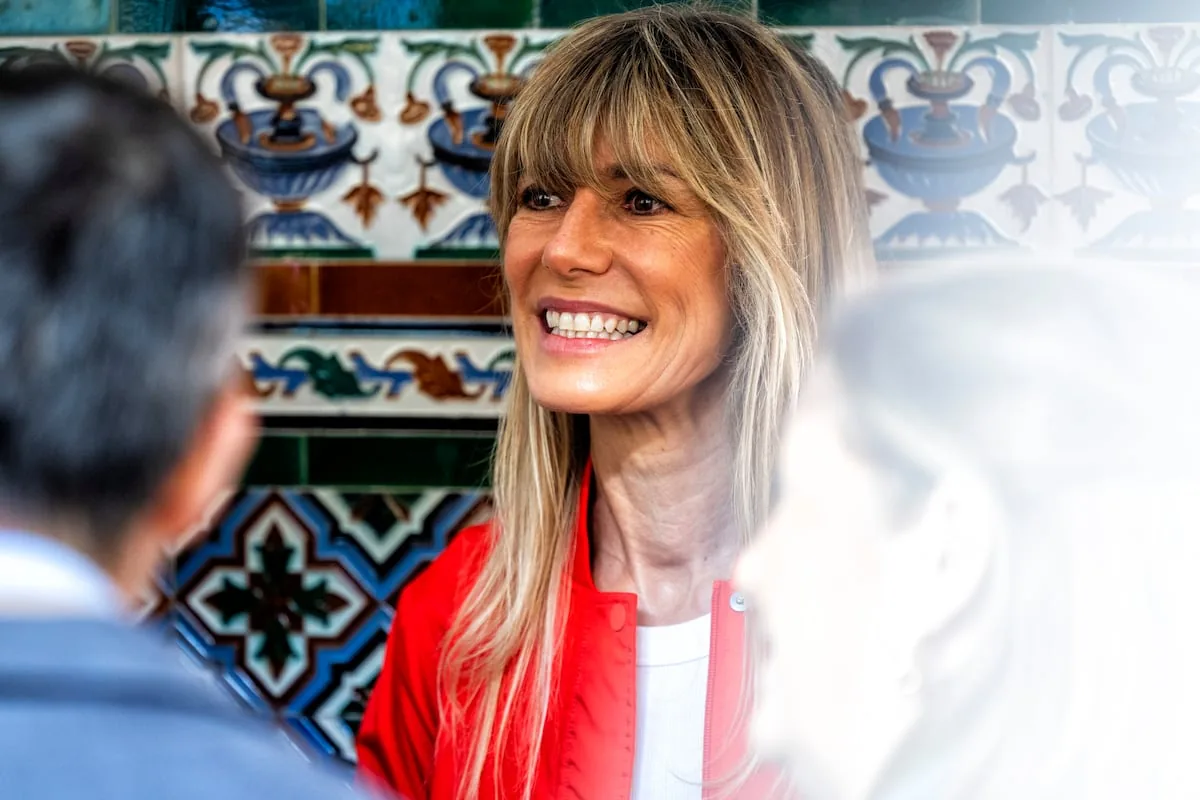
The defense of the wife of the Prime Minister, Begoña Gómez, insisted this Monday on distancing herself from the crimes of influence peddling, business corruption, misappropriation of a brand, and embezzlement for which the popular accusations are asking for her to be sentenced to 24 years in prison. Her lawyer, the former socialist minister Antonio Camacho, has submitted his written conclusions, which EL PAÍS has had access to, in which he requests that, in case she is judged by a popular jury, “an acquittal sentence with all favorable rulings be issued.” “The facts presented do not constitute any crime,” he emphasized. And he defended that her relationship with the Complutense University of Madrid (UCM) began years before Pedro Sánchez assumed the head of the Executive.
Gómez’s conclusions come after Judge Juan Carlos Peinado agreed to send her to trial with a popular jury alongside her advisor Cristina Álvarez and businessman Juan Carlos Barrabés. Throughout 23 pages, her lawyer reiterates the position he has maintained throughout the investigation: that there is no evidence against her. He emphasizes that the conduct attributed to the wife of the Prime Minister “does not meet the objective or subjective elements required by any of the criminal types invoked by the accusations.” “Consequently, and for the reasons that will be exposed in the plenary, an acquittal sentence should be issued,” he defended.
Accusations and defenses present their conclusions after two years of controversial instruction by Peinado, who opened the case in April 2024 following a complaint filed by Manos Limpias. The judge began investigating Begoña Gómez’s professional activity with businessmen and her working relationship with the Complutense, as well as the development of a software for that study center. In these facts, the instructor perceives behaviors that would fit the crimes of influence peddling, business corruption, and misappropriation of a brand. Later, however, he expanded the case to try to determine whether there was a diversion of public money by hiring Álvarez as an advisor to Sánchez’s wife so that she ended up collaborating with her private activity instead of her institutional work. This thesis supports the alleged embezzlement.
Within the framework of the document submitted this Monday, in which she denies the four crimes attributed to her, Gómez takes the opportunity to request that the costs of the popular accusations, led by Hazte Oír — who demand 24 years in prison for Gómez — be ordered, “for having acted with recklessness and bad faith.” The defense maintains that they have acted “with purposes other than the legitimate prosecution of the crime, instrumentalizing the criminal process as a mechanism of pressure and generation of reputational damage” to create “a climate of generalized suspicion” about Gómez.
Although the defense insists that the facts attributed to Gómez “do not constitute any crime” and demands an acquittal sentence, in view of the possible trial, it proposes more than twenty witnesses: including UCM officials, such as Rector Joaquín Goyache; and businessmen like Rosauro Varo or Miguel Escassi, in addition to the accused themselves and the agents of the Central Operative Unit (UCO) of the Civil Guard who prepared key reports of the case.
It also requests that in the preliminary hearing a final proceeding be carried out that Peinado has so far refused to agree to: the testimony as a witness of José Manuel Ruano, a UCM professor and co-director of the Extraordinary Chair of Competitive Social Transformation. The defense emphasizes that “it is essential given the position he held in the extraordinary chair, which is at the center of most of the facts that have been the subject of investigation.” Thus, it describes as “surprising” that “dozens of witnesses, some even several times,” have been heard, and that the judge has denied “the testimony of the only person, along with my client, who directed the said extraordinary chair.”
Denies having caused patrimonial damage to the Complutense
For a possible trial, the lawyer denies the facts collected in the accusation document of Hazte Oír and proposes his own “alternative factual account,” one in which he highlights that Begoña Gómez began her collaboration with the Complutense in 2012, “a time when her spouse held no political responsibility whatsoever.” According to him, her academic work with the university was developed “simultaneously” with her professional activity in the company Inmark, from which she distanced herself in 2018, when Sánchez arrived at La Moncloa, to “avoid any conflict of interest.”
Within the timeframe presented, the defense emphasizes that Gómez began as co-director of the extraordinary chair Competitive Social Transformation (TSC) in October 2020 “following an express offer from the UCM itself” and “given the experience she had with the co-direction of two masters at the same” university. At this point, it highlights that extraordinary chairs are formed outside the “ordinary” structure of ordinary chairs financed with public money. Thus, it recalls that it is a “public-private collaboration instrument” that, in the case of the Complutense, does not imply economic remuneration for those who direct them nor require higher university degrees. In this way, it denies having profited from her relationship with the university.
Read more Bodies of the four missing Italian divers found in the Maldives
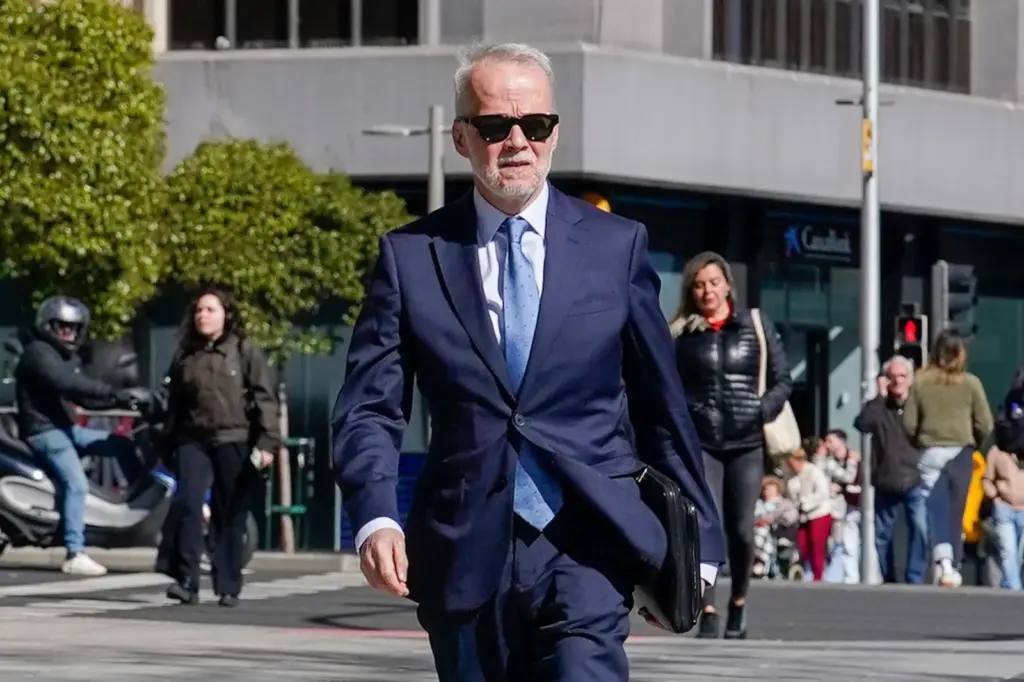
He also recalls that her appointment took place after a meeting she held in July 2020 with the Complutense at La Moncloa — “which since 2018 has been Gómez’s family residence” — and was formalized in October 2020 with the signing of the agreement. As he has done throughout the investigation, the defense insists that the term Competitive Social Transformation was “personally chosen” by Begoña Gómez, who proposed it to the university to be used as the title of the chair. “That is, it is a term she invented, which did not exist before and which was in no way registered by the university in any registry,” he highlights.
Likewise, he emphasizes that the agreement for the creation of the chair “expressly” included the creation and implementation of the software (which was not completed and of which she is accused of having appropriated). He defends that this digital technological platform “was foreseen” as “free” and that “it was the property of the UCM.” He explains that different companies “contributed hours of work or amounts of money,” but that, in any case, “all those amounts were deposited in the assets of the UCM.” “Neither Begoña Gómez nor the other investigated parties have benefited, therefore, from the said funds. Likewise, the UCM has not suffered any patrimonial damage,” he emphasizes.
Similarly, he distances himself from any irregularity or profit motive regarding the software. He reiterates that the registration in the name of the Complutense “was never carried out” because, according to university regulations, it could only be done when the project was finished. Regarding the registration of the internet domain, he insists that he merely followed “instructions” from the UCM on “how to do it.” And he explains that he registered the distinctive symbols of the TSC brand because the university could not do so until the project was finished, because they had to be used on the platform’s website, and because he wanted to “prevent other people from appropriating them.” Finally, regarding the constitution of the company Transforma TSC SL, he maintains that it “had no activity, did not file annual accounts, nor registered domains, rights, or assets of any kind.”
Insists that her advisor only helped her with specific UCM matters
Regarding the crime of embezzlement, which she is accused of for using Cristina Álvarez, a personal assistant hired by La Moncloa, for both her public and private tasks, Gómez insists that it is a figure “common in the history of our democracy since its beginnings.” In fact, she emphasizes that Álvarez’s availability was “24 hours a day, 7 days a week, and working under a special dedication regime.”
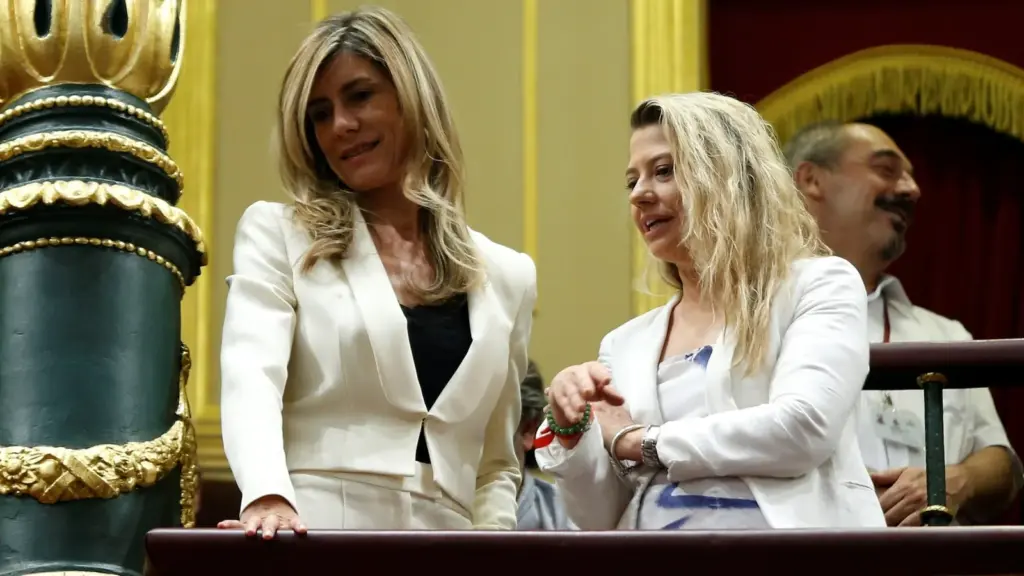
Specifically, the defense points out that if Álvarez was copied on “all the emails that Gómez sent or received” it was to “make her public activity compatible with her private activity.” Only “occasionally,” she sent “a very limited number of emails to help Sánchez’s wife at specific moments,” without this having “affected in any way the proper fulfillment of her duties,” she argues. “And therefore it has not meant, either, any detriment to public resources,” she emphasizes. The lawyer of the La Moncloa worker called the request for 22 years in prison against her “absurd.”
Gómez’s lawyer lays out all his exculpatory arguments days after he asked the Provincial Court of Madrid to halt Peinado’s decision to send her to trial with a popular jury and after he requested the instructor himself to suspend the case until the higher body rules on the appeals pending resolution.
Read more Trump fights in Kentucky the penultimate battle against the rebellious Republicans