








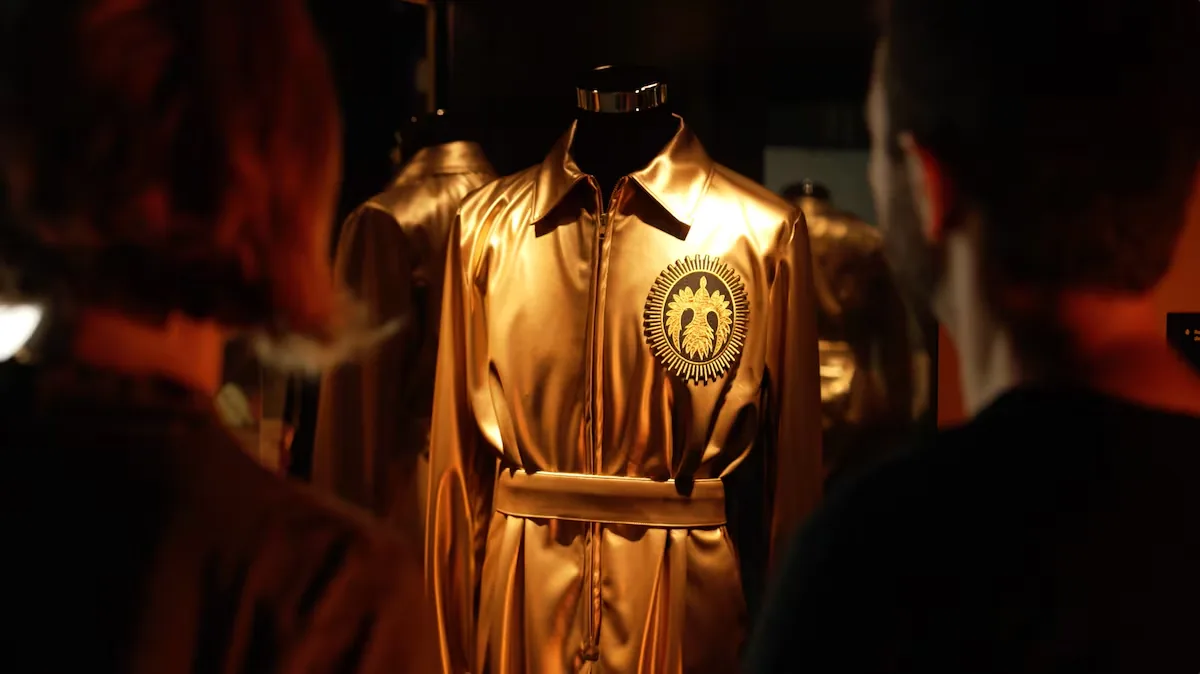
For a time, Salvador Dalí dressed as an astronaut to symbolize his passion for a future he found fascinating. To do this, he designed a suit like the ones worn by universe explorers, but in gold color. He can be seen wearing it as soon as he enters the immersive exhibition Dalí Boulevard Cibernético, which will open this Wednesday at Casa Amatller in Barcelona. The suit, created by Josep Mallerich in 1958, has been reproduced for this journey that shows the painter’s fascination with technology and science, a field he dared to imagine through fashion and jewelry. After the success of Dalí Cibernético which was shown in 2022 at Ideal Barcelona and has toured 15 cities, the production company Layers of Reality, in collaboration with the Gala Salvador Dalí Foundation, has created a route that continues exploring his futuristic thinking.
Read more The judge takes the first step to send the businessman who financed Alvise to the bench
By now, it is well known that Salvador Dalí was much more than a painter. He squeezed the most out of his life and was interested in all forms of creativity, showing a genuine interest in the most cutting-edge research of the time and approaching scientists and tech companies. In fact, as can be seen in the video included in this boulevard that traces his amazement at what was to come, he even stated that he was only interested in “cybernetics, quantum physics, and biology.”
“We continue to claim Dalí as a total and visionary artist,” said curator Anna Pou at the presentation, emphasizing his passion for fashion and jewelry, which reveal him as “an artist with intuition and also a humanist.” In a way, he anticipated some inventions that were to come, such as smart glasses with his Eskimo Eclipse model for the Courrèges brand, which can be seen, or a reproduction of the dress he created in 1965 together with Christian Dior imagining the woman of 2045, with a hat that resembles an antenna.
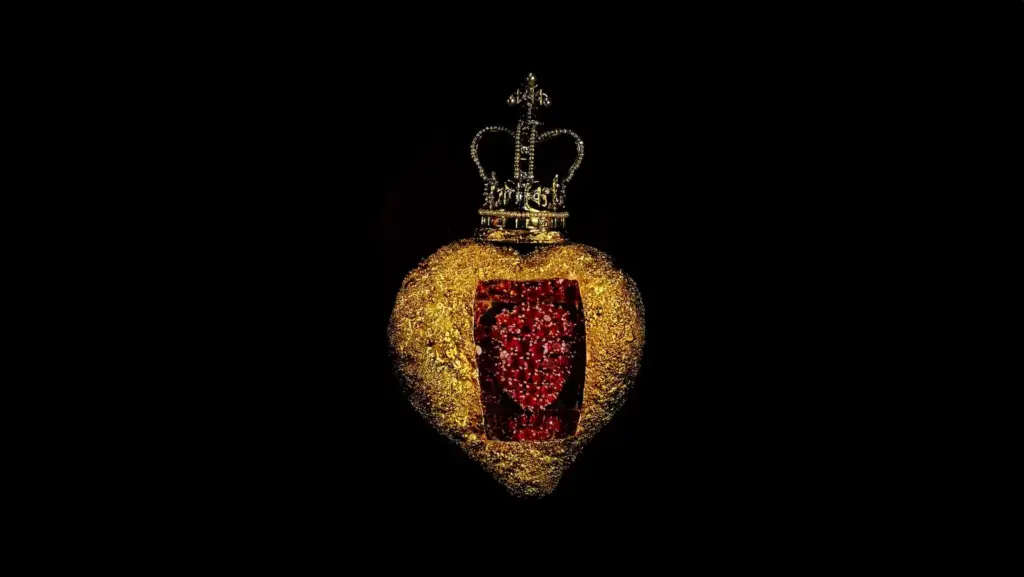
Some of the designs have a certain parallel with the wearables used today, notes Anna Pou, who compared it to the idea of a flying machine that Leonardo da Vinci developed in 1489 and is considered a precursor of the helicopter. The curator says that the surrealist artist learned about the foundations of Artificial Intelligence (AI) when it began to develop in the 1950s in the United States, a country he often traveled to and where he spent long stays cultivating many relationships.
During the tour, which features several rooms supported by different technologies, such as immersive, virtual reality, or audiovisual, two original Dalí pieces are exhibited, such as one of his canes or Eskimo Eclipse glasses, but the other objects are reproductions, like the dresses, among which are also included the printed circuit dresses he designed with Paco Rabanne for the Ballet cibernètic.
Read more ‘La mesa de Hora 25’, in EL PAÍS | Program of September 15, 2026
For Dalí, fashion was not superficial at all. He claimed that his clothing gave him powers such as wisdom and immortality, which he aspired to like current technocrats. The cane was for him like an extension of his body, which he never parted with because he understood it as a symbol of distinction and extravagance that he so pursued, but also because it gave him a kind of stage control, which suited perfectly his will to create himself as a public and popular character. Magazines like Vogue, GQ, or Nugget captured his enthusiasm for fashion.
Jordi Sellas, artistic director of the project, took the opportunity to highlight Dalí’s relationship with Barcelona, an artist more linked by his own will to Empordà, his native land. To give more visibility to the exhibition, three giant eggs have been installed on Passeig de Gràcia, identical to those at his house in Portlligat or on the roof of the museum in Figueres. It is true that the painter had a close relationship with Barcelona. It was on this same promenade, in the original Dalmau galleries, where he held his first exhibition in 1925.
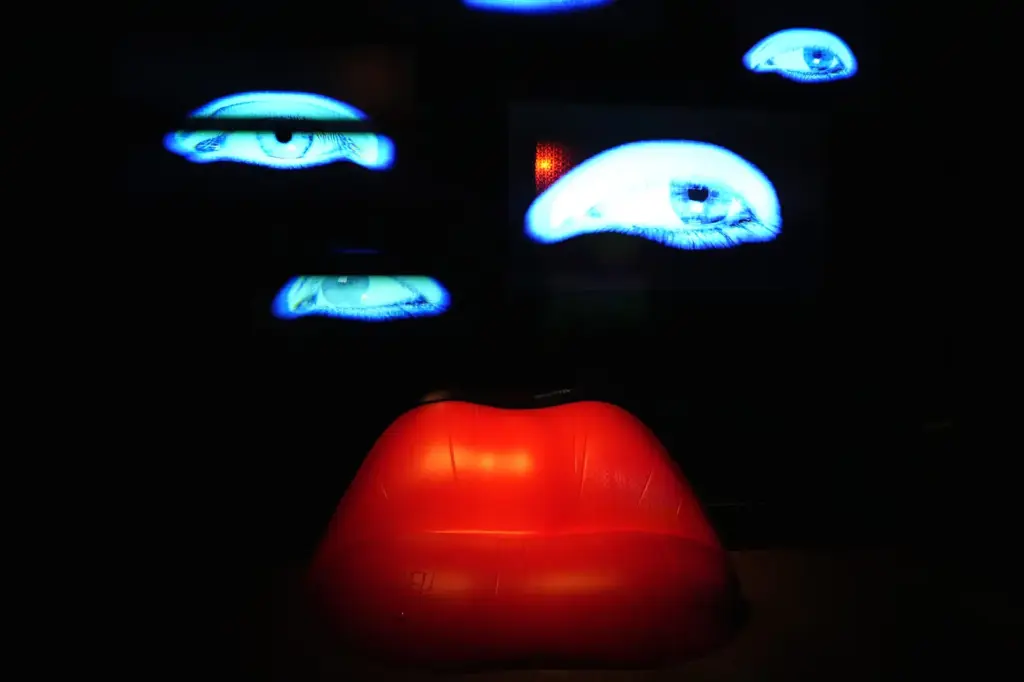
Beyond his paintings, most of which can also be seen projected in the immersive room, Dalí Boulevard Cibernético also includes an audiovisual that recovers memorable fragments of his life, such as a walk through New York singing a poem by Federico García Lorca, the interview with artist Jane Arden where he shows passion for technology, or an event with Raquel Welch in which he ends up painting her. At the end, a free recreation of the Mae West Room of the Dalí Theatre-Museum in Figueres allows visitors to finish the visit by taking photos on the famous red lips sofa.
Read more Patricio Guzmán dies, the master of Chilean documentary