






In recent days, several episodes have emerged in which presidential falsehoods and lies have been revealed, raising the enormous question about the place of ultimate reasons, eventually unconfessable, with which democracy is governed. The issue is not new: democratic governments everywhere establish a complex relationship with the truth of things in the exercise of power. The larger the country, the greater the possibility of altering the ultimate reasons for what is done or left undone, due to demographic reasons and influence power beyond its borders. When countries reach the status of a regional power, and a fortiori the dimension of a world power, what begins to prevail is not the truth, but outright lies, for increasingly strategic… and cynical reasons. President Trump, as well as his Russian counterpart Putin, and many other illiberal rulers (from Orbán to Erdogan) have been lecturing for years on how to govern through lies and half-truths, and how to survive them. It is as if the truth were a mass of information unassimilable by the people, because it is unpalatable: democracy was not designed to hide information, much less to distort the truth.
Read more Europol dismantles an online propaganda campaign by the Iranian Revolutionary Guard
This is what is happening: artificial intelligence will worsen the problem.
Chile is a small country and its global influence power is very limited, somewhat greater on a regional scale (based on inherited prestige), so the falsehoods of its current rulers can only have a local impact.
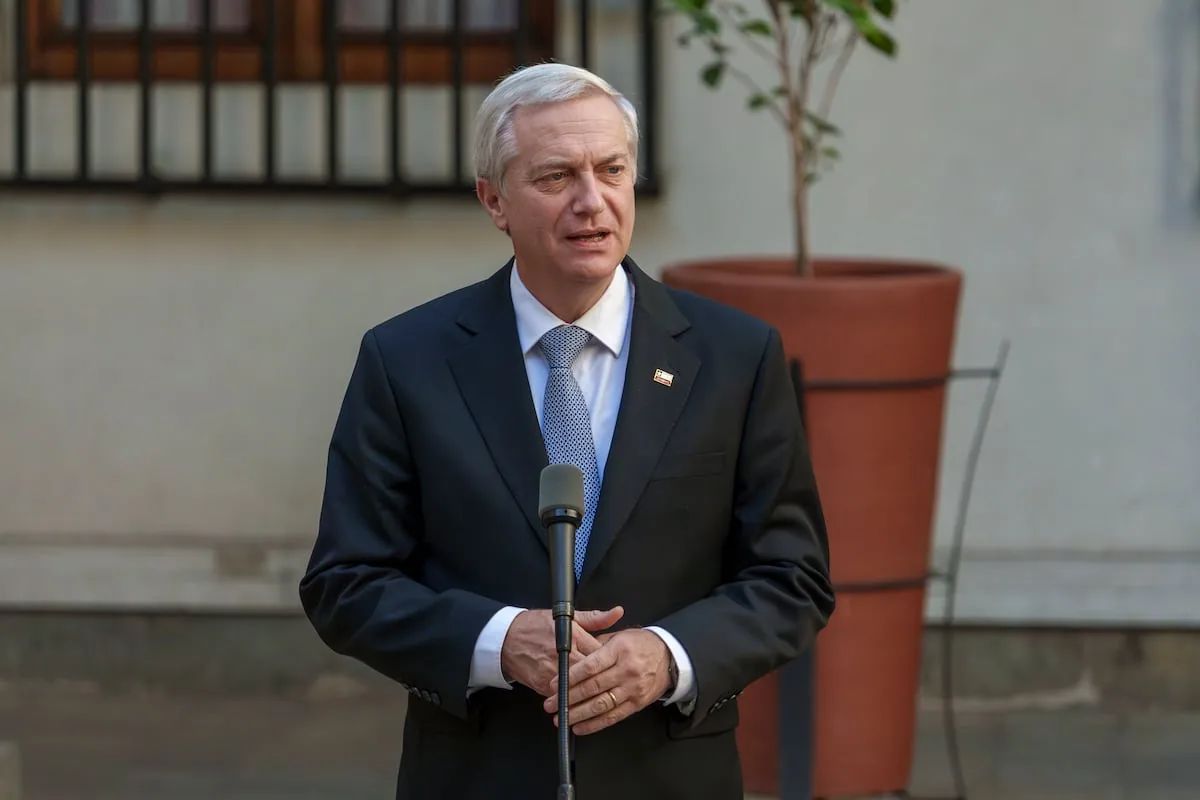
Well, as never before, Chilean democracy is being subjected to a true stress of veracity, and inquisitive tests on the truth of things by journalism that is fulfilling its investigative and oversight role. Before the radical right-wing government of President José Antonio Kast took office, many on the left doubted the role the media would play (especially the print media, based on an almost monopolistic ownership structure around two large groups, the famous duopoly). Well, that suspicion has so far been disappointed, not only by genuinely independent media such as CIPER or EL PAÍS Chile, but also by the duopoly’s own press organs: the editorials of El Mercurio or La Tercera have been singularly critical of the Government, especially on security matters and about a mega economic reform that raises doubts, although within the limits of the political sympathy that characterizes them. It is all these media that have exposed inconsistencies, contradictions, and attacks on coherence: this is evident regarding the spokesperson minister Mara Sedini, whose performance has been catastrophic, very invisible for several days. What is original in the Chilean case is that the problem of truth and lies in politics is being installed by the President of the Republic himself, with great brazenness, a novelty since 1990.
The most eloquent episode of truth distortion by the head of state took place a few days ago, when, without a question from any inquisitive journalist, he explained that his campaign proposal (repeated countless times) to expel 300,000 illegal immigrants “from day one” was not actually a promise: it was a “metaphor.” Reactions were swift, and several opinion leaders corrected the president, arguing that the word “metaphor” was then misused, since we would be in the presence of a “hyperbole.” From that moment, the discussion took a ridiculous turn (what did the president mean?), undermining the authority of the presidential word. The CRITERIA survey published yesterday showed that 76% of respondents considered Kast’s campaign proposal on immediate immigrant expulsions not as a metaphor, nor as a hyperbole: it was “a concrete and real promise.” The survey data is categorical and politically devastating: the facts support it, since expulsions have been trickling, very noisy, but light years away from mass deportations. Fortunately: the ICE experience in the United States evokes an ethnic cleansing policy that, in Chile, is unimaginable. This would be nothing if the Security Minister Trinidad Steinert herself had not naively declared that she did not expect Congress to demand a formal, structured, and written plan on security: her intervention was poor and even annoyed right-wing deputies. Between President Kast’s metaphor and the lack of a plan by the Security Minister, regarding an issue that was central in the campaign and guided much of the vote toward the radical right-wing candidate, it is evident that what predominates is improvisation, which is compensated by a mega economic reform project in which a finished idea, a real plan, is indeed seen. However, President Kast’s government will be judged by its bombastic proposals on security, a problem deeply felt by Chileans: from the construction of ditches to mass expulsions, including institutions that attended irregular immigrants (for example children) reporting their identities to State authorities for the purpose… of expulsion.
What is the place of truth in a democracy like Chile’s? Its place should be essential in any country in the world. However, in Chile, falsehoods, through disinformation, fake news, and lies have taken the stage for a handful of years. It was fake news that predominated during the first constitutional change process: during the campaign to approve or reject the new Constitution draft in 2022, fake news about a project that was indeed disastrous intensified, but irrational, absurd, and baseless information was issued about it.
What we had not seen is that, without fake news, a president would propose to govern based on metaphors that reinterpret his campaign proposals, misleading voters who could genuinely have voted for what a huge majority understood as a promise and not as a metaphor.
There is something increasingly disturbing about Kast’s government.