




Atresmedia has lost the war over El Rosco from Pasapalabra. The Supreme Court has confirmed that the property rights of the final star challenge of the program broadcast by Antena 3 belong to the Dutch company MC&F, and therefore it must stop broadcasting El Rosco. The high court has dismissed Atresmedia’s appeal against the ruling of the Provincial Court of Barcelona which concluded that El Rosco is “an original creation of its authors Roto Luigi Pianta and René Mauricio Loeb, protected by Intellectual Property Law, whose rights belong to MC&F”. However, the ruling leaves a loophole for Antena 3 to continue broadcasting it in exchange for paying compensation that has not yet been set. The Dutch company claimed compensation for damages, but the Supreme Court, as established by the Barcelona Court, warns that Atresmedia is only responsible once it has been informed that it is committing an infringement, that is, when the ruling is notified, and this compensation will only have to be paid if Antena 3 continues to broadcast the program.
Read more A judge in Madrid dismisses Begoña Gómez’s complaint against Vito Quiles for harassment
The network confirms to EL PAÍS that it will continue to broadcast the already recorded episodes of the program in full for “at least several weeks”, until the ruling is communicated to them and a date is stipulated by which the space would have to be modified. During this time, they will study what to do with the format, while negotiations between the production companies also continue.
However, as reported by El Economista and confirmed by EL PAÍS, the current CEO of Mediaset, Alessandro Salem, reached an agreement with MC&F to acquire its rights. This move was finalized a year ago, but could not become effective until there was a favorable ruling for the Dutch production company, such as the one that arrived this Thursday, reports Héctor Llanos.
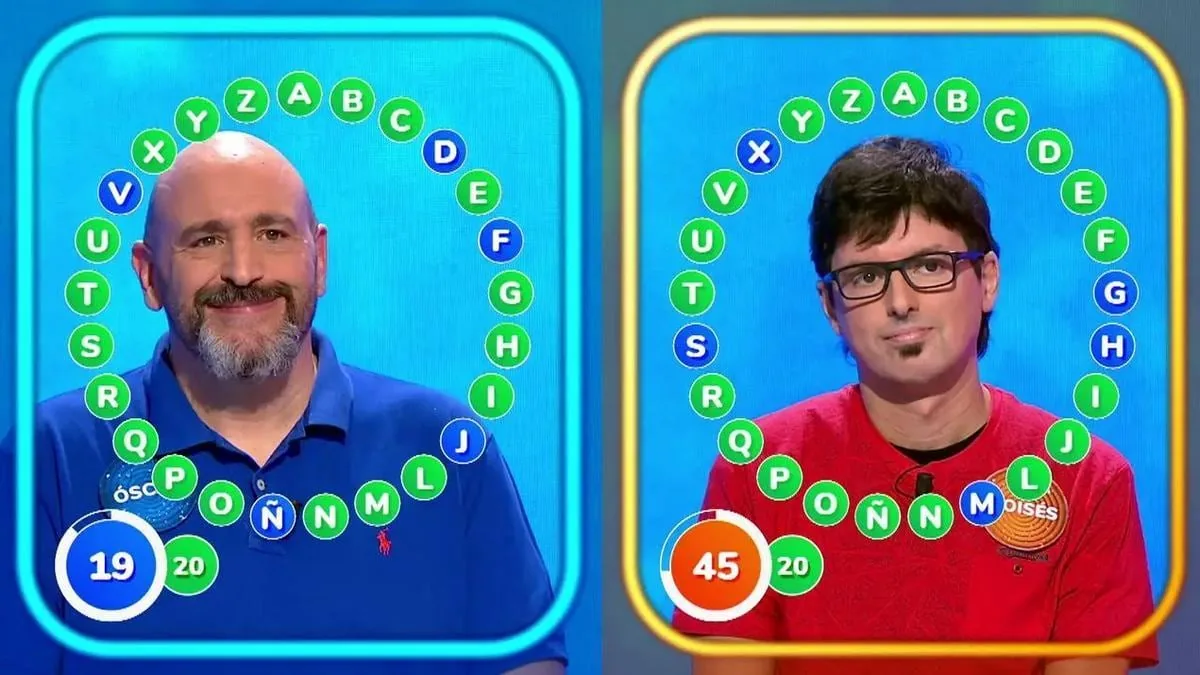
The ruling issued by the Civil Chamber puts an end to a lawsuit that has lasted for years and implies that Antena 3 can continue broadcasting Pasapalabra, but without the final challenge of El Rosco, which contains the moment of maximum emotion: a challenge in which the two finalist contestants must guess, based on a definition, a word for each letter of the alphabet. It also mandates “the withdrawal from commerce and destruction of all recordings” of all “television programs or audiovisual works that include a game based on said format”, and “the withdrawal from commercial circuits, the disabling and, if necessary, the destruction of all material elements, equipment or instruments primarily intended for the reproduction, creation or manufacture of any television program or audiovisual work that includes El Rosco”.
The legal battles regarding Pasapalabra are almost as epic as those of its contestants. The show presented by Roberto Leal in this stage is not only one of Antena 3’s flagships and, day after day, the most watched program on television, but it also went through a similar situation on Telecinco, when in 2019 it lost a legal battle for the format rights against the British company ITV. Atresmedia did have that license granted by the creators and that was its argument, but the English version was, however, actually based on a second game, known as The Alphabet Game (where there was no ‘rosco’), not on the original Italian rights of Passaparola, where it was called Ruota delle lettere, and for which the Dutch company MC&F, owner of this original version, has fought. On Telecinco, the overnight loss of the veteran quiz show (which was once presented by Silvia Jato, Jaime Cantizano, and Christian Gálvez) marked the beginning of an audience crisis that continues to this day.
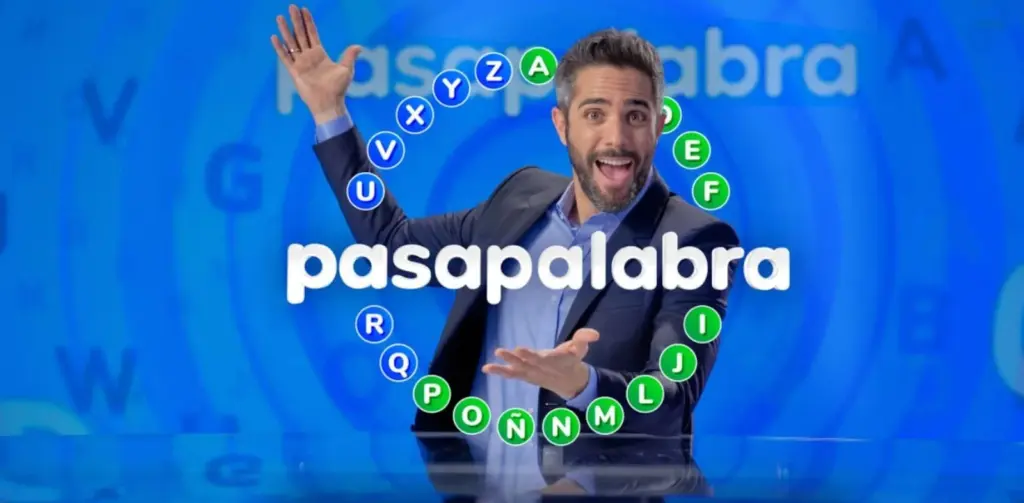
Pasapalabra is also essential for Antena 3. Not only does it reach an average audience of 1,865,000 viewers and a 20.5% screen share (figures unattainable for the rest) this season, but it also serves as a boost for the subsequent news program presented by Vicente Vallés and the rest of the prime-time. With the arrival of the contest, Antena 3 began to reconquer the afternoons, and has been the undisputed leader for years.
Other countries, such as Argentina (Telefé), have also followed the hybrid Passaparola model and broadcast it as such, but the Dutch company claiming ownership of El Rosco has preferred to focus its lawsuit in Spain. Now, this decision opens the door for it to try in other territories.
Uniqueness of the format
The Supreme Court’s ruling, for which magistrate Rafael Sarazá was the rapporteur, rejects all arguments put forward by Atresmedia and recognizes that El Rosco is the expression “of ideas with a degree of development and complexity that make it suitable to constitute a protectable work”. “It is not a simple idea but a developed and detailed television format, capable of being protected as a work by intellectual property rules,” state the judges, who also reject Atresmedia’s claim that intellectual property jurisprudence establishes that a certain degree of originality and intellectual creativity, differing from what already exists, is required.
The high court, after reviewing various rulings from the Court of Justice of the EU (CJEU), concludes that for a work to be protected by intellectual property, “it is not necessary to demand a certain quality in the work nor its novelty”, in the sense in which this concept is used in industrial property with patent law. “But it must be required that it be a realization that reflects the personality of its author so as to express their creative spirit in an original way, in which they manifest their free and creative decisions, giving rise to a singular creation, so that the work bears the imprint of the author’s personality that confers a unique character on said creation,” the magistrates explain. And all of this, they assure, is met by El Rosco.
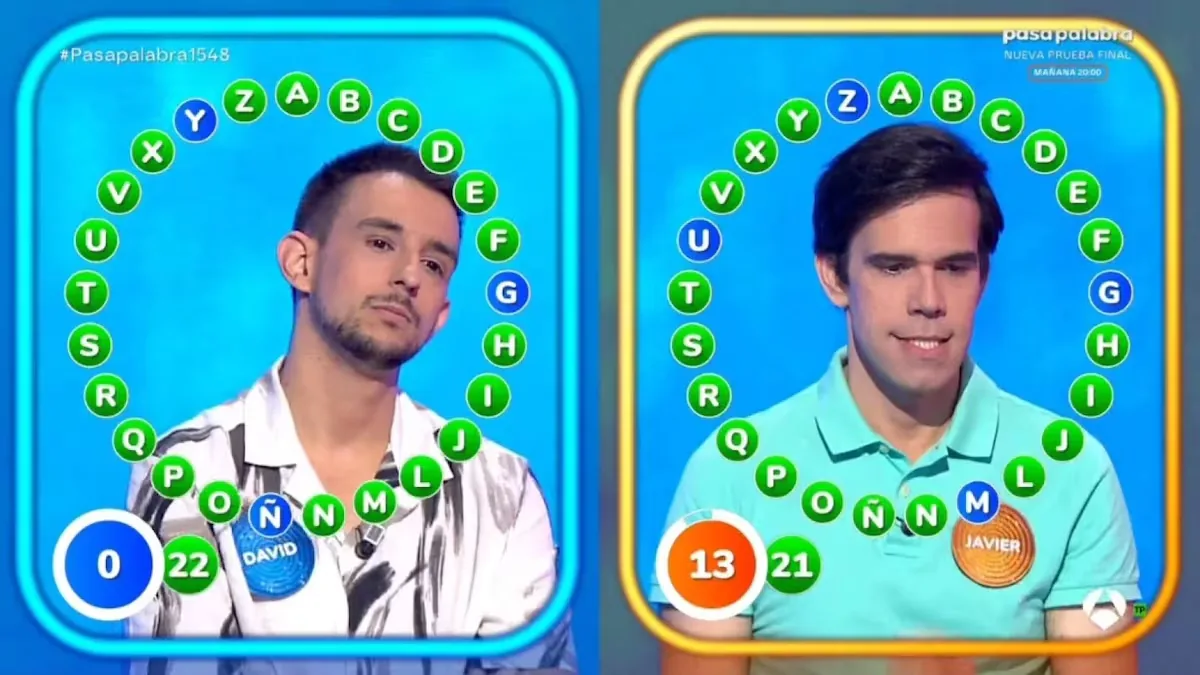
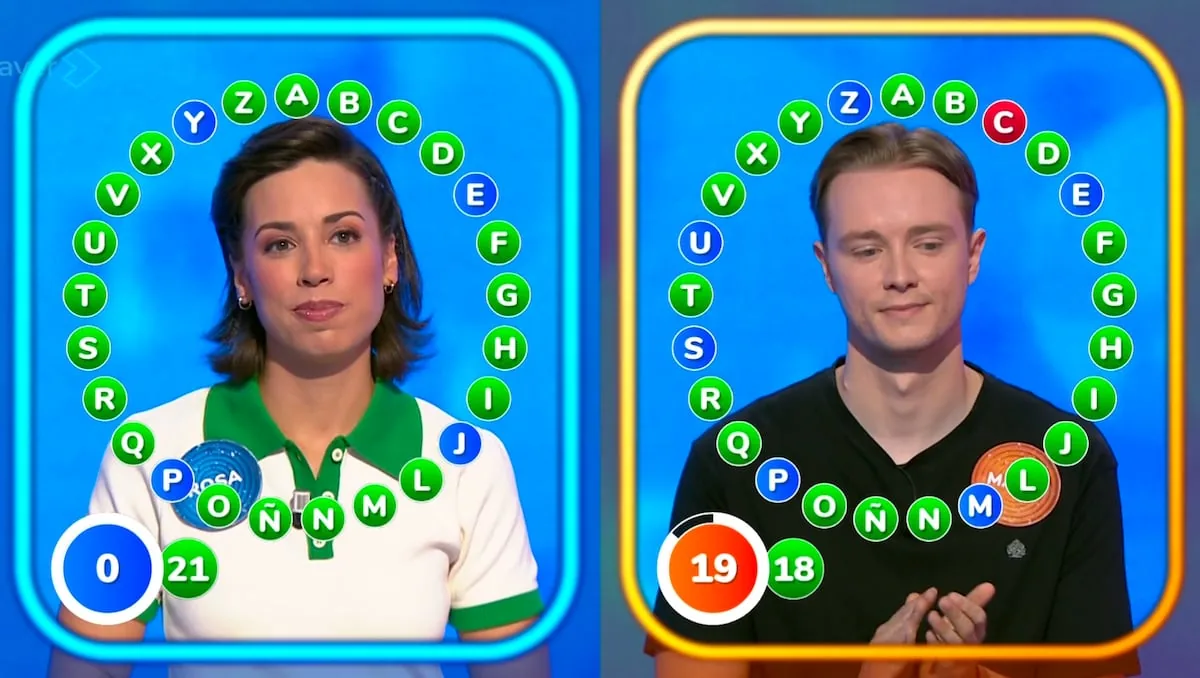
This television format is, according to the Supreme Court, “a product of the free and creative decisions of its authors […] who have reflected their personality in this format, in the terms in which such ‘reflection of their personality’ can occur in a work of this nature,” a television program. The magistrates refer not only to the general rules of the game, but also to other distinctive elements such as “the arrangement of the players, the time they have to answer the questions […] the graphic element of the ‘rosco’ superimposed on the contestant’s image, whose letters change color according to the result of the answers given by the contestant”. All these aspects give “uniqueness to the television format and distinguish it from other alphabet-based games,” concludes the Supreme Court.
Legal loophole
The ruling, however, opens a loophole that Atresmedia can explore to continue broadcasting El Rosco. The Barcelona Court declared that the group would only have to compensate the Dutch company for damages if it continues to exploit that format once it has been declared that it does not have the rights to do so. “From that very moment, it will have to choose between paying the plaintiff compensation or ceasing to broadcast the El Rosco challenge,” stated that ruling, which the Supreme Court now confirms.
“The Provincial Court has considered that until the moment the judgment is issued, the requirement of culpability, which it deems necessary for the compensatory obligation to arise, is lacking, so, once its judgment is issued, that requirement will already be met, and if the program continues to be broadcast after its judgment (which it evidently considers probable, and has in fact occurred), compensation for the damage will proceed,” state the judges, who uphold the decision of the Barcelona court that accepted MC&F’s proposed compensation: the amount it would have received as remuneration if Atresmedia had requested authorization to use the intellectual property right of El Rosco.
To quantify this claim, the Dutch company referred to the amount it had collected from Mediaset for the exploitation of the format in 2020, the last year it was broadcast on Telecinco. The ruling does not include this figure, but states that it is detailed in the third clause of the confidential agreement signed between both companies and incorporated into the judicial dispute. “The system could not be clearer, we have a license and the lost profit has been precisely the loss of those royalties,” warned the Provincial Court.