





In a matter of hours, the complex legal conflict in which El Rosco from Pasapalabra has been embroiled since 2010 has experienced a double plot twist. And its consequences leave Spain’s main private television channels in check. First came, on Thursday afternoon, the Supreme Court ruling confirming that Antena 3 had to stop broadcasting El Rosco. A few hours later, it was announced that Mediaset, through a maneuver by its CEO Alessandro Salem, had bought the broadcasting rights for the segment a year and a half earlier, waiting for this ruling against its competitor to materialize. But the definitive twist came with the confirmation that the Provincial Court of Madrid obliges Mediaset, in a ruling on April 16 that was known on Friday, to pay 73.2 million euros for having broadcast Pasapalabra without authorization for several years.
Read more Barcelona assists more than 47,000 immigrants since the start of the regularization
Although the conflict arises between two foreign companies, the British television channel ITV and the Dutch company MC&F, it is Atresmedia and Mediaset that have seen in recent years how they lost a star content, El Rosco, which has helped both of them achieve the coveted and lucrative audience leadership at different stages. This dispute has plunged both communication groups into long legal battles that remain active.
Given such a torrent of legal developments, both Atresmedia and Mediaset España spent Friday trying to reorganize their legal and television strategies. The first reaction came over the weekend. Mediaset’s parent company, MFE-MediaForEurope, announced in a statement signed from Amsterdam (its legal office) and Cologno Monzese (its administrative headquarters) that it will request the annulment of its millionaire fine from last month, precisely by clinging to Thursday’s Supreme Court ruling against Atresmedia.
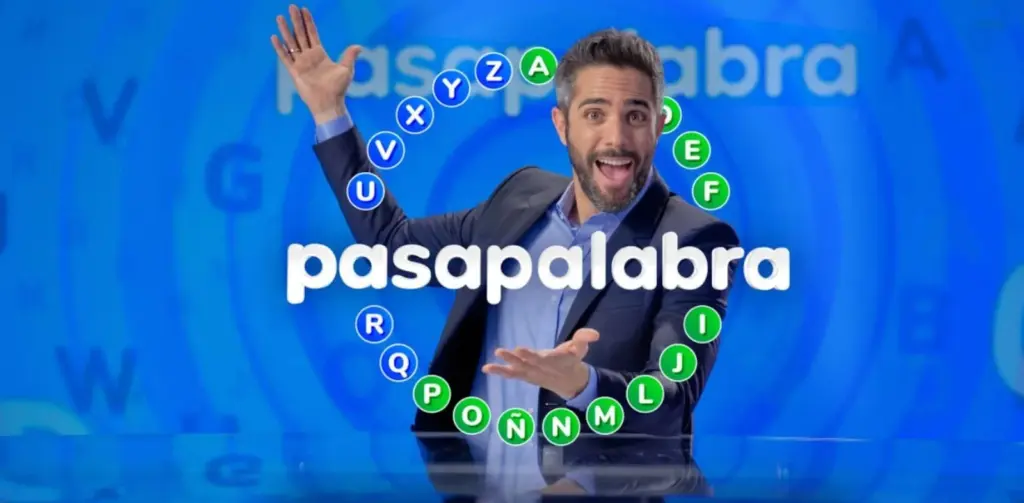
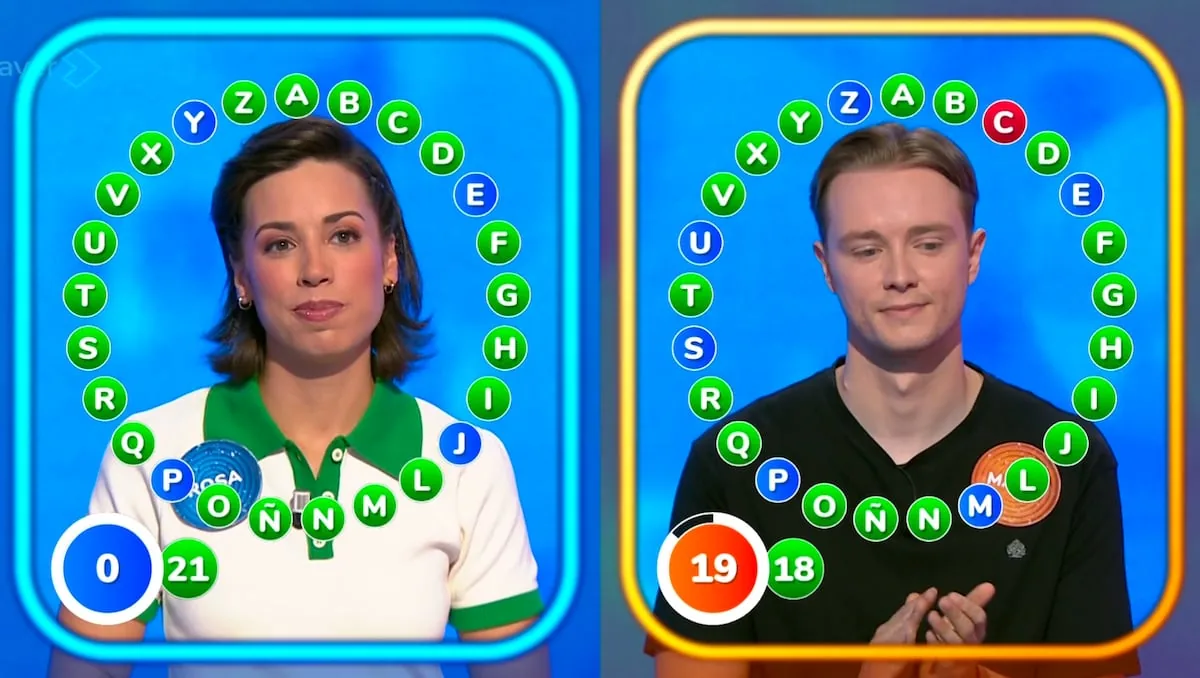
At this moment, Atresmedia owns Pasapalabra, the contest that ITV premiered in 1996 under the name The Alphabet Game. Meanwhile, Mediaset España owns El Rosco, a segment created in 1998 by Reto Luigi Pianta and René Mauricio Loeb under the name 21×100, and whose rights they handed over to the Dutch company MC&F. When the contest arrived in Spain as Pasapalabra in the summer of 2000, through Antena 3, it did so as a fusion of two distinct television contents with different authorship and ownership, as Italian television had done shortly before with Passaparola. In other words, both Italians and then Spaniards added a final segment, 21×100, to The Alphabet Game to give the format the excitement it lacked until then.
Sources close to the Spanish version of Pasapalabra confirm to EL PAÍS that they are aware that ITV and MC&F are currently in discussions regarding the conflict of their two contents. But the solution does not seem simple. Each of the foreign parties has opposing commercial agreements, the British with Atresmedia and the Dutch with Mediaset España. Furthermore, both Spanish communication groups base their defenses on the other’s condemning ruling.
Meanwhile, Atresmedia maintains its initial decision after learning of the Supreme Court ruling. It plans to continue broadcasting Pasapalabra with El Rosco included for the next few weeks, as “they have between 10 and 15 recorded programs,” explain sources within Pasapalabra, and the ruling must be officially ratified and notified to Atresmedia, so that a specific date can be stipulated by which it must comply with this judicial decision. The communication group “is already considering several scenarios”.
One of them would logically be to seek alternative final challenge options for its star contest. This would be content that does not violate the intellectual property rights of El Rosco and that its channel, Antena 3, would only use as a last resort, if no other way allows them to recover the broadcasting rights of Pasapalabra as we know it. The communication group explains that, in principle, “there is no intention to initiate any type of legal process,” as they consider that it is ITV and MC&F who should do so if they deem it necessary. At the same time, they are optimistic as they see “a complicated scenario in which El Rosco exists outside of Pasapalabra”.
Mediaset España has not officially confirmed that it has begun designing a contest to serve as a daily opener for El Rosco, but several sources close to the communication group find it “the most obvious consequence” after this acquisition, much more so than the option of leaving it in a drawer to snatch it from its main competitor.

Cost saving, the origin of the conflict
In fact, Mediaset España’s change of strategy regarding Pasapalabra is evident. When it acquired the broadcasting rights for the contest in 2007, to program it on Telecinco, taking over from Antena 3, its top boss was Paolo Vasile, known for achieving the most-watched content with the tightest budgets, as was the case with Sálvame. Three years later, Vasile decided to save costs also on Pasapalabra and got rid of BocaBoca, the production company that had adapted the program since its arrival in Spain. Pasapalabra became an in-house Telecinco production in collaboration with ITV, the format owner.
But Vasile still found this option expensive. He didn’t care that it was the contest whose millionaire audience peaks, with their pull effect, favored Pedro Piqueras’s nightly news, an undisputed leader at the time, and the subsequent prime time. Upon discovering that El Rosco was not owned by ITV but by MC&F, the executive sought a legal loophole to also dispense with ITV and broadcast the show on his own. Hence the ruling that now condemns the group to pay 73.2 million euros for having had Pasapalabra on its schedule for a decade without ITV’s authorization. A previous ruling, from 2019, was what forced it to stop broadcasting the contest, which at that time was presented by Christian Gálvez. At that moment, Atresmedia took the opportunity to recover the format for Antena 3’s afternoons, with Roberto Leal at the helm. In doing so, it sought a different enemy than Mediaset. This time it was MC&F, which had remained outside the legal dispute between ITV and Mediaset, that denounced Atresmedia for the same reason: broadcasting Pasapalabra with El Rosco without its consent. The Spanish group argued that the 2019 ruling against Mediaset defended that El Rosco and Pasapalabra were indivisible content, but the Supreme Court did not take that argument into account in this Thursday’s ruling.
This decision by Vasile to reduce costs, along with those of his successor Alessandro Salem to cancel Sálvame and hand over its schedule to Ana Rosa Quintana’s production company to shift the channel’s editorial line to the right, caused a serious audience crisis at Telecinco. It went from being the most-watched to occupying the third position, also behind La 1. Salem’s subsequent measures have not lifted the channel from that third place, and his budget-cutting policy has been similar to that of his predecessor except for one thing. His strategy regarding Pasapalabra has been the opposite: he preferred to reach an agreement with the owners of El Rosco, MC&F. A measure that, had it occurred in 2009, when the group also maintained a commercial alliance with ITV, would have avoided this entire complex and intertwined legal framework and, very probably, the audience leadership passing into the hands of Antena 3.