








“We have lost count of the editions in which we announced the worst data since records exist,” laments the Youth Council of Spain before publishing the latest youth emancipation rate: 14.5% in 2025. This is the percentage of young people between 16 and 29 years old who live outside the family home, calculated from the results of the Living Conditions Survey (ECV) of the INE. The Council, which brings together more than 60 youth entities, published this Friday the latest report from its Emancipation Observatory, in which it analyzes the situation of young people, in this case up to 34 years old. Its main conclusion is that “access to housing has become one of the main factors of youth impoverishment.” Although labor indicators have improved, a young person would have to spend 98.7% of their salary to pay rent alone.
The emancipation rate dropped 1.13 percentage points compared to 2024, which means that 48,513 fewer young people live outside the family home. This decline is especially striking for the Observatory, which highlights that “it occurred in a context of labor market improvement: the youth unemployment rate fell to 17.2% and the median salary of employed youth grew by around 1.7%.” They have measured access to housing semiannually since 2006 and last year began recording it annually.
When breaking down the data, emancipation among those aged 16 to 24 is 4.5% and among those aged 25 to 29, 33%. However, the average age at which Spaniards become independent is 30.2 years, when they cease to be young. The EU average is 26.3 years. Additionally, the report notes that in Spain men leave the family home later than women, at 30.8 and 29.6 years, respectively.
The Observatory defines this generation as “markedly renters.” Having a job does not guarantee residential autonomy, according to the study, because the cost of housing “absorbs a disproportionate part of income and directly deteriorates living conditions.” In 2025, more than seven out of ten employed young people still lived in the family home.
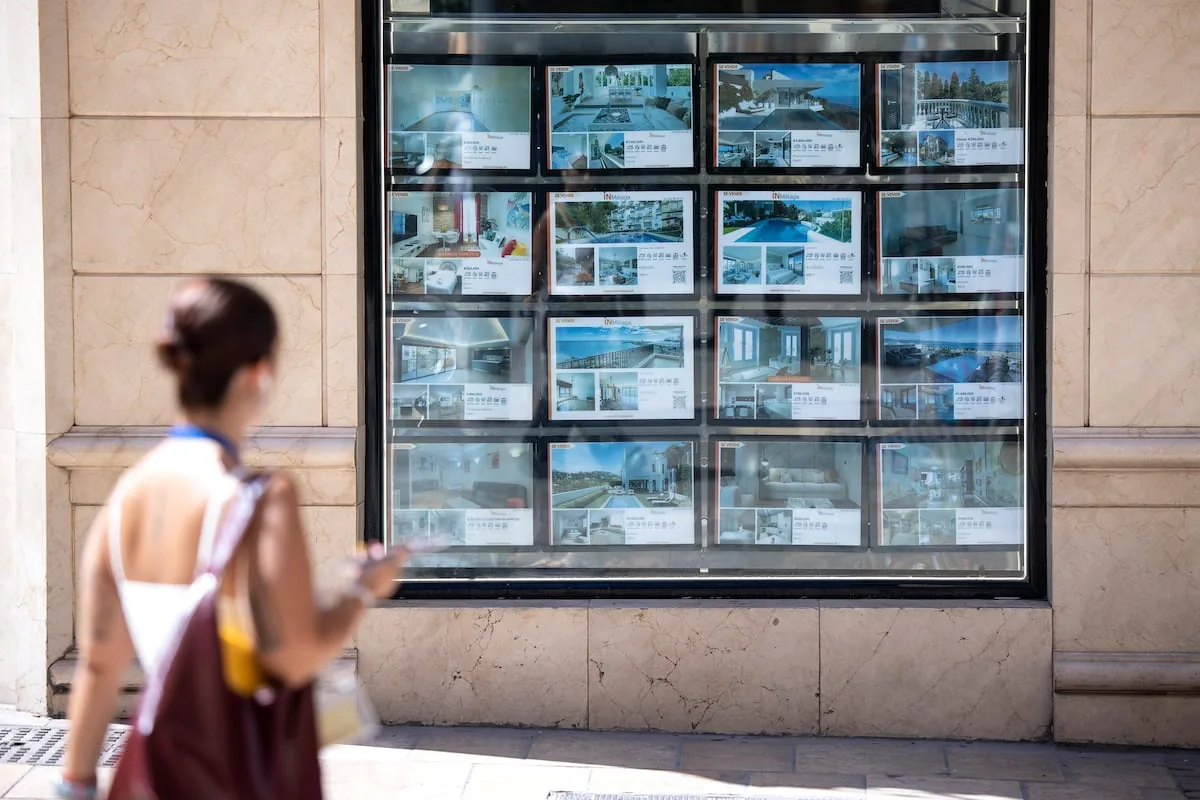
The median net salary of young people is 14,292 euros annually (1,191 monthly), according to calculations by the Council based on the ECV and the Quarterly Labor Cost Survey (ETCL). It has also determined that the average rent price for a full apartment is 1,176 euros, according to the Idealista platform. While living alone can cost almost the entire salary, renting a room corresponds to 33.6% of the salary. The OECD considers housing “affordable” if households do not spend more than 30% of their gross income on housing costs.
The report notes “a progressive transformation of the market towards room rentals.” Renting a room, according to the Observatory, averages 400 euros and the number of rooms offered has increased by 20% compared to 2024 and 85.4% since 2022.
Read more The figures do not justify the salary in a flop show
A problem that “impoverishes an entire generation”
“We are no longer even talking about it making emancipation difficult, but that the problem is so serious that it is impoverishing an entire generation,” says Andrea González Henry, president of the Youth Council of Spain. The entity calls on the Government to expand the public housing stock, effectively regulate the rental market, and ensure that public housing policies respond to the needs of this age group. The Council has calculated that even the risk of poverty or social exclusion among young people jumps from 25.9% to 43% after paying rent.
Almudena Moreno Mínguez, professor of Sociology at the University of Valladolid, comments that “Spain has always dedicated less social spending on youth than other European countries and is characterized by dedicating a large part of its social spending to pensions.” The researcher clarifies that the indicator of social spending by states on youth is difficult to compare because it includes many variables such as scholarships, labor and educational policies, or rental assistance.
The sociologist specializing in youth, family, and gender highlights that “social class is a determining factor regarding the life strategies and expectations that [young people] have about independence.” She recommends differentiating the analysis between different realities and even genders, because there is a “reproduction of inequality.” Additionally, she highlights the country’s “cultural familism”: “In Northern European countries, family help is financial so they move out; in Spain traditionally, family help is residential help: ‘Stay at home and we will provide you with what you need.’”
Buying is not a “real alternative for the majority,” the report describes. The average price of a free-market home is 223,000 euros, according to calculations with information from the Ministry of Transport, so a young person would have to dedicate their entire salary for 15.6 years to buy an apartment. The down payment needed to access a mortgage reaches 66,900 euros, which would require the income of 4.7 years to apply for it.