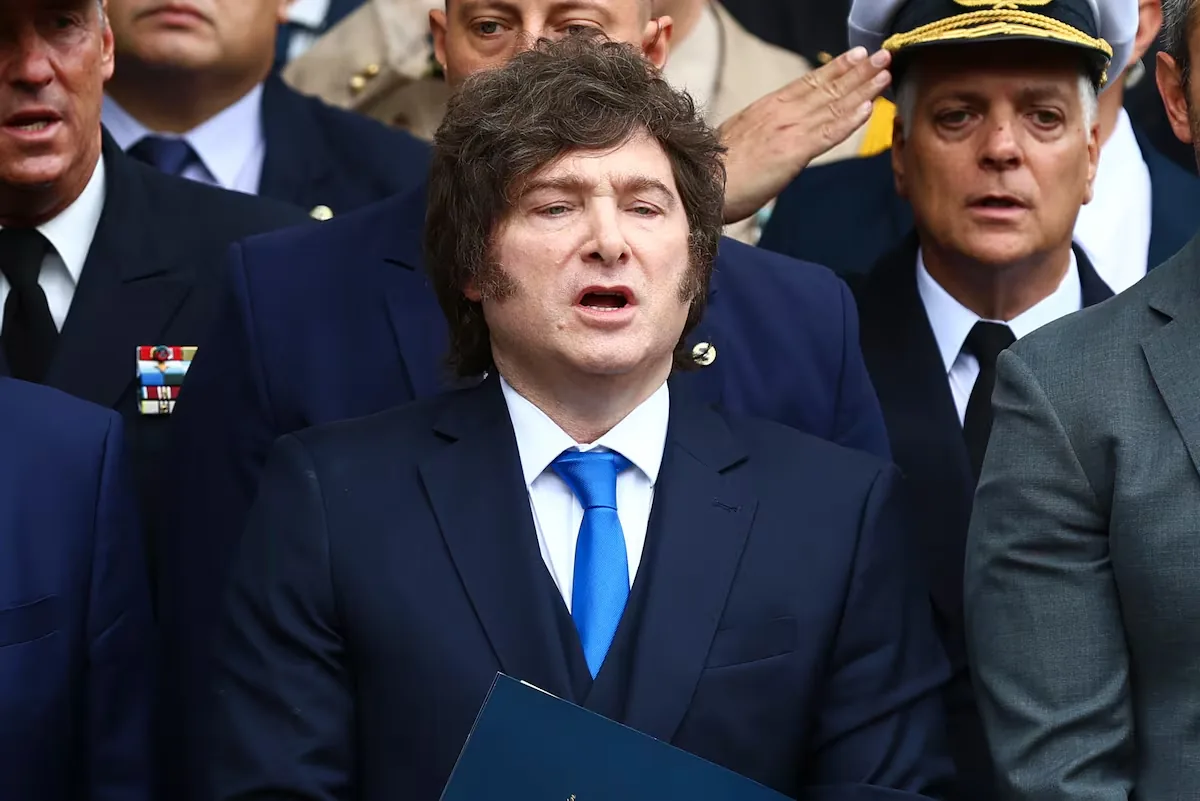






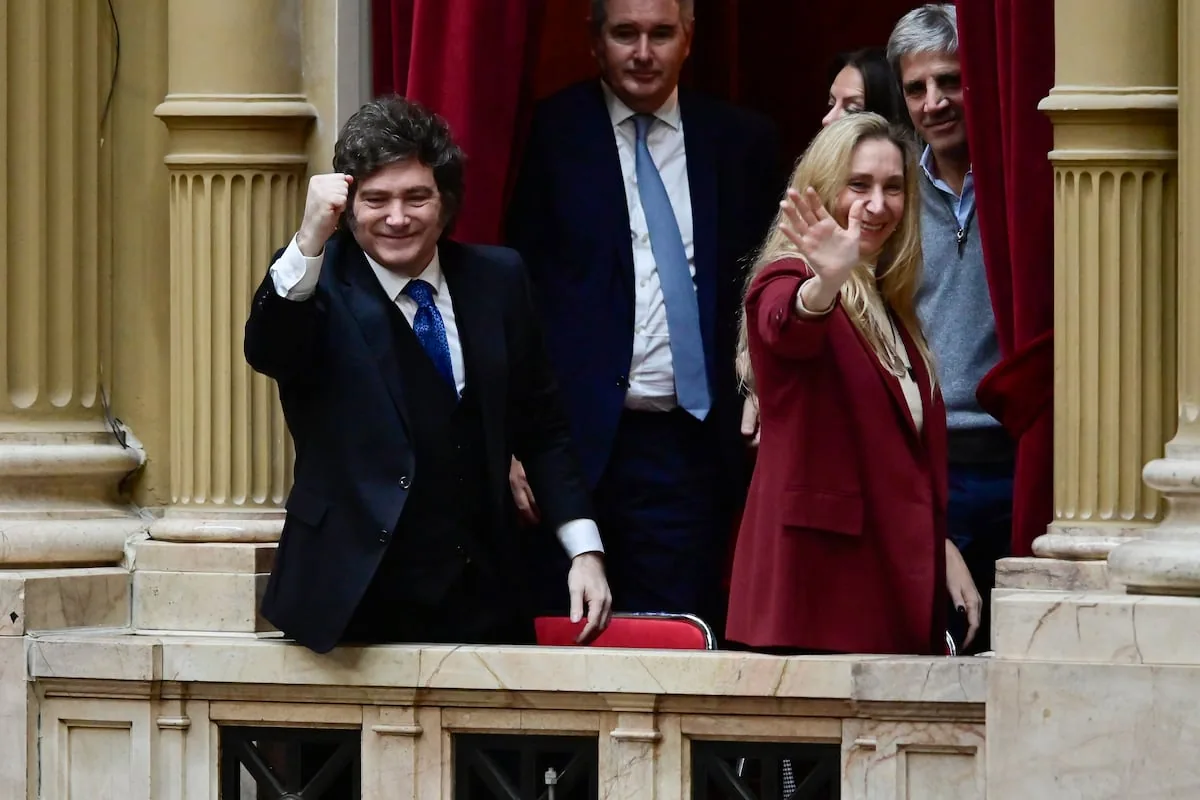
The biggest enemy of Javier Milei’s Government in Argentina today is the Government of Javier Milei itself. Immersed in an open internal conflict that erodes its management, it squanders opportunities to showcase and shine in front of an opposition that does not present replacement figures capable of mobilizing society.
Internal fights have been a constant among libertarians, even before coming to power. Carlos Kikuchi, an unavoidable figure of the 2023 campaign that brought Milei to the Casa Rosada but who fell into obscurity at the hands of the president’s sister and Secretary General of the Presidency, Karina Milei — nicknamed “la hermanísima” — and strategist Santiago Caputo, his main advisor, can attest to this. The Vice President of Argentina, Victoria Villarruel, whom Milei himself went from praising to calling a “traitor,” can also confirm it.
The difference now is that these disputes take place in broad daylight, even through social media. The conflict ceases to be peripheral and moves to the center of power, with explicit clashes between sectors aligned with Caputo and others referenced in Karina Milei, including the environment of the President of the Chamber of Deputies, Martín Menem.
Caputo and Karina practically vie for control of some of the most sensitive state agencies, including the three that accumulate the most confidential information about Argentines: the Revenue and Customs Control Agency (ARCA), the anti-money laundering unit (UIF), and the Intelligence Secretariat (SIDE).
However, the disputes between them and the factions they lead do not end there. They also compete for the “cash boxes” and the “ravioli,” in local political jargon: the first are state areas with budgets of tens or hundreds of billions of pesos; the second, agencies where those in charge can appoint dozens or hundreds of employees. In short, they fight for power.
As expected, of course, if those in command scratch each other, the troops tear each other apart. This is how Deputy Lilia Lemoine accused Daniel Parisini — a Twitter user very close to Caputo, known as “Gordo Dan” — of supporting other libertarian figures fallen out of favor — like Victoria Villarruel and Marcela Pagano — and, with that support, contributing to divide or “let the Government fall.” The response? From irony to personal disqualifications, including mockery of her IQ.
These disputes reached another level, however, this week. The President tried to calm the spirits among his own and ended up involved in a bigger problem. He stated that Santiago Caputo was like a “brother” to him, but that the anonymous account on X that his advisor attributed to Martín Menem was not such. But “Gordo Dan” confronted him. He claimed that “they lied to the president” because they gave him false information about the case of the X account attributed to Menem.
Thus, Milei found himself trapped. He appears incapable of ending the internal conflict that paralyzes his Government or even calming it, while his own followers claim that collaborators give false data to the very head of state. That is, they deceive him, bringing to the public arena the tensions and comments that previously circulated privately.
The message society receives is, therefore, worrying. Because the economy has not yet gotten on track, wages are insufficient, unemployment and inequality hit the major urban centers, but it sees the Government looking at itself in the mirror and, worse, with signs that its own people lie to the very President. And society is patient… until it runs out, as it has already shown in previous political cycles.
All this happens, in part, because the President lacks a consolidated political coordination scheme that organizes management and disciplines officials. Milei wore out his first two Chiefs of Staff, Nicolás Posse and Guillermo Francos, until both left, and the current one, Manuel Adorni, is involved in a presumed corruption scandal that even prevents him from holding a press conference.
The libertarian disputes also occur at a time when libertarians are alone in the ring. No leaders emerge who articulate an attractive option and are “presidential material” for the 2027 campaign. Or to continue with the boxing metaphor, in the absence of a rival in the ring, the Government throws punches at its own sparrings.
That wasteland is bad in two ways. On one hand, because no opposition option has yet appeared to take advantage of the official setbacks to offer society an attractive alternative; on the other, without a clear external counterweight, power tends to fragment and fold in on itself.
Of course, this is not the first Government affected by internal disputes. Alberto Fernández’s presidency embodied the paradigm of everything wrong in this regard, from the start of the administration, with Cristina Fernández de Kirchner as vice president and power behind the scenes. The difference is that the conflict now is not between partners in an alliance, but within the very core of power.
There is more than a year left until the presidential elections in Argentina. But it is now when the Government — and the opposition — build or squander the options with which they will arrive at the polls, with a society increasingly unwilling to tolerate the energy of power being consumed in disputes typical of a tenement. Or, if they worsen, of cannibals.
Read more The figures do not justify the salary in a flop show