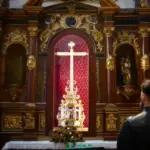







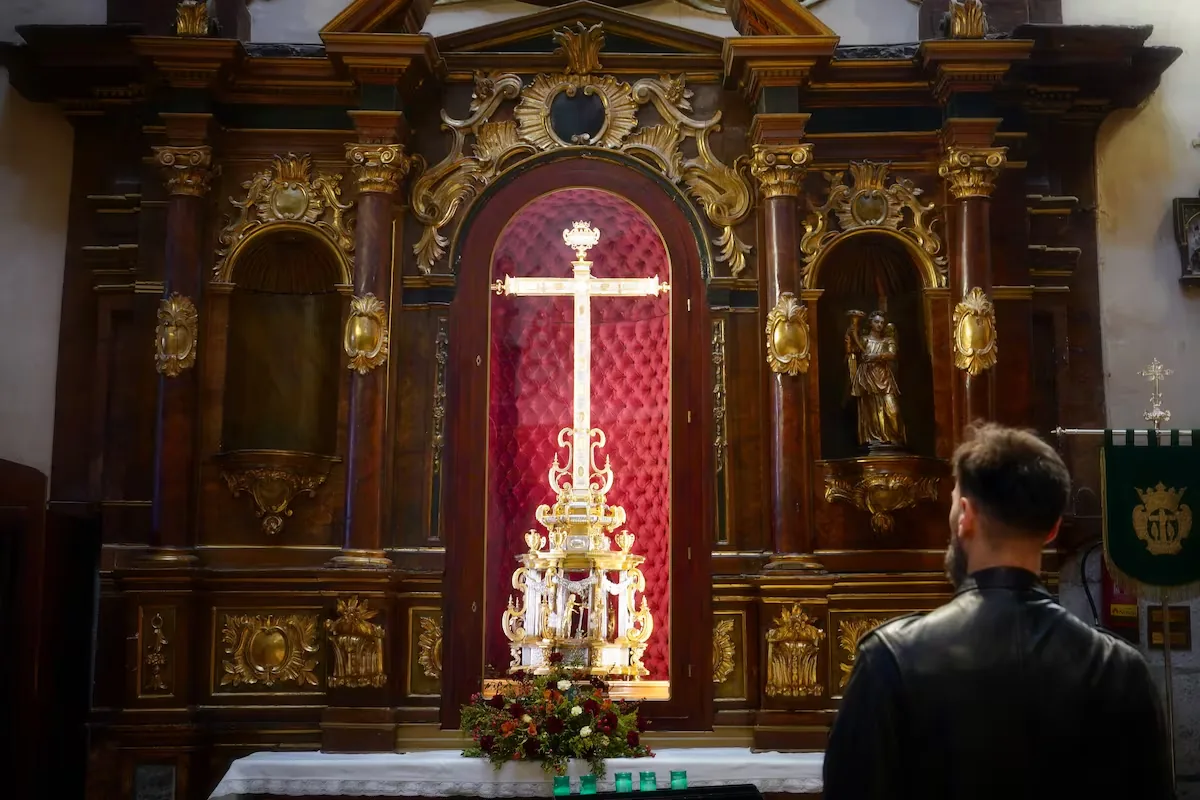
The emerging wave of art thefts in Spain and Europe has entered two churches in Valladolid. The San Pablo temple, one of the most recognizable in the city, has suffered the disappearance of two valuable artistic pieces in recent days, while the Vera Cruz church has suffered another theft, the three cases reported to the Police with no information yet on the whereabouts of these ornaments. The complainants suggest that some of the crimes may have occurred while a Catholic rite was being celebrated, with the faithful focused on the priest and not paying attention to the rest of the church. The Archdiocese of Valladolid has requested to “increase precautions and surveillance in the churches of the Archdiocese” and has urged religious communities to “have updated inventories, preferably with photographs, of the heritage assets.” These thefts add to recent episodes in museums in Villena (Alicante), Badajoz, and Albacete.
Read more The Government will allocate 234 million to train workers in areas with high demand
The items that have disappeared from their usual place are the VII station of the Way of the Cross that adorns San Pablo, a painting about 30 centimeters high equipped with a silver relief depicting the biblical scene of Jesus Christ falling for the second time. In addition to a 17th-century copy of a canvas by the painter Luis Morales representing an Ecce Homo, which was located in a side chapel of this monumental temple. Likewise, the nearby Vera Cruz church has lost a polychrome wooden carving about 60 centimeters of an angel carrying a torch.
The proximity between both temples and the fact that both incidents occurred just a few days apart, last week, with the city bustling due to its patron saint festivities, suggests that the perpetrator may have been the same, although there are no advances in the police investigation so far. The prior of San Pablo, in statements to the Efe agency, expressed his suspicion that both thefts occurred simultaneously, during the 8:30 p.m. mass last Thursday, September 10. It is “a big disappointment for everyone,” according to his words. The mayor successor of the Penitential Brotherhood of the Holy Vera Cruz, Alfonso Domínguez, also expressed to Efe “the disappointment and resignation” caused by these unexpected events.
Diario de Valladolid quotes a sacristan of San Pablo stating that on the day of the theft several parishioners “saw a man leaving with a large plastic bag” and that upon checking the church they detected the absence of the Ecce Homo, which is why they filed an initial complaint. Later they noticed the absence of the Way of the Cross component, so they went again to the authorities. The location of the first theft corresponds to a “remote chapel” where people did not pay attention while the Eucharist was taking place, facilitating the escape of the alleged culprit, although this clergyman maintains that “people were looking forward, but one saw him leave.”
The Archdiocese, in communication with the authorities to clarify the case, has explained that “through its Heritage and Works Delegation, from the moment the facts were reported it remains in direct contact with those affected, the Dominicans of the Santo Pablo Convent and the Penitential Brotherhood of the Holy Vera Cruz.” It has also addressed the parishes and religious orders present in the area where these thefts occurred to increase precautions and surveillance in their respective churches. A call extended to the entire Valladolid Archdiocese. Likewise, it urges to inventory the available assets, with photographs, and encourages reporting these episodes as soon as they happen.
Recent thefts in Spain and Europe
The three thefts in Valladolid join several similar incidents in Spain and Europe. The most recent and high-profile was the Treasure of the Alicante museum in Villena, where essential Bronze Age pieces were stolen. This crime occurred at a time when the European police Europol was warning about this fever, especially towards gold items due to their high market price. The European police coordination agency has been observing “a clear and pronounced increase in the number of museum theft cases reported by national authorities to Europol,” Jean-Yves Goriou, head of the EU Organized Crime Unit, dependent on the European Serious and Organized Crime Centre (ESOCC) of Europol, explained to EL PAÍS in a recent report on these episodes. Almost a year ago, an organized gang took very valuable pieces from the Louvre museum, although several were arrested, the jewels, valued at 88 million euros, remain missing.
This summer there was also a theft at the Provincial Museum of Albacete, where 220 gold coins from the 19th century were lost, while in April the Provincial Archaeological Museum of Badajoz suffered the theft of 149 coins that were part of the so-called Villanueva Treasure.
Churches particularly suffer these thefts, in their case of sacred art, because they are places where for many hours there are hardly any people and when there is attendance, they usually look towards the altar and not the rest of the temple. In the church of San Juan de Rabanera, in the city of Soria, a carving of Saint Anthony was stolen in 2023 in broad daylight. This province also suffers frequent plundering in rural religious buildings victims of depopulation where thieves take everything from imagery to architectural elements in abandoned spaces.
Read more Catalonia plans four freight rail terminals in Empordà-Vilamalla, Penedès, Ebre, and Lleida