









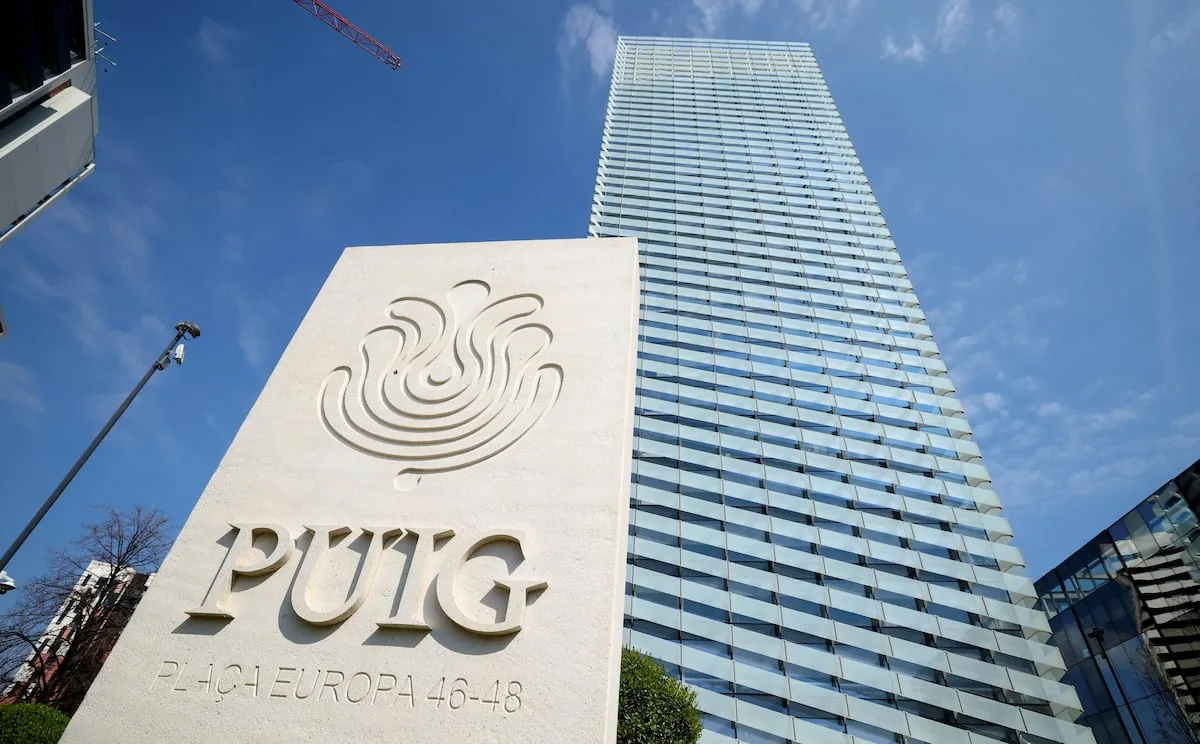
The negotiations between Puig and Estée Lauder to create a cosmetics and perfume giant have ended without an agreement. In a significant event submitted to the National Securities Market Commission (CNMV), the Spanish company has announced that both companies have concluded the talks without reaching a deal for the business merger. The firm assures that this breakdown in negotiations does not affect its strategy and that it will continue to focus on its business lines of perfumery, premium beauty, and skincare.
Read more Óscar Puente calls for “smart collaboration” among the left in the elections
“On March 23, 2026 (under registration number 3147), Puig confirmed that it was in talks with The Estée Lauder Companies Inc. regarding a possible combination of the businesses of both groups. Puig announces today that these talks have ended and that the companies have not reached an agreement to carry out a potential merger of their respective businesses. Puig remains focused on executing its strategy and continuing to drive profitable growth across its brand portfolio. This decision does not alter Puig’s strategic roadmap, which remains focused on premium beauty, brand building, and long-term value creation,” states Puig’s communication sent to the CNMV.
The announcement that Puig and Estée Lauder had begun talks for a possible combination of their businesses came last March 23 and generated great expectations. These were two family-owned companies with a long history, one Spanish and the other American, that could have created a giant in cosmetics and perfumery, large enough to compete with sector leaders like L’Oréal. The sum of both companies would have created a giant with a market valuation close to 40 billion dollars, combining the 30 billion capitalization of the American company and the 9 billion of the Spanish company, and aggregate sales exceeding 17 billion euros (12.336 from Estée Lauder and 5.042 from Puig).
Expectations about a merger between the two companies generated movement in the markets. Puig, whose market valuation has suffered since the company went public in May 2024, has seen its share price rise 13% since announcing the talks. Estée Lauder’s stock, on the other hand, has remained flat since the announcement of the negotiations.
Puig’s CEO, José Manuel Albesa, already commented this week at a business meeting of Expansión in Barcelona that the talks were not concluded and that one had to wait. This Thursday, after announcing the resolution of the negotiations without an agreement, Albesa highlighted in a statement “the enriching conversations held with The Estée Lauder Companies.” The executive emphasizes that “Puig has a solid growth track record, above the premium beauty market,” and notes that despite the lack of agreement, the company remains fully focused on executing its strategy. “This decision does not change our strategic roadmap. We continue building on our strengths in premium beauty, with management focused on brands, creativity, agility, and disciplined growth,” says the CEO.
Read more Trump backtracks and announces the deployment of 5,000 additional US soldiers to Poland
Albesa adds that Puig has fulfilled all its commitments since going public, and that its capital structure gives it “flexibility to undertake a wide range of aligned strategic alternatives”: that is, the company remains on the path of acquiring new brands to expand its portfolio, the strategy that has led it in the last decade to grow in size, after having spent 2.5 billion euros on acquisitions since 2011, including iconic brands like Charlotte Tilbury or Byredo.
Economic situation
Despite the larger size of the American firm, its economic situation was far from ideal, something that may have influenced the failure of the negotiations. In its last fiscal year, it recorded a net loss of 1.133 billion dollars and its revenues fell 8.2% year-on-year. A deterioration that had been ongoing for some time, as at the end of 2023 it started a two-year restructuring program to restore margins eroded after the pandemic crisis, with a plan to lay off 7,000 employees.
In a communication sent to the United States Securities and Exchange Commission (SEC) in early April, Estée Lauder detailed that the accumulated cost of its restructuring plan up to March 31 had risen to 1.367 billion dollars (1.2 billion euros). In that letter, it also significantly increased the number of layoffs linked to the plan. The American cosmetics group expanded the adjustment to between 9,000 and 10,000 net layoffs compared to the previous estimate of between 5,800 and 7,000. Those 10,000 layoffs represented about 15% of the workforce and were a 43% increase over the maximum figures of both ranges, despite the company having raised its year-end forecasts after achieving a good third quarter operationally.
Estée Lauder’s downward trend in recent years contrasts with the momentum of the business of the company chaired by Marc Puig. The Catalan multinational closed fiscal year 2025 with a net profit of 594 million euros, 11.9% higher than the previous year — adjusted net profit was 587 million, 6.5% higher — thanks to sales reaching 5.042 billion euros, a 5.3% increase over the previous year, and 7.8% higher at constant perimeter and exchange rates. This places Puig above its forecasts, and in a prosperous position to face its next strategic plan. Precisely, the presentation of its new roadmap, which was to be announced in April, was postponed due to the talks with Estée Lauder.