

“You will never be the lead.” It’s just five words, but Candela Peña (Gavá, Barcelona, 52 years old) has them etched in her memory. Javier Bardem told her this when they were studying acting at Juan Carlos Corazza’s studio. She was 18; he was 22 or 23. They were just kids, two strangers aspiring to make a living from acting, but Javier was already Bardem, Pilar’s son, Juan Antonio’s nephew, Rafael’s grandson, the latest promise of a dynasty of great talents. Candela, on the other hand, was just María del Pilar (that’s her real name), the daughter of Antonio and Pepa, the owners of the bar in her town.
Read more Eviction in the Golden Mile of Northeast Madrid
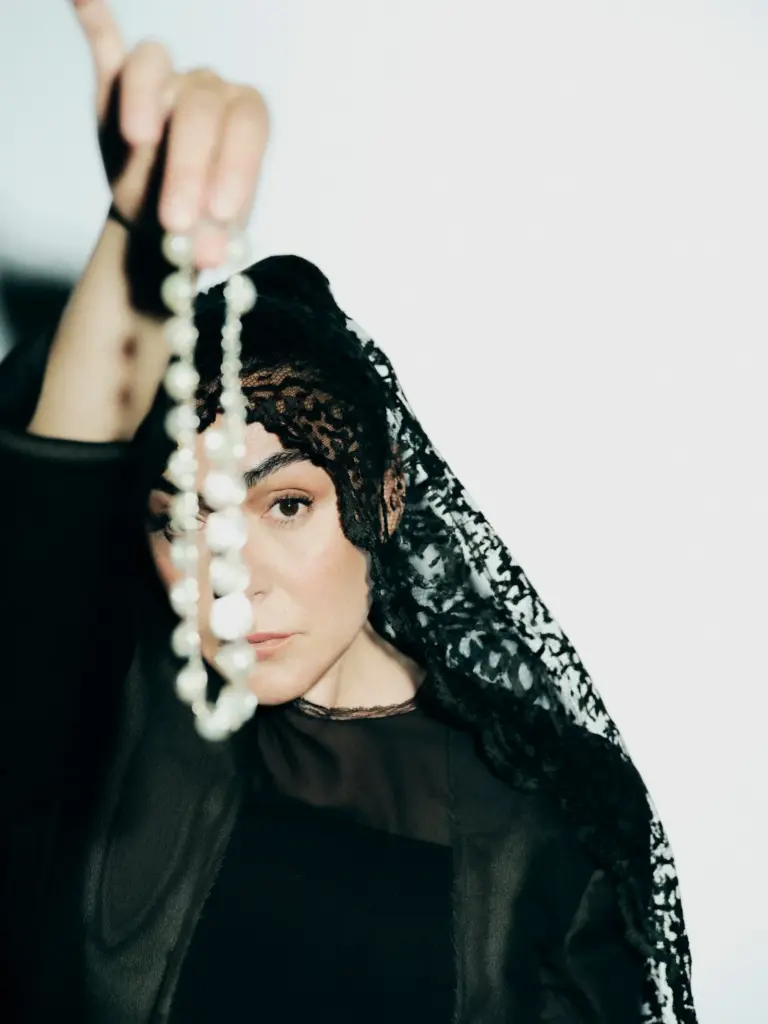
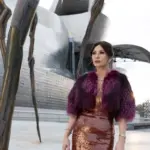
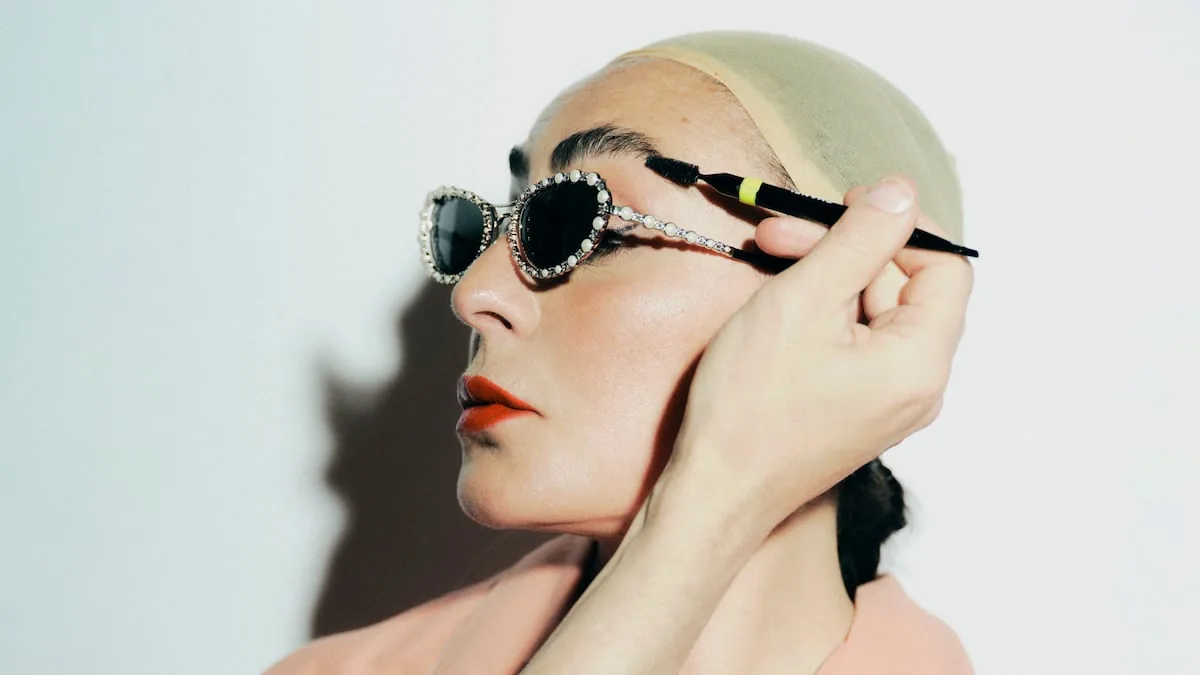
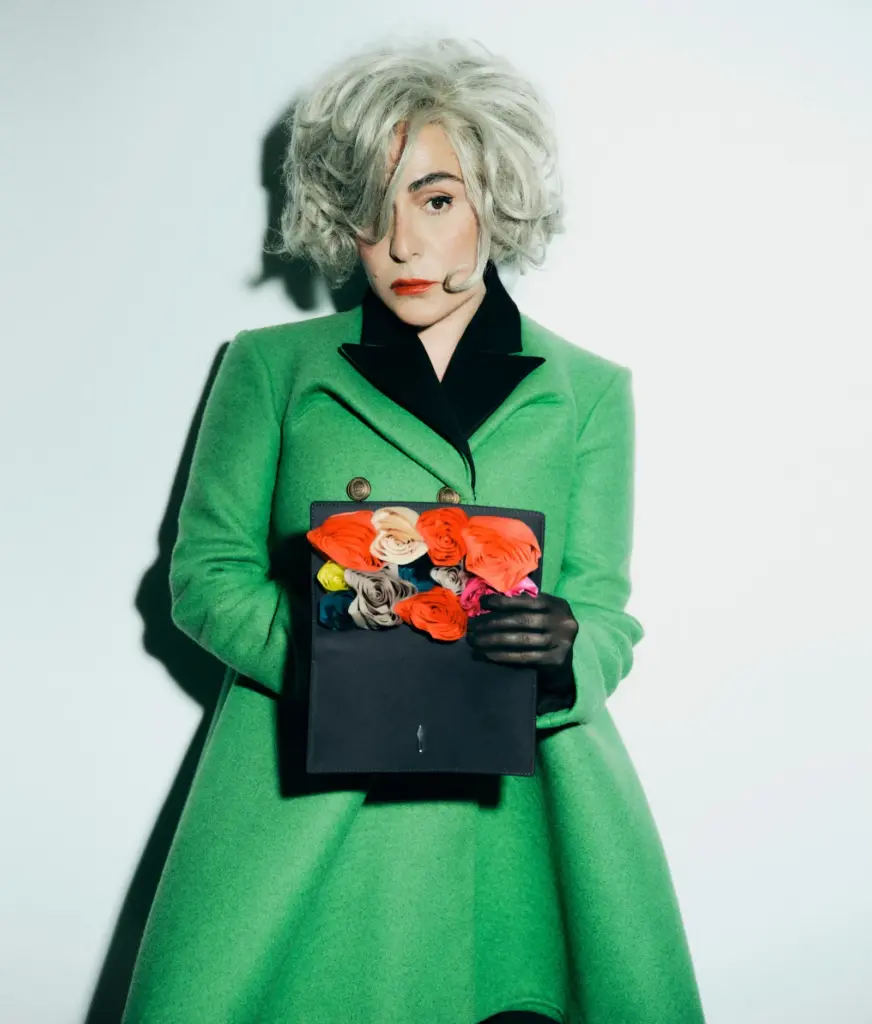
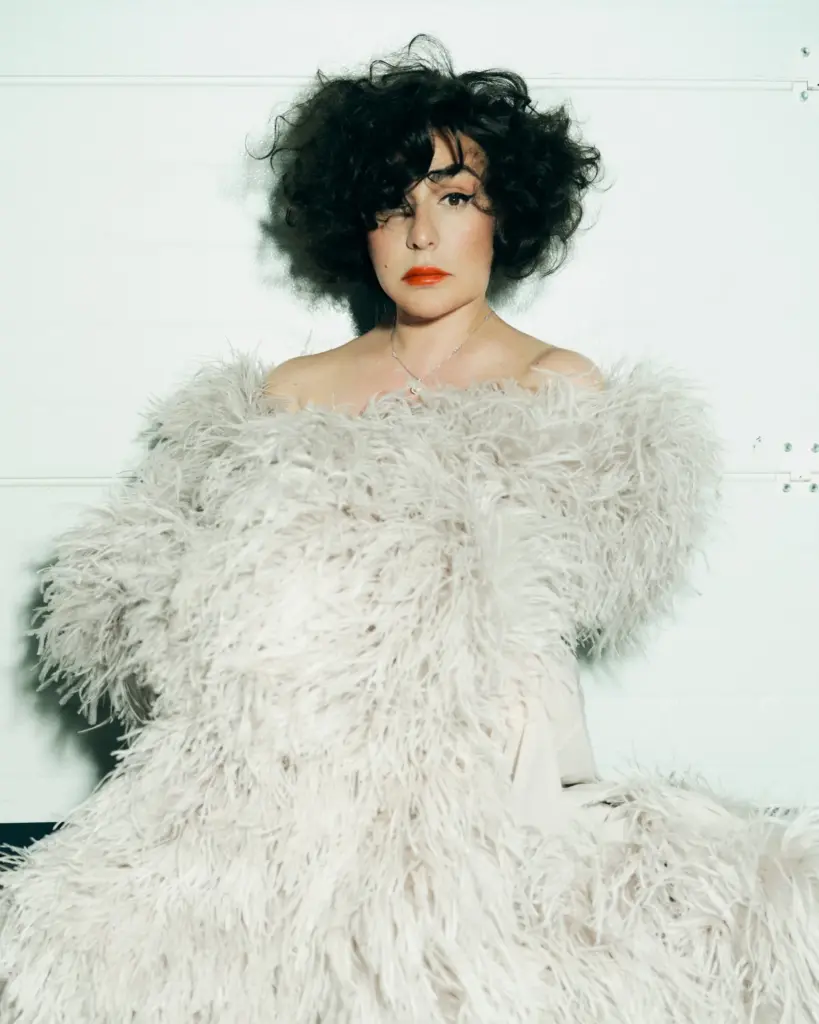
“I don’t want to talk about this because more than 30 years have passed. The only thing I can tell you is that I admire Javi infinitely and that being close to him was a driving force for me, a motivation to say: I’m going to be the lead too. I won’t fight for anything else in my life but to achieve that,” Peña explains to El País Semanal. She is just over five feet tall, but she becomes immense when she shows her funniest side. She spent more than five hours in front of the camera making faces, putting on and taking off wigs, posing in a bathrobe, with a mantilla, with marabou feathers, and even cleaning the floor with a mop.
“Watch out, maybe Javi was right. With my profile and physique, maybe it’s true that they should never have given me a lead role, but I fought for it and here I am,” she reflects. Ironically, she made her film debut with Bardem in Días contados, a 1994 film by Imanol Uribe. The following year, both were nominated for the Goyas. She didn’t win anything, but the nomination opened doors for her to work with directors like Pedro Almodóvar (All About My Mother, 1999) and Icíar Bollaín (Hello, Are You Alone?, 1995; Take My Eyes, 2003).
She had to wait a little longer for her first lead role. It came almost a decade later with Princesses, a film by Fernando León de Aranoa, with which she won the Goya for Best Leading Actress. She has lost count of the awards she has. “It’s not false vanity, but I don’t count them.” She has three Goyas, two Gaudís, four Ondas, seven Actors’ Union awards, two Silver Biznagas from the Málaga Film Festival, two medals from the Circle of Cinematographic Writers, among others.
Candela Peña is one of the best Spanish actresses of her generation. Paradoxically, she doesn’t have an abundance of work. “Don’t think they offer me many roles,” she admits. She has her theory about it. She knows she has a reputation for being “problematic” and “demanding” and suspects producers don’t like her. “Today you saw me work. I’m not what they say. But I’m not going to complain. I can’t stand people who say: ‘I don’t occupy the place I should.’ I’m where I am and I understand that some people like me and others don’t.”
She is clear that actresses with opinions are not liked in this industry. When she won the Goya for A Gun in Each Hand in 2013, she lashed out against cuts in healthcare and education and against evictions. Her speech went viral. “Saying what you think is a problem in this business, it’s not convenient because you have to look good. I don’t know what I have to say to look good and I don’t know who I have to look good to,” she admits. “Maybe it’s because my parents never sat me at the kids’ table and never told me ‘don’t speak in front of adults.’ I’ve always been able to speak. I don’t understand why people keep their opinions to themselves so much.”
She has not had a lead role in a film for six years. The last one she starred in was Rosa’s Wedding in 2020. On June 5, she returns to the screen with The Unknown Woman, a Netflix thriller directed by Gabe Ibáñez. In the film, based on the novel by Rosa Montero and Olivier Truc, she plays Anna Ripoll, a tormented detective who embarks on a race against time to discover the identity of an unknown woman (Ana Rujas) and the secrets hidden in her memory.
What interested her most about this project was what is hinted at in the story rather than what is told in it. Her character is a depressed woman, struck by her brother’s suicide, who forces herself to return to work. “Suicide is the leading cause of unnatural death worldwide. The data is chilling. People commit suicide from adolescence to 35 years old and from 65 onwards. It is estimated that when someone takes their own life, they leave behind six to seven broken lives,” she explains.
To build her character, she read books like The Life We Have Left by Matteo Bianchi, which tells what happens to the parents, children, friends, and lovers of those who give up on life, and Remember Me Dancing, the personal testimony of Mara Torres dedicated to a sister who took her own life at 33. But her main source for creating Anna Ripoll has been herself. “From my character, I noted this,” she says. She takes out a small notebook full of notes and begins to read: “Anna is a person who feels her soul is very bruised, blinded by pain. She is unable to distinguish between what is sensible and what is inappropriate, between confidant and stranger.”
After a brief pause, she adds: “Well, I’m a bit like that.” There is a deep pain inside. She describes it as a “childhood wound.” Her parents, Antonio and Pepa, worked themselves to the bone to run their bar in Gavá (Barcelona). They worked from nine in the morning until midnight. Candela, who was then Pili, had to go live with her grandparents. “I wasn’t taught to love, I was only taught to work: work, work, work,” she explains. The town’s cinema became her refuge. “I don’t know what would have become of me without that cinema.” She lived with her grandparents until she was 14, until one day she asked her mother if she could return home. In the end, she was able to return, but the wound never closed.
I sense she is terribly insecure.
I am the worst attack against myself. I have been very hard on myself, spoken very badly to myself, and sometimes I still do. In life, I am terribly insecure; as an actress, I am not. I once heard Juliette Binoche say that a film set is the only place where she feels she doesn’t bother anyone. The same happens to me. On a set, I feel safe. It’s my place, where I believe I contribute. Life scares me more to navigate.
On sets, she is a “beast.” To play Rosario Porto in The Asunta Case, the miniseries about the murder of Asunta Basterra, she fought hard. The producers wanted to give her a supporting role. She insisted so much to be tested for the lead that she got it. When they saw her, they didn’t hesitate. “In those situations, the boy inside me comes out. My masculine energy is what always helps me move forward,” she points out. “My feminine energy, on the other hand, is more fragile. I’m one of those who cry almost everywhere. I have an almost fragile side.”
During the pre-production of The Unknown Woman, she had to fight to be allowed to portray Anna Ripoll as she wanted. The producers wanted to see her pretty and confident. She, however, wanted to appear unkempt, without makeup, disheveled, with gray hair, “like a functional zombie.” “I pushed hard there. It was hard to defend it. I got annoying and said: it’s okay, I won’t do it.” In the end, they gave in. She believes they made a good decision. “Many actresses don’t like to look ugly on screen. I find it fun. For me, it’s a way to position myself in front of life and to say that not everything is beautiful and not everything is okay.”
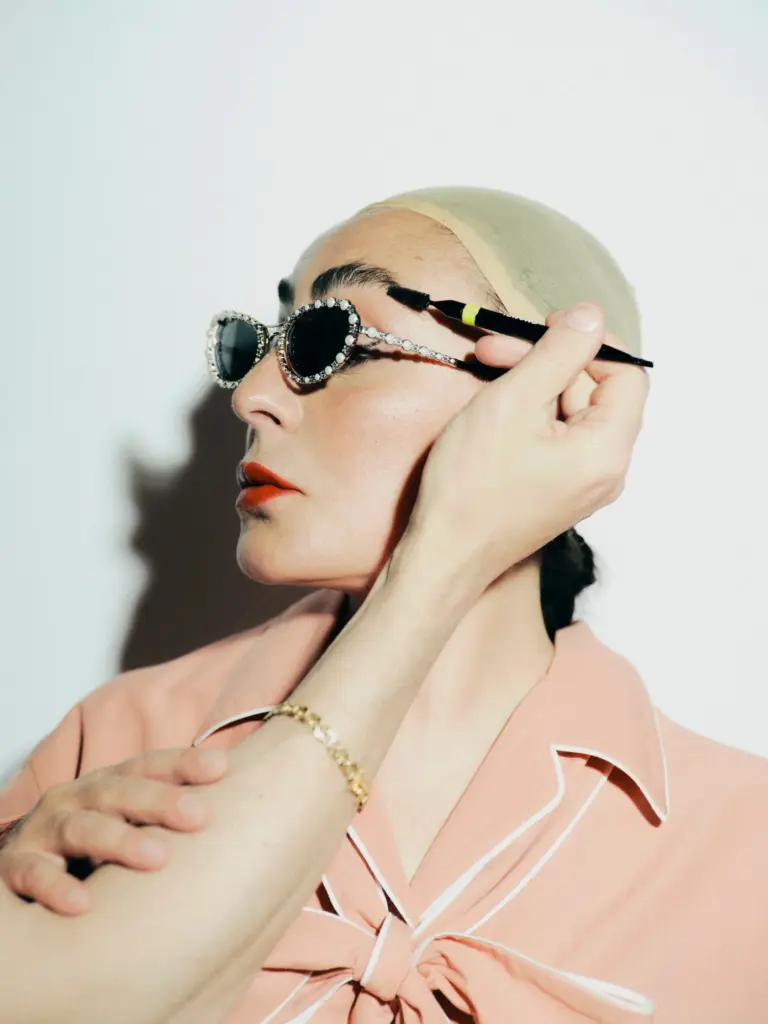
She has lost count of the times things haven’t gone well for her. “I’ve had many crises, one at every moment of my life.” The hardest one, perhaps, was in 2013. That year her father died and shortly after, her son Román was born. Three months after giving birth, she separated from her partner and took on motherhood alone. “That’s when the big challenge started. That was the beginning of ‘now eat what comes.’ The next eight years were tough. I turned down many jobs because I didn’t want to be away from my son. “I could have paid a lady to take care of him and I didn’t. I had such a lonely childhood that I couldn’t afford it,” she explains. Now, Román is 14 years old. “The next big challenge is coming: learning to let go of him.”
Where is she at now?
At a particular, complex life moment. I have felt a bit lost. Before coming to this interview, they told me not to talk about this because I have beautiful projects. But I don’t want to deny myself. It’s good for people to know that I’ve had another big crisis.
Why have you felt lost?
Because when you’re little, you fantasize that by 50 you will have arrived somewhere and I haven’t arrived at that place.
What place is that?
I was the daughter of the bar owners at the cinema and I fantasized a lot in that cinema. At 14, I imagined that at 52 I would be with a glass in hand sailing on my sailboat. I mean, I imagined having a smoother career and that I wouldn’t have to prove anything anymore. This never ends. You’re always being tested.
Her crisis at 50 has gone beyond the usual, beyond frustrated dreams and unreachable expectations. In these years, she has lost friends and role models, important people in her life and career. “I turned 50 and got really scared because people I love have gotten sick and died. I thought: I’m single and I have a child. If I got sick, he has to carry on.” From that dark thought came a very clear idea: “I told myself: I have to start monetizing my career.”
In February this year, she signed with Vertical, the representation agency of pilot Marc Márquez and influencer María Pombo. Now they manage her commercial and brand opportunities, from advertising campaigns to strategic collaborations. Juan Antonio Bayona and Victoria Luengo are also represented by Vertical, but there are people around Candela, people she respects, who haven’t understood this move. She explains it bluntly. “If I were 20 today, maybe I wouldn’t be an actress. I would have flipped the phone and become a content creator. Since my parents were working all day in the bar, I would have recorded some boring stuff alone in my room. I would have been a danger too.”
I suppose some people haven’t understood this change in your career because the stereotype of the “starving artist” is still very present. If you’re not starving, you’re not an artist.
I don’t want that. And I can’t. I have a 14-year-old son and I have to invent other jobs. My son is from another generation and he’s teaching me not to suffer. I ask him: don’t you have a vocation? He answers: “Mom, I want to live well, I want to make money.” He also says: “Mom, you have to set goals.”
That’s how she joined La revuelta, David Broncano’s successful prime time show on La 1. She had already collaborated on La resistencia on Movistar+ between 2019 and 2024, so she felt comfortable returning to television with Broncano. “I left La resistencia fertile and I’ve come back to La revuelta as a menopausal lady,” she jokes. “Before, guys sent me dirty photos on social media. Not anymore. I’ve realized now I’m a señoraca.”
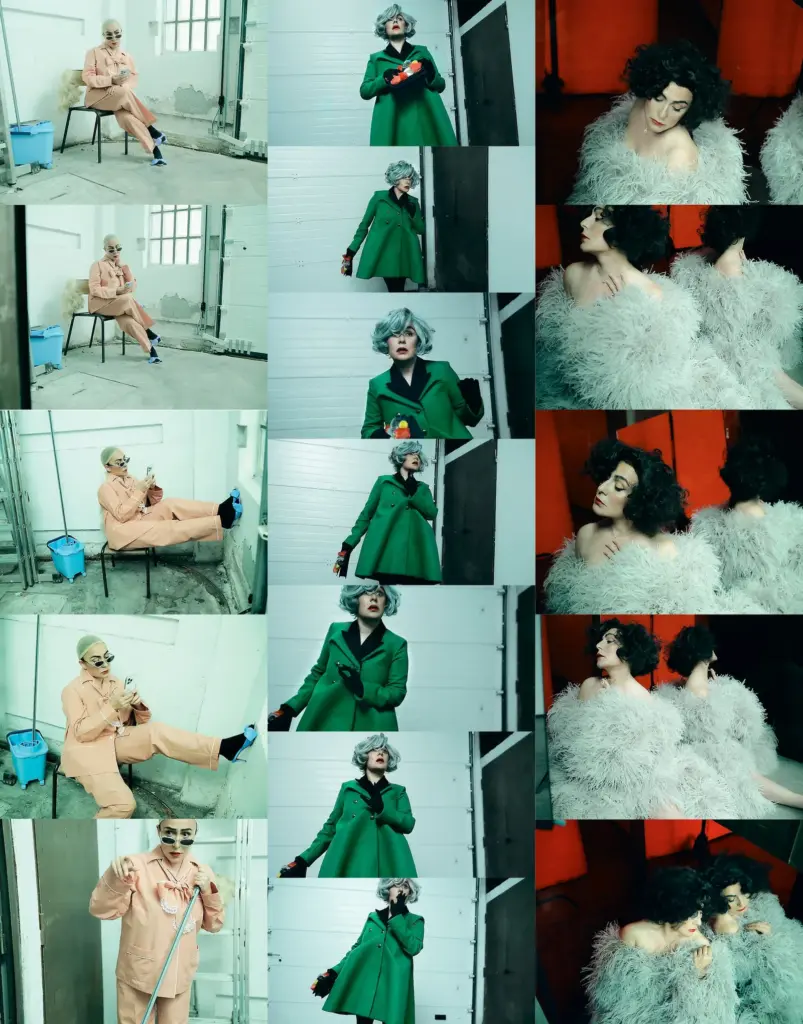
Her appearances on La revuelta go viral on the internet. She clarifies that they are not scripted, that it’s herself “with a bit more sense of humor.” She also wants to point out that she doesn’t consider herself a comedian. “What comedian? No way. I’m not a comedian and I don’t want to steal that title from real comedians. I don’t go on TV intending to do comedy. I go a bit to be able to pay for Mercadona at the end of the month.”
In her gags, she touches on serious topics like ageism or the aesthetic pressure women suffer. A few weeks ago, she defended the regularization of immigrants and the rights of domestic workers. Her speeches always have truth and a political undertone, even if she doesn’t want to admit it. “I have the feeling that I’ve never positioned myself politically. I just try to say things I think are important, to be on the right side of history. Some things aren’t political. Some things are divine justice, common sense.”
She has many fans, also many detractors. After each of her appearances on La revuelta, she usually receives a flood of insults on social media. “Because of what I said about immigrants, I’ve suffered many attacks,” she assures. In 2022, a woman who harassed and threatened her with death online was arrested. “Now, anyone with a mobile phone can be a bomb of hate. We are in a moment of much anger and polarization and that scares me. I think about my son and the world that awaits him.”
Television has given her new popularity and reopened the doors of theater for her. She is having great success on the tour around Spain with Peña + Peña, an improvisation show with Secun de la Rosa. “The audience comes to see Candela, the one from La revuelta. I tell them: ‘You’ve been scammed because I’m only here to tell you how to survive in this profession.’” The character wants to devour her, but she resists.
She doesn’t seem thrilled with her success.
Yes, but we go back to the childhood wound. The girl who still lives inside me would like people to come see me for playing Hedda Gabler, not Candela from La revuelta. Now I earn more from who I am than from the characters I play. They pay me more for being me than for playing Hedda Gabler. It seems like a bargain, I know, but it’s hard for me. I talk about it a lot in therapy and I get into arguments. I’m aware that I have to embrace this new facet.
With so many ups and downs, how do you stay sane?
By doing therapy. It helps me deal with my worst enemy: myself. Leading a normal life also helps. I take my son to soccer and extracurricular activities and I meet teachers and mothers, people who have nothing to do with me or my work. I no longer fantasize about the sailboat. I just want to be happy, calm, and have enough for my son and me.
Maybe you’re getting closer to the longed-for happiness?
I’m happy with who I am. It took me a long time to get here. I have terrible things, like everyone, but also good things and I want to embrace them. At 52, I don’t want to apologize. Nor do I want to justify myself. Women are always justifying themselves. Men don’t give so many explanations.