








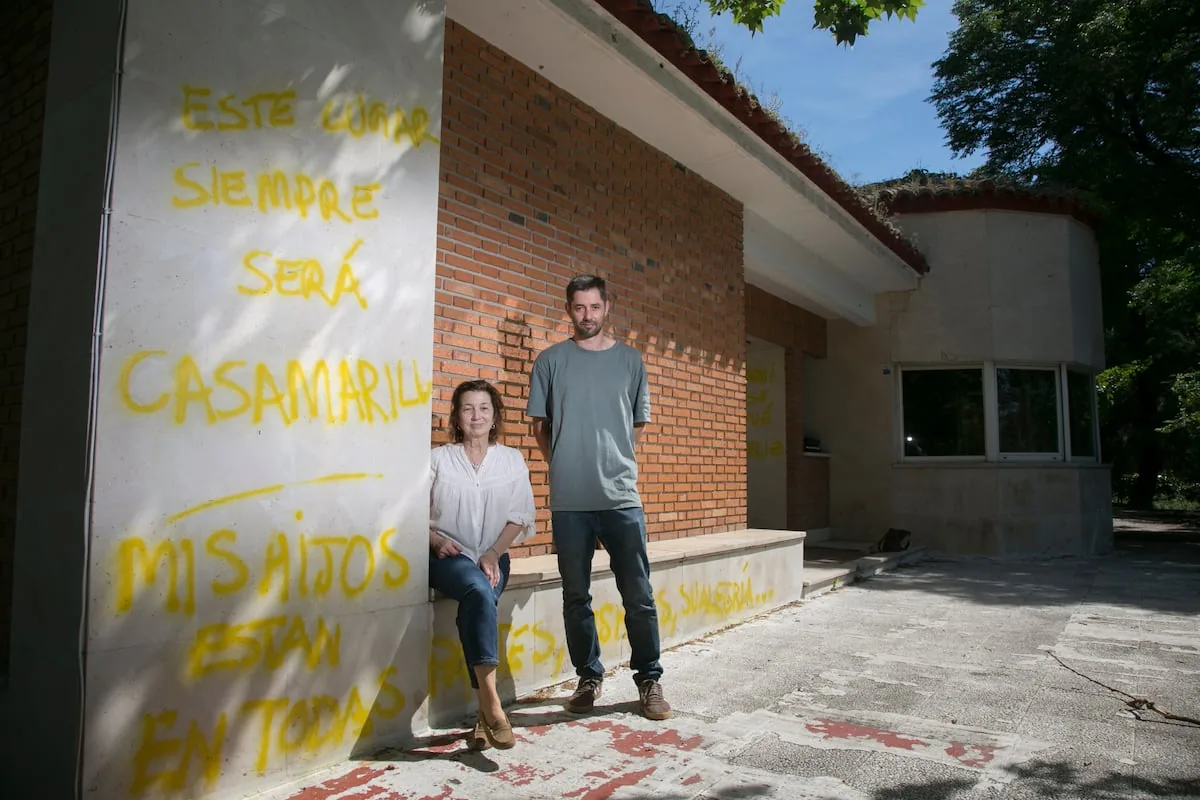
Helène and her son Jaime walk bewildered among boxes, books, plates, disassembled furniture, and family photographs. In the house where for almost three decades there were meals under the pine trees, Christmas celebrations, children running, birds, and a pond with fish, everything is ready for the machines to enter. In less than a year, there will be 18 villas with pools right here on the golden mile of northeast Madrid.
The first time the San Román family appeared in EL PAÍS was in 2002, in a text by Rafael Fraguas titled “Robinson Crusoe lives on Cuesta de las Perdices” with this subtitle: “A family with five children opposes their estate, with 196 trees, being integrated into a housing development.” The text spoke of a family from the Valdemarín neighborhood, in the Moncloa-Aravaca district, who resisted the development and had declared rebellion against the Compensation Board to defend an estate with 196 trees of 25 different species; among them, cypresses, mulberries, elms, magnolias, walnut trees, cedars, or poplars.
Miguel San Román, Helène Gomendio, and their five children (Jaime, Luis, Juan, David, and Pedro) arrived at this house 30 years ago. It was 1997, and the estate included a 6,500 square meter plot and a 1960s one-story building with a tiled roof, like many others in Pozuelo and Aravaca when they were second homes for Madrilenians.
Almost 30 years later, Valdemarín has been absorbed between the A-6, the racetrack, a religious school, and the CNI building, in one of the most expensive areas of Spain. The legal dispute began at the start of the century with the approval of an urban plan by the Madrid City Council allowing the area to be developed. Miguel San Román’s family opposed it and rejected the money offered by the Compensation Board. “I simply didn’t want money, just to be left where my house is. To be left alone,” insists Miguel with devastating simplicity. The trials and appeals lasted 20 years until last April, when the court notified the expropriation order and scheduled the eviction for Tuesday, May 26.
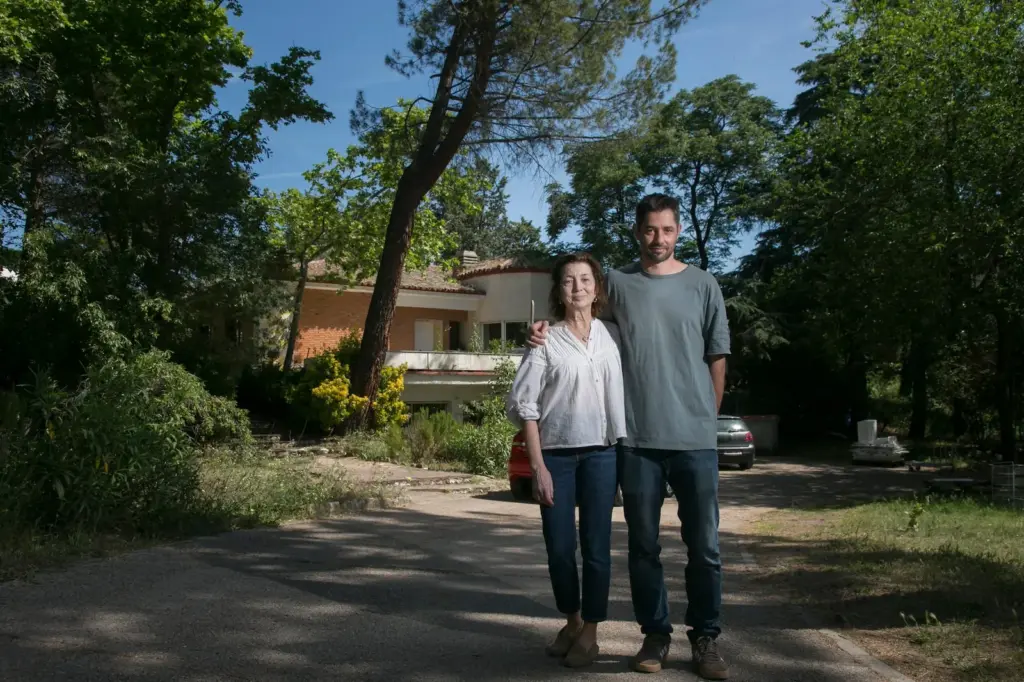
Throughout this month, the San Román siblings have been dismantling the house where they grew up as if it were a wake where, if someone cries, another reminds them that they had “the best childhood in the world,” says Jaime.
Now that it’s all over, their mother sums up two decades of struggle: “We never wanted money. Just to be left as we are. This has been our life and the only thing we have fought for is to keep the family home.”
—Look, a robin —says Helène suddenly changing the subject.
—I think its nest is further on —she clarifies, surprised.
It is striking that something other than a drone flies over the area and that someone is able to distinguish the overwhelmed animal, beside the A-6, where 150 vehicles pass in both directions every minute.
This is a strange place and this is not a family, but a clan: they have been fighting for a house all through the 21st century. From the beginning, the couple decided not to join the Compensation Board. The mother recalls gathering their children and explaining the decision to start litigation to save the house. Thus, the five boys, now in their thirties, have naturally grown up studying the Land Law, the Forced Expropriation Law, or diving into the land registry looking for loopholes in the law. With the same ease as they identify a horse chestnut or distinguish a greenfinch from a hoopoe.
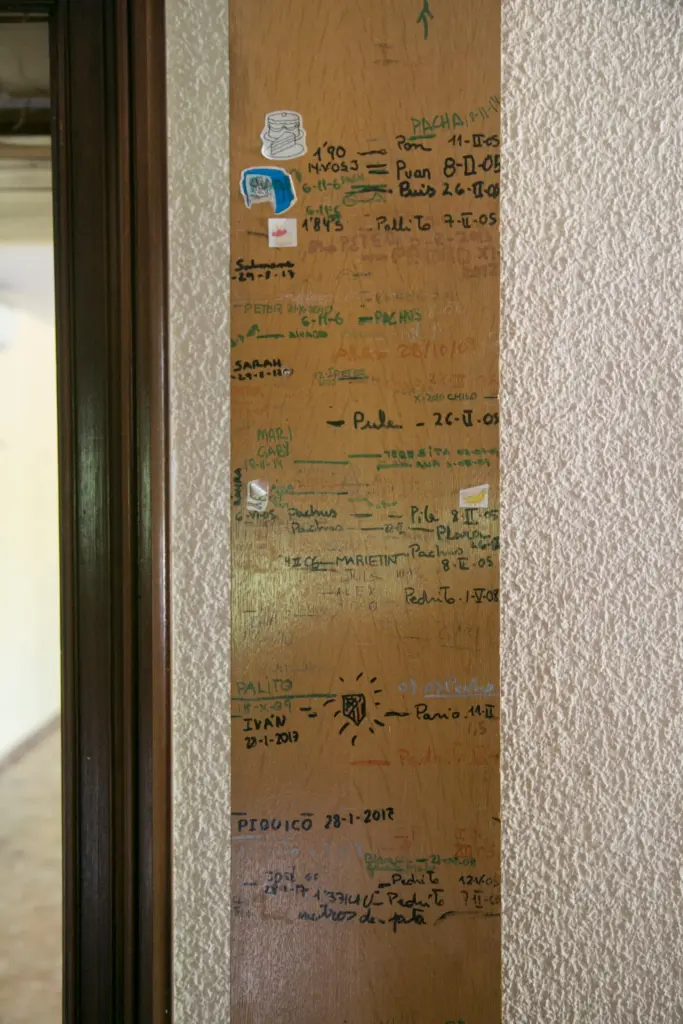
During all this time, the family has resisted like the old Gaulish village of Asterix surrounded by Romans. What were empty lots and estates when they arrived gradually filled with roundabouts, villas, walls, and pools, many pools. While all this was happening, the San Románs were stopping one of the most expensive real estate developments in Spain.
When the ruling came out, in 2005, a forced expropriation was finally approved for which the family received 2.5 million euros, although they claimed it was worth 23 million including the value of the trees. “The only way to stop the operation was for the price to evict us to be so high that it made the operation unfeasible and that they would give up,” says Miguel San Román, an architect by profession. In the legal battle, Miguel found flaws in the approved general plan and got it annulled, which forced the entire replanning to start over. Finally, the courts decided to return to the original design, including some tweaks, although they dismissed most of their claims. A process that lasted 20 years.
During all this time, the pressures have been continuous. “The construction companies wanted us to leave and offered money to my parents separately to divide them,” recalls the son.
Valdemarín is not only an exclusive residential area in northwest Madrid but also one of the most coveted single-family land pockets in the capital: villas, gated communities, low density, private schools, proximity to the A-6, Aravaca, Pozuelo, and Casa de Campo. In April 2026, real estate companies placed the price per square meter in Moncloa-Aravaca at almost 6,400 euros, well above the average for Madrid city, which is around 4,600 euros per square meter. This week Telefónica sold its iconic building at Gran Vía 28, 32,000 square meters over 13 floors, for more than 200 million euros, which amounts to about 6,250 euros per square meter, a price similar to this area. However, Valdemarín is the golden mile of luxury single-family housing.
The new plan foresees the construction of 18 villas in that space. If two decades ago they had accepted the agreement, it would be two villas per person, although it’s better not to talk about that topic in the middle of mourning. “I understand it’s hard to understand, but selling was never an option,” concludes Jaime San Román, the eldest of the children, 36 years old. “The hundred trials I’ve had were never to ask for more money,” adds his father, “but to be left alone.” “Let them do their business, but leave us alone in our house,” he insists, with an argument as simple as it is bewildering to those who have done everything possible to break them.
The life of the San Román family has run parallel to the recent economic history of the country. In 1997, the couple bought the house from the owner of a nursery. A few years later, the City Council approved an urban plan allowing construction throughout the area, and since then the five children have grown up surrounded by cranes. “It only slowed down a bit in 2008 with the crisis,” summarizes Jaime.
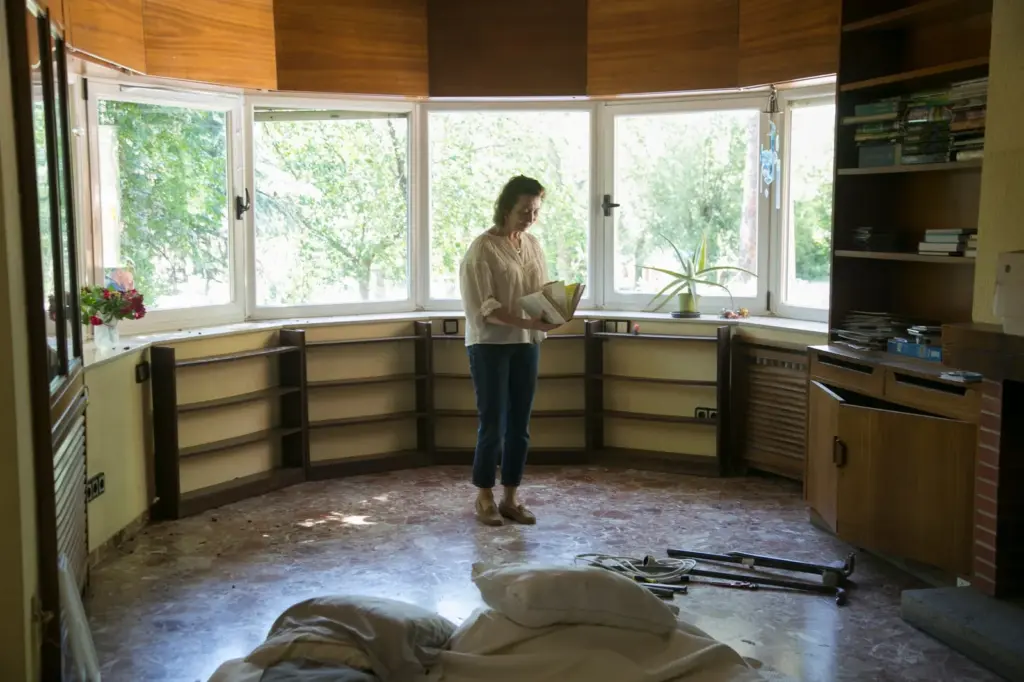
The San Románs have been packing their lives into boxes for a month since the court communicated the execution of the ruling. Some days they do it “with anger, others with nostalgia, and others with resignation,” says the son on the house porch. “I understand that cities have to grow and I have learned that justice is not just, but practical. A ruling in our favor would mean declaring all these homes illegal,” he says, waving his arm in the air to point to the hundreds of fences and villas with cameras in front of him. Precisely that, filling it with “third parties affected,” has been part of the strategy to facilitate the ruling. “No judge dares to rule against so many affected people,” adds the eldest son, from the top of Cuesta de las Perdices, nine kilometers from Puerta del Sol.
A few weeks before taking the last piece of furniture, one of his brothers came with a spray, and the family decided to give free rein to what they were experiencing by writing on the house facade. One wrote: “HP,” their mother: “My children are everywhere: their laughter, their joy…” and the last wrote: “Here happiness left.”