








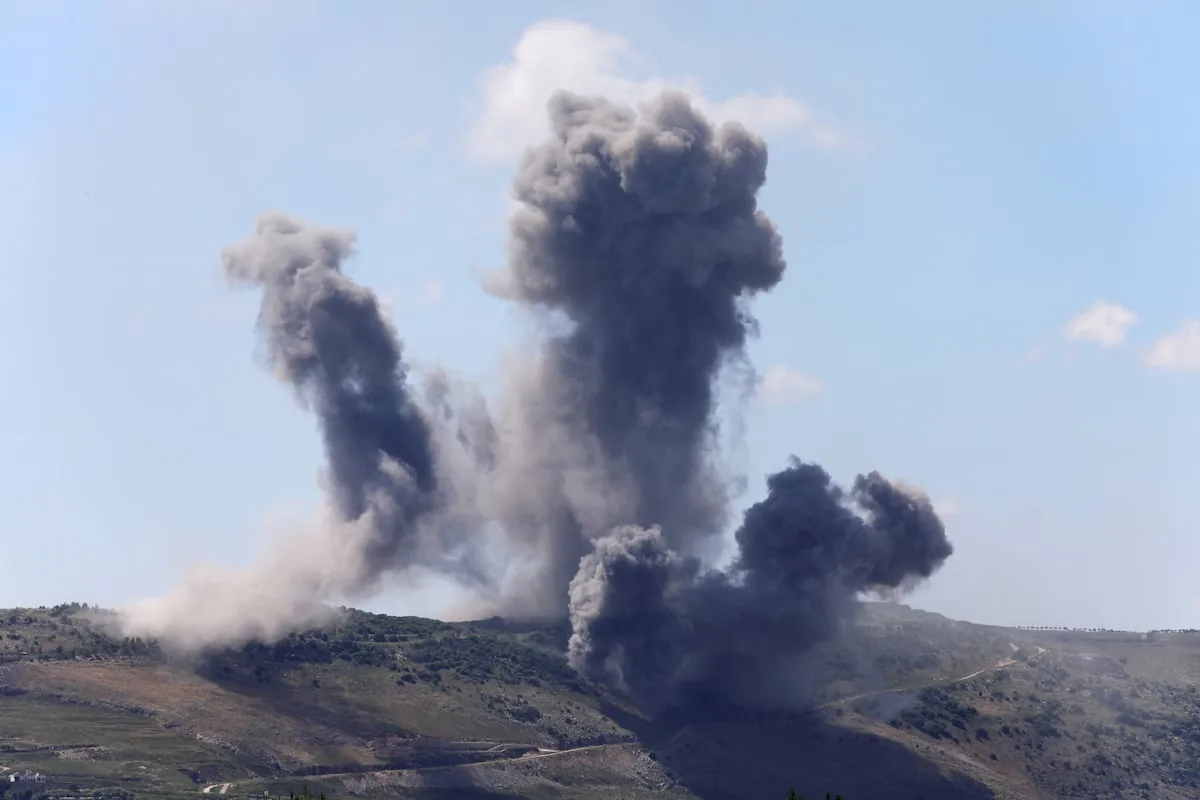
Israel is seeking ways to defend its position in the face of a possible agreement between the United States and Iran, which would initially extend the truce that began last April 8. The Israeli government, which is not participating in the dialogue between the two parties, is following the process from a distance with discomfort. The concern of Benjamin Netanyahu’s government has increased after reports emerged suggesting that key objectives for Israel, such as the nuclear issue or the Iranian missile program, could be addressed in a second phase of talks. An extension of the ceasefire would also affect the Lebanese front, freezing the Israeli offensive against Hezbollah.
Read more Two dead and four injured in a traffic accident on the A-2 in Jorba
Despite this, the Israeli prime minister projected an image of prominence in the diplomatic process this Sunday, as well as harmony with Washington, with whom he started the current war. “My policy, like Donald Trump’s, remains the same: Iran will not have nuclear weapons,” he stated in a communiqué, breaking a long silence about the possible agreement. “Trump reaffirms Israel’s right to defend itself against any threat on all fronts, including Lebanon,” he assured.
The possibility of an agreement between the United States and Iran strengthens the fragile current truce and focuses attention on the reopening of the Strait of Hormuz, a key maritime route for the global oil market. However, the draft text circulating among the negotiating teams allows for a 30 to 60-day renewable period (according to official sources cited by U.S. media) to reach a pact on Iran’s nuclear program, during which a definitive ceasefire agreement should be reached to declare the end of the war.
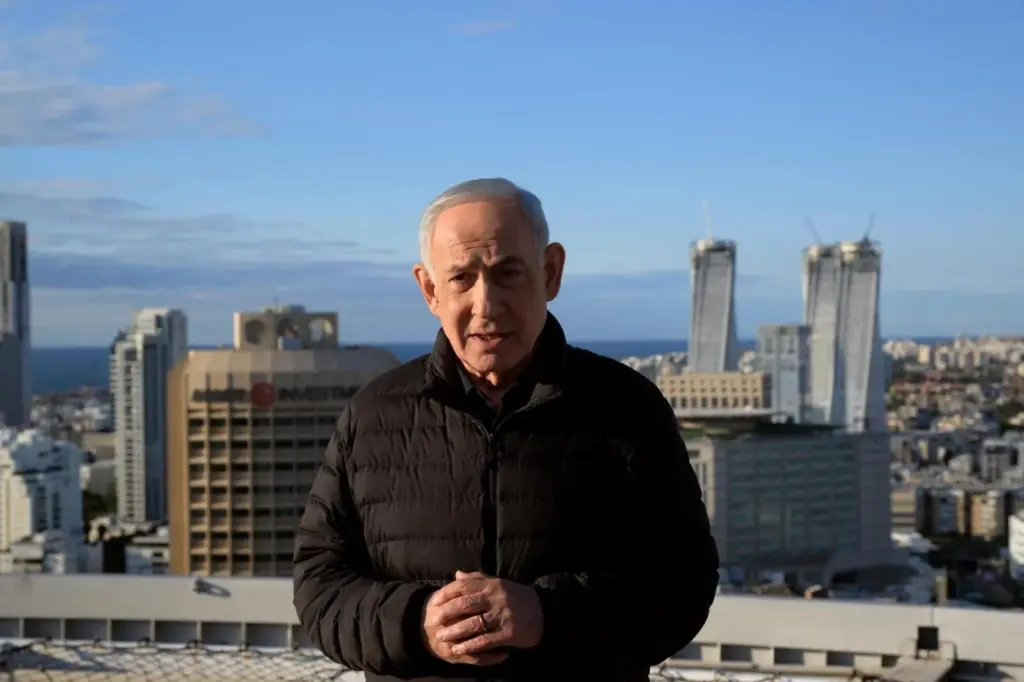
Netanyahu has diverted attention from the points that the new interim agreement leaves aside, whose absence is perceived in Israel as unfavorable to the country’s interests, and has focused on the harmony he maintains with the White House. “President Trump and I agree that any final agreement must eliminate the Iranian nuclear threat,” he claimed. “This means dismantling uranium enrichment sites and removing enriched uranium from its territory,” he detailed.
“It is hard to overstate how much Netanyahu sees this moment as a possible personal and political defeat,” notes Danny Citrinowicz, former head for Iran in the Israeli military intelligence services, on social media. An agreement between the United States and Iran under Trump’s presidency, he adds, would be a severe blow to Netanyahu. Citrinowicz recalls that the prime minister “built his political identity” around the supposed Iranian threat, continuously advising pressure on Tehran.
“After having succeeded in February in dragging the U.S. into a direct confrontation with Iran,” the analyst comments, “Israel may now be forced to accept an agreement that not only legitimizes the very regime it wanted to weaken but also exposes the collapse of its doctrine on Iran.” An Iran he now sees as “more radicalized, resilient, and dangerous. Even Washington doubts whether to confront it militarily again.”
The Gulf countries, also affected by the war, support the mediation efforts led by Pakistan to prevent the return of hostilities. They do so after having suffered thousands of Iranian attacks on civilian infrastructure, such as refineries, pipelines, and hotels, for weeks, and while still suffering the war’s impact on their oil exports, affected by the blockade of Hormuz.
Since Saturday, when Trump simultaneously called the top leaders of Saudi Arabia, Qatar, the Emirates, Jordan, Egypt, Turkey, and Pakistan, the Foreign Ministries and state news agencies of several of those countries have reiterated the position they have maintained during the conflict. They want to exhaust diplomatic channels and avoid the return of a war that has damaged their economies and, in the case of the Gulf countries, their reputation as stable and safe destinations for tourism and business.
Read more The money from Alex Saab that reached Abelardo de la Espriella’s accounts
That regional consensus leaves aside Netanyahu’s government, the only actor considering resuming the offensive against Iran. The Israeli defended that option on Tuesday by phone before Trump, according to CNN. Netanyahu expressed skepticism that diplomacy with Iran would yield results and reiterated that sufficient economic and military pressure could topple the Islamic Republic, now led by Mojtaba Khamenei, son of the previous supreme leader. The next day, Trump stated that Netanyahu “will do whatever I say” regarding Iran, something that has caused a certain feeling of irrelevance in the negotiations in Israel.
Lebanon, awaiting negotiations
Last April 8, Pakistan announced a regional ceasefire that included Lebanon. The agreement, however, was never implemented in that way. Israel showed its rejection that the ceasefire extended to Lebanese territory and launched more than 160 bombs in 10 minutes that same day, killing 350 people within hours. Washington denied Islamabad and rejected that the truce affected the war between the Israeli army and Hezbollah.
Now something similar may happen. U.S. officials cited by Axios and Arab and Iranian sources mentioned by Amwaj, a British media outlet specializing in Iran, agree that the memorandum being worked on foresees a ceasefire throughout the region, including the Israeli offensive on Lebanon. That section of the draft is the result of pressure from Iran, which seeks to protect its Lebanese ally Hezbollah. After Netanyahu’s statement, however, the possibility of a definitive truce could again fall through.
“Israel is uncomfortable with that clause and is pressuring Washington to include language” that allows it to respond to perceived threats in Lebanon, journalist Ali Hashem of Amwaj reported on social media, citing an Iranian source familiar with the talks. Iran, the source adds, insists that the truce be effective over Lebanon, while perceiving the U.S. backtracking on issues where there seemed to be an understanding.
For the Mediterranean country, Iran’s insistence on initiating a regional truce is the only way to achieve a short-term respite, after the truce brokered by the United States for Lebanon on April 16 failed to stop hostilities. Since March 2, when the Lebanese militia reopened open war against Israel, the Israeli army has killed at least 3,151 people and injured another 9,750, according to the Lebanese Ministry of Health reported this Sunday.
Israel has also occupied 5% of Lebanese territory, where nearly 60 villages are located, while continuing to issue evacuation orders for entire localities in the rest of southern Lebanon (this Sunday, for 15 more municipalities), forcing more than 1.2 million people to leave their homes.
The memorandum that the United States and Iran had until today does not detail what should happen with that occupied territory even if the ceasefire extends over Lebanon. This Sunday, Hezbollah’s secretary-general, Naim Qasem, gave indications that the organization would comply with the ceasefire but emphasized that they will continue attacking Israeli troops while they remain in Lebanon.
Read more Real Zaragoza relegated to Primera RFEF and disappears from professional football after 77 years