





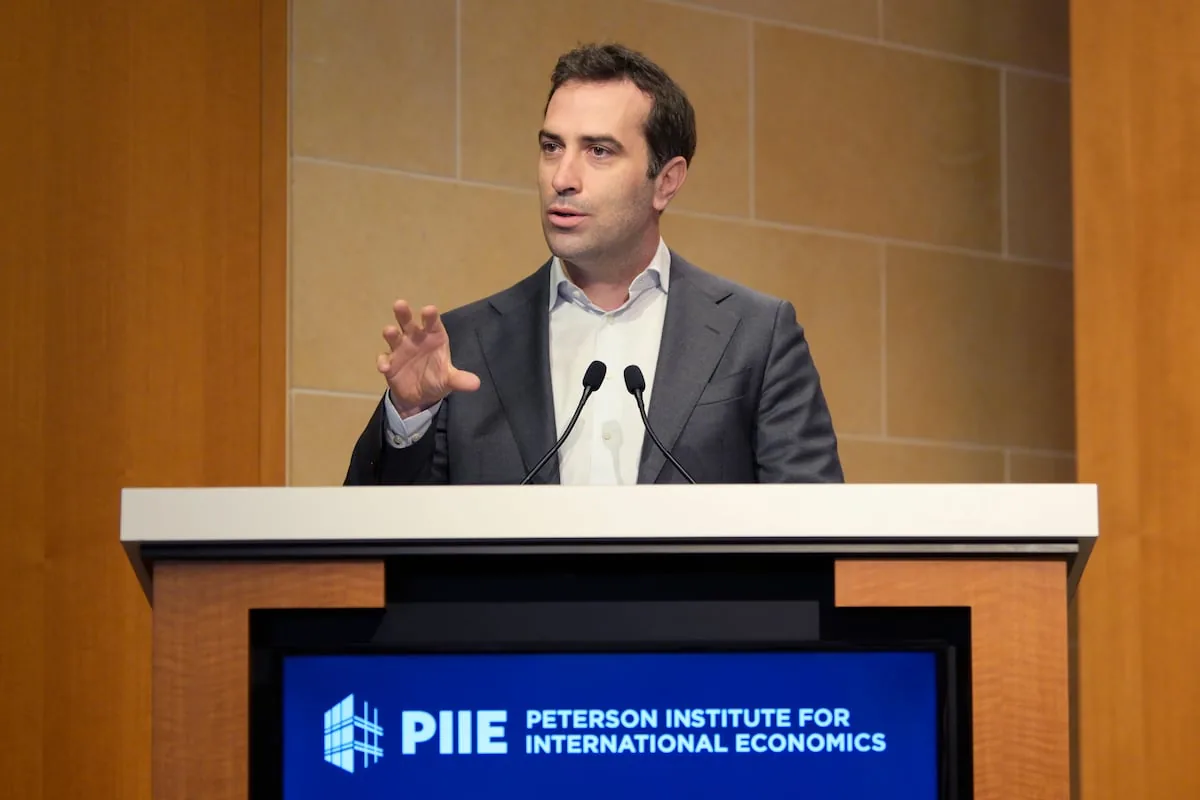
“There is widespread concern about the impact of this war, about the consequences it may have if it drags on; we have also seen this in the reports of the International Monetary Fund,” said First Vice President and Minister of Economy Carlos Cuerpo this Thursday from the World Bank headquarters, where he is participating in the IMF spring assembly. Cuerpo has expressed concern about the blow the conflict could deal to the economy if it lasts too long. He has also warned about the effect on the tourism sector of the shortage of fuel for airplanes. Not so much for Spanish airlines, as he says the industry has sufficient reserves, but for those of other foreign countries that do not have enough kerosene reserves.
Read more Barcelona will dedicate a monument to Cerdà in the Plaça de la Universitat
The closure of the Strait of Hormuz has interrupted much of the world’s oil traffic, liquefied gas, and many other essential raw materials for the chemical industry and the agri-food sector. “From Spain, we have been warning about this situation for weeks. Along with other countries, we have put on the table the importance of stopping this conflict, of promoting diplomatic channels to end it,” said the new number two of the Government.
Cuerpo has boasted because he maintains that Spain has done its homework in recent years and “has arrived better prepared than on other occasions.” The IMF’s economic forecasts corroborate the Spanish vice president’s thesis. The Fund estimates that Spain will grow by 2.1% this year, one of the strongest advances among developed economies, above the major EU partners.
Despite this, he admits that the conflict in the Middle East is having consequences on the Spanish economy. “We are noticing the effects of the war and in the short term we have noticed them, citizens and our companies are noticing them in fuel prices, at service stations, and especially also in the rise of fertilizers and freight costs for transport.”
Cuerpo has defended the package of measures approved by the Government with public aid to alleviate the impact of the war for families and companies. A plan, with more than fifty initiatives, with a budget cost of about 5 billion euros, which includes tax cuts on fuels or direct subsidies to some sectors or the 500 million aid for fertilizer purchase to prevent the energy inflation spiral from transferring to food.
A year ago, Carlos Cuerpo was Spain’s Minister of Economy with limited powers. He had a more representative role in international economic organizations and in adjusting economic forecasts than real decision-making power. Since he had to share decisions with La Moncloa, the Ministries of Finance and Labor, among others. But after María Jesús Montero left to fight in the Andalusian elections and his appointment as First Vice President, he has de facto become the number two of the Government led by Pedro Sánchez.
Asked if he is considering other measures, he stated: “There is now much discussion (at the international level) about kerosene, about aviation fuels. Spain is also particularly well positioned in that segment. We have greater refining capacity thanks to the eight refineries we have in our country.”
Read more Experts call for regulation of prediction houses: «They are a danger to public health and democracy»
Blow to tourism
Spain is a tourism powerhouse, with more than 94 million visitors a year. This year it expected to set a new record, but the shortage of oil due to the war is beginning to impact airlines, which see how the kerosene they need as fuel is starting to run short and the available kerosene has skyrocketed in price. Although Cuerpo assures that Spain has sufficient reserves to serve national airlines, other international airlines are beginning to announce flight cancellations due to lack of kerosene.
“It is true that for the tourism sector, not only are our own airlines important, but also the arrival of tourists and, therefore, we have to monitor the situation of other countries and other airlines,” he said while trying to send a message of reassurance: “For now, tourism data, for example during Easter, show growth in occupancy and stay, but we must remain attentive to what the consequences of the coming weeks may be.”
The impact of the conflict in Arab countries has a double effect on the tourism sector, Cuerpo detailed: “On the one hand, there is the increase in ticket prices, but on the other, there is a certain redirection of flights that previously went to other tourist destinations now arriving in Spain.” The vice president assures that the net effect of the war on the tourism sector, for now, “has been positive,” but the possible effects of a continuation of the conflict must be taken into account, not so much because of the lack of kerosene or fuel in Spain since we have that greater capacity, but because of what may come from outside; this is another discussion we must also have at the European level.”
The economic vice president has shown openness to expanding public aid to companies, sectors, and households if the war continues. And he justifies that Spain has more fiscal room: “In budgetary terms, with more room than on other occasions, in 2025 we had a primary surplus for the first time practically in two decades. Debt is close to the level we had before COVID.”
He is also willing to adopt measures to reduce energy consumption if the situation in the Gulf worsens further. The European Commission is already beginning to convey recommendations that it would be useful to put energy-saving measures on the table preventively. “We will see together with community partners what the circumstances of the coming weeks are,” he explained. But he recalled that civil servants “can already take advantage of teleworking to reduce that energy bill.”
The IMF semiannual meeting is held in Washington. U.S. President Donald Trump has been particularly belligerent with Spain over the decision of the Spanish Government president, Pedro Sánchez, to prevent the use of joint military bases in Rota and Morón de la Frontera for operations related to the war. Sánchez has also criticized Trump for starting a war without any support from international laws. Diplomatic relations between the two countries have been strained by the cross statements of their leaders. Cuerpo assures that during his trip to the United States he has not held any meetings with senior White House officials. “We do not have a bilateral meeting scheduled, we will see each other within the framework of multilateral meetings these days. Yes, we have had a very intense institutional agenda with American authorities.”
Read more Brussels will ease mergers to create large European companies that boost investment