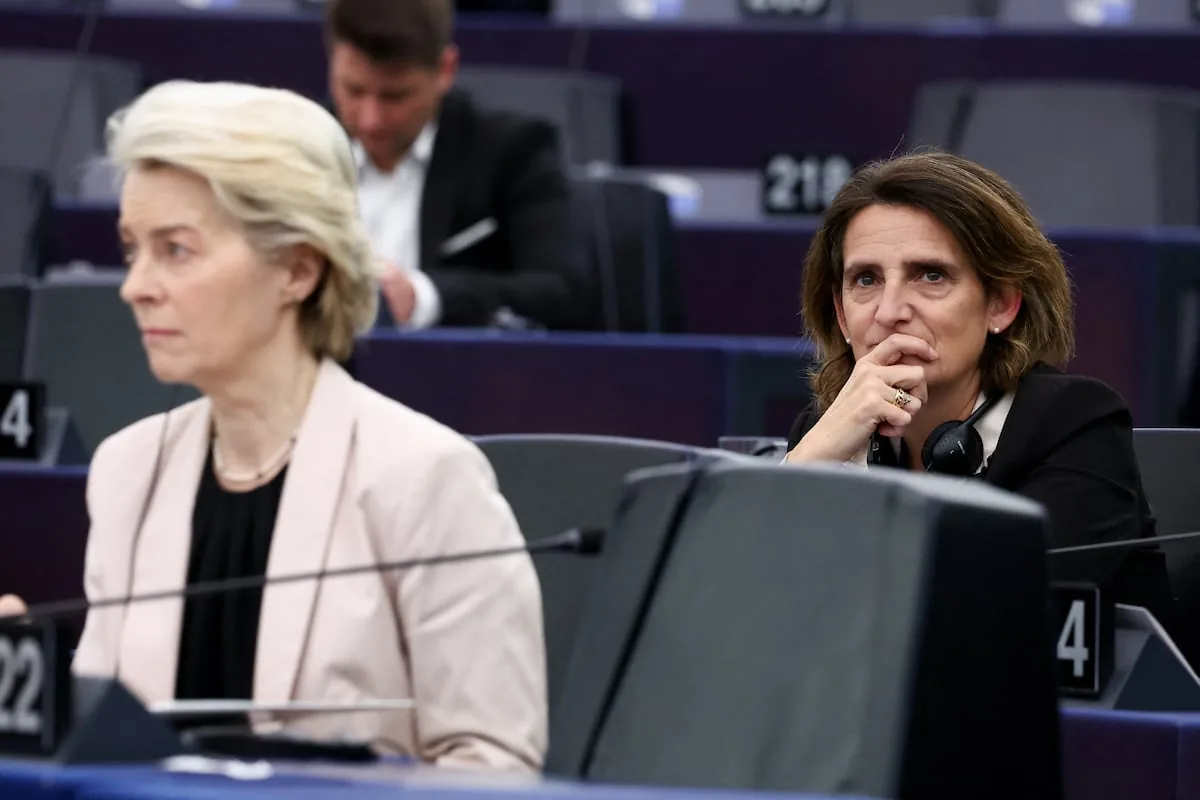









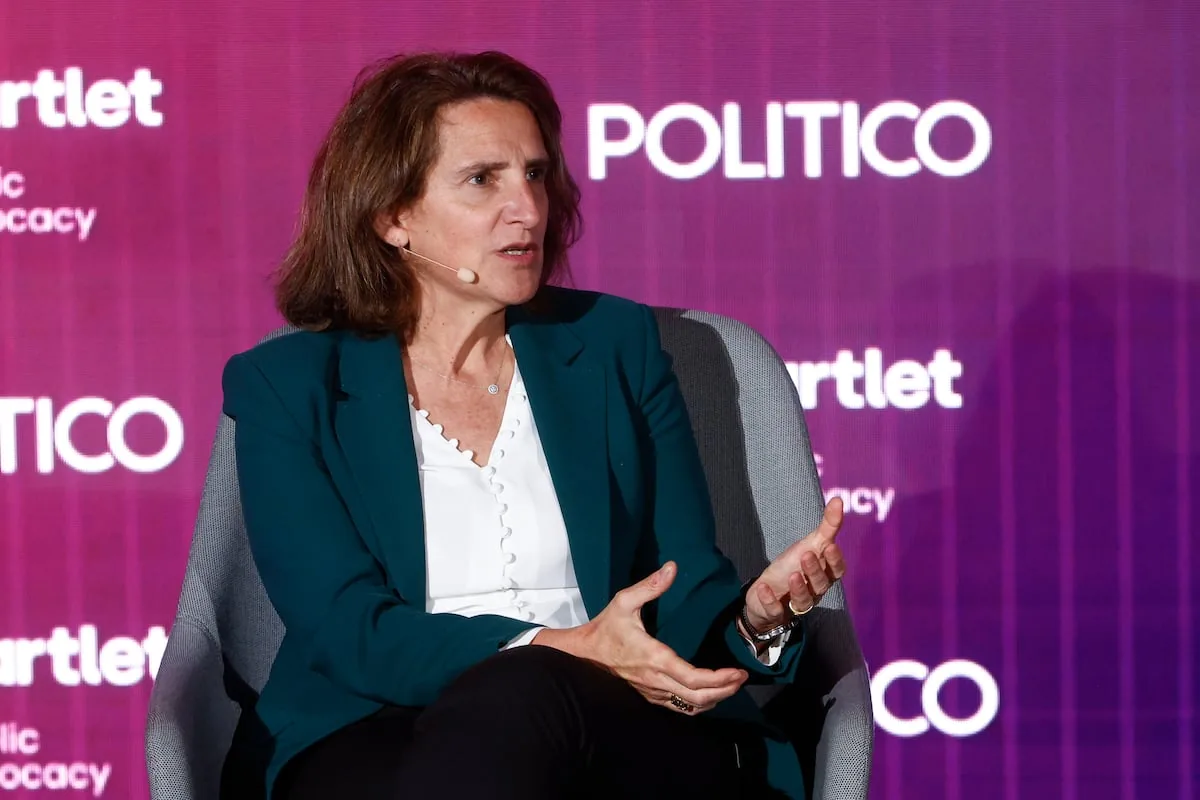
The European Commission is finalizing a reform of the criteria it uses to analyze mergers and acquisitions between companies in the single market. The changes being prepared by the powerful Competition department, led by Vice President Teresa Ribera, involve giving more prominence in the reviews of operations to elements such as resilience, investment, and even the forecast of how the market will evolve, with the idea of promoting the creation of large European companies. This also means that Brussels’ experts will have to give less importance to how the merger affects price trends.
Read more Opposition unions head to the United States embassy to demand democracy in Venezuela
This change represents the deepest reconfiguration of Brussels’ competition strategy since the 2000s. The reform appeared as a recipe to boost the European economy in reports prepared by former prime ministers Enrico Letta and Mario Draghi. Specifically, in the document prepared by the former ECB president, emphasis was placed on the fact that the corporate world had changed a lot, that there were technologies requiring large investments, and that companies of sufficient size were needed to undertake them. Therefore, it called for European Competition policy to take this variable into account.
It was the EU heads of state and government themselves who took up this challenge at the Competitiveness meeting they held in February. “This should be part of the social contract. To ensure that established companies invest and innovate more. Leaders want true European champions in strategic sectors,” declared the President of the European Council, António Costa, at the end.
This has been the focus for months of the department led by Ribera, which already has a first draft completed, which was previewed by the Financial Times. Sources from the Commission indicate that in the coming weeks, likely in May, this first text, to which contributions from other EU Executive departments and national Competition authorities will be added, will be put out for public consultation so that civil society can provide its comments. It will be definitively approved in the last quarter of the year.
Future investment capacity will therefore be one of the criteria given the most weight when evaluating possible business consolidations: Brussels is focusing on technologies such as artificial intelligence, quantum computing, or those necessary for the energy transition towards a decarbonized economy. Also with this in mind, financial, environmental resilience, and the resilience of value chains in potential operations are included as criteria. Additionally, greater prominence is intended to be given to the possible future evolution of markets.
This, logically, will reduce the weight currently given to how a merger may affect prices due to a possible reduction in competition. However, sources from the European Commission warn that this does not mean that the policy followed so far will be radically changed. It is simply about “modernizing it.”
For years, large European industries have requested easing these rules to guarantee their operational survival. Companies argue that current restrictions limit their investment capacity compared to foreign competitors operating in more consolidated or subsidized markets. This outcry has been especially intense in strategic sectors where size is critical for technological development.
The telecommunications sector is the main exponent of this pressure. Major European operators, such as Deutsche Telekom, Orange, and the Spanish Telefónica, have led complaints against the current regulatory framework. These companies argue that the fragmentation of the European market, imposed by competition laws, prevents achieving the scale necessary to deploy next-generation networks like 5G and fiber optics.
Marc Murtra, president of Telefónica, has reiterated in various forums the need to allow the creation of national and transnational champions in Europe. Murtra argues that the current model favors atomization and weakens the competitive position of European telecoms against American tech companies and Chinese state operators. According to the executive, consolidation is essential to guarantee the region’s digital sovereignty.
Despite this shift, the plan faces resistance from several liberal-leaning member states and internal sectors of the Commission itself. In fact, last January, the chief economist of the Directorate-General for Competition, Emmanuel Tarantino, published an informative article concluding that in the telecommunications sector, returns in these companies exceeded the cost of capital (which includes investment) over the last decade.
Another argument often added is that in many service sectors, such as telecommunications or finance, the EU is not a single market but 27, and relaxing rules in these sectors would lead to a reduction in competition that would increase prices and discourage investment due to the lack of rivals to compete with. This is what Vice President Ribera herself said this Wednesday at an event of the Elcano Institute in Brussels, when she pointed out “market integration and European champions are two things that are very closely related.”
“Thinking that champions [European] can be built on the basis of blessing concentration operations that do not respond to market integration but try to substitute for that lack of integration does not work. It may work in the short term, but not in the medium and long term,” she noted.
However, the proposed guidelines hold that scale and innovation ultimately benefit the consumer. Brussels’ argument is that larger companies ensure access to critical supplies and strengthen the resilience of supply chains. Thus, consolidation would not be seen solely as a monopoly risk but as a tool for economic stability and strategic autonomy in the face of international tensions.