






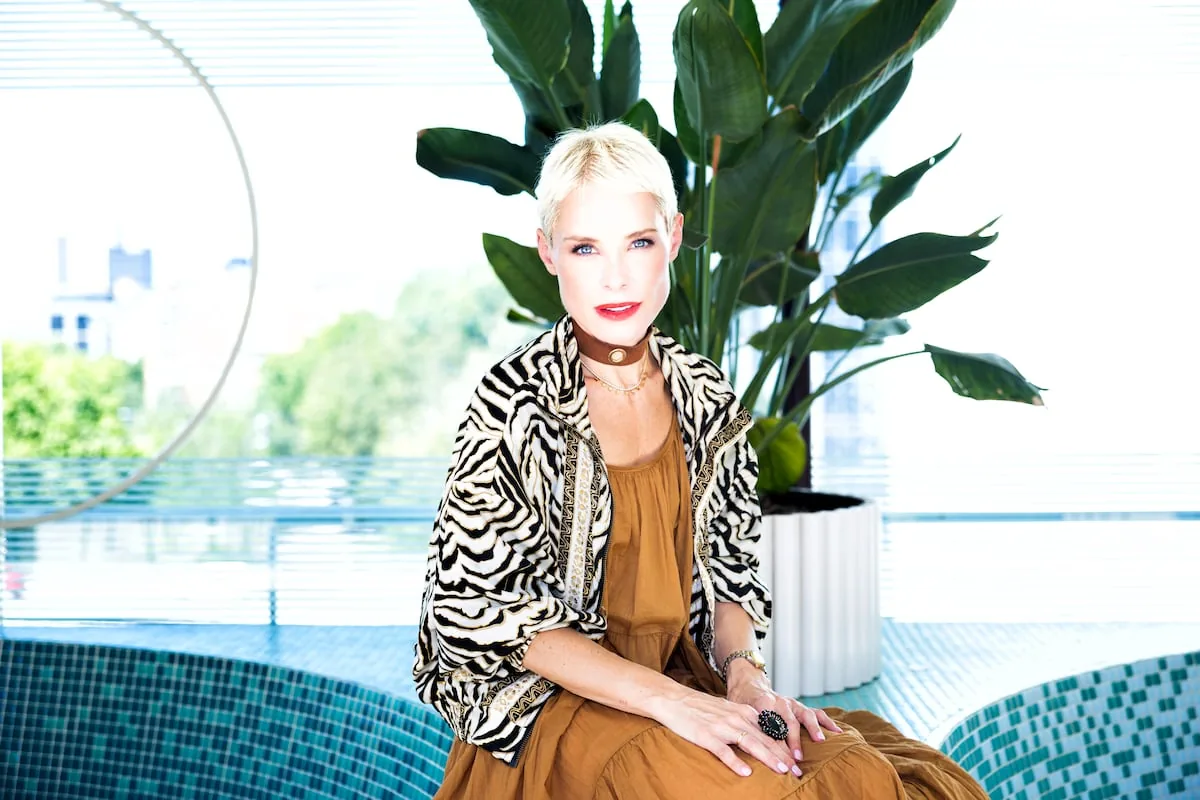
It could be said that Soraya has reconciled with Soraya. The singer from Extremadura (Valencia de Alcántara, Cáceres, 43 years old), one of the few voices that survived the fourth edition of Operación Triunfo —broadcast in 2005, for the first time on Telecinco— has been in music for over 20 years and only now seems to feel comfortable in her own skin. “I am grateful not to have the same energy as before; I have more experience and I know how to economize my energy, how to use it well,” she says in conversation with EL PAÍS, on a May afternoon that feels like July, on a rooftop terrace in Madrid.
Read more El Mar Menor 10 years after the green soup: the unique lagoon is increasingly «a tiny Mediterranean»
Last February 13, Soraya released her eighth studio album, Ilúmina, a return to dance music, with electronic music as its banner, which she continues to promote at her own pace. Not all triunfitos can say the same, but she has owned her own record label, Valentia Records, for 16 years, which gives her a lot of freedom but also entails risks: “When I left the big multinationals, I said: ‘I have to self-publish.’ Because I felt they no longer gave me what I needed,” she comments, before confessing that sometimes she has missed having their support.
A juanpalomo, in short, which fits Soraya’s profile as an artist. She herself admits that, for many years, until she met her husband and father of her two daughters, Miguel Ángel Herrera, she dedicated herself exclusively to work. “I have been very demanding, like a good Virgo. I had to forge a career,” she recalls, “but the intensity has to go down, it is going down and has gone down, thank God.” She refers to that energy she has lost over the years, but now knows how to manage better: “I have always considered myself a runaway horse, a racehorse capable of everything, going a thousand miles an hour with all the strength. But thanks to the passage of time I no longer need that, I am no longer in a race,” sums up the one who represented Spain in Eurovision in 2009, with La noche es para mí.
Soraya does not mind admitting that she is ambitious, although she knows she cannot confess it to just anyone: “Unfortunately, I meet a lot of people to whom sometimes I have to think about whether to tell the truth or not.” Perhaps this distrust comes from all those times she has been criticized, questioned, and tried to be changed, from her appearance to her decisions as a mother and her use of social networks —which she defends as her stronghold and that of her followers—: “I think the strength I have is misinterpreted. When I make decisions, when I take a step, I have thought a lot beforehand about what I do, evaluated whether it is right or not. That confidence is sometimes interpreted as arrogance,” she argues. Aware of the image she projects, the singer neither asks for permission nor forgiveness: “I am a woman who talks a lot to herself, a very normal woman. But when I expose my ideas, I am firm. Sometimes people are not in that process, they don’t understand it.”
View this post on Instagram
Before reaching this vital moment, there have been others: a Soraya from the past with whom the present one is indulgent, almost affectionate, but who will not return: “I have tried to impose myself on life many times and that is impossible. It is a lesson I have learned by falling and taking some very hard hits. In the end, life teaches you that you don’t set the course; in my case, it was due to the adrenaline of youth, the little experience. I got into flying as a flight attendant and thought I had the world at my feet, but it wasn’t like that.” Now she is no longer interested in control: “I have realized that sometimes you have to let yourself be carried away by the magic of life, flow a little more. Sometimes things don’t work out because it is necessary that they don’t.”
There are still bad moments, of course. Like the one that led her to Ilúmina: “Then I needed light because I came from the shadows; I was in a very sad moment after the loss of a baby and once again music rescued me; I had the need to communicate, to get out what I carried inside.” About the 12 songs on the album, Soraya, who already spoke about God and her faith before the recent wave of Christian pride, refers to them as “prayers”: “Behind each song there is a very powerful message from me and for me, and of course for my audience.” About the track that closes the album and gives it its title, she states: “Ilúmina is a prayer, it is my direct connection with God.”
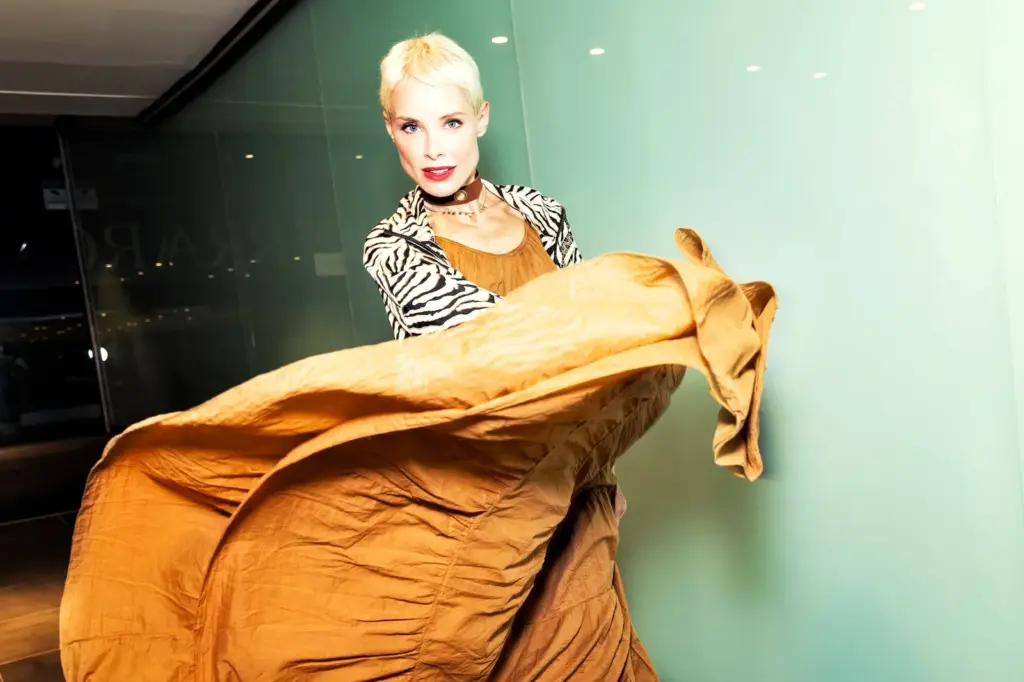
For Soraya, there is something as important as the search for answers: the affirmation of her identity. Lost for years in this maelstrom of the artist who tried to please everyone and at the same time impose herself; appear friendly, but also inspire respect, there was a moment when the singer asked herself who she really was. Used to wearing a wig and being a different Soraya in each work, she has decided to keep her short platinum blonde hair. “An image of mine that is very iconic,” she sums up. There is no turning back: “I gave my wig collection to some friends. It is something very symbolic, driven by the self-affirmation of who I am. I no longer play characters, I am the one in charge of all this.”
The singer of Self Control also says she is starting to get tired of media exposure: “I must confess that it is getting harder for me. After so many years in front of so many people, I want to take a step back and be in the background.” But not from her social networks, where she is very active (477,000 followers on Instagram; 286,000 on TikTok), although she clarifies: “I show occasional little things, but there are many things I don’t post. When I feel like sharing something, I share it, knowing what I am doing and what I am sharing. I share my life, I share my daughters, I share my lifestyle because I trust that social networks, despite the dangers they can have, are a place where we can learn with good use by everyone. Every day they help me make very interesting recipes; there are women who inspire me when they share their lives, they make my day a little happier. I would like to be that light on my social networks for other people.”
About upcoming plans, she has summer covered. Although the most exciting appointment will come earlier: “I am lucky to be able to sing to the Pope; I will be one of the artists who will be there, on June 7 in Madrid, the diocese has chosen me.” She also says she wants to release more music: “I have a plan with Sofía Coll, an electronic singer whose voice and image I love.” And she remembers her friend Marta Sánchez, with whom she has a pending collaboration that will come out “sooner or later.” “I tell Marta that I will wait for her all my life,” she promises.