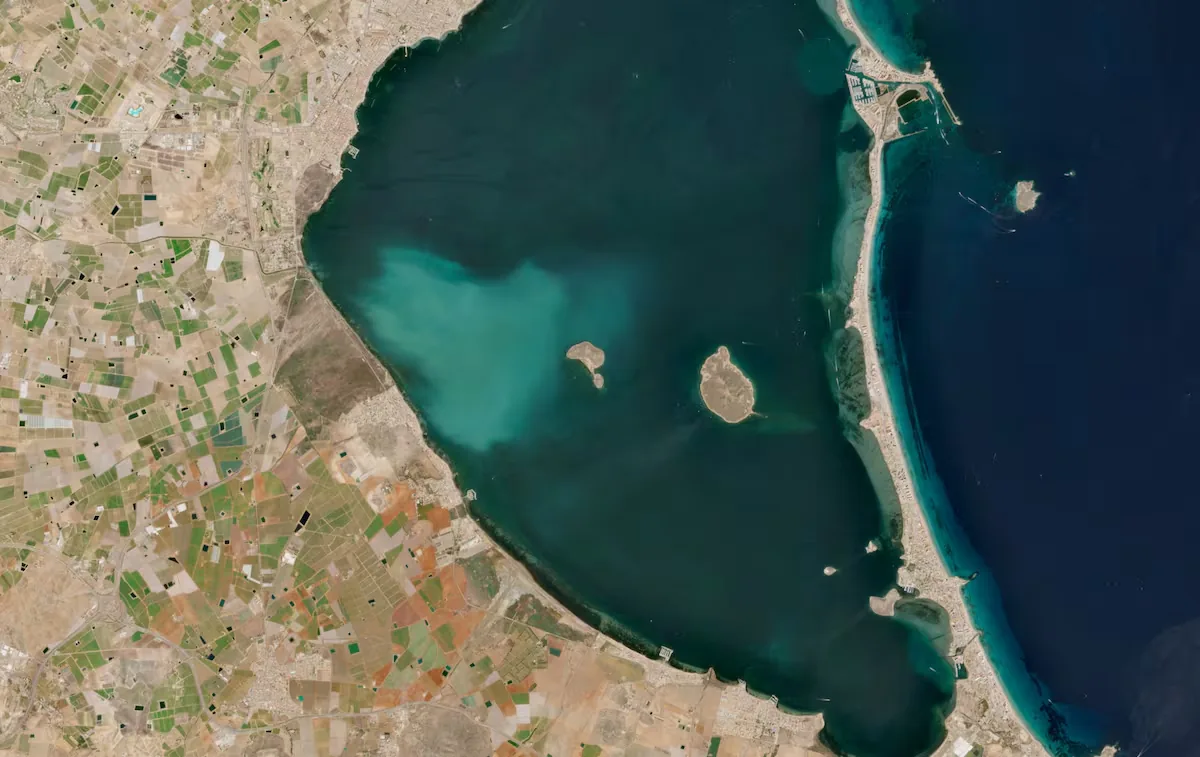









Given the transparency of the water, the dazzling calm that extends this spring morning from Villananitos beach to the wall of buildings in La Manga, on the other side of the lagoon, no one would say that the Mar Menor exploded exactly 10 years ago. A biological outbreak known as green soup devastated the life of the Murcian wetland and the small lagoon remains disturbed today and in an unstable balance, according to scientists who monitor its vital signs daily.
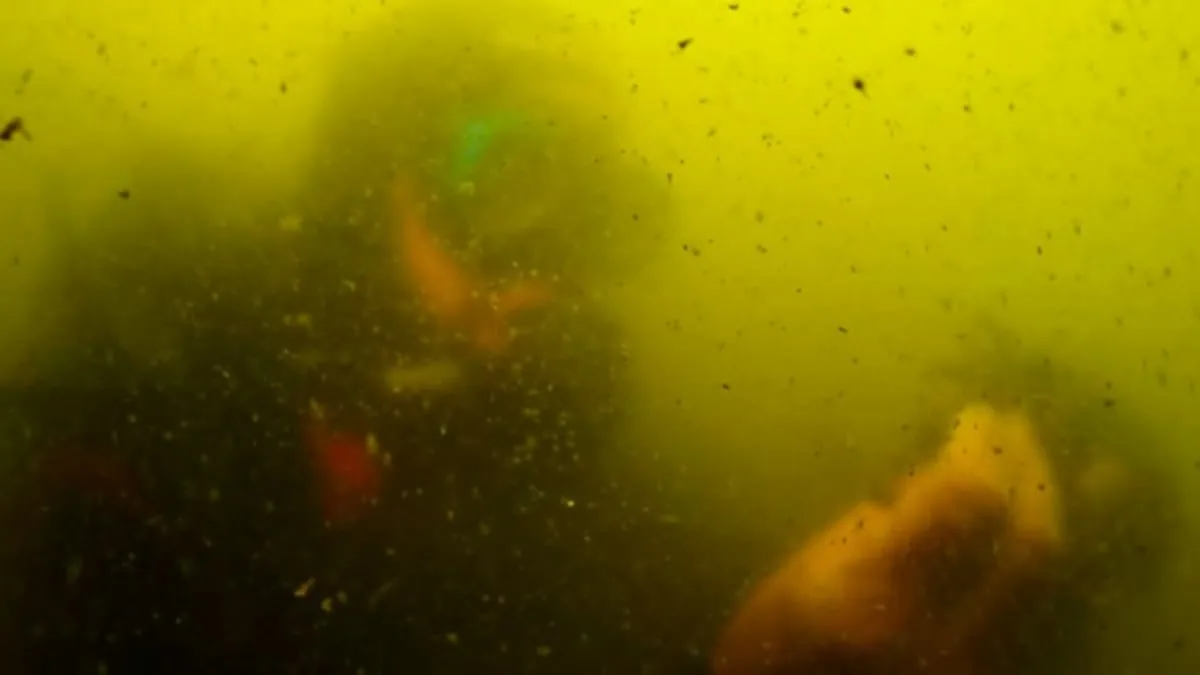
On May 27, 2016, mid-morning, the Association of Naturalists of the Southeast (ANSE) and WWF sent a press release with a video that set off all alarms: inside a kind of vomit, a diver moved slowly in the foreground as if he were an astronaut exploring a remote atmosphere. “That was like a bomb, not even we expected it to have that impact,” recalls Pedro García Moreno, veteran ecologist and director of ANSE.
This episode dubbed the “green soup” turned the putrefaction of a wetland affected for decades by aggressions such as mining waste, sewage discharges, and uncontrolled urbanization into global news, but it was finished off by nitrates from the powerful agricultural industry.
Phytosanitary products, brine from the desalination of well water, mostly illegal, and especially nitrogen fertilizers infiltrated the wetland from the early eighties both on the surface, carried by rain, and through the Quaternary aquifer, a large underground water reservoir that has stored up to 300,000 tons of nitrates, according to regional government estimates.
The Mar Menor digested this enormous pollutant load as long as it could until just before the summer of 2016, when a eutrophic crisis broke out that in subsequent years triggered episodes of anoxia [absence of oxygen] that caused the death of millions of fish and crustaceans and the disappearance of 85% of the seagrass beds. The natural setting linked to the most cherished experiences of several generations was dead.
No trace of the seahorse
What has happened under the 170 km² water surface during these 10 years? “The process we know as mediterranization has accelerated: due to the progressive drop in salinity, we have gone from having a Mar Menor with its own characteristics, with exclusive species adapted to a unique environment, to a tiny Mediterranean,” summarizes Miguel Vivas, researcher at the Spanish Institute of Oceanography (IEO). The consequences of this equalization between the two water masses are, in his opinion, “dramatic” for species such as the nacra, a giant mollusk critically endangered that once had a reservoir of millions of specimens in the lagoon. Now only a few thousand remain. The seahorse has also been wiped out, which was also counted in millions and now it is hard to see even one. “And the tita [a marine worm] has simply disappeared when it was very abundant,” adds Vivas.
Taking advantage of this chaos, numerous invasive species have become established in the Mar Menor, such as the huge blue crab, of Atlantic origin, which preys on prawns, destroys fishermen’s nets, and has displaced the native green crab. This foreign troop has been joined by other rare tenants such as the barnacle and the pearl oyster. And more strange beings from distant oceans, threatening to stay permanently, like the hypnotic Australian spotted jellyfish.
Among commercial species, gilthead bream and sea bass maintain their abundance, with seasonal ups and downs, and eel and prawn are “very bad,” notes this expert in marine fauna monitoring. “With the aggravating factor that the coffee prawn, exotic, larger than the local prawn and of less value at the fish market, is beginning to be fished. It is difficult to differentiate and sometimes it is sold mixed with the Mar Menor prawn,” he clarifies.
Outside the water, the green soup has also shaken the economic fabric of the region. Three studies in which University of Alicante professor Genoveva Aparicio Serrano participated, recently published in the journals Ecological Economics and Journal of Environmental Management, estimate losses of 5,190 euros per household for the population residing in coastal municipalities as a result of the 2016 eutrophication episode. “The environmental shock caused an 18.1% decrease in household income compared to territories in the Region of Murcia that are not part of the Mar Menor coast,” says this researcher.
Using spatial econometrics methodologies and chlorophyll as a measurement parameter, the team led by Genoveva Aparicio found that the probability of business failure increases by 5.5% when water pollution rises by one microgram per cubic meter. The most affected sectors are industry and construction (14.4%), financial and real estate activity (11%), wholesale and retail trade (9.5%), and accommodation (8.4%). In contrast, agriculture and transport are not affected by water pollution, “and therefore have little incentive to preserve the marine environment,” laments Aparicio.
Another worrying fact: a study by Banco de España researcher Gabriel Pérez Quirós estimated a depreciation of 4.8 billion euros in Mar Menor housing in the years following the green soup outbreak.
A 675 million plan
This eutrophic decade has also brought hopeful news, with solutions to recover the Mar Menor that begin kilometers away from its shores, the most important included in the so-called Framework of Priority Actions, an initiative of the Ministry for the Ecological Transition (Miteco) that has mobilized more than 400 million in four years from a total budget of 675 for territory restoration projects.
“The massive fish kills were the trigger for the Ministry to take the initiative,” recalls biologist Francisca Baraza, 72, a veteran official who has just retired on her second attempt as commissioner of the Water Cycle and Ecosystem Restoration at Miteco. When she had already retired from her last public position, at the Taibilla Canal Commonwealth, then third vice president and minister Teresa Ribera re-engaged her to lead a complex challenge: to put in order the wetlands of the Mar Menor, Doñana, the Albufera, and the Tablas de Daimiel, the four affected by deficient and in many cases fraudulent water management for irrigation.
In the case of the Murcian lagoon, the Framework of Priority Actions has meant the creation of a green belt around the natural space, decontamination of the Sierra Minera, reforestation, channel correction, creation of floodplains… With 10 lines of action already started, Baraza looks back and finds it incredible “all that has been achieved in such a short time, considering we started with a blank sheet.”
In parallel, the Segura Hydrographic Confederation (CHS) has dismantled 9,100 hectares of illegal irrigation, out of more than 50,000 in production in the area, 3,500 of which have already been forced to return to their original dryland farm state.
The recovery of the wetland has gained momentum thanks to better coordination with the Autonomous Community and the town councils, after the first years of great tension. For Francisca Baraza, the “good disposition” of the regional Environment Minister, Juan María Vázquez Rojas, has been crucial to advance in actions that require understanding. “The Mar Menor is more monitored, more studied, and more protected than ever,” Vázquez Rojas explains to EL PAÍS. “We have deployed a permanent scientific and technical monitoring network, with continuous control of physical, chemical, and biological parameters and predictive systems. Science has ceased to be something occasional to become the axis of daily management.”
The Murcian Environment official also highlights the renaturalization of coastal spaces such as the large cryptowetland of Carmolí, the construction of 14 storm tanks to retain runoff in torrential rain episodes, and forest interventions on the headwaters of the basin in the Carrascoy, Altaona, and Escalona mountains. Juan María Vázquez also mentions with enthusiasm the future Mar Menor Observatory, a research and conservation center for unique species that will be built in the facilities of the old San Javier civil airport.
The elephant in the room remains the Quaternary aquifer, with an still very high nitrate load that penetrates unstoppable into the Mar Menor. “This summer is going to be very tough,” anticipates Ángel Pérez Ruzafa, professor of Ecology at the University of Murcia. “Nitrate input has quadrupled compared to last year, with phosphorus increasing due to intrusion from cesspools, and salinity has also dropped. It had been recovering for three years and has taken a big hit.” Pérez Ruzafa, president of the Scientific Committee advising the regional government, explains that the abundant winter rains have recharged the underground water reservoir, so nitrates have begun to penetrate in greater abundance. Currently, around two tons daily just through the Albujón ravine, a channel that discharges 200 liters of fresh water per second into the wetland.
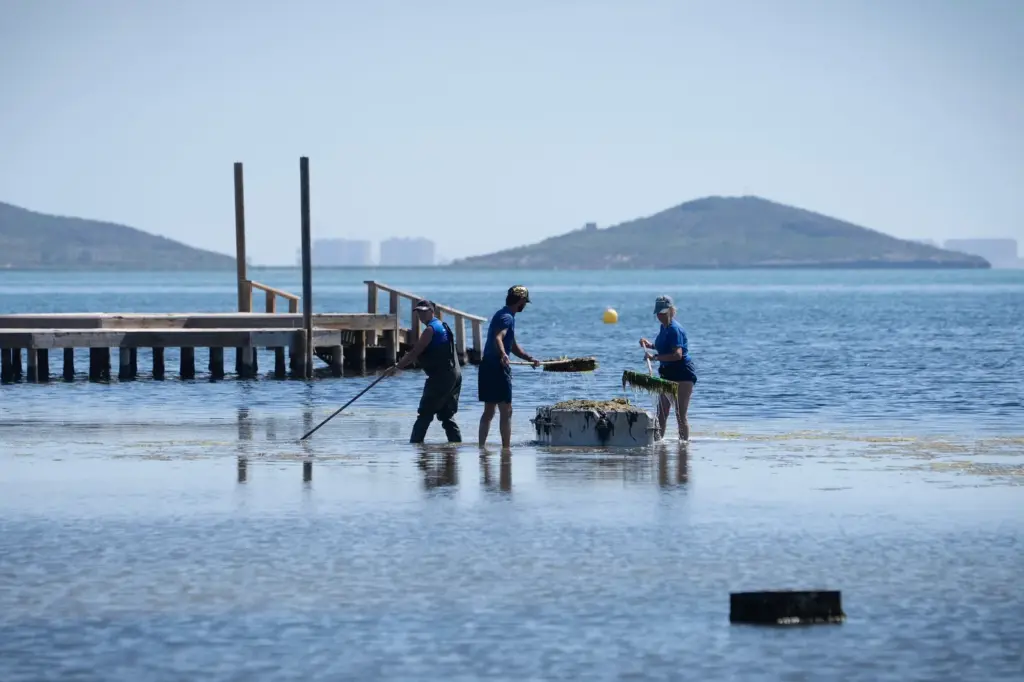
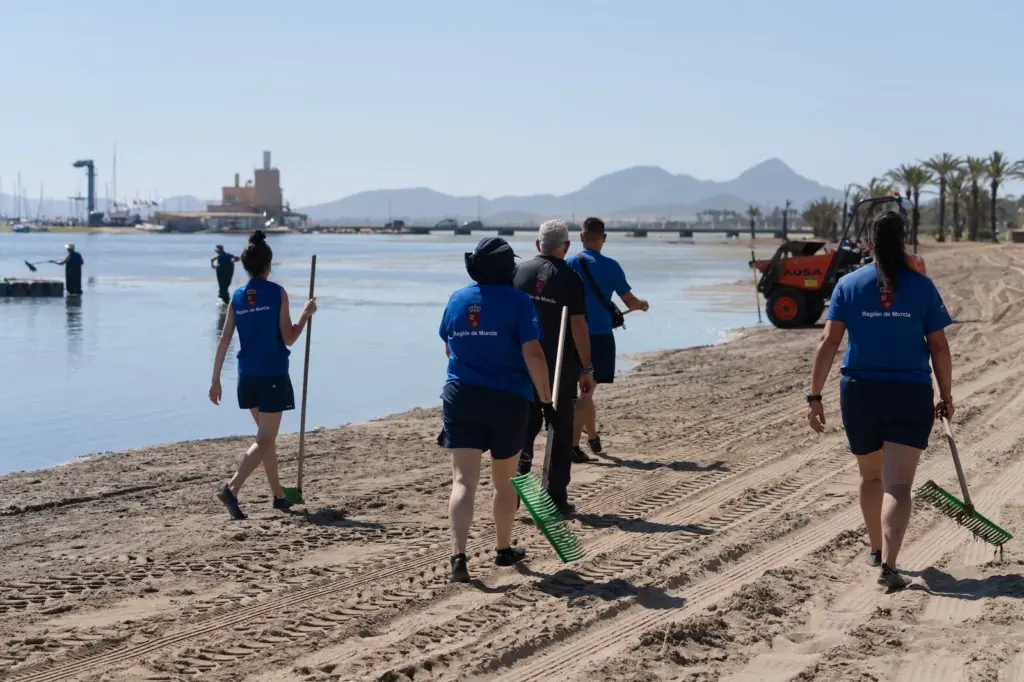
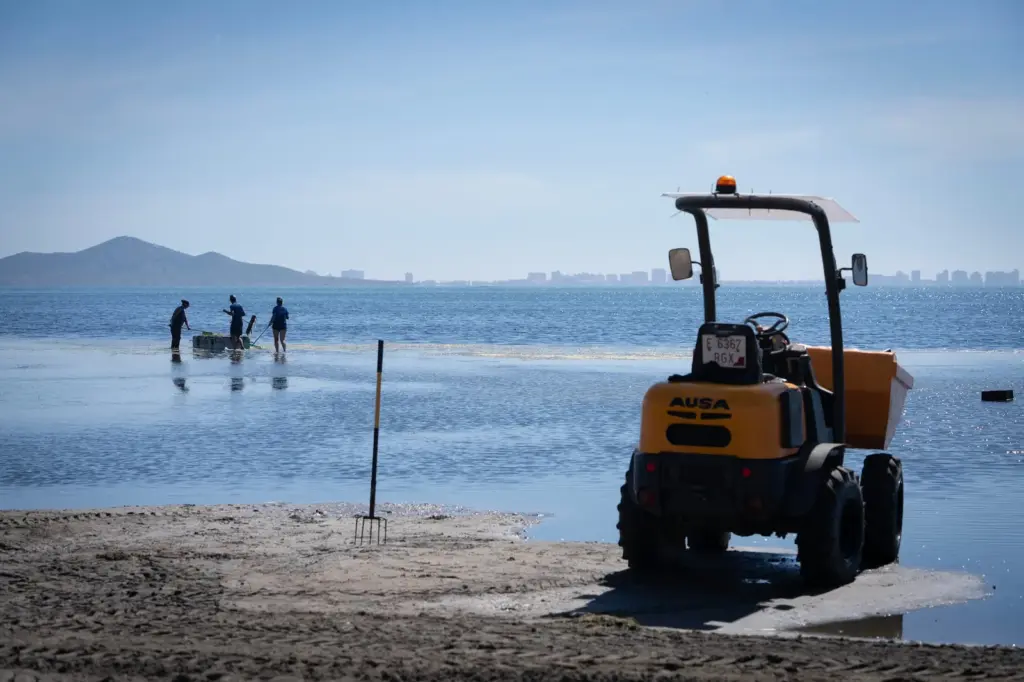
For this reason, biological production has skyrocketed in the form of macroalgae, better known as eggs, which Autonomous Community workers cannot keep up removing from the shores to prevent them from rotting and oxygen consumption from skyrocketing. In the first three months of the year, 4,600 tons of biomass have already been evacuated, more than 45% of all that was collected in 2025.
Under these conditions, “the chances of a new anoxia this summer have tripled. A day when the temperature rises and the wind does not blow, or does not oxygenate, or the water column is stratified, or phosphorus rises…” warns Ángel Pérez Ruzafa, who supports extracting contaminated water from the aquifer to denitrify it and make it available to farmers once purified.
As every late spring since 2016, the Mar Menor holds its breath waiting to see what the summer will bring, once its season of splendor, and now a whole threat.