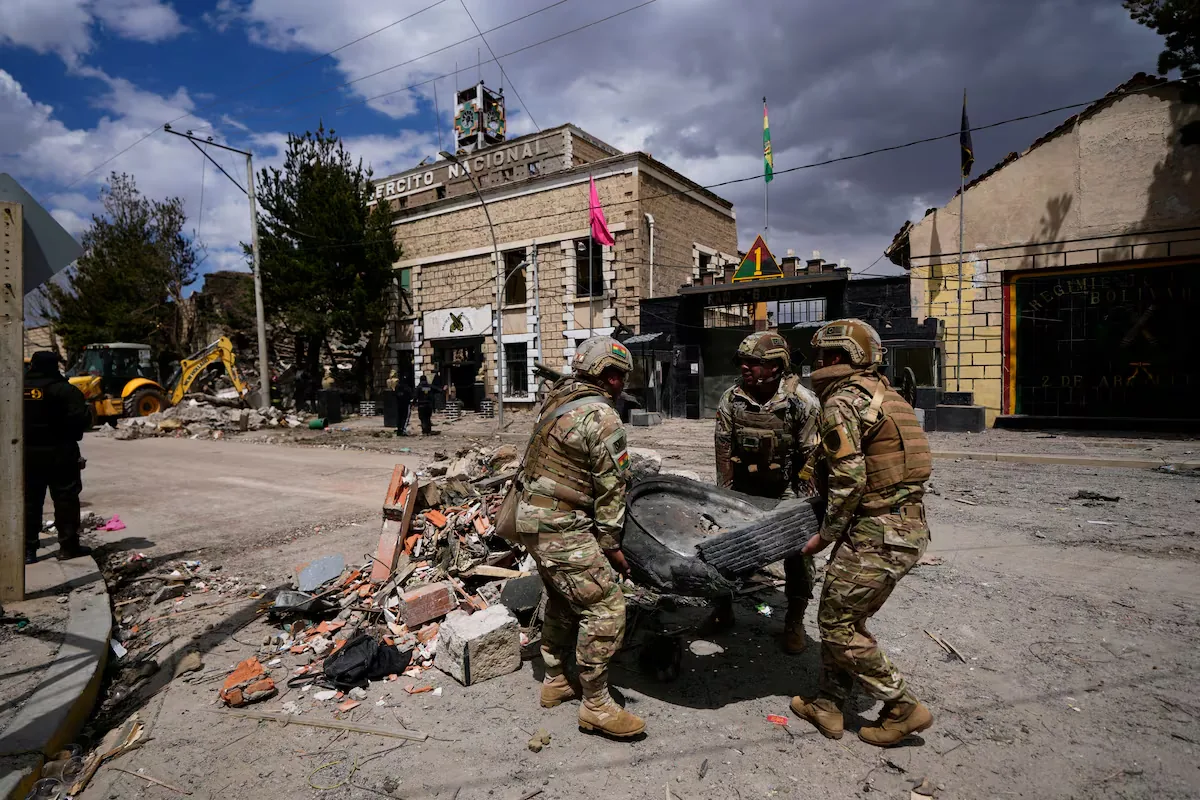








The president of Bolivia, Rodrigo Paz, promulgated this Wednesday a law that cancels the restrictions on the intervention of the Armed Forces in internal conflicts. The regulation increases the pressure on Paz to put an end to the protests and road blockades that for almost a month have cut off the main access routes to La Paz, the administrative capital, by sectors demanding his resignation.
The document was signed by the Executive past midnight, moments after the Chamber of Deputies sanctioned it with a two-thirds majority and after a debate of almost five hours.
With the approved law, the Assembly manages to increase the pressure it exerts on the president to deploy the armed forces on the streets and roads of Bolivia. The social conflict has grown over the weeks and all the president’s attempts to open a dialogue channel have failed. In the last eight days, there were three clashes in the center of La Paz between protesters and police in an escalation of violence that has already claimed the life of one protester. The Government also holds those who maintain the road blockades responsible for the indirect death of four people due to lack of medical attention.
Law 1731 repeals another regulation, 1341, which came into effect towards the end of Jeanine Áñez’s transitional presidency, in 2020. It was promoted by Congress, then controlled by parliamentarians of the previous government of the Movement for Socialism (MAS) and after the harsh repressions by Áñez against those protesting the overthrow of former president Evo Morales. It was a kind of lock on the Executive when a state of exception was decreed, such as time limitations or use of the Army only if the Police were overwhelmed.
The deputies who supported the annulment justified the decision on “putting order” in the country, besieged by protests from various popular sectors and social movements demanding Paz’s resignation, seeing no way out of the economic crisis and feeling “betrayed” by the Government. That was the discourse of the assemblyman who initiated the abolition, Carlos Alarcón of the Unidad bloc, right-wing and allied with the president. “A legitimate Government has been chosen and the break of the constitutional and democratic order is underway,” he assured while blaming the mobilizations on the “personal appetites of [former president] Evo Morales and his gang.”