










There is something truly moving about witnessing the commitment to her own fragility with which Amaia Montero faces these concerts. After the first two recitals in Barakaldo of this comeback tour of La Oreja de Van Gogh following her departure from the group in 2007, the Movistar Arena in Madrid experienced a new chapter in the singer’s battle to feel like an artist again. The vocalist is not at her best, but it is precisely that courage in exposing it that transforms the concerts into a matter of high emotional voltage accompanied by an undeniable wave of underlying hope. The audience understood it perfectly last night and gave their all to support the protagonist, whether by singing along to absolutely every song or encouraging her with continuous chants of “Amaia, Amaia.” And so, stumbling, with anticlimactic pauses between songs, with some tonal mismatches, but also with moments of festive intensity, a strangely successful concert went ahead.
Read more Two injured as a Russian drone hits a residential building in Romania
The group from San Sebastián fulfilled the first of their six dates at the Madrid venue. The capital will be the city hosting the most recitals of this 35-show tour titled So many things to tell: the band repeats in the capital today, Friday, and Sunday, and then completes the half dozen around September to finish on December 30, at the end of the tour. At 15,000 people per night, we are talking about 90,000 tickets sold just in Madrid. No joke about this figure.
The four musicians came out first and began to play a melody that would lead into the nervous keyboards of the introduction of January 20. Rising from the floor (a metaphor for leaving hell behind), Amaia Montero appeared, carried by an elevator. And the scrutiny began.
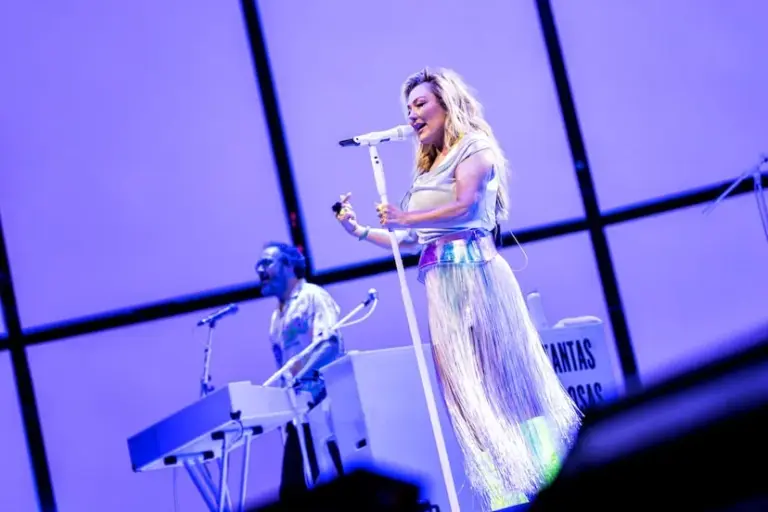

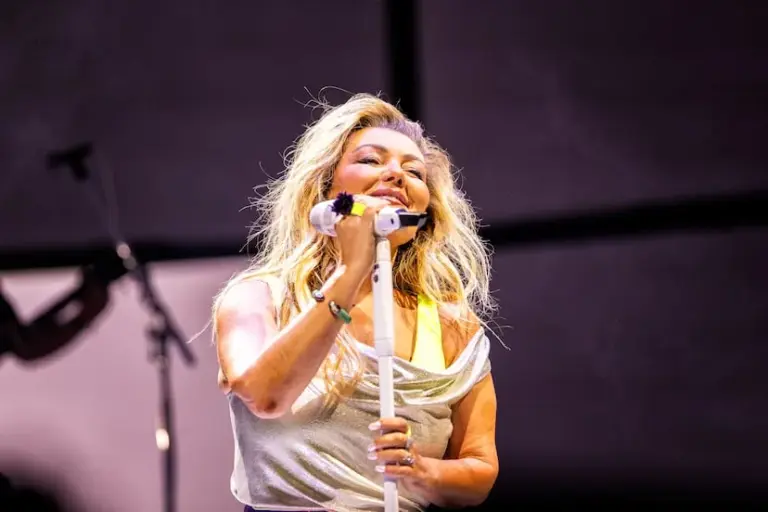

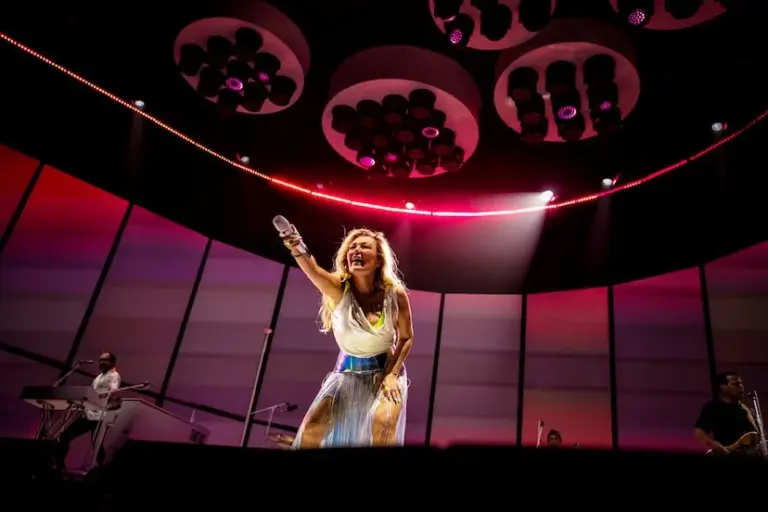
Her voice, the one that these days has been used by uninformed people with an X account to create all kinds of memes, sounded at times frayed, but she did not sing outrageously out of tune as the doom-mongers, inflexible with her but not so much with other worn voices in a musical landscape living in the fervor of nostalgia to go back to times when we were all young and vital with indestructible physical conditions, were rubbing their hands. Time passes, voices change: it’s okay if one knows how to adapt artistically to the new situation. And Amaia is working on it.
Soon a fundamental problem arose in the show related to the staging, based on a, at first, beautiful succession of movable white panels that changed color during the night. A concept that avoids clutter and opts for cleanliness and asepsis. Up to that point, all good. The drawbacks come because each musician occupied a small platform that practically none left (except a bit the bassist, Álvaro Fuentes), which left the vocalist too alone, who found no support for interaction. All the spotlights, therefore, on her, and one more degree of pressure on her back.
The guys from La Oreja were never the life of the party on stage and precisely the role of supporting the vocalist (both Amaia and during Leire Martínez’s era) fell to guitarist Pablo Benegas, who decided to step down from this tour perhaps sensing that the best conditions for a comeback were not met. His replacement, Imanol Goikoetxea, a good musician who accompanied Álex Ubago for years, played last night from the background without stepping forward.
Read more Investigative journalist or paid ‘plumber’: the contradictions of Leire Díez
The show was hampered by some pauses between songs, once justified by a “there is a technical problem.” In So beautiful only Xavi San Martín and his piano remained on stage. The idea was for Amaia to join immediately, but she was delayed. You had to see the keyboardist violently turning his neck to see if his partner’s blonde hair appeared. One, two, three, four… and nothing. It was only a minute, but it felt eternal. Finally, Amaia appeared and they lifted the song as best they could.

But above the setbacks, the songs prevailed. The period that brings the best and most memories to a human being is carefree youth, and for many Spaniards that era was marked by the songs of La Oreja de Van Gogh when Amaia Montero was the spearhead. So last night all attendees, mostly thirty- and forty-somethings with a majority of women, got on their mental Delorean to go back to the late nineties and early 2000s, the era of the Aznar-era “Spain is doing well” with a soundtrack centered on Estopa’s street rumba, El Canto del Loco’s rough pop-rock, and La Oreja de Van Gogh’s sentimental pop.
None of those hits were missing from the evening, with lyrics that embraced cheesiness without shame and that 25 years later still sound just as syrupy. And that is their greatness: they are already classics of cheesiness. They played Tell me in my ear, The beach, The 28th, Solitude or Roses, the song Karol G wanted to perform with Amaia’s company in that now famous concert at the Bernabéu, a circumstance to which part of the responsibility for La Oreja de Van Gogh’s new life must be attributed. When Take care played in the final part, the shouting drowned out Amaia’s voice.
Once the recital was over, the final scene was quite graphic of what happened during an hour and 50 minutes: the five musicians hugging in a circle, with the vocalist warmly embraced. It was a dressing room scene played out in front of all the spectators. It was like saying: we made it, one more concert we survived. Tomorrow, another battle…